Prescription Medications and Pharmacies in Estonia: The Complete Guide
Moving to a new country involves a massive learning curve, but few things are as stressful as standing in a foreign pharmacy, staring at labels you cannot read while trying to manage a chronic condition or a sudden fever. This guide provides a complete roadmap for navigating Estonia’s highly digitized pharmacy system, ensuring you can access the medications you need without the administrative headache.
Understanding the Estonian Pharmacy (Apteek) System
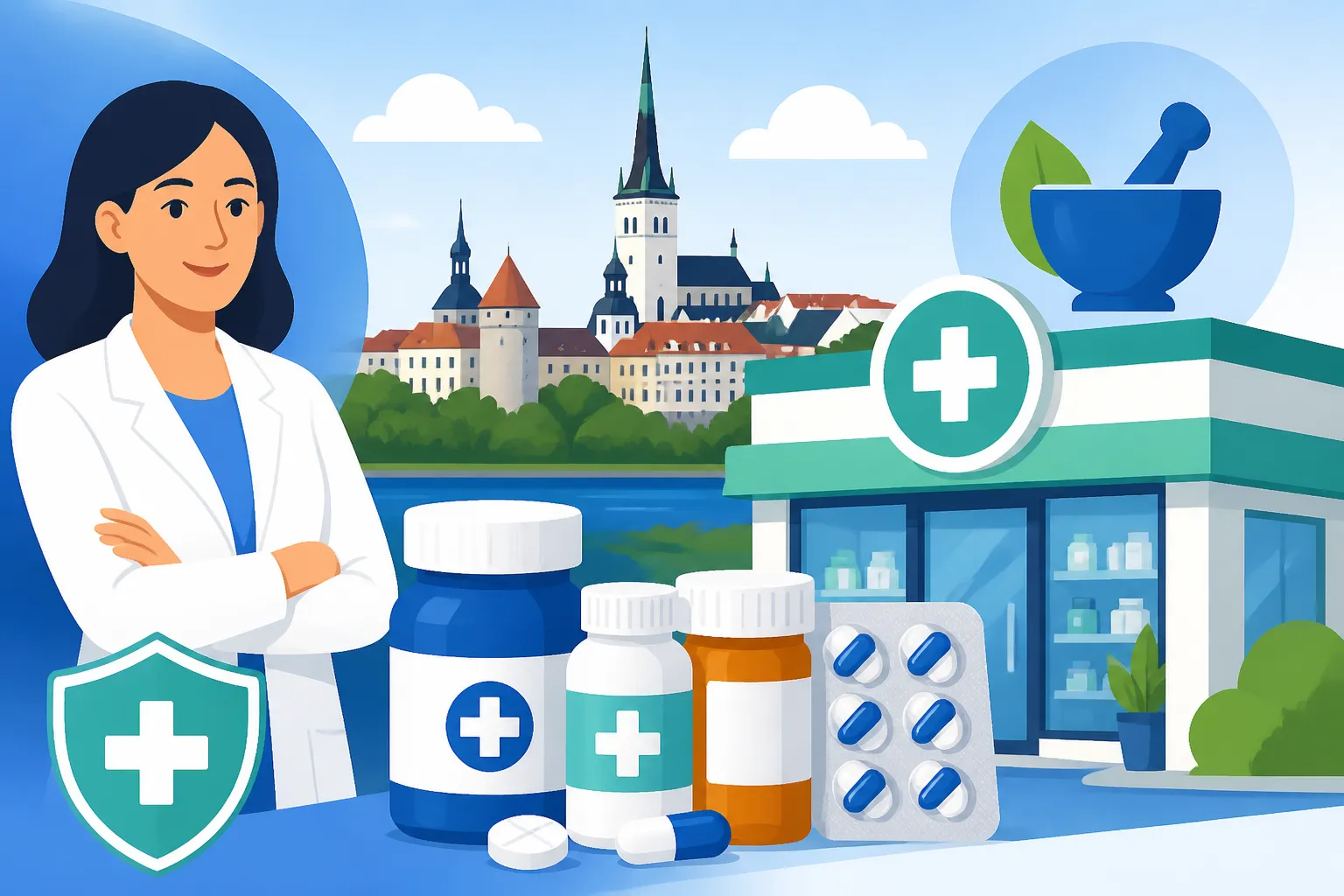
When you first arrive in Tallinn or Tartu, the first thing you will notice is that pharmacies, or "apteegid," are everywhere. They are often tucked into shopping malls (Selver or Rimi centers) or located on prominent street corners marked by a green cross. Unlike some countries where pharmacies are a bit like convenience stores selling snacks and magazines, an Estonian apteek is a strictly medical environment. The focus is entirely on health, wellness, and pharmaceutical care.
Many newcomers face the initial confusion of seeing multiple brand names and wondering if they all offered the same services. In Estonia, the market is dominated by a few major chains: Apotheka, Benu, Euroapteek, and Südameapteek. While they are competitors, they all operate under the same national digital umbrella. This means if your doctor issues a prescription, you can walk into any one of these branches, and they will be able to see your records instantly.
The atmosphere in these pharmacies is professional and generally quite efficient. Most pharmacists hold advanced degrees and are highly knowledgeable about drug interactions. However, they can be quite firm about regulations. If a drug requires a prescription, there is no amount of "persuasion" that will get them to hand it over without one. This is part of the broader commitment to Understanding the Estonian Pharmacy (Apteek) System and Opening Hours which keeps the population safe but can be a bit of a shock if you come from a country with more relaxed over-the-counter rules.
Identifying Local Pharmacy Chains and Services
Apotheka is perhaps the most visible chain in the country, often found in the larger malls like Viru Keskus or Ülemiste. They have a very robust online presence and a loyalty program that can save you a few euros on non-prescription items. Benu and Südameapteek are also widespread and often have smaller, more neighborhood-focused branches. If you are looking for specific skin care brands or high-end supplements, the larger Apotheka branches usually have the widest selection.
Beyond just selling pills, many Estonian pharmacies offer basic health services. You can often get your blood pressure checked, and some of the larger hubs offer consultations for smoking cessation or diabetes management. It is worth asking your local pharmacist what services they provide, as it can save you a trip to the Family Doctor Centre (Perearstikeskus) in Estonia for simple monitoring.
One thing to keep in mind is that the stock levels for very niche medications might vary. While common antibiotics and blood pressure meds are always in stock, more specialized biological drugs might need to be ordered in advance. Usually, if you order something before noon, it arrives at the pharmacy by the next day. This level of efficiency is something I have grown to love about living here, especially when compared to the weeks of waiting I experienced in other parts of Europe.
Working Hours and 24-Hour Emergency Pharmacies
Most pharmacies in Estonia follow the working hours of the shopping centers they are located in, typically from 9:00 or 10:00 to 21:00. However, if you find yourself in a situation where you need medication in the middle of the night, you need to know about the "Valveapteek" or 24-hour pharmacy. In Tallinn, there are two primary locations: one in the city center at Tõnismägi 5 and another in Lasnamäe at Vikerlase 19.
In Tartu, the 24-hour pharmacy is located within the Town Hall (Raekoja plats). These emergency pharmacies are a lifesaver when a child wakes up with a high fever or you realize you’ve run out of a vital medication. Be prepared, however, for a small "night fee" (usually around 1-2 euros) for service during these hours. It is a small price to pay for the peace of mind they provide.
For those who are newly arrived and haven't yet secured their residency, it can be a bit of a gap period. If you fall ill before your official insurance kicks in, having a plan like SafetyWing can be incredibly helpful to cover those unexpected medical costs or private consultations needed to get that first local prescription. It fills the void while you are still figuring out How Long Does It Take to Get Health Insurance as a New Resident in Estonia? and ensures you aren't paying entirely out of pocket for emergency care.
The Role of the Pharmacist in Estonian Healthcare
In Estonia, the pharmacist is considered an integral part of the primary healthcare team. They are not just dispensers; they are advisors. If you describe your symptoms, they will often suggest the best over-the-counter remedy or tell you honestly if you need to see a doctor. I have often found that for a common cold or minor skin irritation, a quick chat with a pharmacist is much faster than trying to book an appointment.
Language can sometimes be a barrier in smaller towns, but in Tallinn and Tartu, the vast majority of pharmacists speak excellent English. They are used to the expat community and are generally very patient. If you are struggling to explain a specific condition, having the active ingredient name (the generic name) of your medication written down is much more helpful than the brand name from your home country, as brands differ wildly across borders.
Navigating the Digital Prescription (Digiretsept) Ecosystem
Estonia is famous for its e-solutions, and the "Digiretsept" system is the crown jewel of its healthcare technology. Gone are the days of carrying around crumpled pieces of paper or worrying about losing a script. Everything is tied to your "Isikukood" or personal identification code. This system is so seamless that once you use it, you will find it hard to go back to any other way of managing your health.
When your doctor (Perearst) or a specialist issues a prescription, they enter it into a central database. Within seconds, it is available at every single pharmacy in the country. You simply walk in, hand over your ID card (or tell them your isikukood if you have it memorized), and the pharmacist can see exactly what has been prescribed, the dosage, and whether there are any subsidized discounts available to you. It is a brilliant example of Navigating Estonia's Digital Healthcare System: An Expat's Roadmap (2027) in action.
The beauty of this system is that it also tracks your history. If you are worried about whether a new medication might interact with something you are already taking, the pharmacist’s computer will often flag those issues automatically. This digital transparency significantly reduces the risk of medical errors and makes the process of getting your meds incredibly fast.
How the Digital System Works for Patients
To use the system, you must have a valid Estonian ID card or a residence permit card. When you go to the pharmacy, the pharmacist will ask for your ID. They insert it into a reader, and your pending prescriptions appear on their screen. You can choose to buy the full amount prescribed or just a portion of it (for example, if you want to see how you tolerate a new medication before buying a three-month supply).
You can also check your own prescriptions online through the patient portal at terviseportaal.ee. This is an essential tool for expats. You can see when your prescriptions expire, how many refills you have left, and even read the notes your doctor left. It is also where you can see your Digilugu (Digital Health Record) System in Estonia to keep track of your overall health journey.
If you are a parent, your children's prescriptions will also be linked to your ID card until they are old enough to have their own. This makes it very easy for one parent to stop by the pharmacy on the way home from work to pick up everything the family needs. The level of integration here is something that truly makes life in Estonia easier for busy families.
Renewing Prescriptions Online or via Perearst
Renewing a prescription for a chronic condition is usually very straightforward. Most family doctors allow you to request a renewal via email or through their clinic's specific portal. You don't necessarily need to book a face-to-face appointment every time you need more blood pressure meds or birth control. You simply send a message, and within 24 to 48 hours, the new digital script is waiting for you in the system.
Some clinics have moved toward automated renewal systems, but generally, a quick email to your nurse is the standard practice. It is important to request renewals at least a week before you run out, as doctors can be busy, and you don't want to be caught without medication over a long weekend. Understanding How Do I Get a Prescription Renewed Online in Estonia? is one of the first "life hacks" you should learn as an expat.
If you are traveling and realize you forgot to renew a script, you can sometimes call the 1220 family doctor advice line, though their ability to issue prescriptions is limited to certain emergency situations. It is always better to handle this through your registered doctor. If you are still in the process of moving and haven't registered with a doctor yet, you might need to visit a private clinic like Confido or Qvalitas to get a local prescription issued based on your foreign medical records.
Picking Up Prescriptions for Others
One of the most convenient features of the digital system is that you can pick up prescriptions for a friend or family member. You do not need their ID card; you only need to know their isikukood. When you go to the pharmacy, tell the pharmacist you are picking up for someone else, provide their code, and then show your own ID card.
The system logs who actually picked up the medication, which provides a layer of security. This is incredibly helpful if you are sick in bed and need a neighbor or colleague to grab your antibiotics. It's a level of trust and efficiency that defines the Estonian social fabric. Just make sure you are clear on How Do I Use a Digiretsept at a Pharmacy in Estonia? rules so you don't encounter any hitches at the counter.
For those who are working as digital nomads or are on a D-visa, you might not be immediately eligible for the public health insurance (Tervisekassa). In these cases, you will be paying the full price for your prescriptions. This is where having a reliable international health plan like SafetyWing becomes vital. They can help you manage the costs of private consultations, and depending on your plan, help with the expense of medications required for an acute illness while you are transitioning into the local system.
Over-the-Counter (OTC) vs. Prescription Medicines
Coming from places like the US or the UK, you might be surprised by what is—and isn't—available on the shelf in Estonia. The regulation of medications here is quite strict. In many countries, you can buy high-dose ibuprofen or certain allergy meds in a supermarket or a gas station. In Estonia, almost all medicinal products must be sold within a pharmacy. You won't find a bottle of aspirin next to the milk and bread.
The "Käsimüügiravimid" (over-the-counter drugs) are usually kept behind the counter or in a specific self-service area within the pharmacy. Even for things like basic cough syrup or vitamin D, it is common to have a brief consultation with the pharmacist. This is to ensure you aren't taking something that could be harmful to you. It might feel a bit restrictive at first, but it ensures a high standard of public health.
The distinction between OTC and prescription is very clear-cut. If you need something stronger than 400mg of ibuprofen, you need a script. If you need most types of allergy nasal sprays or anything containing a mild steroid, you likely need a script. It’s always a good idea to check Understanding the Estonian Pharmacy (Apteek) System and Opening Hours to see what is currently classified as OTC.
What You Can Buy Without a Script
Common items available without a prescription include:
- Pain relief: Ibuprofen (up to 400mg), Paracetamol (up to 500mg), and Aspirin.
- Cold and flu: Various herbal syrups, nasal saline sprays, and lozenges.
- Digestive health: Antacids, some probiotics, and mild laxatives.
- Skin care: Antiseptic creams, basic emollients, and some acne treatments.
- Supplements: Vitamins, minerals (like Magnesium or Vitamin D), and fish oils.
While these are "over the counter," the pharmacist will still often ask if you know how to use them. For example, Vitamin D is highly recommended for everyone living in Estonia during the dark winter months, and pharmacists will often advise on the correct "IU" dosage based on the time of year. This proactive advice is a great way to start Learning Estonian: A Complete Guide to Language Courses and Levels because you'll quickly pick up the medical vocabulary for "once a day" (üks kord päevas).
If you find that your usual home remedy is prescription-only here, don't be frustrated. It’s just the local way of ensuring that potent drugs are used under medical supervision. If you have a chronic need for something that is OTC in your home country but prescription-only in Estonia, you should talk to your Family Doctor (Perearst) in Estonia about getting a long-term digital prescription.
Restrictive Regulations and Safety Standards
Estonia follows the European Medicines Agency (EMA) guidelines, which means safety is the top priority. Certain medications, especially those that have a high potential for misuse (like strong painkillers, sedatives, or some ADHD medications), are monitored very closely. These require specific types of digital prescriptions and cannot be renewed as easily as a basic antibiotic.
If you are moving to Estonia with a prescription for a controlled substance, you must bring a letter from your home doctor and, ideally, the original packaging. You will need to find a local specialist to continue the treatment plan here. This can take time, so start the process as soon as you arrive. I have known many expats who were caught off guard by the waiting times for specialists, which is why understanding How to Access Specialist Care Through the Estonian Public System is so important.
Comparative Table: Medication Access in Estonia
| Category | Typical Items | Access Level | Notes |
|---|---|---|---|
| Pain Relief | Paracetamol, Ibuprofen (Low Dose) | OTC | Sold only in pharmacies. |
| Antibiotics | Amoxicillin, Penicillin | Prescription | Strictly regulated; no "emergency" OTC sales. |
| Chronic Care | Insulin, Blood Pressure, Statins | Prescription | Usually highly subsidized by Tervisekassa. |
| Contraception | Birth Control Pills, IUDs | Prescription | Requires a gynecologist or family doctor visit. |
| Vitamins | Vitamin D, Magnesium, Multivitamins | OTC | High quality; pharmacists offer dosage advice. |
| Mental Health | Antidepressants, Anxiolytics | Prescription | Requires specialist (Psychiatrist) or Perearst. |
Costs, Subsidies, and Insurance Coverage
One of the best things about the Estonian healthcare system is the cost of medication—if you are covered by the national health insurance fund, known as Tervisekassa. Estonia uses a generous subsidy system that makes essential medications affordable for everyone. However, if you are not yet in the system, or if you are buying non-subsidized "lifestyle" drugs, the prices are comparable to the rest of the EU.
The subsidy system is tiered. Depending on the severity of the illness and the necessity of the drug, the state may cover 50%, 75%, 90%, or even 100% of the cost above a certain base limit. For chronic conditions like diabetes or hypertension, the out-of-pocket cost is often just a few euros. This is a significant relief for many expats who are used to the astronomical prices in the United States or other private-heavy systems.
To benefit from these discounts, you must be registered with the Tervisekassa. This usually happens automatically if you are employed by an Estonian company paying social tax. If you are a freelancer or a student, the process might be different, and you should read up on How Estonia's Health Insurance Fund (Tervisekassa) Works: A Full Overview to ensure you aren't overpaying at the pharmacy.
The Tervisekassa Discount System Explained
When the pharmacist scans your ID, the computer automatically calculates the discount. You don't have to fill out any forms or claim money back later. The price you are quoted at the counter is already the "net" price. For most prescriptions, there is a standard "prescription fee" of about 2.50 euros per item, and the subsidy applies to the remaining balance.
If you have a particularly expensive medication regimen, there is also an additional safety net. If your annual spending on subsidized medications exceeds 100 euros, the state starts covering an even higher percentage of the cost. This prevents people with chronic illnesses from facing financial hardship due to their medical needs. It's a compassionate system that really shows the value of The Cost of Healthcare in Estonia: A Complete Breakdown for Foreigners (2026).
For those who are not yet covered by Tervisekassa—perhaps you are waiting for your residence permit or you are a digital nomad—you will pay the "full price." While this is still often cheaper than in North America, it can add up. This is another area where SafetyWing can be a buffer, providing you with travel medical insurance that handles the big stuff while you navigate the local bureaucracy of Registering with the Tervisekassa in Estonia: The Complete Expat Guide (2027).
Out-of-Pocket Costs and Reimbursements
Not all medications are subsidized. "Lifestyle" medications, such as those for hair loss or certain cosmetic skin conditions, are usually paid for in full by the patient. Similarly, over-the-counter medications are not covered by Tervisekassa. You should budget for these items as part of your regular Cost of Living in Estonia for Expats (2026) calculations.
If you are using private health insurance—either through your employer or a plan like SafetyWing—you will usually pay the pharmacist the full amount and then submit the receipt to your insurer for reimbursement. Always ask the pharmacist for a "detailed receipt" (arve-saateleht), as a simple cash register slip might not be enough for your insurance company to process the claim.
Finding English-Speaking Pharmacists and Medical Support
One of the biggest fears for any expat is a misunderstanding at the pharmacy. "Did they say take this before or after food?" "Is this the one that makes me drowsy?" Fortunately, Estonia is a very polyglot society. In major cities, you will almost never struggle to find an English-speaking pharmacist. In fact, many pharmacists take pride in their ability to assist international residents.
If you are feeling particularly unwell and don't want to leave the house, Estonia also has a growing online pharmacy sector. Websites like apotheka.ee or azeta.ee allow you to order over-the-counter meds and health products directly to your door or to a parcel machine (SmartPost/Omniva). However, for digital prescriptions, you still generally need to visit a physical location or use a secure authentication method online.
If you are in a situation where you need medical advice but aren't sure if you need a pharmacy or a hospital, the 1220 advice line is an incredible resource. It is staffed by experienced nurses and doctors who can provide guidance in Estonian, Russian, and usually English. They can help you determine if your symptoms require an Emergency Medical Care in Estonia: What Every Expat Needs to Know visit or if an OTC remedy will suffice.
Communication Strategies in Pharmacies
Even with the high level of English, it is helpful to be prepared. If you are looking for something specific, show the pharmacist a photo of the box or the name of the active ingredient on your phone. This eliminates any confusion caused by different brand names. If you are picking up a prescription, just hand over your ID card; the digital system does the heavy lifting for you.
Don't be afraid to ask for a printout of the dosage instructions. While the pharmacist will explain it to you, having it written down in clear steps is helpful when you are feeling under the weather. If you are moving to a smaller town, you might find that finding an English-speaking family doctor in Tallinn is easier than in the countryside, but the digital systems remain the same everywhere, which provides a consistent safety net.
Using the 1220 Advice Line and Telemedicine
The 1220 line is free for the first five minutes from a landline, and after that, it is charged at a standard rate. It is available 24/7. This is particularly useful for those "Is this normal?" questions after starting a new medication. They can also advise you on which Pharmacies Are Open Late or 24 Hours in Tallinn if you need to get something urgently.
Recently, telemedicine has also taken off. Services like MinuDoc allow you to have a video consultation with a doctor who can then issue a digital prescription directly into the system. This is a game-changer for busy expats who can't take half a day off to sit in a waiting room. It's just another part of why Navigating Estonia's Digital Healthcare System: An Expat's Roadmap (2027) is so rewarding once you get the hang of it.
For nomads and those on the move, SafetyWing’s community and support can also offer peace of mind. Knowing you have a global support system behind you while you interact with a local healthcare network makes the transition much smoother. Whether you are in Estonia for a month or a decade, having a multi-layered approach to your health is the smartest move you can make.
Bringing Medication into Estonia and Traveling with Meds
If you are just moving to Estonia, you are likely carrying a supply of your current medications. It is vital to understand the rules set by the Estonian State Agency of Medicines (Ravimiamet). You are generally allowed to bring a certain amount of personal medication with you without a special permit, but there are strict limits, especially for travelers from non-EU countries.
For most standard medications, you can bring up to 10 different medicinal products, with up to five retail packagings of each. If you are carrying more than this, or if you are carrying psychotropic or narcotic drugs, you may need a permit. This is not something you want to get wrong at the border. Always keep your medications in their original packaging with the prescription label attached.
If you are traveling from within the Schengen area, you should obtain a Schengen Certificate from your home country for any controlled substances. This proves that the medication was legally prescribed to you. For those moving from the US, Canada, or the UK, a detailed doctor's letter is your best friend. It helps local doctors understand your history when you go to Register with a Family Doctor (Perearst) in Estonia.
Rules for Importing Personal Medication
If you need to have medication sent to you by mail from home, be extremely careful. The Estonian Customs and Ravimiamet have very strict rules about receiving medicines via post. In many cases, it is actually prohibited for individuals to receive medicinal products by mail from outside the EEA. It is almost always better to find a local equivalent or have a local doctor issue a new prescription.
If you are unsure about a specific drug, you can check the Ravimiamet website or send them an email. They are quite responsive. I’ve found that being proactive about these regulations saves a lot of heartache (and potential fines) later on. It’s a core part of The Complete Guide to Moving to Estonia: Your First 90 Days (2027) to get your medical supplies sorted legally.
Traveling with Estonian Prescriptions
Once you are settled in Estonia and have your digital prescriptions, traveling within the EU is relatively easy. You can request a "paper copy" of your prescription if you are traveling to a country that doesn't yet recognize the Estonian digital system. However, a great development is that Estonian digital prescriptions are now increasingly recognized in other EU countries like Finland, Croatia, and Portugal.
Before you go on a trip, check if your destination allows you to pick up your meds using your Estonian ID. It’s a glimpse into the future of a truly borderless European healthcare system. If you are traveling outside the EU, always carry a sufficient supply and a printed summary of your health records from the Digilugu (Digital Health Record) System in Estonia.
Specialized Medications and Chronic Care
For expats with chronic conditions, the Estonian system is a double-edged sword. On one hand, the subsidies make the medication incredibly affordable. On the other hand, the process of "getting into the system" for specialized care can be slow. If you take biological drugs for autoimmune issues or specialized cancer treatments, you must be under the care of an Estonian specialist.
Your Perearst cannot usually initiate these specialized treatments; they can only refer you. This is why it is critical to bring your full medical history, including recent blood tests and scan reports. The more information you provide, the faster the local specialist can authorize your treatment under the Tervisekassa.
During this waiting period, you might have to pay for your meds privately. This is where a budget for The Cost of Healthcare in Estonia: A Complete Breakdown for Foreigners (2026) becomes necessary. Some specialized drugs can cost hundreds or even thousands of euros without the subsidy, so do your research before you arrive.
Rare Medications and Special Orders
If you take a medication that is not currently registered in Estonia, your doctor can apply for a "special use permit" from Ravimiamet. This allows a pharmacy to order the drug specifically for you from abroad. It takes a bit of extra paperwork, but the system is designed to ensure that patients get what they need, even if it's not a standard item on the Estonian market.
The pharmacists at the larger hospital-based pharmacies (like those at North Estonia Medical Centre/PERH or Tartu University Hospital) are the best people to talk to about special orders. They handle these cases more frequently and can give you a realistic timeline for delivery.
Managing Chronic Conditions as an Expat
Living with a chronic illness in a foreign country requires extra organization. Make sure you have a "buffer" supply of at least one month's medication when you first move. Use the first few weeks to Find an English-Speaking Family Doctor in Tallinn and get your isikukood registered in their system.
Stay on top of your Digiretsept (Digital Prescription) System in Estonia refills. I always set a calendar reminder a week before my last pack ends. This proactive approach, combined with the excellent digital tools provided by the Estonian state, makes managing your health one of the least stressful parts of expat life once you understand the rhythm of the system.
Disclaimer
The information provided in this guide is for informational purposes only and does not constitute professional medical or legal advice. While every effort has been made to ensure the accuracy of the details regarding Estonian pharmacies and prescription systems as of 2026, regulations and costs can change. Always consult with a qualified healthcare provider or the Estonian State Agency of Medicines (Ravimiamet) for specific medical concerns or legal requirements regarding medication. The author is not responsible for any actions taken based on the content of this article.