Understanding the Estonian Pharmacy (Apteek) System and Opening Hours
Moving to a new country often involves a steep learning curve regarding the most basic necessities, and few things are as stressful as falling ill in an unfamiliar environment. You might find yourself wandering through a Tallinn shopping mall, squinting at signs, wondering why you cannot find Ibuprofen on the supermarket shelves or how to claim a digital prescription. This guide solves those frustrations by providing a deep dive into the Estonian pharmacy ecosystem, digital integrations, and essential opening hours.
The Digital Backbone of Estonian Pharmacies
Estonia is world-renowned for its "e-everything" approach, and the healthcare sector is no exception. For a newcomer, the absence of paper prescriptions can be confusing. When your doctor tells you they have "sent" a prescription, they haven't sent it to a specific shop; they have uploaded it to a centralized national database. This means you can walk into any apteek (pharmacy) in the country, from the islands of Saaremaa to the border city of Narva, and access your medication.
The Digiretsept System Explained
The digital prescription system, or Digiretsept, is the heart of the Estonian pharmaceutical experience. When you visit a doctor or call your clinic, the physician enters the prescription into the State Portal. This record is immediately visible to every pharmacist in the country. To understand the broader context of this technological feat, it is worth Understanding the Digiretsept (Digital Prescription) System in Estonia to see how it integrates with your overall health records. From the patient's perspective, this eliminates the risk of losing a physical slip of paper or having to deal with illegible handwriting.
For expats, the most important thing to remember is that you do not need to bring anything other than your physical ID card or your residence permit to the pharmacy. The pharmacist will insert your card into a reader, and your entire history of active prescriptions will appear on their screen. If you are a parent, you can also pick up prescriptions for your children, as their records are linked to yours in the system. If you are ever unsure about what has been prescribed, you can learn How Do I Use a Digiretsept at a Pharmacy in Estonia? by checking the patient portal online before heading to the shop.
Your ID Card as the Universal Key
Your Estonian ID card is more than just an identification document; it is your medical passport. Without it, or at least your personal identification code (isikukood), picking up prescription medication is nearly impossible. Pharmacists are strictly regulated and cannot dispense most medications based on a verbal confirmation or a photo of an ID. This digital reliance ensures that the Health Insurance in Estonia: Mandatory, Private and Travel Options Explained are correctly applied, as the system automatically calculates your discount based on your insurance status with the Tervisekassa.
If you are a tourist or a digital nomad waiting for your residency to be processed, you might be using a service like SafetyWing to cover your medical needs. In such cases, you may still receive a digital prescription if you have a temporary isikukood, but the billing process might differ. SafetyWing is often used by those who haven't yet entered the local state insurance system, providing a safety net for emergency prescriptions that you would otherwise have to pay for entirely out of pocket. It is a vital tool for the transition period before you are fully integrated into the e-Estonia medical grid.
Renewing Prescriptions Remotely
One of the greatest conveniences of the Estonian system is the ability to renew recurring prescriptions without a face-to-face doctor’s visit. Most family doctor centers allow you to request a renewal via email or a dedicated phone line. The doctor reviews your file and pushes the new Digiretsept to the system within 24 to 48 hours. This is a lifesaver for chronic conditions where the medication does not change.
However, keep in mind that the pharmacist cannot renew a prescription for you. Everything must go through a licensed physician. If you find yourself running low on a Sunday, you might need to know How Do I Get a Prescription Renewed Online in Estonia? or wait until Monday morning when your clinic opens. The efficiency of this system is high, but it requires a proactive approach from the patient to ensure no gaps in medication occur.
Navigating the Apteek Chains and Service Culture
In Estonia, pharmacies are generally private entities, but they are highly regulated. You will notice several major brands dominating the landscape. While the branding differs, the prices for prescription medications are strictly regulated by the state, meaning you won't save money by "shopping around" for a better deal on your blood pressure medicine. However, prices for over-the-counter (OTC) products and supplements can vary slightly between chains.
Major Pharmacy Chains in Estonia
The four primary chains you will encounter are Apotheka, Benu, Südameapteek, and Euroapteek. Apotheka is perhaps the most ubiquitous, often found in major shopping centers like Viru Keskus or Ülemiste. They usually have a very modern feel and a wide selection of dermo-cosmetics. Benu and Südameapteek often have a more traditional "neighborhood" feel, though they are equally technologically advanced.
| Pharmacy Chain | Typical Locations | Best For |
|---|---|---|
| Apotheka | Malls, Hospitals | Large selection of skin care, easy access in city centers |
| Benu | Residential areas, Grocery stores | Personal service, loyalty programs integrated with Rimi |
| Südameapteek | Small towns, Health centers | Knowledgeable staff, often located near a Perearst |
| Euroapteek | Maxima supermarkets | Competitive pricing on non-prescription items |
When entering these shops, you will usually see a ticket machine. Even if the shop looks empty, it is polite to take a number. This ensures that the pharmacist can give you their full attention and that the privacy of the person at the counter is respected. Estonians value personal space and privacy, especially when discussing medical issues.
The Role of the Professional Pharmacist
In many countries, pharmacists are seen merely as retail workers who dispense what the doctor ordered. In Estonia, the role is far more clinical. Pharmacists undergo rigorous university training and are qualified to offer significant medical advice for minor ailments. If you have a cough, a mild skin rash, or a digestive issue, the pharmacist is often your first point of contact before you attempt to book an appointment with a The Expat Guide to Finding a Family Doctor (Perearst) in Estonia.
They will often ask clarifying questions about other medications you are taking to check for contraindications. Don't be surprised if they offer a cheaper generic alternative to a brand-name drug you requested; state regulations encourage pharmacists to inform patients about the most cost-effective options. This level of care is especially useful for expats who may not yet be familiar with local brand names for common medications like Paracetamol or Ibuprofen.
Language Barriers and Communication
English proficiency among Estonian pharmacists is generally very high, especially in the larger cities like Tallinn and Tartu. Most pharmacists under the age of 50 will speak fluent English and often Russian as well. If you are in a more rural area, communication might be slightly more challenging, but the digital system does most of the heavy lifting. Since the prescription is already in the computer, there is less chance of a misunderstanding regarding dosage or drug type.
If you are a tourist and don't speak the language, having your insurance details from a provider like SafetyWing ready can help the pharmacist understand your situation. SafetyWing users should always keep their digital ID and policy number handy, as the pharmacist may need to provide a specific type of receipt for you to claim reimbursement later. While they can't help you with your insurance claim directly, they are usually very patient in providing the detailed, stamped invoices required by international insurers.
Understanding Over-the-Counter (OTC) Restrictions
One of the biggest culture shocks for expats from the US or the UK is that you cannot buy pain relievers or cold medicine in a supermarket. In Estonia, any substance considered a "medicinal product" can only be sold in a licensed pharmacy. This even includes things like high-dose Vitamin D or medicated throat lozenges.
Why You Can't Find Aspirin in Selver
Estonian law is designed to ensure that a healthcare professional is always present when a medicine is sold. The logic is that even "safe" medications like Aspirin can have dangerous interactions or side effects if misused. Therefore, you won't find a "pharmacy aisle" in a grocery store. Instead, pharmacies are often located directly next to or inside the grocery store entrance for convenience.
This means you need to plan ahead. If you feel a headache coming on after the malls close at 9 PM or 10 PM, you cannot simply run to the 24-hour gas station or a convenience store. You will need to find a designated night pharmacy. This restriction often catches newcomers off guard, leading to frustrated searches for a simple bottle of Advil in the middle of the night.
Restricted Medications and EU Regulations
Estonia follows strict European Union guidelines regarding what can be sold without a prescription. Some medications that are OTC in other parts of the world, such as certain high-strength allergy medications or specific types of sleep aids, require a doctor's referral here. If you are moving to Estonia with a chronic condition, it is a good idea to check Can I Use a Foreign Prescription at an Estonian Pharmacy? to see if your home-country paperwork will be accepted or if you need to see a local doctor immediately.
Furthermore, antibiotics are never sold OTC in Estonia. There is a very strong public health stance against antibiotic resistance, so don't even try to persuade a pharmacist to sell you some for a persistent cold. You will invariably be told to consult a doctor. If you aren't sure where to start, you can always call the How to Use the Family Doctor Advice Line (1220) in Estonia for guidance on whether your symptoms require a prescription.
Costs, Subsidies, and the Tervisekassa
The cost of medication in Estonia is generally lower than in the United States but can be higher than in countries with fully socialized medicine like the UK. However, the system of subsidies is very robust. If you are registered with the Estonian Health Insurance Fund, the system automatically applies a 50%, 75%, or even 100% discount to many essential medications at the point of sale.
For those not yet covered by the state system, such as new expats or those on a Digital Nomad Visa, the full price must be paid. This is where having private insurance like SafetyWing becomes essential. SafetyWing provides a buffer against the high costs of emergency medical treatment and associated prescriptions. While you pay the pharmacy directly, you can then submit your itemized receipts for reimbursement according to your policy terms. If you are curious about other costs, you might find it helpful to see How Much Does a Routine Blood Test Cost Privately in Estonia? to gauge general private medical pricing.
Late-Night and 24-Hour Pharmacies (Valveapteek)
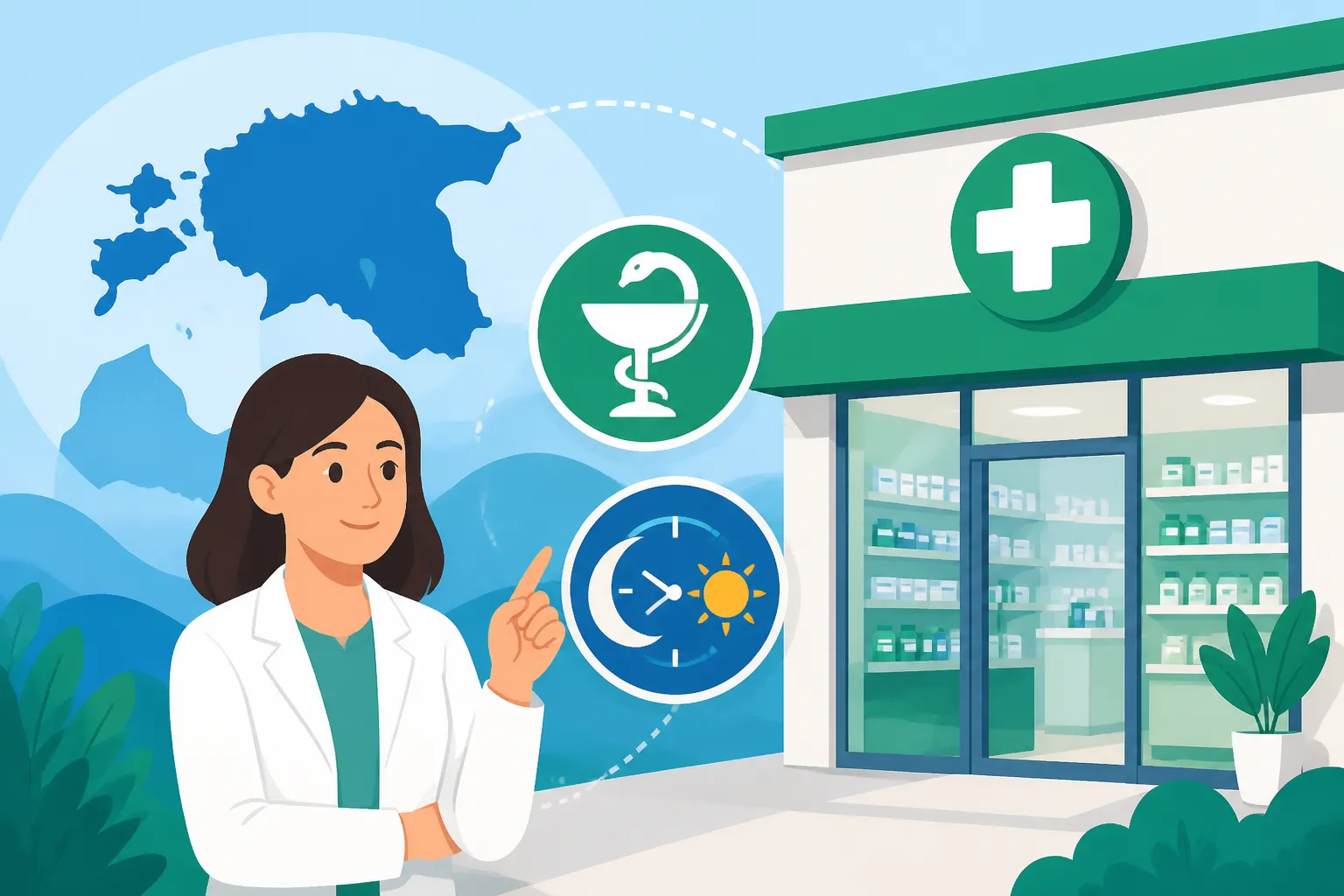
Living in Estonia means accepting that most of the country goes to sleep early. Shopping malls usually close by 9 PM, and with them, the pharmacies. However, there is a specialized system of "valveapteek" (night pharmacies) that stay open 24/7 to handle emergencies.
Finding a Valveapteek in Tallinn and Tartu
In Tallinn, there are traditionally two main 24-hour pharmacies. One is located in the city center at Tõnismägi 5, and the other is in the Lasnamäe district at Vikerlase 19. These are the only places in the capital where you can get medicine at 3 AM. In Tartu, the 24-hour pharmacy is typically located within the Town Hall Square (Raekoja plats) or at the University Hospital, though you should always verify What Pharmacies Are Open Late or 24 Hours in Tallinn? and other cities before making the trip.
The experience of a night pharmacy is different. After hours, the main doors are usually locked, and you must ring a bell at a small window or a side door. The pharmacist will speak to you through a protective screen. This is for security reasons and is standard practice across the country. Be prepared to wait, as there is often only one person on duty and they may be busy processing complicated prescriptions.
Emergency Fees and Night Service Protocol
When you visit a valveapteek between the hours of 8 PM and 8 AM (or on Sundays and public holidays), a small "night fee" or "service fee" is often added to your bill. This is usually around 2 to 5 Euros. It is a nominal charge to help cover the costs of keeping the facility open during off-hours.
It is also important to note that night pharmacies are for essential medical needs. While they will sell you a toothbrush or shampoo if you really need it, their primary focus is on dispensing medication. If you show up at 2 AM for a luxury face cream, you might receive a rather cold reception from a tired pharmacist who is prioritizing someone with an emergency prescription for their child.
Alternatives During Off-Hours
If you cannot reach a night pharmacy, your options are limited. For life-threatening emergencies, you should always call 112 or head to the Emergency Medicine Department (EMO) of the nearest hospital. The EMO can dispense a starting dose of medication if your condition is acute, but they will not fill a long-term prescription for you.
For non-emergency advice when the pharmacies are closed, the 1220 advice line is your best resource. The consultants there can tell you if your symptoms can wait until morning or if you need to find a valveapteek immediately. They are familiar with the Understanding the Digilugu (Digital Health Record) System in Estonia and can sometimes see your records to give more tailored advice.
Practical Tips for Expats and Tourists
Success in the Estonian pharmacy system comes down to preparation and understanding the digital landscape. Whether you are here for a week or a decade, these practical tips will save you time and stress.
Bringing Medication from Abroad
If you are moving to Estonia, try to bring at least a two-month supply of your essential medications. While the Estonian system is efficient, it can take a few weeks to get your isikukood, register your place of residence, and find a family doctor. Having a buffer ensures you don't run out while navigating the bureaucracy.
Always bring your medications in their original packaging with a copy of the prescription from your home country. This is vital for customs and also helps your new Estonian doctor understand exactly what you have been taking. Some brand names in your home country might be sold under different names here, so the chemical name (active ingredient) is the most important piece of information to have.
Travel Insurance and Pharmacy Costs
For those on short-term stays, SafetyWing is a highly recommended option because it is designed specifically for the needs of nomads and travelers. If you fall ill and need a prescription, SafetyWing can help cover the costs that wouldn't be subsidized for non-residents. Make sure to ask the pharmacist for a "detailed receipt" (arve), which includes the name of the medication, the price, and the pharmacy's registration details. A simple cash register slip is often not enough for insurance companies to process a claim.
Estonian pharmacists are used to these requests and can print a formal invoice in a few seconds. Just tell them you need it for "kindlustus" (insurance). Even if you are covered by a policy like SafetyWing, remember that you will almost always have to pay the pharmacy upfront and seek reimbursement later. The "direct billing" system between pharmacies and insurers is currently only available for the local Tervisekassa.
Using the E-Health Portal
Once you have your ID card and a card reader (or Smart-ID/Mobile-ID), you should log in to the national health portal (digilugu.ee). Here, you can see all your active and expired prescriptions, the dosages prescribed by your doctor, and how many refills you have left. This level of transparency is incredibly empowering for patients.
You can also see if a prescription has been "bought" or if it is still waiting for you. This is particularly helpful if a family member was supposed to pick up your medicine and you want to double-check. The portal also lists the cost of the medication and the amount of subsidy provided by the state, which is great for personal budgeting.
Important Considerations for Families and Seniors
The pharmacy system has specific nuances for different age groups. Children and seniors often receive higher subsidy rates, and the process for picking up their medication has some unique features.
Prescriptions for Children
As mentioned earlier, children's prescriptions are linked to their parents' ID cards. When you go to the pharmacy, you simply present your own ID card and tell the pharmacist you are picking up medicine for your child. They can see the link in the system. Children under the age of 16 often have their medications covered at a 100% or 90% rate for many chronic or serious acute conditions.
It is worth noting that for some specialized pediatric medications, you might need to go to a larger hospital-based pharmacy or a major center, as smaller neighborhood pharmacies may not keep rare formulations in stock. However, they can usually order any medication and have it delivered to the shop within 24 hours.
Benefits for Seniors and Chronic Illness
For those over the age of 63 or those with documented chronic illnesses, the Estonian state provides additional pharmaceutical support. The subsidy system is designed so that the more you spend on essential medications in a calendar year, the higher the percentage the state covers. This "additional drug benefit" is calculated automatically at the pharmacy counter—you don't need to fill out any extra paperwork.
This makes The Cost of Healthcare in Estonia: A Complete Breakdown for Foreigners (2026) more manageable for retirees moving to the Baltics. The integration of social tax and healthcare benefits ensures that those who need the most support receive it seamlessly through the digital pharmacy network.
Disclaimer
This guide is for informational purposes only and does not constitute medical or legal advice. Pharmacy regulations and opening hours in Estonia can change. Always consult with a qualified healthcare professional or the Estonian Health Board for the most current information regarding medications and health insurance requirements.