What Pharmacies Are Open Late or 24 Hours in Tallinn?
Waking up at 3:00 AM with a throbbing toothache or a child running a high fever is a nightmare scenario for any expat, especially in a city where most shops close their doors by 9:00 PM. The panic of realizing your local apothecary is shuttered can be overwhelming when you are still navigating the Estonian language and healthcare landscape. This guide solves that immediate crisis by detailing the only two 24-hour pharmacies in Tallinn, how to reach them, and what you need to know about the digital prescription system in the middle of the night.
The Reality of Late Night Pharmacy Access in Tallinn
If you have lived in a massive metropolis like London or New York, you might be used to a 24-hour pharmacy being around every corner. In Tallinn, the situation is much more centralized. While the city is incredibly high-tech, the physical infrastructure for overnight medical needs is limited to a few specific "Valveapteek" (Emergency Pharmacy) locations. Most neighborhood pharmacies, such as those found in Selver or Rimi supermarkets, typically close between 8:00 PM and 10:00 PM.
The concept of the valveapteek is a public service mandate. These locations are required to stay open through the night, including weekends and public holidays like Christmas or Midsummer (Jaanipäev), when the rest of the country effectively shuts down. For expats, knowing the difference between a "late" pharmacy and a "24-hour" pharmacy is crucial. Some pharmacies in larger malls like Ülemiste or Roc Al Mare might stay open until 9:00 PM or 10:00 PM, but they will not help you at 2:00 AM. For true middle-of-the-night emergencies, you are limited to two primary hubs.
Understanding the Estonian Pharmacy (Apteek) System and Opening Hours is your first step toward medical literacy in Estonia. These 24-hour locations do not just sell aspirin; they are fully staffed by licensed pharmacists who can access the national digital health database to dispense prescription medications. However, be prepared for a different experience than your daytime shopping trip. At night, the main doors are often locked for security, and you will need to use a small service window or a "night bell" to get the pharmacist's attention.
Detailed Profiles of the 24 Hour Pharmacies in Tallinn
Tallinn splits its emergency pharmacy services between the city center and the high-density eastern district. This ensures that no matter where you live, you are generally within a 15-minute drive of a pharmacist. If you are a digital nomad or a frequent traveler, having a plan for these moments is essential, and keeping your Prescription Medications and Pharmacies in Estonia: The Complete Guide handy can save you a lot of stress.
Tonismae Sudameapteek the City Center Hub
Located at Tõnismägi 5, this is the most famous 24-hour pharmacy in the country. It sits right in the heart of Tallinn, just a short walk from Vabaduse Väljak (Freedom Square) and the National Library. For many expats living in Kesklinn, Kalamaja, or Põhja-Tallinn, this is the default destination.
The building itself is historic and easy to spot, but at night, the atmosphere changes. You won't be browsing the aisles for vitamins. Instead, you will walk up to the small "ööaken" (night window) on the side of the building. You press a buzzer, and the pharmacist will speak to you through a thick glass pane and an intercom. If you are covered by an international plan like SafetyWing, remember that you will still need to pay for your medications upfront and claim the reimbursement later, so always ask for a detailed "arve" (invoice).
Getting there is straightforward. If you are using public transport, several night buses and the main tram lines stop nearby at the "Vabaduse Väljak" or "Kosmos" stops. However, if you are feeling unwell, a Bolt or Forus taxi is highly recommended. The drivers all know "Tõnismäe Apteek" by heart. It is worth noting that while the pharmacists are professionals, their English proficiency can vary during the late-night shift. Having your symptoms or medication names written down or translated on your phone can bridge the communication gap.
Lasnamae Tervisemaja Apteek the Eastern District Hub
Serving the largest district in Tallinn, the Lasnamäe Tervisemaja Apteek is located at Linnamäe tee 3. This pharmacy is part of a modern medical center and is the primary resource for those living in Lasnamäe, Pirita, or even the nearby town of Maardu. Unlike the older Tõnismäe location, this facility is modern and features a very clear night-service window protocol.
For expats who have recently moved to the newer developments in eastern Tallinn, this is your lifeline. The pharmacy is accessible via Laagna Tee (the "channel" road), making it a quick trip from the city center by car. If you are relying on Emergency Medical Care in Estonia: What Every Expat Needs to Know, you should keep this address saved in your GPS.
One of the benefits of the Lasnamäe location is the ease of parking. While Tõnismäe parking can be a nightmare of narrow streets and expensive zones, the Lasnamäe Health House has ample space right in front of the night window. If you are a traveler using SafetyWing, the same rules apply: keep your digital prescription records and physical receipts. This pharmacy is particularly efficient at processing digital IDs, so make sure you have your physical residency card or your digital ID app ready to scan.
| Pharmacy Name | Address | Best For | Contact |
|---|---|---|---|
| Tõnismäe Südameapteek | Tõnismägi 5, Kesklinn | City center residents, tourists, Kalamaja dwellers | +372 644 2282 |
| Lasnamäe Tervisemaja Apteek | Linnamäe tee 3, Lasnamäe | Eastern Tallinn, Pirita, car owners | +372 602 4114 |
Understanding the Digiretsept System at Night
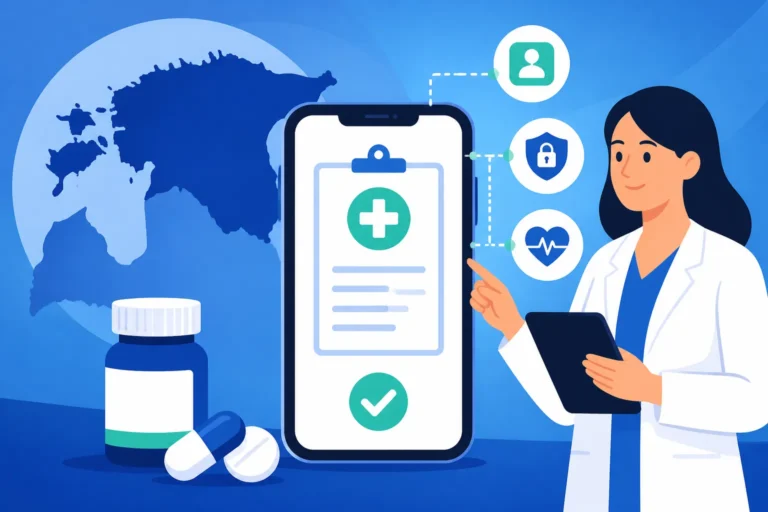
Estonia’s healthcare system is almost entirely paperless. If a doctor has issued you a prescription, it is not a piece of paper you carry in your wallet; it is a digital entry linked to your personal identification code (isikukood). When you arrive at a 24-hour pharmacy, the pharmacist will ask for your ID card. Once they insert it into their reader, they can see every active prescription you have.
This is incredibly convenient, but it poses a challenge if you haven't seen a doctor yet. You cannot simply walk into a 24-hour pharmacy and ask for strong painkillers or antibiotics without a pre-existing digital record. If your condition requires a prescription and you don't have one, you will first need to contact a medical professional. This is where Navigating Estonia's Digital Healthcare System: An Expat's Roadmap (2027) becomes vital.
During the night, you have a few options to get that digital prescription. You can call the Family Doctor Advice Line (1220). While they cannot always issue prescriptions directly for new, complex issues, they can give medical advice and tell you if you need to head to the ER (EMO). If you are a nomad using SafetyWing, you might also have access to their remote health services which can help guide your next steps. For a detailed walkthrough on the local process, check out How Do I Use a Digiretsept at a Pharmacy in Estonia? to ensure you aren't standing at the window empty-handed.
Dealing with Language and Cultural Nuances
Estonian pharmacists are highly trained medical professionals, often holding Master’s degrees in pharmacy. They are not just "cashiers." However, the cultural style in Estonia is direct and efficient. Do not be surprised if the pharmacist at the 24-hour window is brief or seems unsympathetic; it is simply the local way of being professional during a high-stress night shift.
If you do not speak Estonian, start the conversation by asking, "Kas te räägite inglise keelt?" (Do you speak English?). Most younger pharmacists speak excellent English, while older ones may be more comfortable with Russian or Estonian. If you are struggling, use a translation app or point to the area of pain. If you are trying to find a long-term solution for your health needs, you should eventually look into The Expat Guide to Finding a Family Doctor (Perearst) in Estonia so you have a regular physician who can manage your prescriptions during normal business hours.
Another cultural quirk is the "Valve" fee. At 24-hour pharmacies, there is often a small surcharge (usually around 1-3 Euros) for dispensing medications during the night hours. This is a standard fee to help cover the costs of keeping the facility staffed 24/7. It is rarely covered by basic insurance, but it is a small price to pay for immediate relief. If you are worried about the broader financial implications of health issues, The Cost of Healthcare in Estonia: A Complete Breakdown for Foreigners (2026) provides a deeper look at what to expect.
What to Do if the Pharmacy is Not Enough
Sometimes, a trip to the pharmacy isn't sufficient. If you are experiencing chest pains, severe breathing difficulties, or heavy bleeding, the 24-hour pharmacy should not be your first stop. In these cases, you must use the emergency services. Estonia’s emergency number is 112, and operators usually have access to English and Russian translators.
If you are mobile but need urgent care that a pharmacist cannot provide, you should head to the EMO (Erakorralise meditsiini osakond). In Tallinn, the main EMO for adults is at the North Estonia Medical Centre (PERH) in Mustamäe (J. Sütiste tee 19) or the Ida-Tallinn Keskhaigla (Ravi 18). For children under 15, the only place to go is the Tallinn Children's Hospital (Lastehaigla) at Tervise 28.
Before you head out, make sure you understand Understanding Emergency Numbers (112) and Ambulance Care in Estonia. Often, a visit to the EMO results in a new digital prescription, which you can then fill at the Tõnismäe or Lasnamäe 24-hour pharmacies on your way home. If you are a visitor or an expat waiting for your local insurance to kick in, having a policy like SafetyWing is a lifesaver, as EMO visits for non-residents can result in significant bills that you will want to have covered. You can also learn How to Access Specialist Care Through the Estonian Public System if your night-time emergency turns into a long-term medical requirement.
Practical Survival Tips for the Night Shift
To make your trip to the late-night pharmacy as smooth as possible, keep these veteran expat tips in mind:
- Carry Physical ID: While many things in Estonia are digital, the night-window pharmacists almost always require your physical ID card or passport to access the Digiretsept system. A photo on your phone rarely suffices.
- Check the Stock: If you are looking for a very specific or rare medication, call ahead. The phone numbers for Tõnismäe (+372 644 2282) and Lasnamäe (+372 602 4114) are active 24/7. It's better to find out they are out of stock over the phone than after a 20-minute taxi ride.
- Cash and Card: Both 24-hour pharmacies accept all major credit and debit cards. However, in the rare event of a system outage (which does happen in "e-Estonia" occasionally), having 20-40 Euros in cash can be a lifesaver.
- Bolt Food/Wolt: Some pharmacies are now listed on delivery apps. However, they usually only deliver over-the-counter (OTC) items like cough syrup or bandages, and they typically stop delivering at the same time the malls close. Do not rely on delivery for prescription meds at 3:00 AM.
- SafetyWing Documentation: If you are using SafetyWing, take a clear photo of the box and the receipt immediately. The ink on Estonian pharmacy receipts tends to fade quickly in the wallet, and you’ll need a clear image for your claim.
Navigating a medical situation in a foreign country is always a test of nerves. By knowing exactly where the Tõnismäe and Lasnamäe hubs are, you take the guesswork out of the equation. Whether you are dealing with a simple fever or a more complex issue, the Estonian "Valveapteek" system is a reliable, albeit quiet, guardian of the city's health.
Disclaimer
This guide is for informational purposes only and does not constitute professional medical or legal advice. While every effort has been made to ensure the accuracy of the addresses and services listed, opening hours and local regulations in Estonia can change. Always consult with a qualified healthcare provider or call the national emergency number (112) in the event of a life-threatening medical crisis. The author is an expat sharing personal experiences and research, not a medical professional.