The Complete Guide to Moving to Estonia: Your First 90 Days (2027)
Stepping off the plane in Estonia can feel like a whirlwind – a mix of excitement, anticipation, and, let’s be honest, a fair bit of bureaucratic dread. You’ve just landed in a new country, a place renowned for its digital prowess yet sometimes bewildering for newcomers. This comprehensive guide is here to walk you through those critical first 90 days, tackling everything from getting connected to securing your residency, ensuring your transition into Estonian life is as smooth and stress-free as possible.
First Steps After Landing: Arrival and Immediate Necessities
The moment your feet touch Estonian soil, a cascade of immediate needs arises. You’re likely tired, perhaps a little disoriented, and definitely eager to get settled. Don't worry, we've all been there! The key is to tackle these initial hurdles systematically, one small victory at a time.
Getting from the Airport and Initial Accommodation
For most international arrivals, Tallinn's Lennart Meri Airport (TLL) will be your gateway. It's a remarkably compact and efficient airport, making initial navigation less daunting than some larger hubs. Once you've collected your bags, your first decision is how to get to your pre-booked accommodation.
Public transport is a fantastic and budget-friendly option right from the start. Bus number 2 and tram number 4 both connect the airport directly to the city centre, including major hubs like Viru Keskus and Balti Jaam. Trams are generally very modern and comfortable, offering a pleasant introduction to Tallinn’s urban landscape. You can buy a single ticket from the driver with cash or card, or better yet, purchase a public transport card (Ühiskaart) from an R-Kiosk at the airport to top up. This card will be your best friend for navigating the city.
If you're weighed down with luggage or prefer a more direct route, ride-sharing services like Bolt and Uber are widely available and extremely popular in Estonia. Just download the app beforehand, and you can easily order a car right outside the terminal. Taxis are also readily available, though often a bit pricier than ride-sharing. A typical fare to the city centre will vary depending on traffic but expect to pay around €10-€15. When booking your initial accommodation, think about convenience. Areas like Kesklinn (city centre), Kalamaja (bohemian, trendy), and Kadriorg (green, stately) offer excellent access to amenities and transport, helping you feel grounded from day one. Many expats opt for short-term rentals through platforms like Airbnb or even extended-stay hotels for the first few weeks, giving themselves breathing room to search for a more permanent home without pressure.
Setting Up Your Initial Communication: SIM Cards and Internet
Connectivity is paramount, especially in your first few days. You'll need to contact family, navigate new streets, and perhaps even conduct initial job or apartment searches. Relying solely on Wi-Fi can be frustrating, so securing a local SIM card should be high on your priority list.
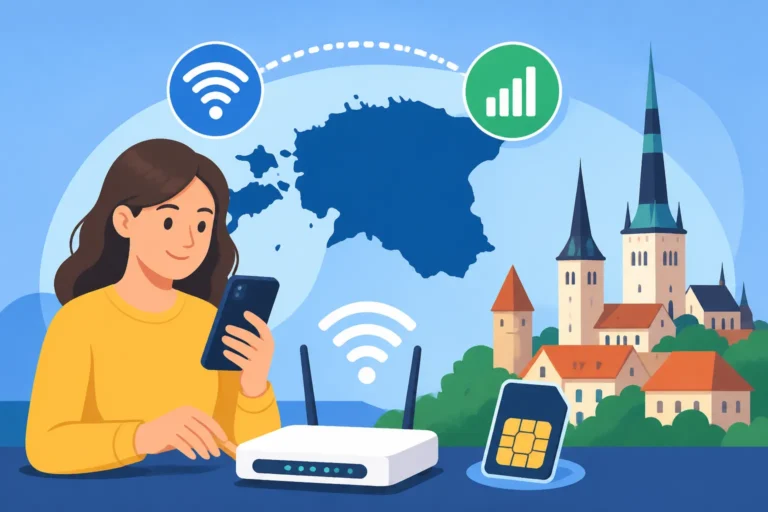
Estonia has excellent mobile network coverage, with three main providers: Telia, Elisa, and Tele2. All offer prepaid SIM card options that are incredibly easy to acquire. You can pick them up from almost any supermarket (Rimi, Selver, Prisma, Maxima), R-Kiosks found in shopping centres and transport hubs, or directly from the providers' dedicated stores in shopping malls. Activation is usually straightforward, often requiring just an ID. For instance, a Telia prepaid card can get you online and connected within minutes.
For those who want to be connected the moment their plane lands, or if your phone supports it, consider an eSIM. Services like Airalo allow you to purchase a data plan for Estonia before you even leave home. This means you have internet access from the second you arrive, without hunting for a physical SIM card. It’s a small detail that can make a huge difference in those initial, sometimes stressful, hours. While Estonia is a digital nation with plenty of public Wi-Fi spots, having your own reliable data connection is invaluable for peace of mind as you start exploring.
The Cornerstone: The Estonian Personal Code (Isikukood)
I cannot stress this enough: your Isikukood is the foundational piece of your life in Estonia. Without it, you’ll find yourself hitting brick walls repeatedly. It's not just a number; it's your key to accessing nearly every public and private service, from healthcare to banking. Many expats get frustrated by how often they're asked for it, even for seemingly simple tasks, but trust me, it’s a system designed for efficiency, once you’re in.
Why Your Isikukood is Non-Negotiable
Imagine trying to open a bank account, register with a family doctor, or even just get loyalty cards at a supermarket – all these things will typically ask for your Isikukood. It's a unique, eleven-digit identification number assigned to every resident of Estonia, linking you to various state databases. For example, your health insurance coverage, once you qualify for it, is tied directly to this code, allowing medical professionals to access your Digilugu (digital health record).
This single identifier streamlines processes immensely in Estonia's highly digital society. It's what allows the government to keep track of your residency, your tax contributions, and even your voting rights if you become an eligible resident. Without it, you're essentially an invisible person in the eyes of the Estonian system, and that can lead to significant delays and complications, particularly in those crucial first few months when you’re trying to establish yourself. Understanding How to Get Your Isikukood (Personal Code) and Why It Matters for Healthcare is one of the most important first steps you can take.
How to Obtain Your Isikukood
The good news is that obtaining your Isikukood is relatively straightforward, though the exact method can vary slightly depending on your circumstances. For many non-EU citizens, it's often assigned automatically as part of your temporary residence permit application process. This is the most common route for those moving to Estonia for work or study. Once your residence permit is approved and your residence card issued, your Isikukood will be printed on it.
If you are an EU citizen or already have a long-stay D-visa and need to obtain your Isikukood separately, you’ll need to apply for it at a local government office, specifically the population register department (Rahvastikuregister). In Tallinn, this would typically be the Population Register Office, currently located at Pärnu mnt 67. You'll need to bring your valid passport or national ID card, proof of your legal stay in Estonia (such as your visa or EU registration document), and often proof of your current address, like a rental agreement. Sometimes, if you're employed, your employer might be able to facilitate the process for you by submitting the application on your behalf, but it's best to confirm this with them.
The process usually involves filling out a simple application form. While staff at these offices generally speak English, having a local friend or a translation app can ease any anxieties. Once submitted, the Isikukood is usually issued on the spot or within a few working days. Keep in mind that securing this number is a fundamental step, and you won't be able to progress with many other administrative tasks until it's in hand. Don't underestimate its importance; it truly unlocks everything else.
Laying Down Roots: Residence and Registration
Once you have your Isikukood, the next crucial step is officially establishing your presence in Estonia. This isn't just a formality; it's a legal requirement that solidifies your status as a resident and grants you access to more services.
Registering Your Place of Residence in the Population Register
For anyone planning to stay in Estonia for more than three months, registering your place of residence in the Population Register (Rahvastikuregister) is absolutely mandatory. This isn't the same as applying for a residence permit; it's about telling the state where you actually live. It ensures that your address is officially recorded, allowing local municipalities to provide services, and it’s a prerequisite for many other processes like opening a full-service bank account or enrolling children in school.
The process involves submitting a notice of residence to your local city or rural municipality government. You’ll need to provide documentation of your right to use the living space, most commonly your rental agreement (üürileping) or proof of ownership if you’ve purchased property. If you're renting, your landlord will often need to co-sign the form or provide a separate consent document, especially if the property is registered to them. This can sometimes be a minor sticking point if your landlord is unfamiliar with the process or prefers to avoid additional bureaucracy, so ensure this is clear when signing your rental agreement.
Once registered, your official address will be updated in the Population Register, and you can even request a physical printout of your proof of address if needed. This step is incredibly important for integrating fully into the Estonian system, as many government and private services rely on this official address. You can read more about the intricacies in our guide on Registering Your Place of Residence in Estonia: The Complete Guide.
Understanding Residence Permits and EU Right of Residence
While registering your place of residence is about where you live, obtaining a residence permit or registering your right of residence is about why you're allowed to live in Estonia. The rules differ significantly depending on whether you are an EU/EEA/Swiss citizen or a third-country national.
If you are an EU/EEA/Swiss citizen, you automatically have the right to reside in Estonia for up to three months without any special registration. However, if you plan to stay longer, you must register your right of residence with the local government (the same office where you register your address) within that three-month period. This involves presenting your valid ID card or passport. You’ll be issued an Estonian ID card which serves as your proof of residence. It’s a relatively simple process designed to integrate EU citizens smoothly into the local system.
For non-EU citizens, the path is more complex and involves obtaining a temporary residence permit. This permit typically specifies the reason for your stay – for work, study, family reunification, or as a digital nomad. The application process usually begins at an Estonian embassy or consulate in your home country or a country where you have legal residency, or in some cases, can be initiated from within Estonia if you hold a long-stay (Type D) visa. The Police and Border Guard Board (PPA) is the authority responsible for handling these applications. You'll need to submit a range of documents including your passport, photographs, proof of sufficient financial means, health insurance, and proof of your legal grounds for stay (e.g., employment contract, university acceptance letter). This process can take several weeks or even months, so it’s crucial to plan far in advance. For a deeper dive, check out our guide on How to Apply for a Temporary Residence Permit in Estonia. Getting this sorted is paramount, as it dictates your legal right to stay and work in the country, impacting almost every other aspect of your life here.
Financial Foundations: Banking and Taxes
With your Isikukood and residence officially established, your next major hurdle is getting your finances in order. While modern fintech solutions are great, having a local Estonian bank account is essential for everyday living and will greatly simplify your financial life.
Opening an Estonian Bank Account
Trying to navigate life in Estonia without a local bank account is like trying to drive a car with no fuel. Sure, you can use your foreign credit or debit cards for some things, but you’ll quickly run into issues with transaction fees, currency conversion rates, and the simple fact that many local services and employers require an Estonian IBAN for payments and direct debits. Getting paid your salary or setting up utility payments becomes much smoother with a local account.
Estonia has several major banks, with Swedbank, SEB, and LHV being the most popular. Each has its pros and cons, but generally, all three offer good digital services. To open an account as a foreigner, you’ll typically need your Isikukood, your passport, and often your residence permit (if you're a non-EU citizen). Banks may also ask for proof of your address in Estonia (which is why registering your residence is so important!) and sometimes proof of your employment or study to understand your financial activity and assess risk. For instance, LHV is often cited as being quite expat-friendly, particularly for those in the tech sector or self-employed, while Swedbank and SEB have extensive branch networks.
Be prepared for a potentially lengthy application process, which may include an in-person interview. Estonian banks are, quite rightly, diligent about preventing financial crime and money laundering. They want to understand why you need an account in Estonia, where your funds come from, and what your planned transactions will be. Don't be surprised if they ask detailed questions; it's standard procedure. Having all your documents organised, including your employment contract or university acceptance letter, will make the process much smoother. For a more comprehensive overview, consult The Expat Guide to Opening a Bank Account in Estonia.
Initial Tax Considerations for New Arrivals
Estonia's tax system is famously streamlined and digitally advanced, but as a newcomer, it can still feel a bit complex to grasp. One of the first things you need to understand is Estonia's flat income tax rate. This means everyone, regardless of their income level, pays the same percentage (currently 20%) on their taxable income above a certain tax-free allowance. What's even more unique is Estonia's corporate tax system, where profits are only taxed when distributed, not when earned or reinvested.
As soon as you start earning income in Estonia, whether through employment or self-employment, you will become subject to Estonian tax laws. Your employer will typically handle your income tax and social tax deductions directly from your salary, but it's important to understand your obligations. If you are self-employed (FIE or OÜ), you'll need to actively manage your tax affairs. The Estonian Tax and Customs Board (Maksu- ja Tolliamet), or MTA, is your primary point of contact for all tax-related matters. Their e-MTA online portal is incredibly user-friendly and allows you to view your tax data, submit declarations, and manage various tax-related activities digitally.
A critical concept for new arrivals is tax residency. Simply living in Estonia doesn't automatically make you a tax resident. Generally, if you reside in Estonia for more than 183 days within a 12-month period, or if Estonia is your permanent home and centre of vital interests, you will be considered a tax resident. This status determines which country has the right to tax your worldwide income. It's vital to clarify your tax residency status early on to avoid potential double taxation or non-compliance. Our guide on The Complete Guide to Taxes in Estonia for Expats (2027) provides an in-depth look at all these facets. Don't delay in understanding these initial tax implications; proactive engagement with the e-MTA system will save you headaches down the line.
Getting Around and Staying Connected: Transport and Utilities
Once you're legally and financially settled, it's time to get comfortable in your new surroundings. This means understanding how to navigate your city efficiently and ensuring your new home has all the necessary comforts, from electricity to internet.
Navigating Public Transport
Estonia’s public transport system, particularly in Tallinn, is quite impressive and famously progressive. The biggest perk? Public transport in Tallinn is free for all registered residents. Yes, you read that right. As soon as you've successfully registered your place of residence and have your Isikukood, you are eligible for free travel on buses, trams, and trolleybuses within the city limits. This is a massive boon for your monthly budget!
To take advantage of this, you’ll need an Ühiskaart (public transport card). You can purchase one for a small fee (currently €2) from R-Kiosks, post offices, or specific public transport service points. Once you have the physical card, you must personalise it by linking it to your Isikukood via the public transport website or at a service point. After that, simply validate your card by tapping it against the readers when entering a vehicle. While you won't be charged, it confirms your resident status and helps track passenger numbers.
Outside of Tallinn, public transport is generally not free, but it remains affordable and efficient. Tartu, for example, has a comprehensive bus network that uses a similar card system. For intercity travel, Elron trains offer comfortable and modern connections across the country, reaching cities like Tartu, Narva, and Pärnu. And of course, for those times when public transport isn't convenient or you're out late, ride-sharing apps like Bolt remain an excellent option. For a comprehensive overview, dive into The Expat Guide to Public Transport in Estonia.
Setting Up Home Utilities
Moving into a new apartment means setting up essential utilities: electricity, water, heating, and internet. While some landlords may include these in the rent or manage them directly, it's more common to set them up in your own name, especially for long-term rentals. This is where your Isikukood and Estonian bank account become incredibly useful.
Electricity is typically managed by providers like Eesti Energia. You’ll need to contact them to set up an account in your name. This often involves providing your Isikukood, contact details, and the address of your apartment, along with the meter readings upon moving in. They will then send you monthly bills, which you can typically pay via online banking through direct debit or manual transfer. Heating and water are often managed through your apartment association (korteriühistu) and are included in your monthly communal bills (kommunaalkulud). These bills cover a range of services, including rubbish collection, common area maintenance, and sometimes even internet, depending on your building. Understanding your kommunaalkulud can be tricky at first, as they fluctuate seasonally (heating costs skyrocket in winter!) and can vary greatly between buildings. Don’t hesitate to ask your landlord or a local friend to help you decipher them initially.
For internet and mobile services, you have a choice of providers, primarily Telia, Elisa, and Tele2. These companies offer various packages for home internet (fibre optic is widely available and very fast) and mobile plans. Setting up home internet usually involves a visit from a technician to install the router, though some apartments may have pre-installed connections. Be sure to check what's available at your address. For more detailed instructions, our guide on The Expat Guide to Setting Up Utilities in Estonia will be immensely helpful. Getting these basics sorted ensures your new Estonian home is comfortable and connected from day one.
Healthcare Essentials: Your Wellbeing
No matter how adventurous you are, knowing you have access to healthcare in a new country is a fundamental comfort. Estonia’s healthcare system is robust, but understanding how to access it as a newcomer requires a bit of navigation.
Understanding Estonian Health Insurance
Estonia operates on a public health insurance system managed by the Estonian Health Insurance Fund (Haigekassa, often called Tervisekassa). This system provides comprehensive coverage for residents, but crucially, it’s primarily based on social tax contributions. This means if you are employed by an Estonian company and paying social tax (sotsiaalmaks), you are generally covered. Your employer will take care of these contributions directly from your salary. Once you start working, your health insurance coverage usually begins automatically after a short processing period, which your employer should be able to clarify.
However, there's often a waiting period for new residents or those awaiting their work permits to be fully processed, or if you're not yet employed. During this interim, it's highly advisable to have private health insurance or comprehensive travel insurance that covers medical emergencies. This is particularly important for non-EU citizens who often need proof of health insurance to even get their visa or residence permit. Some private companies, like Ergo and Salva, offer expat-friendly private health insurance plans that can bridge any gaps in coverage or provide additional services not fully covered by Tervisekassa.
Understanding when your Tervisekassa coverage starts and what it fully entails is critical. Don't assume immediate coverage. If you fall ill before your public health insurance kicks in, you will be liable for the full cost of medical treatment, which can be significant. This makes having a contingency plan, such as private insurance, incredibly important for your initial 90 days. For a deeper dive into all your options, take a look at our comprehensive guide: Health Insurance in Estonia: Mandatory, Private and Travel Options Explained.
Finding a Family Doctor (Perearst)
Once your health insurance status is sorted, the next vital step for your long-term wellbeing is registering with a family doctor, known in Estonian as a perearst. The perearst system is the backbone of primary healthcare in Estonia. Your perearst is your first point of contact for most medical issues, providing general consultations, managing chronic conditions, issuing prescriptions, and crucially, giving referrals to specialists when needed. Without a referral from your perearst, accessing specialist care within the public system is usually not possible, except in emergencies.
Finding a perearst can sometimes be a bit of a challenge, especially if you’re looking for one who speaks fluent English or if you live outside of Tallinn or Tartu. While medical professionals in Estonia are generally highly skilled, not all will be comfortable conducting consultations in English. You can typically find lists of perearst practices (perearstikeskused) on the Tervisekassa website or through local municipality health departments. It's often a matter of calling different practices in your area to inquire if they have open spots and if they can accommodate English-speaking patients.
Once you find a perearst who can take you on, you’ll need to submit a written application to them. This is typically a standard form provided by the practice. They will then notify the Tervisekassa of your registration. It's not uncommon to be placed on a waiting list if practices are full, so start this process as soon as you’re settled. Remember, this doctor will be your gateway to the rest of the healthcare system, including the advanced Understanding Estonia's Digital Healthcare System: An Expat's Roadmap (2026). For more detailed advice and specific steps, consult The Expat Guide to Finding a Family Doctor (Perearst) in Estonia. Proactive registration will ensure you have proper primary care when you need it most.
Embracing Estonian Life: Cultural Nuances and Community
Beyond the administrative tasks, settling into Estonia involves understanding its unique culture and finding your place within the community. Estonia might seem quiet and reserved at first, but beneath that calm exterior lies a deeply digital, nature-loving, and surprisingly warm society.
Navigating the Language Barrier and Learning Estonian
One of the most common anxieties for new expats is the language barrier. In Tallinn and Tartu, particularly within the tech and international business sectors, English is widely spoken, especially by younger generations. You can certainly get by in daily life, shopping, dining, and using public services with English alone. However, venturing into smaller towns, interacting with older generations, or dealing with more complex administrative tasks will often require some Estonian.
While it might not be immediately necessary for survival, making an effort to learn Estonian will significantly enrich your experience and foster deeper connections. Even mastering a few basic phrases like "Tere" (Hello), "Aitäh" (Thank you), "Vabandust" (Excuse me/Sorry), and "Palun" (Please/You're welcome) will go a long way and be greatly appreciated by locals. It shows respect and a willingness to integrate. There are numerous resources available for language learning. The Integration Foundation (Integratsiooni Sihtasutus) often offers free or subsidised Estonian language courses for new residents. Many private language schools in Tallinn and Tartu also cater specifically to expats, offering various levels and schedules.
Don't be discouraged by the perceived difficulty of Estonian. It's a unique Finno-Ugric language, different from most European languages, but consistent in its rules. Immersion, even just by listening to local radio or trying to read street signs, combined with structured learning, will yield results. Embracing the language journey is not just about communication; it's about unlocking a deeper understanding of Estonian culture and forging genuine connections. Our detailed guide, Learning Estonian: A Complete Guide to Language Courses and Levels, can help you find the best starting point.
Connecting with Other Expats and Local Communities
Estonians can be reserved and take time to open up, which can sometimes be misinterpreted as unfriendliness. However, once you break through that initial barrier, you'll find them incredibly loyal and welcoming. For many expats, finding a social circle often begins with connecting with other international residents who are navigating similar experiences.
Online platforms are your best friend here. Facebook groups like "Expats in Tallinn" or "Foreigners in Tartu" are vibrant communities where people share advice, organise meetups, and offer support. Websites like Meetup.com also list various interest-based groups, from hiking clubs to board game nights, which are great for meeting both expats and English-speaking locals. Expat associations, such as the International Women's Club of Tallinn, provide structured social events and networking opportunities. Don't underestimate the power of simply striking up conversations at local cafes, bars, or even during language classes.
Beyond the expat bubble, consider joining local hobby groups or volunteering. This is an excellent way to meet Estonians with shared interests and experience the culture firsthand. For example, local sports clubs, choirs, or environmental groups are always looking for new members. Websites like Sirelo, while primarily a moving platform, also offer insights into expat life and communities in various countries, including Estonia, which can be a good starting point for general advice. Remember, building a community takes time and effort. Be proactive, be patient, and embrace the unique opportunity to forge friendships with people from all walks of life. The initial quietness often hides a rich and welcoming social fabric waiting to be discovered.
First 90 Days in Estonia: A Checklist
To help you keep track of all the essential steps during your initial three months in Estonia, here’s a handy checklist. Remember, timing can vary based on your visa type and individual circumstances.
| Task Category | Action Item | Target Completion (Weeks) | Notes |
|---|---|---|---|
| Immediate Arrival | Land & arrange transport to accommodation | 0 | Public transport, Bolt, Uber available from Tallinn Airport. |
| Secure initial short-term accommodation | 0-1 | Airbnb, hotels, extended stays. | |
| Get a local SIM card / eSIM | 0-1 | Telia, Elisa, Tele2 (prepaid) or Airalo (eSIM). Essential for connectivity. | |
| Official Registration | Obtain your Isikukood (Personal Code) | 1-4 | Via residence permit, employer, or local Population Register office. |
| Register your Place of Residence (Elukoht) | 1-8 | At local government office with rental agreement/landlord consent. Mandatory after 3 months. | |
| Apply for/Register EU Right of Residence | 1-8 | EU citizens: at local government. Non-EU: Residence Permit via PPA. | |
| Financial & Home | Open an Estonian bank account | 2-8 | Swedbank, SEB, LHV. Requires Isikukood, residence proof. |
| Understand initial tax obligations | 4-12 | Check e-MTA. Clarify tax residency status. | |
| Set up home utilities (electricity, internet) | 2-6 | Eesti Energia for electricity. Telia, Elisa, Tele2 for internet. | |
| Understand communal bills (kommunaalkulud) | 4-8 | Ask landlord/local friend to explain apartment association fees. | |
| Healthcare | Secure temporary/private health insurance | 0-4 | Critical for any waiting periods before Tervisekassa coverage. |
| Confirm Tervisekassa coverage status | 4-12 | Usually automatic if employed by Estonian company. | |
| Register with a family doctor (perearst) | 4-12 | Contact practices in your area, inquire about English-speaking doctors. | |
| Integration | Familiarise yourself with public transport in your city | 1-4 | Tallinn residents: personalise your Ühiskaart for free travel. |
| Start learning basic Estonian phrases | 1-12 | "Tere," "Aitäh," "Palun." Consider language courses. | |
| Connect with expat groups and local communities | 4-12 | Facebook groups, Meetup, expat associations, local hobby groups. |
Disclaimer
The information provided in this guide is intended for general informational purposes only and is subject to change. While we strive to provide accurate and up-to-date advice, regulations and procedures in Estonia can evolve. It is always recommended to consult official government sources, legal professionals, or relevant authorities for the most current and specific information pertaining to your individual circumstances. We are not liable for any actions taken or not taken based on the content of this guide.