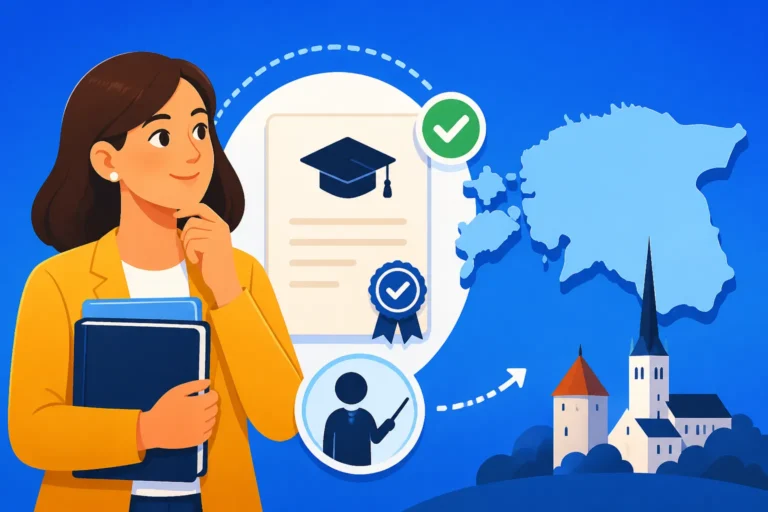
Learning Estonian: A Complete Guide to Language Courses and Levels
Moving to a new country like Estonia is an exhilarating adventure, but let's be honest, the language barrier can feel like a formidable wall, especially when you encounter those seemingly endless, vowel-rich Estonian words. It's a common frustration among expats to feel limited in daily interactions, understand official documents, or fully immerse in the local culture simply because the language seems so unique. This comprehensive guide is here to demystify learning Estonian, outlining everything from why it's beneficial to the best resources and strategies for expats to conquer this beautiful, albeit challenging, Finno-Ugric tongue.
Why Learn Estonian? More Than Just the Language
When you first arrive in Estonia, especially in larger cities like Tallinn or Tartu, you'll quickly realize that a significant portion of the population, particularly younger generations and those in tech, speaks excellent English. It’s easy to get by, order food, and even work in many international companies without uttering a single Estonian word. So, why bother? The truth is, while English might be your survival tool, learning Estonian is your key to truly thriving and integrating into this fascinating country. It’s about more than just communication; it’s about connection, opportunity, and respect.
Unlocking Daily Life and Local Culture
Imagine walking into a small local shop or a charming kohvik (café) in a village outside the main hubs, and being able to chat with the shopkeeper or barista in their native tongue. That simple exchange often opens up a whole new level of warmth and connection that English simply can’t achieve. Estonian culture, while increasingly global, remains deeply rooted in its language. Understanding Estonian means you can finally decipher the quirky local humour, appreciate the nuances of traditional songs, and even follow discussions on local radio or TV – things that remain a mystery if you only speak English. It means reading signs, understanding public announcements, and navigating bureaucracy with greater ease, instead of always relying on translation apps or the kindness of strangers. Your daily life shifts from merely existing in Estonia to truly participating in it.
The initial feeling of being an outsider quickly fades when locals see you making an effort. It’s a sign of respect, a recognition of their heritage and identity. You'll find doors opening to local events, community gatherings, and friendships that would otherwise remain out of reach. Suddenly, you're not just a foreigner passing through; you're someone investing in their home, and that makes all the difference.
Enhancing Your Career Prospects
While the tech sector and many international companies operate in English, having Estonian language skills can significantly boost your career prospects across a much broader range of industries. Many roles, especially those involving client-facing duties, public service, or management in local companies, will list Estonian as a mandatory or highly preferred skill. Think about it: if two equally qualified candidates apply for a job, and one speaks fluent Estonian, who do you think will get the nod?
Beyond direct employment, understanding the language also gives you an edge in networking. Business dealings often involve informal conversations, and being able to participate in these in Estonian can build trust and rapport more effectively. Furthermore, if you ever consider transitioning from working for a foreign company to an Estonian one, or even venturing into self-employment as an FIE (Sole Proprietor) or setting up an OÜ (Private Limited Company), a grasp of Estonian will make navigating local regulations, interacting with the Maksu- ja Tolliamet (Tax and Customs Board), and understanding contracts significantly less daunting. It helps you understand the local market better and communicates a serious commitment to your professional life here.
Building Deeper Connections and Community
One of the most profound benefits of learning Estonian is the ability to forge deeper, more authentic connections with locals. Expats often lament the challenge of breaking into Estonian social circles, which can sometimes appear reserved or closed to outsiders. The language, however, is a powerful bridge. When you can converse in Estonian, you’re not just sharing words; you’re sharing a piece of their world. This can lead to genuine friendships, understanding family dynamics, and a sense of belonging that transcends your expat bubble.
Imagine being able to participate fully in a local Estonian sauna tradition, understand the toasts at a jaanipäev (Midsummer's Day) celebration, or simply have a meaningful conversation with your neighbour about their garden. These are the moments that truly make a place feel like home, moving beyond superficial interactions to a rich, integrated life. It shows you care, and that effort is almost always reciprocated with warmth and acceptance, turning acquaintances into friends and a foreign land into a cherished community.
The Estonian Language Landscape: What to Expect
Let's not sugarcoat it: Estonian isn't the easiest language for English speakers to pick up. It's not Germanic, nor Romance, but part of the Finno-Ugric family, making it quite distinct from most European languages. This means you won't find many cognates or familiar grammatical structures to lean on initially. However, what it lacks in immediate familiarity, it makes up for in logical consistency and a surprising depth that makes the learning journey incredibly rewarding.
A Glimpse into Estonian Grammar and Vocabulary
The first thing you’ll notice about Estonian is its seemingly endless cases. Unlike English, which largely relies on prepositions, Estonian boasts 14 grammatical cases for nouns, pronouns, and adjectives. Yes, you read that right, fourteen! These cases dictate the ending of a word based on its function in a sentence (e.g., in, on, to, from, with, without). This can feel overwhelming at first, but with practice, you'll start to recognize patterns. For instance, "tabel" (table) becomes "lauale" (to the table), "lauast" (from the table), "lauas" (in the table). It’s a system, and while complex, it’s largely regular.
Another characteristic is its vowel harmony (though less strict than Finnish) and a richness in diphthongs, giving it a very melodic sound. Pronunciation, while different, is generally phonetic once you learn the alphabet, which is a huge relief compared to, say, French or English. Vocabulary, being unique, requires dedicated memorization. You won't find many "oh, that sounds like…" moments, which can be both challenging and refreshingly new. However, the logical structure of verb conjugations and a lack of grammatical gender simplify other aspects. It's a trade-off, but a navigable one with patience.
The Importance of Immersion and Practice
Given its unique nature, simply studying grammar rules from a textbook won't cut it. Immersion and consistent practice are absolutely crucial for learning Estonian. This means actively seeking out opportunities to speak, listen, and engage with the language every single day. Even if it’s just ordering a coffee in Estonian, asking for directions, or trying to follow a conversation at the supermarket, every interaction counts.
Living in Estonia provides an invaluable environment for this. Don't be shy about making mistakes; Estonians generally appreciate the effort and are often willing to help you correct yourself. Try watching Estonian TV shows or movies (even with subtitles), listening to local radio, and reading simple news articles. The more you expose yourself to the language in its natural habitat, the faster your brain will start to pick up patterns, intonation, and vocabulary without conscious effort. It's like learning to ride a bike; you can read all the manuals, but you only truly learn by getting on and pedalling.
Common Misconceptions and Overcoming Initial Hurdles
A common misconception is that Estonian is "impossible" or "too hard" because it's not Indo-European. While it certainly presents a different kind of challenge, it's far from impossible. Many expats, myself included, have successfully learned it. The initial hurdle often comes from the sheer novelty of its structure and the feeling that you're starting from scratch. Don't let this discourage you. Focus on small victories. Mastering the nominative, genitive, and partitive cases (the first three and most common) is a huge step.
Another hurdle is the tendency for Estonians to switch to English when they hear you struggling. While well-intentioned, this can hinder your progress. Don't be afraid to politely insist on speaking Estonian, even if it’s just a few words. You can say something like "Ma tahaksin eesti keelt harjutada" (I would like to practice Estonian) or "Palun rääkige aeglasemalt" (Please speak slower). They'll usually respect your request. Remember that every language learner faces these challenges, and persistence is your greatest asset. Celebrating small gains, like understanding a new phrase or successfully asking a question, will keep your motivation high.
Understanding Estonian Language Levels and Frameworks
Before you jump into a course, it’s helpful to understand the widely recognized language proficiency frameworks. This not only gives you a clear goal but also helps you choose the right materials and programs. For Estonia, the Common European Framework of Reference for Languages (CEFR) is the standard, but there are also specific national requirements for certain purposes.
The Common European Framework of Reference for Languages (CEFR)
The CEFR is an international standard for describing language ability. It organises language proficiency into six levels, from A1 for beginners to C2 for those who have mastered a language.
- A1 (Beginner): You can understand and use familiar everyday expressions and very basic phrases aimed at the satisfaction of needs of a concrete type. You can introduce yourself and others and ask and answer questions about personal details.
- A2 (Elementary): You can understand sentences and frequently used expressions related to areas of most immediate relevance (e.g., very basic personal and family information, shopping, local geography, employment). You can communicate in simple and routine tasks requiring a direct exchange of information on familiar and routine matters. This level is often a minimum requirement for simpler jobs or longer stays.
- B1 (Intermediate): You can understand the main points of clear standard input on familiar matters regularly encountered in work, school, leisure, etc. You can deal with most situations likely to arise whilst travelling in an area where the language is spoken. You can produce simple connected text on topics that are familiar or of personal interest. This level is a common requirement for obtaining a long-term residence permit in Estonia.
- B2 (Upper Intermediate): You can understand the main ideas of complex text on both concrete and abstract topics, including technical discussions in your field of specialisation. You can interact with a degree of fluency and spontaneity that makes regular interaction with native speakers quite possible without strain for either party. You can produce clear, detailed text on a wide range of subjects. This level is often required for higher education or certain professional roles.
- C1 (Advanced): You can understand a wide range of demanding, longer texts, and recognise implicit meaning. You can express yourself fluently and spontaneously without much obvious searching for expressions. You can use language flexibly and effectively for social, academic and professional purposes. This level is necessary for many public service roles or teaching positions.
- C2 (Proficiency): You can understand with ease virtually everything heard or read. You can summarise information from different spoken and written sources, reconstructing arguments and accounts in a coherent presentation. You can express yourself spontaneously, very fluently and precisely, differentiating finer shades of meaning even in more complex situations. This is typically native-speaker level proficiency.
Most expats will aim for at least B1 or B2 to comfortably navigate life and work in Estonia. Reaching these levels provides a solid foundation for both daily life and administrative tasks.
Estonian National Language Proficiency Requirements
Beyond the general CEFR levels, Estonia has specific national language proficiency requirements, especially for those seeking long-term residence permits, certain types of employment, or even Estonian citizenship. For instance, to apply for a long-term residence permit in Estonia, you typically need to demonstrate at least B1 level Estonian. This usually involves passing a state-administered language exam.
For those considering the ultimate step of acquiring Estonian citizenship by naturalisation, the bar is set higher. You’ll need to prove B1 level proficiency, but the exam also includes a component on knowledge of the Estonian Constitution and the Citizenship Act. So, while CEFR provides the general framework, always check the specific requirements outlined by the Police and Border Guard Board (PPA) or other relevant government bodies if you have a particular goal in mind, like residency or citizenship. Understanding these requirements early can help you tailor your learning path. You can find detailed information on these requirements on the eesti.ee portal.
Assessing Your Current Level
Before you enrol in any course, it's a good idea to assess your current Estonian level, even if you suspect you're a complete beginner. Many language schools and online platforms offer free placement tests. These tests typically evaluate your grammar, vocabulary, reading comprehension, and sometimes listening skills. This assessment is crucial because it ensures you join a class that matches your abilities, preventing you from feeling overwhelmed or bored.
If you're starting from absolute zero, don't worry – most courses are designed for complete beginners. However, if you've already dabbled in self-study or picked up a few phrases, a placement test can help pinpoint where you should begin. Remember, the goal is to find a learning environment that provides the right level of challenge to keep you motivated and progressing efficiently. Don't be afraid to be honest about your skills; it's the first step towards effective learning.
Finding the Right Estonian Language Course for You
Now that you know what to expect and the different proficiency levels, let's talk about where to actually learn this fascinating language. You have a variety of options, each with its own advantages, catering to different learning styles, schedules, and budgets.
In-Person Classes and Language Schools
For many, the structured environment of an in-person class at a language school is the most effective way to learn. The regular schedule provides discipline, and learning alongside other students creates a supportive and motivating community. Tallinn and Tartu offer numerous reputable language schools.
- Tallinna Rahvaülikool (Tallinn Folk High School): This is a very popular choice among expats. They offer a wide range of Estonian courses from A1 to C1 levels, often with different intensities and schedules (evening, morning, weekend). Their prices are generally reasonable, and the teachers are experienced in working with foreigners.
- Keeltekool Tondi: Another well-regarded option, Tondi provides structured courses with a strong focus on grammar and communication, often with smaller class sizes.
- International Language Centre (ILC): ILC also offers Estonian courses and is known for its professional teachers and adaptable programs.
- University Language Centres: Universities like the University of Tartu and Tallinn University often have language centres that offer courses to the public, especially during the summer. These can be intensive and academically rigorous.
The main benefits of in-person classes include direct interaction with a teacher, immediate feedback, structured curriculum progression, and the opportunity to practice speaking with classmates. This social aspect can be vital for staying motivated, especially with a language as unique as Estonian. The downside, of course, is the fixed schedule and location, which might not suit everyone's lifestyle.
Online Platforms and Tutoring
If your schedule is unpredictable, or you prefer the comfort of learning from home, online options have become incredibly robust and popular. They offer flexibility and often a more personalized approach.
- Private Online Tutors: Platforms like iTalki connect you with native Estonian speakers for one-on-one lessons. You can choose a tutor based on their qualifications, price, and teaching style. This is an excellent option for personalized feedback, focusing on specific areas you find challenging, or just having regular conversation practice. Many tutors on iTalki are incredibly flexible and can tailor lessons to your needs, whether it's preparing for an exam or just improving conversational fluency.
- Online Language Schools: Some Estonian language schools, and even independent teachers, offer their courses entirely online. This can provide the structure of a classroom with the convenience of remote learning.
- Self-Paced Online Courses: Websites like LingQ, Mondly, and various e-learning platforms offer self-paced Estonian courses. These are often subscription-based and combine lessons with interactive exercises, vocabulary building, and listening practice. While flexible, they require significant self-discipline.
Online learning, particularly with a private tutor, can accelerate your progress by allowing you to speak much more than you would in a group class. It's often where you can really hone your pronunciation and gain confidence without the pressure of a classroom setting.
Self-Study Resources and Mobile Apps
For those on a tight budget, or who simply prefer to learn at their own pace, there's a wealth of self-study materials available. These are also excellent for supplementing formal courses.
- Textbooks and Workbooks: Books like "E nagu Eesti" (E for Estonia) are popular choices for beginners, offering clear explanations and exercises. You can find these at local bookstores like Rahva Raamat or Apollo, or sometimes order them online.
- Mobile Apps: Apps like Duolingo (while limited for Estonian, it’s a good starting point for vocabulary), Memrise (user-generated content can be excellent for specific vocabulary sets), and Drops (focuses on visual vocabulary) can make learning feel like a game. These are fantastic for daily, bite-sized practice, especially for expanding your vocabulary on the go.
- YouTube Channels: Many enthusiastic Estonians and language learners share free lessons and tips on YouTube. Search for "Learn Estonian" and you'll find a growing community.
- Podcasts: As you advance, listening to Estonian podcasts or news (even if you only catch fragments) is a great way to train your ear.
- Flashcards: Old-school physical flashcards or digital apps like Anki are indispensable for memorizing vocabulary and grammatical cases.
The key to successful self-study is consistency and variety. Don't rely on just one resource. Mix and match textbooks, apps, and online videos to keep things fresh and cover different aspects of the language. And remember, even with self-study, try to find opportunities for real-world practice!
Navigating Publicly Funded and Free Estonian Language Learning Opportunities
Estonia actively supports the integration of foreigners, and a significant part of that support comes in the form of language learning initiatives. Don't think you always have to pay a hefty sum; there are excellent publicly funded and even free options available, though they often come with specific eligibility criteria or waiting lists.
Integration Programs through the Töötukassa (Unemployment Insurance Fund)
If you are an unemployed registered job seeker in Estonia, the Estonian Unemployment Insurance Fund, or Töötukassa, is an invaluable resource. They offer a range of free training courses, and this often includes Estonian language courses, from beginner to advanced levels. These courses are designed to improve your employability and aid your integration into the Estonian labour market and society.
To access these, you typically need to be registered with Töötukassa as unemployed. They will assess your needs and guide you to suitable courses. The process usually involves an initial meeting with a case manager who can explain the available options and help you enrol. This is a fantastic opportunity, not just for the free language training but also for networking with other learners and getting support with job searching. It’s definitely worth looking into if you meet the eligibility criteria. Just remember, the focus is on re-employment, so be prepared to demonstrate your commitment to finding work.
Language Houses and Cultural Centres
Another brilliant initiative aimed at helping newcomers learn Estonian and integrate is through the network of Language Houses (Eesti Keele Majad) run by the Integration Foundation (Integratsiooni Sihtasutus). They have centres in Tallinn and Narva, and they offer free Estonian language courses at various CEFR levels. These courses are highly popular and therefore often have waiting lists, so it’s wise to apply early.
The Integration Foundation's Language Houses provide a welcoming environment not just for language learning but also for cultural orientation. They often organise cultural events, workshops, and discussion clubs, providing a holistic approach to integration. These are excellent resources for meeting other foreigners and local Estonians, creating a community around your learning journey. Check their website regularly for application periods and updates on available courses.
State-Supported Courses and Subsidies
Beyond the Töötukassa and Language Houses, the Estonian government occasionally provides other state-supported language learning opportunities or subsidies for specific groups. For example, highly qualified specialists, entrepreneurs, or individuals granted specific types of residence permits might be eligible for partially subsidized courses.
It’s always a good idea to check the official government portals like eesti.ee or the websites of the Ministry of Culture or the Integration Foundation for the most up-to-date information on such programs. These opportunities can change, so staying informed is key. Sometimes, even if a course isn't completely free, the state might cover a significant portion of the cost, making quality language education much more accessible. This proactive approach by the Estonian government demonstrates its commitment to ensuring that new residents have the tools they need to succeed and belong.
Practical Tips and Strategies for Expat Language Learners
Learning Estonian isn’t just about sitting in a classroom; it’s about making it a part of your daily life. As an expat, you have a unique advantage: you live in the country where the language is spoken! Here are some practical strategies to leverage that advantage and make your learning journey more effective and enjoyable.
Incorporating Estonian into Your Daily Routine
The best way to learn any language is to use it. Don't wait for the perfect moment or for your Estonian to be "good enough." Start incorporating small bits into your everyday life from day one.
- Greeting and Politeness: Master basic greetings like "Tere" (Hello), "Aitäh" (Thank you), "Palun" (Please/You're welcome), and "Vabandust" (Excuse me/Sorry). Use them consistently. Locals will appreciate the effort.
- Shopping: When you go grocery shopping, try to name items in Estonian, even if just in your head. Ask for "piim" (milk) or "leib" (bread) at the counter. At the checkout, try to understand the total price in Estonian.
- Public Transport: Learn key phrases for asking about routes or understanding announcements. If you're using the bus or tram in Tallinn, try to understand the stop names as they are announced.
- Simple Interactions: When ordering coffee, instead of "coffee, please," try "Kohvi, palun." It might seem small, but these consistent mini-practices build confidence and reinforce vocabulary. Even checking the weather app and trying to understand the Estonian forecast is a tiny victory.
Making these small shifts helps you integrate language learning seamlessly, rather than seeing it as an additional chore. The more you use it, the more natural it becomes.
Finding Language Exchange Partners
One of the biggest challenges for expats learning a new language is finding native speakers to practice with in a relaxed, non-judgmental environment. Language exchange partners are a fantastic solution. Many Estonians are keen to practice their English (or other languages), creating a mutually beneficial exchange.
- Online Platforms: Websites and apps like Tandem or HelloTalk connect you with native speakers worldwide. You can find Estonians looking to practice English and offer to help them in exchange for Estonian conversation.
- Local Meetups: Look for language exchange meetups in Tallinn or Tartu. Groups often organize casual gatherings in cafes or pubs where you can chat with both locals and other expats learning Estonian. Check Facebook groups for expats in Estonia or local event listings.
- University Campuses: If you're near a university, check bulletin boards or student groups. Many university students are open to informal language exchanges.
The key here is to find someone with whom you genuinely connect. It’s not just about grammar; it’s about building a rapport that makes conversation natural and enjoyable. Don't be afraid to try a few partners until you find the right fit. It's a great way to make local friends too!
Don't Be Afraid to Make Mistakes
This is perhaps the most critical advice for any language learner, especially with a language like Estonian where every sound and case ending feels new. Fear of making mistakes is the number one barrier to speaking. You will make mistakes – countless of them. Your cases will be wrong, your pronunciation will be off, you’ll mix up vocabulary. And that is perfectly, absolutely normal.
Native speakers rarely expect perfection from learners. In fact, they often find the effort endearing. Every mistake is a learning opportunity. When someone corrects you, see it as a gift, not a criticism. Thank them, try to repeat the correct form, and move on. The more you speak, the more natural it becomes, and the fewer mistakes you’ll make over time. Focus on getting your message across, even if it’s clumsy. The goal is communication, not flawless grammar. Embrace the awkwardness, laugh at your linguistic mishaps, and keep speaking. That’s how real progress is made.
The Journey Beyond the Classroom: Maintaining and Advancing Your Estonian
Learning a language is a lifelong journey, not a destination. Once you've completed your initial courses and gained a functional level of Estonian, the real work (and fun!) of maintaining and advancing your skills begins. This is where you truly solidify your place in Estonian society.
Consuming Estonian Media and Culture
One of the most enjoyable ways to continue learning is to immerse yourself in Estonian media and cultural content. This exposes you to natural language, expands your vocabulary, and deepens your understanding of local nuances and humour.
- Estonian TV and Radio: Start by watching ETV (Eesti Televisioon) news or children's programs, which often use simpler language. As you improve, branch out to more complex dramas or documentaries. Listen to Estonian radio stations like Vikerraadio or Raadio 2, even if it's just background noise at first. Over time, you’ll start catching familiar words and phrases.
- Movies and Series: Estonia produces some fantastic films and TV series. Look for them on local streaming platforms or at the cinema. Watching with Estonian subtitles (if available, or even English subtitles initially to get the gist) can be incredibly helpful for linking sounds to written words.
- Music: Dive into Estonian music! Listen to contemporary pop, folk, or classical. Songs are a great way to learn new vocabulary, improve pronunciation, and absorb rhythm and intonation. Look up the lyrics (sõnad) and try to understand them.
- Books and Magazines: Begin with children's books or simplified readers. Progress to news portals like ERR.ee or Postimees.ee, perhaps starting with articles on topics you’re already familiar with in English. Local magazines on hobbies or lifestyle can also be less intimidating than dense literature. This isn't just language practice; it's a window into the Estonian soul.
Participating in Local Events and Activities
To truly advance your Estonian, you need to use it in real-world, dynamic situations. Actively seek out and participate in local events, hobbies, and community activities.
- Join a Club or Group: Whether it’s a hiking group, a choir, a board game club, or a sports team, joining a group focused on a shared interest is a fantastic way to practice Estonian naturally. The common activity provides a context for conversation, making it less intimidating.
- Volunteer: Volunteering for a local cause or charity in Estonia can put you in contact with native speakers who share your passions. It’s a rewarding way to give back while simultaneously improving your language skills.
- Attend Cultural Festivals: Estonia has a rich calendar of festivals, from music to food to ancient traditions. Attend these, engage with vendors and performers, and try to understand the cultural significance of what you’re seeing and hearing. The Song and Dance Celebration (Laulupidu ja Tantsupidu) is a prime example of an event where the language is central to the experience.
- Travel Locally: Explore Estonia beyond the major cities. In smaller towns and rural areas, fewer people may speak English, forcing you to rely more on your Estonian. This can be challenging but incredibly beneficial for boosting your confidence and practical skills.
The more you integrate your social life and hobbies with Estonian speakers and activities, the faster and more effortlessly your language skills will develop.
Preparing for Language Proficiency Exams
For many expats, the ultimate goal of learning Estonian isn't just casual conversation, but to meet specific requirements for residency or citizenship. This means you’ll eventually need to prepare for and pass a state-administered language proficiency exam, such as those for the A2, B1, or B2 levels.
- Understand the Exam Format: The Estonian language exams (often referred to as 'eesti keele tasemeeksam') typically test listening, reading, writing, and speaking skills. Familiarize yourself with the structure, types of tasks, and time limits for each section. Sample tests and guidelines are usually available on the Innove website (Haridus- ja Noorteamet or Education and Youth Board), which administers these exams.
- Targeted Practice: Focus your studies on the areas where you need the most improvement for the exam. If writing is your weakness, practice essay writing or formal letter writing in Estonian. If listening is tough, spend more time with Estonian podcasts and news.
- Mock Exams: Take mock exams under timed conditions to get used to the pressure and identify areas that still need work. Many language schools offer courses specifically designed for exam preparation, providing targeted strategies and practice materials.
- Get Feedback: If possible, ask your teacher or a native speaker to review your written and spoken practice. Their feedback is invaluable for refining your grammar, vocabulary, and fluency, especially when it comes to the nuances required for higher-level exams.
Successfully passing these exams is a significant milestone in your expat journey, opening doors to greater opportunities and a deeper sense of belonging in Estonia. It validates your hard work and provides concrete proof of your integration efforts. For those aiming to obtain an Estonian residence permit, proving your language proficiency by passing these exams is a mandatory step, making focused preparation essential.
| Learning Method | Pros | Cons | Estimated Cost (per month, rough) |
|---|---|---|---|
| In-Person Classes | Structured, direct teacher feedback, social interaction, motivated peers | Fixed schedule/location, can be large class size, pace might not suit individual | €80 – €250+ |
| Online Group Classes | Flexible location, structured, teacher feedback, peer interaction | Less direct interaction than in-person, technology reliability, can still have fixed schedules | €70 – €200+ |
| Private Online Tutoring | Highly flexible, personalized learning, tailored content, one-on-one practice | Can be more expensive per hour, requires self-discipline to book sessions, depends heavily on tutor's quality (e.g., via iTalki) | €15 – €35+ per hour |
| Self-Study (Apps/Books) | Most flexible, cheapest, learn at your own pace | Requires high self-discipline, no direct feedback, limited speaking practice, can feel isolating, inconsistent quality across resources | Free – €20/month |
| Language Exchange | Free, cultural exchange, natural conversation practice, make friends | Unstructured, depends on partner's reliability/teaching skill, not ideal for systematic grammar learning, can be hard to find a good match | Free |
| Government-Funded Programs | Free/subsidized, structured, professional teachers, integration focus | Eligibility criteria (e.g., Töötukassa), often long waiting lists, fixed schedules, may have specific requirements for beneficiaries (e.g., unemployment status) | Free |
Disclaimer
The information provided in this guide is intended for general informational purposes only and does not constitute professional advice. While we strive to keep the information accurate and up-to-date, rules and regulations regarding language courses, proficiency requirements, and government programs in Estonia can change. Readers are strongly advised to consult official sources, such as the Estonian Police and Border Guard Board (PPA), the Ministry of Culture, the Integration Foundation, or specific language schools, for the most current and authoritative information. Always verify details directly with the relevant authorities or institutions before making any decisions.