Emergency Medical Care in Estonia: What Every Expat Needs to Know
Finding yourself in the middle of a medical crisis in a foreign country is one of the most isolating and terrifying experiences an expat can face. Between the language barrier and the nuances of a highly digitized system, knowing exactly where to go when the unthinkable happens can save lives. This guide provides an exhaustive roadmap for navigating emergency medical care in Estonia, from dialing the right numbers to understanding the triage process in the ER.
The Structure of Emergency Services in Estonia
When you first move to Tallinn, Tartu, or even a smaller town like Viljandi, the healthcare system can seem like a black box. Unlike some countries where you might have separate numbers for fire, police, and ambulance, Estonia operates under a unified emergency response system. This centralization is designed to be efficient, but for a foreigner, the efficiency can feel a bit clinical if you aren't prepared for how the dispatchers operate.
The Universal Emergency Number 112
The number 112 is your lifeline in Estonia. It is the single point of contact for all life-threatening situations, including medical emergencies, fires, and police intervention. When you call 112, you are connected to the Emergency Response Centre (Häirekeskus). The dispatchers are trained to handle high-stress calls and, in major cities, they often speak a good level of English or Russian. However, in a state of panic, it is helpful to know a few key phrases or at least have your address written down nearby.
The dispatcher will ask a series of specific questions: What happened? Where did it happen? Who is injured? Is the person conscious? It is vital to stay on the line and answer these questions clearly. Do not hang up until the dispatcher tells you to. They are simultaneously dispatching an ambulance while they talk to you, giving you instructions on first aid in the meantime. Even if your Estonian is non-existent, the system is designed to triangulate your location if you are calling from a mobile phone, though providing a precise address is always better.
For many newcomers, there is a fear of "bothering" the emergency services. You might wonder if your chest pain is just heartburn or if that fall on the ice was truly serious. In Estonia, the rule of thumb is: if you suspect a threat to life or limb, call. The dispatchers will determine the level of priority. If the situation is not life-threatening but still urgent, they might redirect you to the 1220 advice line, which is a common occurrence for expats seeking Emergency Medical Care in Estonia: What Every Expat Needs to Know.
Ambulance Services and Kiirabi
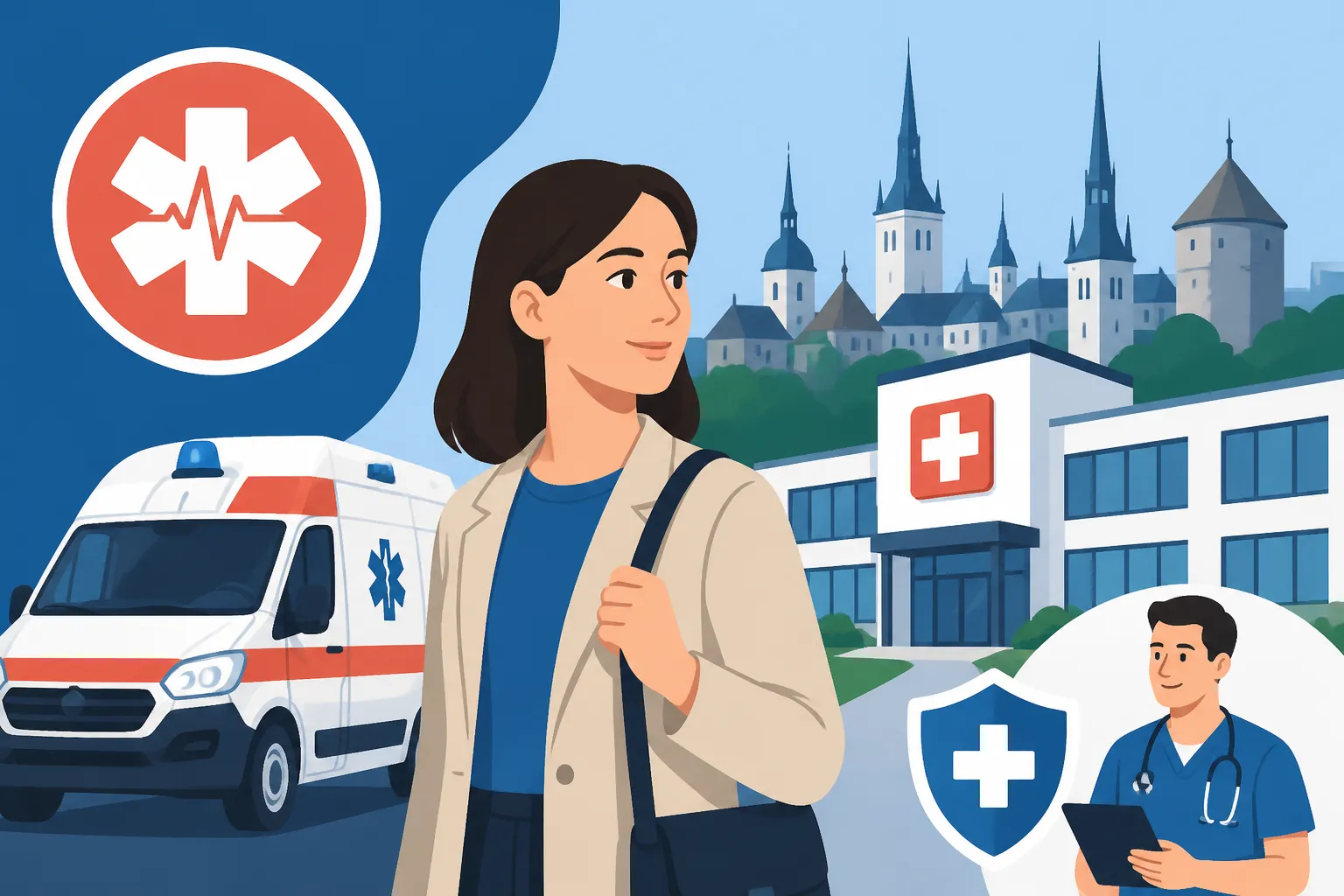
The Estonian ambulance service, known as Kiirabi, is a professional, rapid-response network. These are not just "transport vans"; they are mobile intensive care units staffed by highly trained paramedics or emergency doctors. In major hubs like Tallinn and Tartu, response times are remarkably fast, often arriving within minutes of a high-priority call. The sight of the yellow and orange vehicles is a common one, especially during the winter months when the icy sidewalks of the Old Town claim many victims.
One thing that often surprises expats is that the ambulance crew may provide treatment on-site and decide not to take you to the hospital if they stabilize the situation. This can feel counterintuitive if you come from a culture where an ambulance ride always ends in an ER visit. If they do transport you, they will take you to the nearest appropriate Emergency Medicine Department (EMO). It’s worth noting that for residents covered by the national system, ambulance transport in a true emergency is generally free, but the rules change for those without state coverage.
If you are a digital nomad or a new arrival still waiting for your residence permit, your state coverage might not be active yet. This is where having a plan is crucial. While the ambulance will never refuse to treat a person in a life-threatening state, the subsequent billing can be a headache. This is a primary reason many expats utilize SafetyWing during their first few months, as it provides a bridge of coverage that handles the high costs associated with emergency transport and stabilization before the Health Insurance in Estonia: Mandatory, Private and Travel Options Explained kicks in.
Emergency Departments known as EMO
The Erakorralise meditsiini osakond, or EMO, is the Estonian equivalent of the Emergency Room (ER) or Accident & Emergency (A&E). These departments are located within major hospitals and are open 24/7. In Tallinn, the primary EMOs are at the North Estonia Medical Centre (PERH) in Mustamäe, the East Tallinn Central Hospital (ITK) on Ravi Street, and the West Tallinn Central Hospital (LTK) on Paldiski Road.
Entering an EMO can be an intimidating experience. You aren't just walking into a waiting room; you are entering a high-triage environment. It is not a "first come, first served" system. The staff uses a color-coded triage system to prioritize patients based on the severity of their condition. If you arrive with a minor injury, be prepared to wait. I have personally sat in the Ravi street EMO for six hours with a suspected sprain while patients with more critical needs were rushed past.
Understanding which EMO to go to can also depend on your specific needs. For example, PERH is the primary trauma center for Northern Estonia, handling the most complex surgical and cardiac emergencies. If you have a choice and your condition allows for travel, picking the hospital closest to your residence is usually the standard advice, but always keep in mind that the ambulance crew ultimately makes the call on where you are headed.
Navigating the Emergency Room Experience
Once you arrive at the EMO, the "Estonian way" of doing things becomes very apparent. The system is highly efficient but can feel somewhat cold or bureaucratic to those used to a more "customer service" oriented medical culture. The focus here is strictly on medical outcomes and triage efficiency. Knowing the steps of the process can help lower your stress levels significantly.
Triage Levels and Waiting Times
The triage nurse is the most important person you will meet upon arrival. They will assess your vital signs and symptoms to assign you a color: Red (immediate, life-threatening), Orange (urgent, should be seen within 15 minutes), Yellow (needs attention, but stable), and Green (non-urgent). If you are categorized as "Green," you may be in for a long night. It is not uncommon for Green-level patients to wait 4 to 8 hours during peak times or weekends.
It is helpful to understand that the EMO is strictly for emergencies. If you show up with a cold, a minor rash, or a request for a routine prescription refill, you will likely be told to contact your family doctor or wait until the very end of the queue. This is a common point of frustration for expats who are used to using the ER for urgent but non-emergency care. For those non-emergency situations, you should instead look into The Expat Guide to Finding a Family Doctor (Perearst) in Estonia to avoid the EMO wait.
While waiting, you should stay in the designated area. If your condition worsens while you are waiting, do not hesitate to inform the triage nurse immediately. Estonians are generally reserved, so if you are sitting quietly and suffering, they may assume you are stable. You have to be your own advocate in the EMO. Clearly state if your pain has increased or if you feel faint.
Documentation Needed
In Estonia, your Isikukood (personal identification code) is the key to everything. If you have an Estonian ID card, you must bring it with you. The hospital staff will use it to access your entire medical history through the digital health portal. This is one of the perks of Navigating Estonia's Digital Healthcare System: An Expat's Roadmap (2027), as it allows the doctor to see your previous allergies, medications, and surgeries instantly.
If you do not have an ID card yet—perhaps you are a tourist or a newly arrived expat—you must bring your passport. If you are an EU citizen, your European Health Insurance Card (EHIC) is essential. Without these, the registration process becomes significantly more complicated and expensive. The hospital will need to create a temporary profile for you, and you will likely be asked to pay an upfront visitation fee, which for non-residents can be around 50 to 100 Euros just for the initial consultation.
For those without an Isikukood, keeping a digital copy of your private insurance policy on your phone is a lifesaver. Companies like SafetyWing are well-recognized by international clinics and larger hospitals, making the reimbursement or direct billing process smoother. Even if the public hospital requires upfront payment, having your documentation organized ensures you can claim those costs back later without a fight.
Communication and Language Barriers
Language is perhaps the biggest hurdle for expats in the EMO. While many younger doctors speak excellent English, the nursing and administrative staff may only speak Estonian or Russian. This can lead to misunderstandings during the intake process. It is a good idea to have a translation app ready on your phone or, better yet, a friend who can translate over the phone if needed.
When describing your symptoms, be as literal as possible. Avoid metaphors or "flowery" language. Instead of saying "I feel like an elephant is sitting on my chest," say "I have heavy pressure and sharp pain in the center of my chest." Being direct helps the staff categorize you correctly in the triage system. If you find that the language barrier is preventing you from getting the care you need, you can ask, "Kas keegi räägib inglise keelt?" (Does anyone speak English?).
If you are admitted to the hospital, the language barrier can become more pronounced during long stays. However, the medical charts and digital records are increasingly standardized. You can always ask for a summary of your visit in English, though they are not legally required to provide it in any language other than Estonian. For a better understanding of the overall system, you might want to read The Complete Guide to Healthcare in Estonia for Expats (2027).
Understanding Costs and Insurance Coverage
The cost of emergency care in Estonia is remarkably low for residents but can be a shock for the uninsured. The system is funded through social tax, and if you are working here, you are likely contributing to this. However, the gap between arriving in the country and having your insurance activated is a "danger zone" that every expat needs to navigate carefully.
Tervisekassa Coverage for Emergencies
If you are registered with the Tervisekassa (Estonian Health Insurance Fund), most of your emergency care is covered. There is a nominal fee for an EMO visit, usually around 5 Euros, which is waived if you are admitted to the hospital, if the patient is a child under 2, or if it’s a pregnancy-related emergency. This fee is a tiny fraction of the actual cost of care, which is subsidized by the state.
However, How Estonia's Health Insurance Fund (Tervisekassa) Works: A Full Overview explains that coverage is not universal or automatic just by living here. You must be employed, a student, a dependent of a covered person, or paying voluntary contributions. If you lose your job, your coverage typically continues for two months, but after that, you are considered "uninsured" in the eyes of the public system, even in an emergency.
It is a common misconception that emergency care is "free for everyone" in Europe. In Estonia, while they will never turn away a person in a life-threatening state, they will send a bill to an uninsured person after the fact. These bills can range from a few hundred Euros for a simple stitches job to tens of thousands for intensive care or emergency surgery.
Costs for Uninsured Expats
For those without Tervisekassa, the costs are determined by a standard price list set by the government. An ambulance call-out for an uninsured person can cost upwards of 100-200 Euros. An EMO consultation, diagnostic tests (like X-rays or blood work), and treatments are billed individually. For example, a simple MRI can cost several hundred Euros, and a night in a standard hospital ward can exceed 300 Euros.
| Service Type | Tervisekassa Resident Fee | Uninsured/Private Cost (Approx) |
|---|---|---|
| Emergency Room (EMO) Visit | 5 EUR | 80 – 150 EUR (Base) |
| Ambulance (Kiirabi) | 0 EUR | 100 – 250 EUR |
| Standard X-Ray | 0 EUR | 30 – 70 EUR |
| Inpatient Hospital Stay (Per Night) | 2.50 EUR (Max 10 days) | 250 – 600 EUR |
| Emergency Dental (Pain Relief) | 0 EUR (Limited) | 50 – 150 EUR |
For many, The Cost of Healthcare in Estonia: A Complete Breakdown for Foreigners (2026) provides a sobering look at how quickly these fees add up. This is why it is almost mandatory for non-EU expats to have private insurance during their initial residency period. It isn't just about the visa requirement; it’s about financial survival in the face of an accident.
Private Insurance and Travel Options
SafetyWing is a popular choice for expats and digital nomads because it specifically targets the gaps that traditional travel insurance or local state insurance might miss. For example, if you are moving to Estonia on a D-visa and waiting for your residence permit to process, you are in a legal and medical limbo. During this 1-3 month period, SafetyWing acts as your primary safety net for emergencies.
One of the benefits of private insurance in an emergency context is the ability to choose private clinics for follow-up care. While the EMO handles the immediate crisis, the subsequent recovery often requires specialist visits. Public waiting lists can be months long, but with private coverage, you can jump to the front of the line at clinics like Confido or Fertilitas. Naturally, you should check Health Insurance in Estonia: Mandatory, Private and Travel Options Explained to see how these private options integrate with the local system.
Even if you have Tervisekassa, some expats keep a secondary private policy for "repatriation of remains" or "emergency medical evacuation," which the Estonian state system does not cover. If you are hiking in a remote part of Estonia and need a helicopter evacuation (rare but possible), or if you need to be flown back to your home country for long-term recovery, private insurance is the only thing that will cover those astronomical costs.
Pediatric Emergencies and Specialized Care
If you are a parent, the stress of a medical emergency is amplified tenfold. The Estonian system has specialized pathways for children that are generally more "gentle" and faster than the adult EMO. Knowing where the children’s hospitals are located is essential before you ever need them.
Children's Hospitals and EMOs
In Tallinn, pediatric emergencies are primarily handled at the Tallinn Children's Hospital (Tallinna Lastehaigla) located in Mustamäe, right next to the North Estonia Medical Centre. This is a world-class facility dedicated entirely to patients under 18. Their EMO is specifically designed for children, with staff who are experts in pediatric care and communication.
If your child has a high fever, a deep cut, or a broken bone, this is where you should go. The triage process still applies, but children are often prioritized over adults with similar non-critical injuries. One parent is usually allowed to stay with the child at all times, even during overnight admissions. For more detailed information on raising a family here, see Understanding Health Coverage for the Self-Employed (FIE) in Estonia if you are a freelancer with children.
In Tartu, the Children’s Clinic of Tartu University Hospital is the main hub. The care here is often considered the best in the country due to its association with the university's medical research. Regardless of where you are, if your child is in a life-threatening state, call 112, and the ambulance will automatically route you to the nearest pediatric-capable facility.
Dental Emergencies
Dental pain can be excruciating, but most EMOs do not have a dentist on staff 24/7. In Tallinn, emergency dental care is provided by the Tallinn Dental Clinic (Tallinna Hambapolikliinik) on Toompuiestee. They have specific hours for "first aid" dental care, even on weekends and holidays.
Emergency dental care usually covers immediate pain relief, draining an abscess, or temporary fillings. It does not cover permanent crowns or extensive root canals—those must be scheduled as regular appointments. If you are a resident, Tervisekassa provides a very limited adult dental benefit, but "emergency" extractions or pain relief are often covered under specific conditions. You can find more details in Understanding Dental Care and Adult Dental Benefits in Estonia.
For children under 18, dental care in Estonia is completely free at clinics that have a contract with Tervisekassa. This includes emergency visits. If your child knocks out a tooth during a football match, take them to an emergency dentist immediately; the state will foot the bill as long as you go to a contracted provider.
Mental Health Crisis Support
Mental health emergencies are treated with increasing seriousness in Estonia. If you or someone you know is experiencing a severe psychiatric crisis, you can go to the psychiatric clinic’s emergency reception. In Tallinn, this is located at the Psychiatry Clinic of PERH on Paldiski Road. They are open 24/7 for people in acute distress, including those experiencing suicidal ideation or psychosis.
There are also crisis hotlines available. The number 116 123 is a 24-hour emotional support line. While the service is primarily in Estonian and Russian, they do their best to accommodate English speakers. For expats, the isolation of moving to a new country can often trigger or exacerbate mental health issues. Knowing that there is a dedicated "Psychiatric EMO" can be a massive relief.
If the situation is not an immediate emergency but you need help urgently, you should look into How to Access Mental Health Services in Estonia as an Expat. The system can be slow for routine therapy, but the crisis intervention teams are generally very responsive and professional.
Beyond the ER: Aftercare and Follow-up
The work doesn't end when you leave the EMO. In fact, for many expats, the real administrative headache begins after the crisis has passed. Estonia’s digital-first approach means there is very little paperwork to carry home, but you need to know how to access your data online.
Digital Prescriptions and Records
When the EMO doctor prescribes you medication, they will not give you a paper slip. Instead, they will issue a Digiretsept (digital prescription). This is linked to your Isikukood or passport number. You can walk into any pharmacy (Apteek) in Estonia, show your ID, and they will see the prescription in the system.
This is a marvel of efficiency, but it can be confusing if you’ve never used it. You can check your active prescriptions by logging into the national health portal. This portal also contains the summary of your EMO visit, including any test results or X-rays. Understanding the Digiretsept (Digital Prescription) System in Estonia is vital for making sure you actually get the medicine you need after a late-night hospital visit.
If you were treated as an uninsured patient, the process is slightly different. The pharmacy may still be able to see your prescription if it was entered correctly, but you will pay the full retail price for the medication. SafetyWing and other private insurers usually reimburse these costs, provided you keep the receipt from the pharmacy.
Sick Leave and Medical Certificates
If your emergency requires you to take time off work, the EMO doctor cannot usually issue a long-term "sick note." Instead, they record the visit in the digital system, and you must contact your family doctor (Perearst) the next business day to open a formal "Certificate for Care" or "Sick Leave" (Haigusleht).
The Perearst will see the notes from your EMO visit in the Understanding the Digilugu (Digital Health Record) System in Estonia portal and then officially authorize your sick leave. In Estonia, the first three days of sickness are typically unpaid, days 4-8 are paid by the employer, and from day 9 onwards, Tervisekassa takes over. This is a complex system that is further explained in Understanding Sick Leave (Haigusleht) and Sick Pay in Estonia.
Failure to contact your family doctor immediately after an EMO visit can result in your absence from work being marked as "unexcused." Even if you are in pain, a quick email or phone call to your doctor’s registry is necessary to start the clock on your legal sick leave protections.
Family Doctor Referrals
Most EMO visits end with the advice to "follow up with your family doctor." The EMO handles the acute problem—stopping the bleeding, setting the bone, or stabilizing the heart—but they do not handle long-term recovery. For that, you need a referral (Saatekiri) from your Perearst to see a specialist.
The digital system makes this transition easier, but you still have to initiate it. If you haven't registered with a family doctor yet, you are in a difficult position. You cannot easily get specialist follow-up care in the public system without a Perearst. If you find yourself in this "aftercare limbo," you might need to use private clinics like Confido or Qvalitas to get the follow-up care you need, paying out of pocket or using your SafetyWing coverage to bridge the gap.
For those who are new to the country, the process of getting a doctor can take weeks, as many practices are full. It is highly recommended to start this process the moment you get your residence permit. Don't wait for an emergency to realize you don't have a doctor. Check How to Choose and Register with a Family Doctor (Perearst) in Estonia for a step-by-step guide.
Emergency Pharmacies and After-Hours Advice
Not every medical situation requires an EMO, but many occur when regular clinics are closed. Knowing the "middle ground" options in Estonia can save you a night in a hospital waiting room.
24-Hour Pharmacies in Tallinn and Tartu
Most pharmacies in Estonia close by 7 PM or 8 PM. However, there are a few "Duty Pharmacies" (Valveapteek) that stay open all night. In Tallinn, the most famous one is the Town Hall Pharmacy (Raeapteek) in the Old Town, though there is a more accessible 24-hour pharmacy on Tõnismägi and another in Lasnamäe.
In Tartu, the 24-hour pharmacy is usually located in the city center or near the hospital district. These pharmacies are a godsend for midnight fevers or sudden allergic reactions. Be aware that during late-night hours, you usually have to ring a bell, and a pharmacist will serve you through a small window for security reasons.
It is worth noting that some over-the-counter medications you might be used to in your home country (like certain cold medicines with pseudoephedrine or strong painkillers) require a prescription in Estonia. The 24-hour pharmacist cannot "prescribe" these for you. If you need something prescription-strength, you must have an existing digital prescription or call the 1220 advice line.
The 1220 Family Doctor Advice Line
The 1220 number is a national helpline staffed by experienced family doctors and nurses. It is available 24/7 and is designed to provide advice on whether you need to go to the EMO or if you can wait until morning to see your own doctor. They can give advice on dosages for fever reducers, how to treat a minor burn, or what to do if you’ve forgotten your daily medication.
The service is available in English, but you may have to wait a bit longer for an English-speaking consultant. This line is free for the first five minutes from a landline, but mobile charges apply. It is an incredible resource for expats who are unsure about the severity of their symptoms. Often, they can even extend a digital prescription for chronic medication in an "emergency" situation if your regular doctor is unavailable.
Using this line is a great way to avoid the 5-hour wait at the EMO if your condition is actually manageable at home. For more on how this works, see How to Use the Family Doctor Advice Line (1220) in Estonia.
Home Visits and Urgent Care Alternatives
While home visits from doctors are rare in Estonia, some private clinics offer them for a significant fee. If you have a high fever and cannot leave the house, but don't feel it's a 112 emergency, you can call private providers like Confido. They have "urgent care" slots that are much faster than the public EMO but come at a premium price.
For those on the Digital Nomad Visa, these private alternatives are often the preferred route. Since SafetyWing and similar providers cover "urgent" care, you can often get a same-day appointment at a private medical center in Tallinn or Tartu, avoiding the chaos of the public hospitals. This "hybrid" approach—using the public system for massive trauma and the private system for urgent sickness—is the secret to a smooth expat life in Estonia.
Preparing Your In Case of Emergency Kit
The best time to prepare for an emergency is when you don't have one. As an expat, you have an extra layer of preparation required to ensure that the "system" works for you when you are at your most vulnerable.
Digital Tools and Apps
Estonia is the most digital country on earth, and your health reflects that. You should ensure that you can log into terviseportaal.ee (the health portal) using your Smart-ID or Mobile-ID. If you don't have these set up yet, do it today. In an emergency, being able to show a doctor your health records on your phone is invaluable.
There is also an official "112" app available for smartphones. This app allows you to call the emergency services while automatically sending your precise GPS coordinates to the dispatcher. For an expat who might not be able to describe their location in Estonian, this app is a literal lifesaver.
Translating Your Medical History
If you have a complex medical history, chronic conditions, or severe allergies, do not rely on the Estonian system having your records from your home country. They don't. You should have a one-page summary of your medical history translated into Estonian or, at the very least, written in clear, medical English.
List your:
- Current medications (using generic names, not brand names).
- Major surgeries and dates.
- Chronic diagnoses (Diabetes, Hypertension, etc.).
- Known allergies (especially to antibiotics or latex).
- Blood type.
Keep this document in your wallet or as a "pinned" note on your phone. If you are unconscious, the Kiirabi crew will look for an ID and any medical alerts.
Essential Contacts to Have Ready
Finally, have a list of local emergency contacts that isn't just "Mom back home." You need a local contact—a colleague, a neighbor, or a friend in Estonia—who can help you with the bureaucracy or bring your belongings to the hospital.
Make sure this person knows where you keep your ID card and has a basic understanding of your insurance situation. If you are using SafetyWing, make sure they have the policy number. Living as an expat often means being far from family, so building this "emergency community" is a vital part of your relocation.
Disclaimer
This guide is for informational purposes only and does not constitute professional medical or legal advice. Medical systems and regulations in Estonia can change, and you should always consult official sources like the Tervisekassa or the Police and Border Guard Board for the most up-to-date information. In a life-threatening emergency, always dial 112 immediately.