How Estonia’s Health Insurance Fund (Tervisekassa) Works: A Full Overview
Moving to a new country involves a mountain of paperwork, but nothing feels more urgent or confusing than realizing you aren't covered by the local medical system the moment you step off the plane. This guide solves the mystery of the Tervisekassa, explaining exactly how to navigate the Estonian Health Insurance Fund to ensure you and your family are never left unprotected.
Understanding the Tervisekassa Ecosystem
The Estonian Health Insurance Fund, recently rebranded as Tervisekassa, is the heartbeat of the nation’s socialized medical system. For many expats coming from countries with strictly private insurance or entirely different public models, the Estonian approach can feel like a paradox. It is highly efficient and digital, yet deeply rooted in a "solidarity" principle. This means the system isn't funded by individual premiums you pay out of pocket, but rather through a collective pool. When you start working here, you aren't just buying insurance for yourself; you are contributing to a national fund that ensures a child in Saaremaa or a pensioner in Narva can also see a doctor.
The philosophy of solidarity is something you will hear a lot about if you dive into the administrative weeds. In practice, it means that the quality of care you receive is not dictated by the size of your paycheck. Whether you are a junior developer or a C-suite executive, you have access to the same network of specialists and hospitals. This is a comforting thought for many, but the trade-off is the bureaucracy and waiting lists that come with a system designed for everyone. Understanding this mindset helps when you're frustrated by a three-month wait for a non-urgent dermatologist appointment; the system prioritizes based on medical need, not financial status.
Who exactly is covered automatically under this umbrella? Generally, the Tervisekassa covers anyone for whom social tax is being paid, as well as specific groups like children under 19, pregnant women, students, and pensioners. However, as an expat, your entry point is almost always linked to your employment or your status as a registered resident. If you are here on a visitor visa, you are largely outside this system and must rely on travel policies like SafetyWing to handle any mishaps. It is only once you have your residence permit and a local contract that the Tervisekassa gears start turning in your favor.
The engine that drives this whole system is the Social Tax. In Estonia, employers pay a 33% social tax on top of your gross salary. Of this, 13% is funneled directly into the health insurance fund. This is why you often won't see a "health insurance" deduction on your payslip; the employer handles it before the money even reaches you. It’s a seamless process for employees, but for those of us who have moved from places where you choose a "Gold" or "Silver" plan, it can feel strange not to have a card or a policy number. In Estonia, your "policy number" is simply your Isikukood (personal identification code).
Navigating the Registration Process for Expats
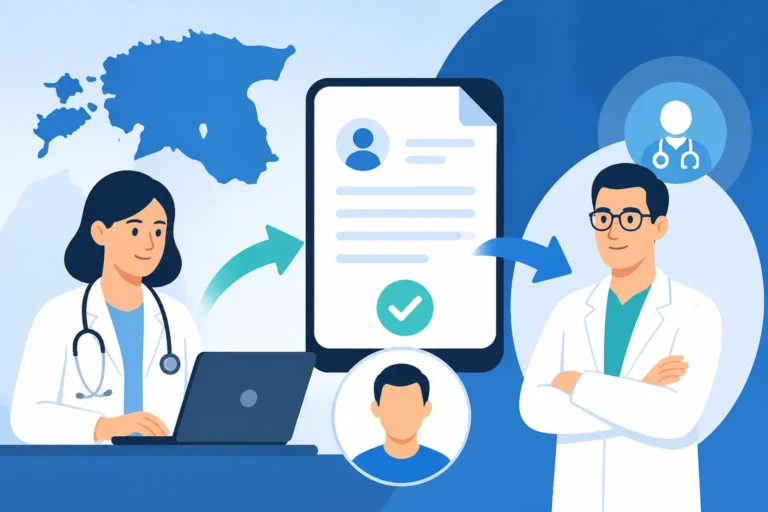
For most expats, the journey into the Tervisekassa begins with a signed employment contract. Once your employer registers your commencement of work in the Employment Register (Töötamise register), the information is automatically forwarded to the Health Insurance Fund. However, there is a catch that often catches newcomers off guard: the "waiting period." Your coverage doesn't usually start on minute one of your first day. There is typically a 14-day buffer from the entry in the register before your insurance becomes active. During this fortnight, you are effectively in a "blind spot," which is why many veterans recommend keeping your SafetyWing coverage active until you’ve officially cleared those first two weeks of employment.
If you are a freelancer or a solo entrepreneur, the path is slightly different. You will likely be operating as an FIE (Sole Proprietor) or through a private limited company (OÜ). For an FIE, the registration happens through the Tax and Customs Board. For those running an OÜ, you are technically an employee of your own company. You must pay yourself a salary that meets the minimum threshold to trigger health insurance coverage. This is a critical point: if you only take dividends and no salary, you do not have Tervisekassa coverage. You must be paying social tax on a monthly basis to remain in the system, and Understanding Health Insurance Through Social Tax in Estonia is vital for anyone planning to go the entrepreneurial route.
Covering your family is another layer of the puzzle. If you have moved with a spouse who is not working, or children, you need to ensure they are registered correctly. Children under 19 are covered by the state regardless of their parents' employment status, provided they are residents. However, a non-working spouse does not automatically "tag along" to your insurance. There are specific cases for "dependent spouses" who are within five years of retirement age or those caring for multiple children, but generally, an unemployed spouse may need to seek voluntary insurance or find a job to gain coverage. It’s a common point of stress, and many families choose to bridge this gap with private options while the trailing spouse looks for work.
Getting your paperwork in order is the first hurdle. To even exist in the eyes of the Tervisekassa, you must first have a residence permit and a registered address. This is where How to Get Your Isikukood (Personal Code) and Why It Matters for Healthcare becomes the most important step in your relocation. Without that 11-digit code, the system cannot link your tax payments to your medical rights. I remember the frustration of trying to book a simple check-up only to be told I didn't "exist" in the database yet because my address registration was still processing. Be patient, but be proactive; check your status on the state portal (eesti.ee) regularly during your first month.
The Digital Backbone: Digilugu and Your Health Data
One of the most impressive (and occasionally intimidating) aspects of the Estonian system is the Health Information System, known locally as Digilugu. This is a centralized digital health record that stores every diagnosis, test result, and hospital visit you’ve ever had in Estonia. When you walk into a doctor's office in Tartu, they can see the blood test results you had in Tallinn three years ago. This eliminates the need for carrying folders of physical records, but it means you need to get comfortable using your ID card or Mobile-ID to log in and see what’s going on with your health.
The patient portal (digilugu.ee) is where you will spend a lot of time. Here, you can see your medical history, book appointments through the national digital registration system, and even view who has accessed your data. It’s incredibly transparent. For an expat, this is a lifesaver because it allows you to use translation tools on your medical notes at home rather than trying to decode complex Estonian medical terminology while sitting in a cold doctor's office. Navigating Estonia's Digital Healthcare System: An Expat's Roadmap (2027) provides a deeper look into how to master this portal without losing your mind.
Then there is the Digiretsept, or digital prescription system. Gone are the days of paper slips that get lost in your bag. When a doctor prescribes medication, they upload it to the central system. You simply walk into any pharmacy (Apteek) in the country, hand over your ID card, and the pharmacist sees exactly what you need. It is remarkably efficient. However, it’s worth noting that the system only works if your insurance is active. If your coverage lapses—say, between jobs—your digital prescriptions might still be there, but you’ll have to pay the full price for the medication without the Tervisekassa subsidy.
Accessing specialists also happens through this digital backbone. In Estonia, you generally cannot just call up a cardiologist and book an appointment. You first need a "Saatekiri" (e-referral) from your family doctor. The family doctor uploads this referral to the system, and only then can you book a specialist slot. This "gatekeeper" model is designed to keep specialist queues moving for those who truly need them. If you’re used to direct access, this can feel like a bottleneck, but it’s the price of a coordinated system. Understanding How E-Referrals (Saatekiri) Work for Specialists in Estonia will save you a lot of circular phone calls to clinics that can't help you without that digital "permission slip."
| Feature | Tervisekassa (Public) | Private Insurance (e.g., SafetyWing) |
|---|---|---|
| Funding | 13% Social Tax via Employer | Monthly Premiums |
| Access | Requires Isikukood & Residency | Available to Tourists/Nomads |
| Wait Times | Can be long for non-urgent care | Usually much faster access |
| Primary Care | Via assigned Family Doctor (Perearst) | Choice of private clinics |
| Prescriptions | Subsidized digital prescriptions | Reimbursement based on policy |
| Coverage Area | Estonia + EHIC for EU emergencies | Global or Region-specific |
Practical Realities: Benefits and Coverage Limits
While the Tervisekassa is comprehensive, it is not "free" in the sense that everything is covered at 100%. For most specialist visits, there is a small "visit fee" (usually around 5 euros). If you are hospitalized, there is a daily "bed fee" (around 2.50 euros per day for up to 10 days). These fees are nominal for most, but they are there to prevent system abuse. The real coverage lies in the high-cost items: surgeries, chronic disease management, and emergency interventions. If you end up in the ICU, the Tervisekassa handles the thousands of euros in costs that would bankrupt a person in other parts of the world.
Dental care is the area where most expats feel the "sting" of the Estonian system. For adults, the Tervisekassa benefit is quite limited. As of current regulations, the state provides a small annual subsidy (around 60 euros) for dental care, and you must visit a dentist who has a specific contract with the Tervisekassa to use it. For specialized treatments like root canals or crowns, you will be paying mostly out of pocket. This is why many expats look for employer-provided health packages or private add-ons. Children, however, receive completely free dental care until the age of 19, which is a massive relief for parents. Understanding Dental Care and Adult Dental Benefits in Estonia is a must-read if you have a history of dental issues.
One of the most vital benefits of being in the system is the "Haigusleht" or sick leave compensation. If you get sick and cannot work, your doctor opens a digital sick leave certificate. In Estonia, the first few days of sickness are handled differently: typically, the first three days are unpaid (to discourage minor absenteeism), days 4 through 8 are paid by your employer, and from day 9 onwards, the Tervisekassa takes over. The compensation is usually 70% of your average salary. For expats living on a tight budget, this 30% drop in income can be significant, so it's wise to have an emergency fund. Understanding Sick Leave (Haigusleht) and Sick Pay in Estonia breaks down the math so you aren't surprised by a smaller paycheck after a bout of the flu.
Maternity care is another pillar where the system shines. If you are a resident with Tervisekassa coverage, prenatal care, the birth itself, and postnatal check-ups are all covered. Estonia also has one of the most generous parental leave systems in the world, though that is technically managed through the Social Insurance Board (Sotsiaalkindlustusamet) rather than the Tervisekassa. Still, the medical side of having a baby in Estonia is top-tier. Many expat mothers have been terrified of the language barrier but found the medical care at places like Pelgulinna Maternity Hospital to be world-class.
The Family Doctor (Perearst) System
The "Perearst" (Family Doctor) is the center of your medical universe in Estonia. Everyone who has health insurance is supposed to be on the list of a specific family doctor. This doctor is your first point of contact for everything from a sore throat to a mental health crisis. The challenge for many expats is that family doctor lists are often full, especially in popular Tallinn neighborhoods like Kalamaja or Kesklinn. You have the right to choose your doctor, but the doctor has the right to refuse you if you don't live in their service area or if their list is at its maximum capacity of 2,000 patients.
Finding a doctor who speaks fluent English can be another hurdle. While most younger doctors in Estonia speak excellent English, some of the older generation or those in smaller towns may prefer Estonian or Russian. When searching for a doctor, it is perfectly acceptable to call the clinic and ask if they are accepting new patients and if they have English-speaking staff. If you are struggling, The Expat Guide to Finding a Family Doctor (Perearst) in Estonia offers a step-by-step strategy for getting on a list in the major cities.
The "Gatekeeper" function of the Perearst cannot be overstated. If you want to see a gynecologist or an ophthalmologist, you can actually book those without a referral, as they are considered "direct access" specialists. But for almost anything else—a neurologist, a cardiologist, or a physical therapist—you must go through your family doctor. This can be frustrating if you "know" what you need, but the system is designed to ensure the family doctor handles the 80% of issues that don't actually require a high-level specialist, keeping the specialist queues shorter for everyone else.
If you are a digital nomad or a new arrival who hasn't yet secured a family doctor, you aren't completely stranded. There is a 24/7 Family Doctor Advice Line (1220). You can call this number to get medical advice in English (though you might have to wait for an English-speaking operator). They can't give you a referral or a prescription, but they can tell you if your symptoms warrant a trip to the ER. For those still waiting on their residency or Tervisekassa activation, having a SafetyWing policy is the best way to ensure you can visit a private GP if the 1220 line suggests you need an in-person exam.
Specialist Care and Hospitalization
Once you have your referral, the next challenge is the waiting list. For non-urgent specialist care in the public system, it is not uncommon to see wait times of several months. The Tervisekassa has "maximum" wait time targets, but in reality, high demand for certain specialists can push these limits. The trick is to use the national digital registration system to check all available clinics, not just the one closest to your house. Sometimes a hospital in Tartu or Pärnu has an opening next week, while Tallinn is booked for three months. If you are willing to travel, you can get seen much faster.
When it comes to the costs of specialist visits and hospital stays, the transparency is refreshing. You will usually receive a small invoice via email or through your internet bank. These must be paid, but they are rarely more than the cost of a nice lunch. If you require surgery, the Tervisekassa covers the procedure, the anesthesia, the medical supplies, and the recovery room. Compared to the complex billing cycles of many Western countries, the Estonian system is incredibly straightforward. The Cost of Healthcare in Estonia: A Complete Breakdown for Foreigners (2026) is an excellent resource for visualizing these minor out-of-pocket expenses.
Emergency care is the one area where the rules are a bit looser. If your life is in danger, you go to the EMO (Erakorralise meditsiini osakond – Emergency Medicine Department). In a true emergency, they will treat you regardless of your insurance status. However, if you show up at the EMO with a minor issue that should have been handled by a family doctor, be prepared for two things: a very long wait (as they prioritize life-threatening cases) and a potential bill if it’s determined not to be an emergency. For tourists or those without insurance, Emergency Medical Care in Estonia: What Every Expat Needs to Know explains how to handle these high-stress situations.
The physical state of Estonian hospitals is generally excellent. Massive investments in infrastructure over the last decade have resulted in facilities like the North Estonia Medical Centre (PERH) being state-of-the-art. As an expat, the biggest challenge isn't the technology, but the communication style. Estonian medical culture can be very direct and efficient, which some may interpret as "cold." Don't take it personally; the doctors are often working through high patient volumes and value precision over small talk. Knowing what to expect can make a hospital stay much less jarring.
Bridging the Gaps: Private Insurance and Supplementary Coverage
Is the Tervisekassa enough? For many, the answer is yes. But for expats who value speed, convenience, and English-speaking service, private insurance is a popular "top-up." Private clinics like Confido or Fertilitas offer a different experience: shorter waiting times, plush waiting rooms, and guaranteed English-speaking staff. These clinics do accept Tervisekassa for some services if they have a contract, but for many things, they operate on a private-pay basis. This is where having supplementary insurance becomes a strategic move.
The transition period is the most dangerous time for a new expat. Between leaving your home country and getting your Estonian ID card and employment registered, you are effectively uninsured. Many people assume that "the state will cover me" only to be hit with a 400-euro bill for an emergency dental extraction in their first week. This is exactly why SafetyWing is so popular in the Tallinn tech scene; it provides that vital bridge until the Tervisekassa "Solidarity" kicks in. How Long Does It Take to Get Health Insurance as a New Resident in Estonia? will help you map out your personal timeline.
Choosing a private insurer in Estonia can be a bit tricky because the market for local private medical insurance is still developing. Most locals rely solely on the public system. However, more and more companies are offering private health packages as a perk to attract talent. These packages often cover things like mental health therapy, massage, and dental care—the very things the Tervisekassa is "light" on. If you are negotiating a job offer, ask specifically about "Health Insurance" (Tervisekindlustus) as an additional benefit beyond the mandatory social tax.
For those who are self-employed or on a Digital Nomad Visa, you are in a unique position. You may not be paying social tax into the Estonian system at all. In this case, you are required by law to have your own private health insurance to maintain your visa. In these scenarios, the Tervisekassa isn't even an option, and Is Private Health Insurance Worth It for Expats in Estonia? becomes a central question for your financial planning. You need a policy that meets the Schengen requirements but also provides actual, usable coverage in the high-quality private clinics across Tallinn and Tartu.
Traveling and Moving: EHIC and Cross-Border Healthcare
Once you are in the Tervisekassa system, you also gain rights across the European Union. You should immediately apply for the European Health Insurance Card (EHIC), known in Estonian as the Euroopa ravikindlustuskaart. This card allows you to access state-provided healthcare during a temporary stay in any of the EU countries, plus Iceland, Liechtenstein, Norway, and Switzerland, under the same conditions and at the same cost as people insured in that country. It’s free to order through the eesti.ee portal and is a vital travel companion.
However, the EHIC is not a replacement for travel insurance. It only covers "necessary" medical care—things that can't wait until you get back to Estonia. It won't pay for mountain rescue if you break your leg skiing in the Alps, and it won't fly you home if you need long-term care. This is a common misconception that leads to massive bills. Even with an EHIC, veteran expats often keep a basic SafetyWing plan for their travels to cover the "non-medical" emergencies like repatriation or trip cancellation that the Tervisekassa simply isn't designed to handle.
If you are working remotely for a company outside of Estonia while living here, your healthcare situation gets complicated. To be in the Tervisekassa, someone needs to be paying social tax to the Estonian Tax Board. If your foreign employer doesn't have an Estonian entity, you might need to register as an FIE or set up an OÜ to "employ" yourself and pay those taxes. Otherwise, you will find yourself living in Estonia as a resident but with no access to the public health system. Can I Keep My Estonian Health Insurance If I Work Remotely for a Foreign Company? explores this "nomad trap" in detail.
Finally, for those looking at the long term, retiring in Estonia brings its own set of rules. If you receive a pension from another EU country, there are forms (like the S1) that allow you to transfer your healthcare rights to Estonia. The Tervisekassa will then treat you as if you were an Estonian pensioner. For non-EU retirees, the path is much steeper and usually involves mandatory private insurance. No matter where you are in your journey, the Tervisekassa is a robust system, but like everything in this digital nation, it works best when you understand the code behind it.
Disclaimer
The information provided in this guide is for general informational purposes only and does not constitute legal or professional medical advice. While we strive to keep the information up to date and correct, healthcare regulations in Estonia can change. Always consult with the Estonian Health Insurance Fund (Tervisekassa) or a qualified legal professional regarding your specific situation.