How Do I Set Up Internet and Mobile Service in Estonia?
The moment you land in Estonia, one of the first things you’ll desperately crave – after maybe a hot shower and a decent meal – is connectivity. You need to tell your family you’ve arrived, navigate to your new place, and probably order some takeaway. But diving into a new country's telecom landscape, often with a language barrier, can feel like trying to untangle a bowl of spaghetti. This guide is here to untangle that for you, offering a clear roadmap to getting online and staying connected, whether you're here for a short visit or settling in for the long haul.
Getting Connected Right Away: Mobile Options for New Arrivals
When you first arrive, the priority is often instant connectivity. You might not have your Estonian personal code (Isikukood) yet, or a local bank account, which can complicate getting a long-term contract. Thankfully, Estonia offers some excellent immediate solutions to keep you in touch from day one.
Prepaid SIM Cards: The Easy Start
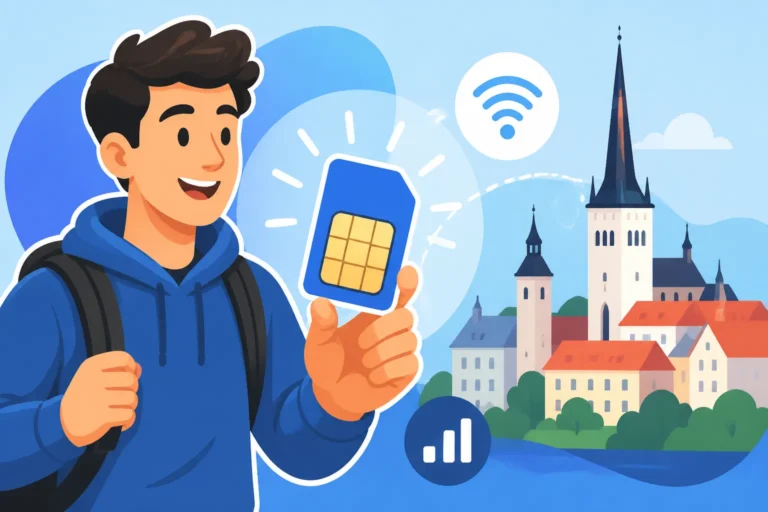
Prepaid SIM cards, or kõnekaart in Estonian, are your best friend for immediate mobile service. They are readily available, easy to activate, and don't require any long-term commitments or personal documents beyond perhaps showing your ID if you're buying it from a dedicated provider store.
You can pick up a prepaid SIM at numerous locations:
- R-Kiosks: These ubiquitous convenience stores are found at bus stations, ferry terminals, shopping centres, and street corners across Estonia. They're probably the easiest spot.
- Supermarkets: Major chains like Rimi, Selver, Prisma, and Maxima often have SIM cards near the checkout or at their customer service desks.
- Telecom Provider Stores: Telia, Elisa, and Tele2 have physical stores in most major towns (Tallinn, Tartu, Pärnu, Narva). While you might queue, staff here can often help with activation if you hit a snag.
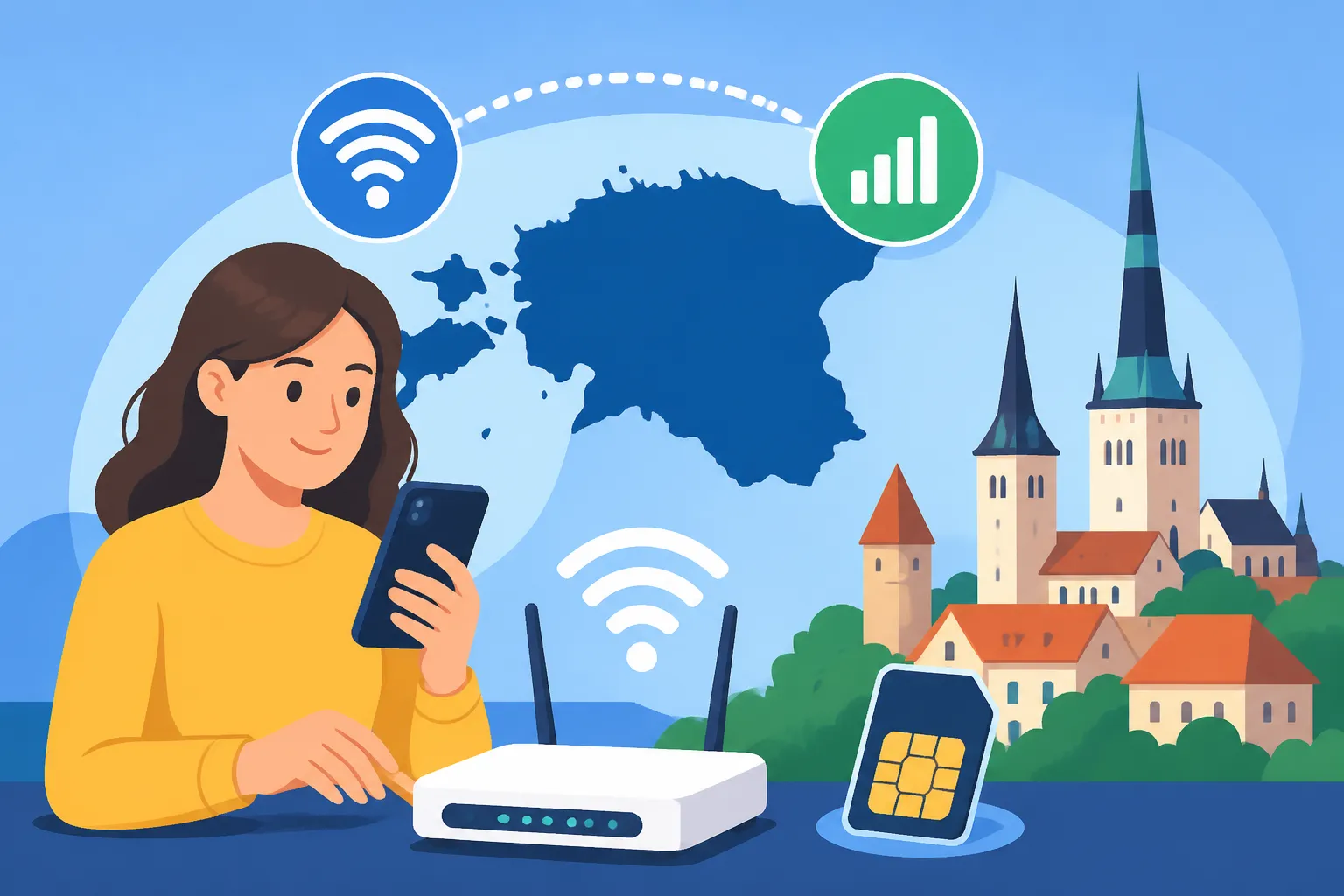
The main providers offering prepaid options are Telia, Elisa, and Tele2, each with their own sub-brands for prepaid customers (e.g., Telia's Super, Elisa's Zen, Tele2's Smart). You buy the SIM pack, which usually comes with a small pre-loaded balance or a starter package of data and calls. To top it up, you can buy scratch cards at the same locations or do it online using a foreign credit card initially. The activation process usually involves simply inserting the SIM, sometimes sending a specific SMS, and then you're good to go. It’s wonderfully straightforward compared to other countries.
eSIMs and International Roaming: Modern Solutions
For those who travel light and prefer digital solutions, eSIMs are a game-changer. An eSIM allows you to activate a mobile plan digitally without needing a physical SIM card, provided your phone supports it. This is especially useful for short-term visits or to tide you over until you get a local physical SIM. Companies like Airalo offer various eSIM packages for Estonia and the wider Baltic region, allowing you to buy data plans online before you even arrive and activate them instantly. It bypasses the need to find a store and deal with cash or language on arrival.
While convenient, it's worth noting that international roaming with your home country's provider should be a last resort. Unless you have an exceptionally good plan (e.g., an EU-based one that includes Estonia at no extra cost), roaming charges can quickly become exorbitant. Think of it as a brief emergency measure, not a sustainable solution for your stay. You’ll want to get that local SIM or eSIM quickly to avoid those nasty bill surprises.
Choosing a Permanent Mobile Plan: Estonian Providers & Contracts
Once you're settled and have your Estonian ID and bank account sorted, you'll likely want a more permanent mobile plan. This usually means a post-paid contract, which offers better value, more flexibility, and often comes bundled with other services.
Major Mobile Operators in Estonia
Estonia's mobile market is dominated by three main players:
- Telia Estonia: Historically the state-owned telecom giant, Telia is often seen as the premium provider, offering extensive network coverage (especially in rural areas) and a wide range of services, including home internet and TV. Their customer service is generally robust, and they usually have good English support.
- Elisa Estonia: A strong competitor, Elisa often offers competitive pricing and good service quality, particularly in urban centres. They also provide home internet and TV services, and frequently bundle them with mobile plans.
- Tele2 Estonia: Known for its aggressive pricing, Tele2 often appeals to budget-conscious customers. While their network coverage is solid, particularly in populated areas, it might not be as extensive as Telia's in the most remote parts of the country.
All three providers offer excellent 4G coverage, and 5G networks are rapidly expanding in Tallinn, Tartu, and other larger cities, offering blistering speeds. When choosing, consider where you'll be spending most of your time. If you’re mostly in Tallinn, any of them will be fine, but if you’re venturing to more remote islands or countryside, Telia might have a slight edge.
Here's a quick comparison of the major mobile providers:
| Provider | General Perception | Network Coverage | English Support | Contract Types | Key Offerings |
|---|---|---|---|---|---|
| Telia | Premium, reliable | Excellent, wide | Good | Post-paid, Prepaid (Super) | Mobile, Home Internet, TV, Smart Home |
| Elisa | Competitive, good value | Strong, urban focus | Decent | Post-paid, Prepaid (Zen) | Mobile, Home Internet, TV |
| Tele2 | Budget-friendly | Good, competitive | Available | Post-paid, Prepaid (Smart) | Mobile, Home Internet, sometimes TV |
Contract Types and What to Consider
Moving from prepaid to a post-paid contract (leping) opens up more options and typically offers better value for money. For a post-paid plan, you'll generally need:
- Your Isikukood (personal identification code): This is crucial for any official contract in Estonia, including mobile and internet. If you haven't got yours yet, you'll want to read up on How to Get Your Isikukood (Personal Code) and Why It Matters for Healthcare.
- An Estonian bank account: Direct debits are the standard for bill payments. You can learn more about this in How to Open a Bank Account at an Estonian Bank as a Foreigner.
- A valid ID (e.g., passport, Estonian ID card, residence permit).
Most contracts are for 12 or 24 months, offering better monthly rates than no-commitment plans. You’ll choose a plan based on your data needs, call minutes, and SMS allowances. Unlimited data plans are common and often very affordable here. Many providers also offer bundles that include mobile, home internet, and TV, which can save you money if you need all three. If you’re moving your whole family, family plans can also be a cost-effective option.
If you already have an Estonian number from a prepaid SIM, you can usually port it over to your new contract seamlessly. This process typically takes a few business days and is handled by your new provider.
Documents and Process for Contracted Plans
Getting a contracted plan is generally straightforward once you have the necessary documentation. Your Isikukood is the absolute cornerstone, as it allows the providers to verify your identity and creditworthiness. Your residence permit or even your e-Residency card might be accepted by some providers for initial identification, but for a full contract, the Isikukood linked to your registered place of residence in the Population Register is usually essential. This is a good time to ensure you have indeed registered your address, which you can read about in How to Register Your Place of Residence (Elukoht) in the Population Register.
The easiest way to get a contract is to visit a physical store of your chosen provider. Bring your passport/ID card, your residence permit (if applicable), and your Isikukood. Staff can guide you through the available plans, explain the terms in English (most major stores in Tallinn and Tartu will have English-speaking staff), and help you sign up. Online applications are possible, especially for Estonian speakers or those comfortable with digital signing via an ID-card or Mobile-ID. However, for your first contract, an in-person visit can clarify any doubts and ensure you get the right plan.
Setting Up Home Internet: Fibre, Cable, and Wireless Solutions
Beyond your mobile phone, reliable home internet is non-negotiable for most expats. Whether you’re working remotely, streaming movies, or just keeping in touch, Estonia offers a range of fast and dependable internet options.
Types of Home Internet Connections
Estonia prides itself on being a digitally advanced nation, and its internet infrastructure reflects that. You'll generally find these types of connections:
- Fibre Optic (kiudoptika): This is the gold standard, offering the fastest and most stable internet speeds. Fibre is widely available in apartment buildings in cities like Tallinn, Tartu, and Pärnu, and its rollout continues to expand into smaller towns and even some rural areas. If fibre is available at your address, it's usually the best choice for speed and reliability.
- Cable Internet (kaabelinternet): Still a very common and reliable option, particularly in older apartment buildings. Cable internet offers good speeds that are more than sufficient for most households. Providers like Elisa (which acquired Starman, a major cable provider) and Telia often utilise existing cable infrastructure.
- Mobile Home Internet (mobiilne internet koju): If you live in an area where fixed-line fibre or cable isn't yet available, or if you prefer flexibility, mobile home internet uses 4G or 5G networks via a special router. It’s essentially a powerful mobile data plan designed for home use. While speeds can be very good, they can vary based on network congestion and signal strength in your specific location. This can be a great temporary solution or for those in more remote areas.
- Rural Challenges and Satellite Options: For those living in truly remote parts of Estonia, fixed-line options can be limited. Mobile home internet is often the primary choice. However, satellite internet services, such as Starlink, are also becoming viable alternatives, offering high-speed connectivity even in the most secluded locations, albeit at a higher cost.
Major Home Internet Providers and Packages
The same main players dominate the home internet market: Telia, Elisa, and Tele2. They offer a variety of packages, often bundled with TV services.
- Telia: Offers a comprehensive range of fibre and mobile internet solutions. They have various speed tiers, from basic to lightning-fast gigabit connections. Telia often has attractive bundles that include internet, TV channels, and mobile phone contracts, making it a convenient one-stop shop.
- Elisa: Strong in both fibre and cable internet, Elisa also provides competitive mobile home internet solutions. Like Telia, they often have appealing package deals that combine internet and TV.
- Tele2: While primarily known for mobile, Tele2 also offers home internet, often leveraging fibre connections or providing mobile internet solutions. Their focus tends to be on competitive pricing.
When choosing a package, consider your actual needs. Do you need ultra-fast speeds for gaming or heavy streaming, or is a standard connection sufficient? Check if installation fees apply (they often do for fibre), what the contract length is, and whether you need to rent or buy a router from the provider. Sometimes, you can use your own compatible router, which might save you money in the long run.
The Home Internet Setup Process
Setting up home internet in Estonia typically involves these steps:
- Check Availability: Start by checking which providers and connection types are available at your specific address. Most provider websites have an address checker tool. This is a crucial first step, as not all connection types are available everywhere.
- Order Service: You can order online (if you can navigate the Estonian interface and have an ID-card for digital signing) or, more commonly for new expats, by visiting a provider's physical store. Explain your needs, and they will help you choose a package and schedule an installation.
- Installation Appointment: For fibre or cable internet, a technician will need to visit your home to install the necessary equipment. This usually requires you to be home during a specific time window. Ensure you understand the installation date and time, and if there are any language barriers, consider bringing an Estonian-speaking friend or using a translation app.
- Activation: Once installed, the technician will usually activate your service and ensure everything is working. You'll then be ready to connect your devices.
- Moving or Cancelling: If you move, you’ll typically need to inform your provider to transfer your service to your new address or cancel your contract. Be aware of any early termination fees if you cancel before your contract term is up. You’ll want to review your full utility setup in Estonia by checking out The Expat Guide to Setting Up Utilities in Estonia.
Navigating the Digital Landscape: Essential Tips for Expats
Estonia is renowned for its e-governance and digital services. Understanding how to navigate this ecosystem is key to a smooth experience, not just for internet and mobile, but for life in general.
Understanding Estonian Digital Services
Once you have your Isikukood, a functioning Estonian bank account, and reliable internet access, you'll unlock a world of digital services. The portal eesti.ee is your gateway to nearly all government services and information. You can use your Estonian ID-card, Mobile-ID, or Smart-ID to log in and access everything from checking your health records (Digilugu) to managing your taxes. This interconnected digital system means that many tasks you might do in person elsewhere can be done from your couch in Estonia. It’s incredibly efficient but can take a bit of getting used to. For a deeper dive into this, check out Understanding eesti.ee and Digital Government Services in Estonia or even Navigating Estonia's Digital Healthcare System: An Expat's Roadmap (2027).
Language Barriers and Customer Support
While Estonia is increasingly international, especially in Tallinn and Tartu, Estonian remains the official language. Most major telecom providers offer customer support in English, particularly via email, chat, or in their larger physical stores. However, for smaller issues or when calling a general helpline, you might encounter an Estonian-only speaker. Don't be afraid to politely ask if they speak English ("Kas te räägite inglise keelt?"). Many Estonians, especially younger generations, do. Having a translation app handy can also be a lifesaver. In-person visits to provider stores are often best for complex issues where nuances might be lost in translation. For broader support with moving, relocation services through platforms like Sirelo sometimes offer assistance in navigating these initial administrative hurdles.
Managing Bills and Payments
Estonian digital payment systems are highly efficient. Most telecom and internet bills are handled via e-arve (e-invoice) through your online banking portal. You can often set up a direct debit (püsimakse) directly from your Estonian bank account, so bills are paid automatically each month. This is incredibly convenient and ensures you don’t miss payments. You'll be able to see all your invoices and payment history within your bank's online platform. Getting familiar with How to Set Up Online Banking and Payments in Estonia will make your life much easier in this regard. Keeping track of your monthly expenses, including utilities and telecom, is a vital part of understanding The Complete Guide to Cost of Living in Estonia for Expats (2026).
Transitioning to life in Estonia, especially the initial scramble for connectivity, can feel like a mini-adventure in itself. But with a bit of planning and understanding of the local options, you’ll be surfing the web and chatting with friends and family in no time. Welcome to the digital age, Estonian-style!
Disclaimer
The information provided in this guide is intended for general informational purposes only and does not constitute professional advice. While we strive to keep the information up-to-date and accurate, telecom plans, prices, and regulations in Estonia can change. We recommend verifying details with the respective service providers and official sources.