Understanding Kindergarten (Lasteaed) Enrolment in Estonia
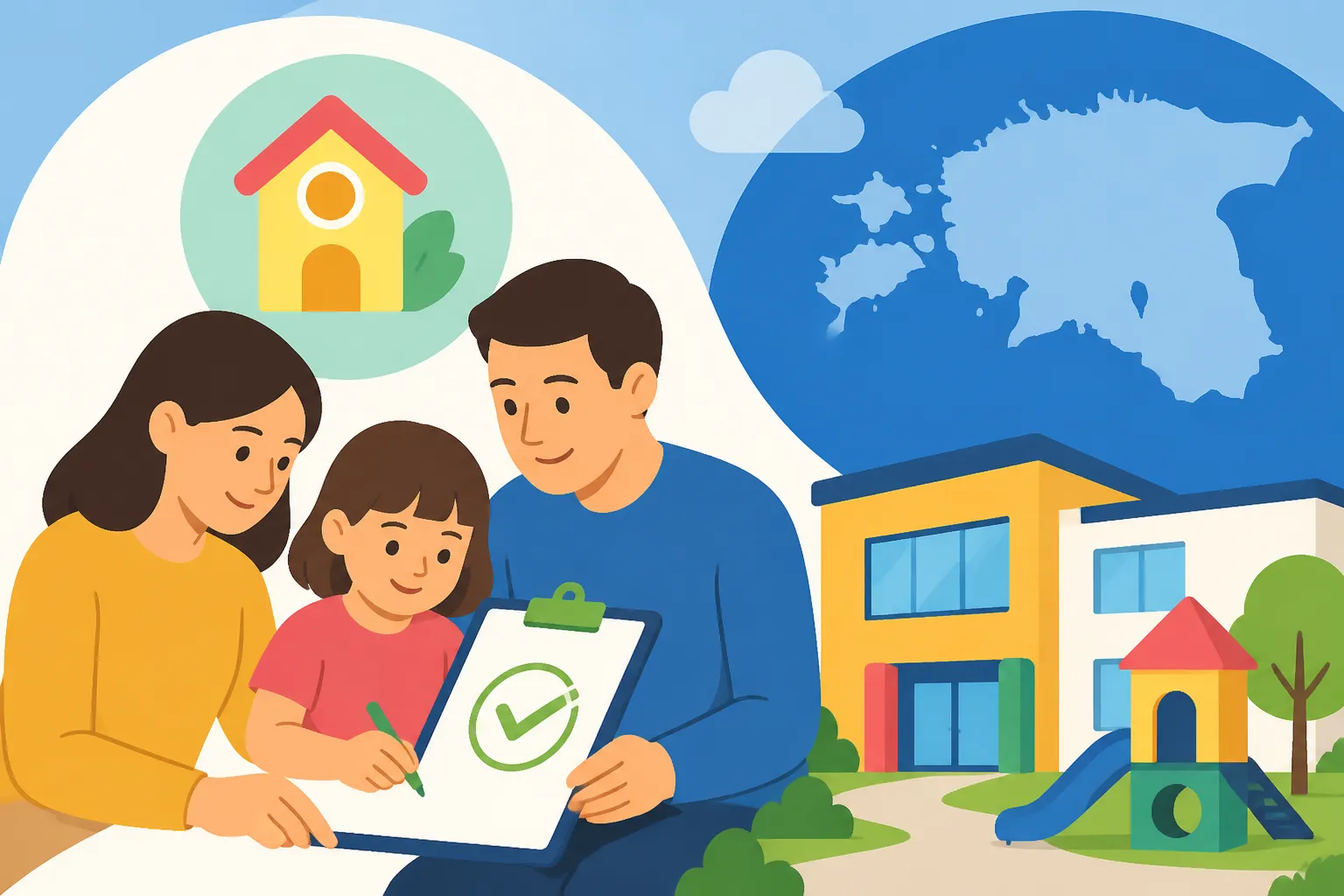
One of the first significant hurdles many expat families face when settling into a new life in Estonia is figuring out childcare. It’s not just about finding a safe place for your little ones; it’s about navigating an entirely new system, often in a foreign language, and understanding the nuances of local regulations. This guide is here to unravel the often-complex world of kindergarten (lasteaed) enrolment in Estonia, offering a comprehensive, realistic overview to help you through the process.
The Lasteaed Landscape: What to Expect from Estonian Kindergartens
When you first start looking into childcare options in Estonia, you'll quickly discover that the system is robust but has its own unique characteristics. The concept of lasteaed – literally "children's garden" – is deeply ingrained in Estonian society, emphasizing play, nature, and early development. However, for expat families, understanding the distinctions and managing expectations is crucial.
Public vs. Private Kindergartens: Key Differences for Expats
The fundamental choice you'll face is between public (municipal) and private kindergartens. This isn't just a matter of cost; it impacts language, availability, curriculum, and overall integration into the local community.
Public kindergartens are the backbone of Estonia's early education system. They are heavily subsidized by the local municipalities, making them a much more affordable option. The curriculum typically follows national guidelines, focusing on play-based learning, outdoor activities, and preparing children for primary school. A significant aspect, especially for expats, is that the language of instruction in nearly all public kindergartens is Estonian. While this offers excellent language immersion for your child, it can be a source of anxiety for parents and a challenge for children initially, particularly if they have no prior exposure to Estonian. Waiting lists are a stark reality, especially in larger cities like Tallinn and Tartu, for public places. It's not uncommon for spots to be allocated based on the child's age and the date of application, sometimes even requiring registration shortly after birth to secure a place years down the line. This can be incredibly frustrating for newcomers who haven't had that foresight. The allocation system is often managed through municipal online portals, which require an Estonian ID card or Mobile-ID for access.
Private kindergartens, on the other hand, offer more flexibility but come with a significantly higher price tag. They are not subsidized by the state to the same extent, meaning parents bear the brunt of the costs. The major draw for many expat families is the availability of international, English-speaking, or even other language-specific programs. You'll find institutions like the International School of Estonia or the British School of Tallinn, which often have their own early years programs. These private options might also offer different pedagogical approaches, such as Montessori or Waldorf, and often boast smaller group sizes and a wider range of extracurricular activities. The application process is usually direct to the institution, and while waiting lists can still exist, they are often shorter or more manageable than those for public spots. They are a godsend for families who move to Estonia with older toddlers and simply cannot afford to wait years for a public spot, or for those who prefer their children to continue in an English-speaking environment. However, the costs can be prohibitive for many, making it a decision that often comes down to budget versus immediate availability and language preference.
Age Ranges and Curriculum: What Will Your Child Learn?
Estonian kindergartens cater to various age groups, typically from 1.5 to 7 years old. The system generally divides children into two main categories: sõim (nursery groups) for the youngest children, usually from 1.5 to 3 years old, and lasteaed (kindergarten groups) for children aged 3 to 7.
The curriculum across both public and private institutions generally aligns with the national curriculum for preschool education, which emphasizes a holistic approach to child development. Learning is primarily play-based, recognizing that young children learn best through exploration, interaction, and hands-on experiences. A significant focus is placed on outdoor activities, regardless of the weather – prepare for your child to spend a lot of time outside in snowsuits and rain gear! This focus on nature and physical activity is one of the aspects many expat parents come to love about the Estonian system. Children also develop social skills, fine motor skills, and cognitive abilities through various creative arts, music, storytelling, and structured play sessions.
For older children in lasteaed groups, there’s an increasing emphasis on preparing them for the transition to primary school. This includes developing pre-reading and pre-math skills, enhancing independence, and fostering a sense of responsibility. In public kindergartens, this preparation is entirely in Estonian, which naturally accelerates language acquisition for non-native speakers. While challenging at first, most children adapt remarkably quickly, often becoming fluent in Estonian within a year or two, sometimes even surpassing their parents' language skills. This language immersion is often cited by expat parents as one of the most significant benefits, leading to genuine integration and cultural understanding for their children.
Eligibility and Documentation: Getting Your Ducks in a Row
Navigating the bureaucracy for kindergarten enrolment can feel like a labyrinth, especially in a new country. The key to success is understanding the eligibility criteria and having all your documents meticulously prepared. Estonia, with its advanced digital services, still requires specific paperwork, and missing even one detail can cause significant delays.
Who Can Apply? Residency, Isikukood, and Beyond
The most critical factor for enrolling your child in an Estonian kindergarten, particularly a public one, is having proper legal residency and an Estonian personal identification code, known as an Isikukood. Without an Isikukood and a registered place of residence in Estonia, your child simply cannot be entered into the municipal queue for public kindergarten. This is a common point of frustration for newly arrived expat families, as obtaining these can take time, pushing your child further down the already lengthy waiting lists.
To get an Isikukood, you typically need to register your place of residence in the Population Register. This process is fairly straightforward once you have a rental agreement or property ownership. For a comprehensive overview, you might want to look at "Registering Your Place of Residence in Estonia: The Complete Guide". Your child will also need an Isikukood, which is usually issued automatically upon registration of birth in Estonia or when they receive their residence permit. If you're coming from abroad, ensuring your whole family has their Isikukood is a priority; it's essential not just for healthcare but for any public service. Read more about "How to Get Your Isikukood (Personal Code) and Why It Matters for Healthcare" to understand its broader implications.
For private kindergartens, the requirements are often more flexible regarding residency and Isikukood, though they will still require proof of identity for both parent and child. Some private institutions might accept applications even if you're still in the process of obtaining your residence permit, making them a viable interim solution. However, even with private options, having your basic identification numbers squared away will streamline the process.
Essential Documents for Enrolment
Once you understand the eligibility, gathering the necessary documents is the next step. While requirements can vary slightly between municipalities and individual private institutions, there’s a core set of documents you should always have ready:
- Child's Birth Certificate: This is fundamental proof of your child's identity and age. If it's not in Estonian, English, or Russian, you'll likely need a certified translation.
- Child's Passport or ID Card: Essential for identity verification.
- Parent/Guardian's Passport or ID Card: To prove your identity and legal guardianship.
- Proof of Estonian Residency: This typically means an Estonian residence permit or EU citizen's right of residence registration, along with proof of your registered address in the Population Register. For EU citizens, registering your right of residence as an EU citizen in Estonia is a vital step.
- Isikukood (Personal Code): For both the child and at least one parent.
- Application Form: Usually provided by the municipality (for public) or the kindergarten itself (for private). These are often digital via an online portal.
- Health Records/Vaccination Card: Kindergartens will require proof of your child’s vaccination status and general health. It's vital to ensure your child's vaccinations meet Estonian standards. Your family doctor will enter this into the Digilugu (digital health record system), which kindergartens can access. Understanding Estonia's Digital Healthcare System: An Expat's Roadmap is useful here.
A crucial tip for expats: Always carry digital copies and physical copies of these documents. And if your original documents are not in Estonian or English, definitely get them officially translated and notarized before you start the application process. This will save you immense headaches down the line.
The Application Process: A Step-by-Step Walkthrough
Once you’ve got your documents in order, you’re ready to dive into the application process itself. This stage can feel a bit like a waiting game, particularly for public institutions, and it’s where a clear understanding of the system will really benefit you.
Public Kindergarten Application: The Waiting Game
Applying for a public kindergarten spot in Estonia usually happens through your local municipality’s online e-services portal. For example, Tallinn operates a user-friendly system, but it demands you have an Estonian ID card or Mobile-ID to log in. This is why getting your Isikukood and residence permit (or EU registration) sorted early is non-negotiable.
Here’s a general rundown of how it usually works:
- Access the Municipal Portal: Log in to your municipality's e-services with your Estonian ID.
- Submit an Application: You'll find a section for kindergarten applications. Here, you typically input your child's details, your contact information, and select your preferred kindergartens. Many municipalities allow you to list several options in order of preference. Be strategic here: consider proximity to home or work, and check the available groups (sõim or lasteaed).
- The Waiting List: Once submitted, your child is placed on a waiting list. This is where the "waiting game" truly begins. Spots are usually allocated based on the date of application and the child's age. Some municipalities might also have priority categories, such as children with special needs or siblings already attending the same kindergarten. The sheer volume of applications, especially in Tallinn and Tartu, means that waiting lists can be long. It’s not uncommon to hear of parents applying when their child is still an infant.
- Accepting an Offer: If a spot becomes available, you'll typically receive an offer via the portal or email. You'll have a limited time to accept the offer – usually a few days. If you don't accept, the spot will be offered to the next child on the list, and your child might lose their place in the queue for that particular kindergarten.
- Registration and Contract: Once you accept, you’ll proceed to formally register your child with the kindergarten and sign a contract. This usually involves visiting the kindergarten in person.
It’s easy to feel disheartened by the waiting lists, but applying as early as possible is your best bet. Many expat families apply months, or even a year, before they actually need the spot, understanding the competitive nature of the system. Remember, consistency is key; keep an eye on your application status through the portal.
Private Kindergarten Application: More Flexibility, Higher Costs
The application process for private kindergartens is generally more direct and often quicker, offering a welcome alternative for those facing long public waiting lists or seeking specific programs.
- Research and Selection: Start by researching private kindergartens in your desired area. Many have English-language websites, making it easier to compare their curricula, facilities, and fees. International schools such as the International School of Estonia or Tallinn European School often have dedicated early years programs.
- Direct Application: You typically apply directly to the private kindergarten of your choice. This usually involves filling out an online form on their website and submitting initial documents.
- Tours and Interviews: Many private kindergartens encourage or require prospective parents and children to visit the facility, meet the staff, and sometimes even have a brief informal interview. This is an excellent opportunity for you to ask questions, assess the environment, and see if it’s a good fit for your child.
- Offer and Enrolment: If accepted, you’ll receive an offer of admission. Once you accept and pay any required registration fees, you’ll sign a contract and complete the enrolment process. The contract will outline tuition fees, payment schedules, and other terms and conditions.
While private kindergartens offer more immediate solutions and often cater specifically to an international clientele, remember that the costs are significantly higher. This is a trade-off many expat families are willing to make for the ease of access and often, the English language environment. For a broader look at educational choices and their costs, you might find "Understanding International Schools and Their Costs in Estonia" insightful.
Costs and Financial Considerations: What You'll Actually Pay
Money matters, especially when moving to a new country and adjusting to a new cost of living. Understanding the financial implications of kindergarten in Estonia is crucial for budgeting and making informed decisions for your family. The costs can vary wildly between public and private institutions, and even between different municipalities.
Public Kindergarten Fees and Subsidies
The good news about public kindergartens is their affordability. Unlike many countries where childcare can be an enormous monthly expense, the Estonian state heavily subsidizes public lasteaed places. However, it's not entirely free, and you'll still need to factor in some recurring costs.
The main costs for public kindergarten typically include:
- Parental Contribution Fee (kohatasu): This is a relatively small monthly fee, usually set as a percentage of the minimum wage. It varies by municipality but is generally quite low compared to the actual cost of running the kindergarten. For instance, in Tallinn, the fee is generally capped at 20% of the minimum wage, which translates to around €170-€180 per month as of 2024.
- Food Costs (toiduraha): This is a separate charge for meals provided during the day (breakfast, lunch, and often an afternoon snack). This fee is usually calculated per day and can range from €2.50 to €4.00 per day, depending on the municipality and the kindergarten itself.
- Additional Fees: Occasionally, there might be small additional fees for specific materials, excursions, or optional extracurricular activities (e.g., music lessons, sports clubs) offered by the kindergarten. These are usually optional and communicated clearly.
Many municipalities also offer subsidies or discounts for low-income families, families with many children, or for children with special needs. It's always worth checking with your local municipal social welfare department to see if you are eligible for any reductions in the parental contribution or food costs. For example, Tallinn offers a 100% exemption from the parental contribution for the third and subsequent children if all children attend a municipal kindergarten. These subsidies are designed to make early education accessible to all residents, but you often need to actively apply for them.
Overall, a public kindergarten spot, including food, might cost an expat family roughly €200-€300 per month, which is incredibly reasonable compared to international standards. However, this reasonable cost is offset by the significant challenge of securing a spot due to high demand and long waiting lists.
Private Kindergarten Expenses: A Full Breakdown
Private kindergartens, while offering more immediate access and often a wider range of services (including international language programs), come with a considerably higher financial commitment. This is the reality for many expat families who either cannot wait for a public spot or prefer a specific educational environment.
Here’s a breakdown of typical private kindergarten expenses:
- Monthly Tuition Fees: This is the largest component. Private kindergarten fees can range from €400 to €1,000+ per month, depending on the institution, its location, the services offered (e.g., language programs, extended hours), and its reputation. International schools often sit at the higher end of this spectrum.
- Registration/Admission Fees: Many private kindergartens charge a one-time, non-refundable registration or admission fee. This can range from €100 to €500 or more and secures your child's place.
- Material Fees: Separate from tuition, some private institutions may charge an annual or semi-annual fee for educational materials, art supplies, and other consumables.
- Food Costs: Similar to public kindergartens, food is usually an additional charge, often included in the overall monthly fee or billed separately.
- Extracurricular Activities: While private kindergartens often offer a broader array of activities, some specialized ones might incur extra costs.
- Deposit: Some private kindergartens might require a security deposit, typically equivalent to one month's tuition, which is refundable when your child leaves, provided all conditions are met.
Comparing private kindergarten costs is essential. You'll find a range of options, and it's worth weighing the benefits against the price tag. Sometimes, the extra cost buys you flexibility, immediate enrolment, and a language environment that eases your child's transition. It is definitely a significant part of "The Complete Guide to Cost of Living in Estonia for Expats (2026)". While the expenses can be substantial, for many expat families, it's a necessary investment for their child's early education and a practical solution to the public system's capacity issues. For specific financial breakdowns of childcare, including kindergarten, it's worth checking "How Much Does Childcare Cost in Estonia?".
| Feature | Public (Munitsipaallasteaed) | Private (Eralasteaed) |
|---|---|---|
| Cost (Monthly) | Low (€200-€300, including food) | High (€400-€1000+, plus additional fees) |
| Language | Predominantly Estonian immersion | Often English, other international languages, or bilingual |
| Application | Via municipal e-portal; requires Estonian ID/Mobile-ID | Direct to kindergarten; often online form, potentially interviews |
| Availability | High demand, very long waiting lists (apply at birth recommended) | More flexible, shorter waiting lists (though still exist for popular ones) |
| Curriculum Focus | National curriculum, play-based, strong outdoor emphasis | Varied (Montessori, Waldorf, IPC, etc.), often diverse extracurriculars |
| Eligibility | Requires Isikukood and registered residence | More flexible residency requirements, Isikukood usually still preferred |
| Subsidies | Municipal subsidies available for eligible families | Generally no direct government subsidies for parents |
| Size & Ratio | Larger group sizes are common | Often smaller group sizes, better adult-to-child ratios |
Navigating the System: Practical Tips and Expat Realities
Moving to Estonia with children, especially young ones, means confronting a range of practical challenges. Beyond the paperwork and waiting lists, you'll need strategies to help your child adapt and to navigate the daily realities of the Estonian kindergarten system.
Language Barriers and Integration: Supporting Your Child
One of the biggest concerns for expat parents is the language barrier. In public kindergartens, your child will be immersed in Estonian from day one. While children are incredibly resilient and often pick up languages faster than adults, the initial period can be tough. There might be tears, frustration, and a temporary regression in communication at home as they process so much new information.
Here’s how to support your child and yourself through this:
- Patience and Empathy: Understand that this is a huge adjustment. Validate their feelings of confusion or sadness. Reassure them that it's okay to feel overwhelmed.
- Basic Estonian Phrases: Try to learn some simple Estonian phrases yourself. Even "Tere!" (hello), "Aitäh!" (thank you), and "Nägemist!" (goodbye) can help your child feel a little more connected to their new environment and shows them you're trying too.
- Visual Aids: Before starting kindergarten, use books, flashcards, or apps with basic Estonian words, especially related to kindergarten activities (e.g., playing, eating, sleeping).
- Communication with Teachers: Most kindergarten teachers, especially younger ones, will have some level of English. Don't be afraid to use translation apps on your phone to communicate important information or to ask about your child's day. Estonian teachers are generally very supportive and understanding of the challenges expat children face. Building a good relationship with them is crucial.
- Peer Support: Connect with other expat parents who have gone through the same experience. Online groups and local expat communities are invaluable for sharing tips, frustrations, and successes.
- Supplementary Language Support: If your child is struggling significantly, consider supplementing their Estonian learning with fun, informal activities at home or through private tutors if available. However, for most children, natural immersion is incredibly effective.
For many, the initial hurdle quickly gives way to the joy of seeing their child thrive and become genuinely bilingual. The experience of language immersion in an Estonian public kindergarten is often praised for its effectiveness in helping children integrate not just linguistically, but culturally.
What to Do While You Wait: Alternative Childcare Options
Given the reality of long waiting lists for public kindergartens, especially for younger children or if you've arrived in Estonia unexpectedly, you'll likely need interim childcare solutions. This is where foresight and a bit of creativity come into play.
- Private Kindergarten (Short-Term): This is often the most straightforward and reliable alternative. Even if your ultimate goal is a public spot, enrolling your child in a private kindergarten for a year or two can bridge the gap. This ensures your child has a structured environment, social interaction, and potentially a head start on language, whether it's English or even early Estonian exposure. Yes, it's more expensive, but it offers peace of mind and immediate availability.
- Nannies and Au Pairs: For very young children or those who need a more personalized approach, hiring a nanny or an au pair is an option. While a nanny can be quite expensive, an au pair (often from another EU country) can offer cultural exchange and childcare at a more modest cost, usually in exchange for room, board, and a small allowance. Websites and expat groups are good places to search for these services.
- Family Daycare (Lapsehoid): Some individuals or small groups offer family daycare services from their homes. These are usually smaller, more intimate settings, often run by experienced childcare providers. They might be a more affordable alternative to full-fledged private kindergartens and can be found through local community networks or online.
- Playgroups and Parent-Child Groups: While not full-time childcare, attending local playgroups (mängugrupid) or parent-child activity groups can provide valuable social interaction for your child and a chance for you to connect with other parents, both expat and local. These are often organized by community centers, libraries, or even private initiatives. They're a great way to ease into the local culture.
- Connecting with Expat Families: Building a network of expat friends with children of similar ages can open doors to informal childcare sharing arrangements, playdates, and mutual support during the waiting period. When planning your move, consider services like Sirelo to help you relocate efficiently, so you have more time to focus on these crucial family arrangements. And once you're on the ground, having reliable connectivity with an eSIM from Airalo can ensure you stay in touch with potential caregivers and local resources right from the start.
Remember, the Estonian system, while digitally advanced and efficient in many respects, still operates on local rules and realities, particularly when it comes to highly sought-after public services like kindergarten. Planning ahead, being persistent, and exploring all available options will make your experience significantly smoother.
Disclaimer
Please note that the information provided in this guide is intended for general informational purposes only and is subject to change. While we strive to provide accurate and up-to-date information, regulations and procedures in Estonia can evolve. It is always recommended to verify specific requirements with the relevant Estonian authorities, such as local municipalities (e.g., Tallinn City Education Department), the Police and Border Guard Board (PPA), or the specific kindergarten institutions, before making any decisions. This guide does not constitute legal, financial, or professional advice.