How to Get Your Isikukood (Personal Code) and Why It Matters for Healthcare
Many expats arrive in Tallinn or Tartu with high hopes of experiencing the world’s most advanced digital society, only to be stopped at the very first hurdle: the lack of an 11-digit number. Without this code, you cannot easily rent an apartment, sign a mobile contract, or, most importantly, access the healthcare system. This guide walks you through exactly how to obtain your Isikukood and why it is the indispensable master key to your health and well-being in Estonia.
The Anatomy of the Estonian Personal Code
When you first hear the word Isikukood, it might sound like just another piece of Eastern European bureaucracy. In reality, it is the foundation of your entire digital identity. Estonia does not operate with a patchwork of different numbers for tax, social security, and health; instead, everything is tied to this single 11-digit string. If you do not have one, you essentially do not exist in the eyes of the Estonian state's digital servers.
Understanding the 11-Digit Structure
The Isikukood is not a random sequence of numbers. It follows a very specific logic that tells a story about the bearer. The first digit represents your gender and the century you were born in (for example, 3 for a man born in the 20th century, 4 for a woman born in the 20th century, and 5 or 6 for those born in the 21st century). The next six digits are your date of birth in the YYMMDD format. The final four digits consist of a three-digit sequence number based on the order of registration for that day and a final checksum digit.
Knowing this structure helps you verify that your documents are correct. I remember a fellow expat who spent three weeks trying to fix a pharmacy error because a clerk had mistyped their birth year in a temporary system. If you understand how the code works, you can spot these errors instantly before they ripple through the system.
Why Your Isikukood is Not an ID Card
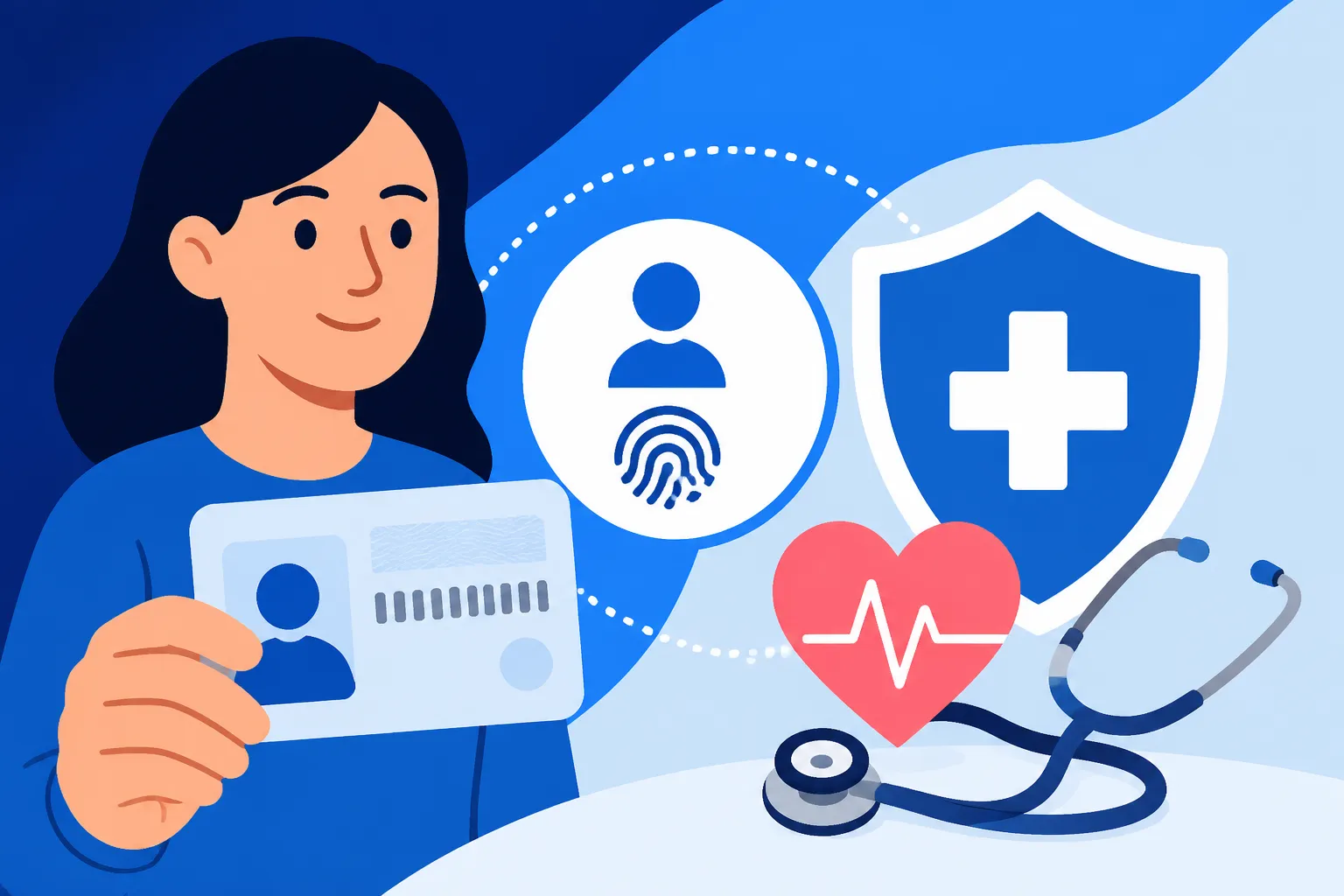
A common point of confusion for newcomers is the difference between the Isikukood and the physical ID card. You can have a personal code without having a physical card—for example, if you are an e-resident or if you have just been issued a code but are waiting for your residence permit card to be printed. However, the code is what allows doctors to find you in the national database.
While you are waiting for your official residency and personal code to be processed, you may find yourself in a state of administrative limbo. This is particularly stressful if you fall ill during your first few weeks. During this transitional period, many expats rely on flexible coverage like SafetyWing to ensure they aren't paying out of pocket for private emergency visits while the Estonian state machines slowly grind toward issuing their official credentials.
The Role of the Isikukood in the e-State
Estonia’s "Once-Only" principle means that the state should only ask for your information once. Because your Isikukood is used by the Tax and Customs Board, the Population Register, and the Health Insurance Fund, these agencies can communicate behind the scenes. This is why How Estonia's Health Insurance Fund (Tervisekassa) Works: A Full Overview is so efficient; once your employer registers your Isikukood with the tax office, your health insurance often activates automatically. Without that code, there is no bridge between your employment and your right to see a doctor.
The Crucial Link Between the Isikukood and Healthcare Access
In most countries, you might walk into a clinic, show a passport, and fill out a paper form. In Estonia, the process is almost entirely paperless, but that digital convenience relies entirely on your personal code. Without it, the medical staff cannot open a digital file for you, which means they cannot record your symptoms, order blood tests, or issue prescriptions.
Accessing the Digital Health Record
The heartbeat of Estonian medicine is the Digilugu. This is a centralized portal where every diagnosis, X-ray, and immunization record is stored. To see your own data, you must log in with a digital ID that is tied to your Isikukood. If you want to understand how this works in practice, you should look into Understanding the Digilugu (Digital Health Record) System in Estonia.
The beauty of this system is that if you see a specialist in Pärnu and then visit your family doctor in Tallinn, both have access to the same notes. However, this interoperability is completely gated by the Isikukood. If you are an expat who hasn't yet received their code, you will find that even private clinics struggle to maintain your records consistently because their software is designed to prioritize the national ID system.
The Digital Prescription System
Estonia has largely eliminated paper prescriptions. When a doctor prescribes medication, they "send" it to your Isikukood. You then walk into any pharmacy (Apteek), hand over your ID card or tell them your personal code, and the pharmacist pulls up the prescription on their screen. For a deep dive into this, see Understanding the Digiretsept (Digital Prescription) System in Estonia.
This is one of those "magic" Estonian moments that makes you realize how far ahead the country is. But expats are sometimes stuck at the pharmacy counter, unable to get their much-needed asthma medication or antibiotics because they tried to use their foreign passport instead of an Estonian personal code. The system is rigid; if the code isn't in the database, the prescription doesn't exist.
Registering with a Family Doctor
In Estonia, the Family Doctor (Perearst) is the gatekeeper to the rest of the medical system. You cannot simply walk into a hospital for a non-emergency issue; you need a referral (Saatekiri) from your Perearst. To join a doctor’s list, you must submit a signed application that requires—you guessed it—your Isikukood.
Finding a doctor can be a challenge, especially one who speaks English and has an open list. You can find more advice on this in The Expat Guide to Finding a Family Doctor (Perearst) in Estonia. Without the code, you cannot formally join a practice, which means you may be forced to use expensive private clinics for basic issues. While SafetyWing is an excellent safety net for these situations, your long-term goal should always be getting onto a Perearst list to access the full suite of state-subsidized care.
Step-by-Step Guide to Getting Your Isikukood
The process of getting your code depends largely on your citizenship and your reason for being in Estonia. It is not always a linear process, and the "right" office to visit can change depending on current government regulations or your specific visa type.
For EU Citizens: The Population Register Path
If you are a citizen of the European Union, your path is relatively straightforward but involves a bit of a "chicken and egg" scenario with your housing. You first need to find a place to live and get a rental contract. Once you have that, you visit your local district government office (Linnaosavalitsus) to register your residence.
When you register your address, the clerk will simultaneously issue your Isikukood if you don't already have one. This is often the fastest way to get into the system. For more details on the paperwork required for this step, check out How to Register Your Place of Residence (Elukoht) in the Population Register. It is vital to ensure your landlord agrees to this registration, as it is a legal requirement for your "Right of Residence" to be finalized.
For Non-EU Citizens: The PPA Path
If you are coming from outside the EU, your Isikukood is usually generated as part of your residence permit application. You will likely visit the Police and Border Guard Board (PPA). This can be a daunting experience, with long queues and a requirement to book appointments weeks in advance.
The personal code will be printed on your residence permit card (ID-kaart). However, there is a catch: it can take 30 days or more to process your permit. If you need a code urgently (for example, to register a car or a marriage) before your permit is ready, you can sometimes apply for a "temporary" code at the local municipality, though this is becoming rarer as the systems become more integrated. To navigate the appointment system, see How to Book an Appointment at the Police and Border Guard Board (PPA).
Special Cases: Digital Nomads and Short-Term Workers
If you are in Estonia on a Digital Nomad Visa or a short-term employment registration, you might not be entitled to a permanent residence permit, but you still need an Isikukood to function. In these cases, you apply for the code at the local municipality office or through the PPA under a "short-term" status.
Digital nomads often find themselves in a unique position where they have an Isikukood but are not eligible for the public Tervisekassa insurance because they don't pay local social tax. For these individuals, maintaining private health insurance like SafetyWing is not just a recommendation; it is a necessity to ensure coverage across the Schengen area and within Estonia itself.
| Application Method | Target Audience | Key Location | Estimated Time |
|---|---|---|---|
| Residence Registration | EU Citizens | Local District Office | 1-5 Days |
| Residence Permit | Non-EU Citizens | PPA Service Office | 30-90 Days |
| Short-term Registration | Seasonal Workers | PPA / Employer | 1-10 Days |
| e-Residency | Overseas Entrepreneurs | Online / Embassy | 3-8 Weeks |
The Isikukood for Different Expat Categories
Not all Isikukoods are created equal in terms of the rights they grant you. While the number looks the same, the underlying status in the Population Register determines whether you get free public transport in Tallinn or if the state will pay for your surgery.
The "Right of Residence" vs. Temporary Residence
For EU citizens, the Isikukood is a confirmation of their "Right of Residence." This is a relatively permanent status as long as you live in Estonia. For non-EU citizens, the code is tied to a "Temporary Residence Permit" (TRP). If your TRP expires and you do not renew it, your Isikukood remains the same, but your access to healthcare and other services will be deactivated in the system.
It is a common nightmare for expats to realize their insurance has lapsed because they missed a renewal deadline. You can learn more about the broader healthcare landscape in The Complete Guide to Healthcare in Estonia for Expats (2027). Always keep an eye on your status on the eesti.ee portal to ensure your insurance is still active.
Family Members and Dependents
If you are moving to Estonia with a spouse or children, each person needs their own Isikukood. For children, the process is usually handled through the local municipality or the PPA, depending on their citizenship. Once the child has a code, they are automatically eligible for healthcare until the age of 18, regardless of whether the parents are working, provided they are residents.
Many families forget to register their newborns in the confusion of a move. Without that 11-digit code, the hospital cannot link the baby to the parent’s insurance for follow-up visits. It is worth checking Health Insurance in Estonia: Mandatory, Private and Travel Options Explained to see how dependents fit into the national scheme.
e-Residents and the "Digital Only" Status
E-residents receive an Isikukood, but this does not grant them residency or healthcare rights in Estonia. It is a digital tool for running a business. Many e-residents are surprised to find that while they can sign documents and pay taxes, they cannot walk into an Estonian hospital and receive "free" care. They are still considered foreign visitors for medical purposes. For those frequently traveling to Estonia for business, a policy from SafetyWing is often the most logical choice to bridge the gap between their digital status and their physical health needs.
Navigating the Digital Ecosystem After Receiving Your Code
Once you have those 11 digits, a whole new world opens up. You aren't just a guest anymore; you are a participant in the "e-Estonia" experiment. However, having the code is only the first step. You also need a way to use it digitally.
Smart-ID, Mobile-ID, and ID-Cards
In Estonia, knowing your Isikukood is rarely enough; you must be able to prove it belongs to you using a secure digital authentication method. Once you have your code, you should immediately set up a Smart-ID or Mobile-ID. These apps allow you to log into the Patient Portal (Digilugu) or the Tax Board without needing a physical card reader.
This is where the convenience really kicks in. Need to renew a prescription? You can often message your doctor via email or a dedicated clinic portal, and they will "push" the renewal to your Isikukood. You then get a notification, and you can pick up your meds 15 minutes later. This entire ecosystem is described in detail in Health Insurance in Estonia: Mandatory, Private and Travel Options Explained.
Checking Your Insurance Status
One of the most important things to do once you have your Isikukood is to log into the national portal, eesti.ee. Here, you can check if you are "insured" (kindlustatud). If you are working for an Estonian company, your employer pays a social tax that funds your insurance.
There is often a lag between starting a job and your insurance appearing as "active" in the system. Typically, this takes about 14 days after your employer registers you in the employment register. During this two-week window, you are technically uninsured. This is another reason why newcomers are generally advised keep their SafetyWing or other private coverage active until they see that "kindlustatud" status reflected on the government portal.
The Power of Saatekiri (Referrals)
With your Isikukood, your doctor can issue a digital referral. In the old days, you’d have to carry a piece of paper and pray you didn't lose it. Now, the referral is a digital "ticket" attached to your personal code. You can then log into a central booking system (usually the Health Portal) and see all available appointments across the country. Without the Isikukood, you cannot even see the appointment calendar, let alone book a slot.
Common Pitfalls and Veteran Advice for Newcomers
Estonia’s system is incredibly logical, but it can be unforgiving. If you provide the wrong information or miss a step, you can find yourself locked out of essential services for weeks.
The "Isikukood First" Rule
If you are looking for a job or an apartment, do not wait until you have the perfect lead to start the Isikukood process. Many landlords will not even show you a contract if they know you don't have a code yet, because they can't verify your identity in the official registers. Similarly, while an employer can register you with a passport number for a very short period, they will eventually need that code to pay your social taxes properly.
Watch Out for the "Gap" Months
If you lose your job or switch to a freelance (FIE) status, your health insurance status might change. The Tervisekassa gives a grace period (usually two months) after employment ends, but after that, you are on your own. Your Isikukood remains your identity, but the "insurance" flag next to it will turn off. Always verify your status if your employment situation changes.
Keep Your Contact Info Updated
Estonia’s systems are only as good as the data you give them. If you move apartments, you must update your address in the Population Register. Why? Because if the Health Insurance Fund or your Perearst needs to send you a formal letter (like a cancer screening invitation), they use the address tied to your Isikukood. If that information is out of date, you miss out on vital preventative care.
Ultimately, getting your Isikukood is the single most important administrative task you will perform in Estonia. It is the thread that weaves through every aspect of your life here, from your first dental check-up to your annual tax return. By understanding the process and the "why" behind it, you can avoid the common frustrations that leave many expats feeling like outsiders in a digital world.
Disclaimer
This guide is intended for informational purposes only and does not constitute legal or professional medical advice. Immigration laws and healthcare regulations in Estonia are subject to change. Always consult with the Estonian Police and Border Guard Board (PPA) or the Health Insurance Fund (Tervisekassa) for the most current requirements and procedures regarding residency and health coverage.