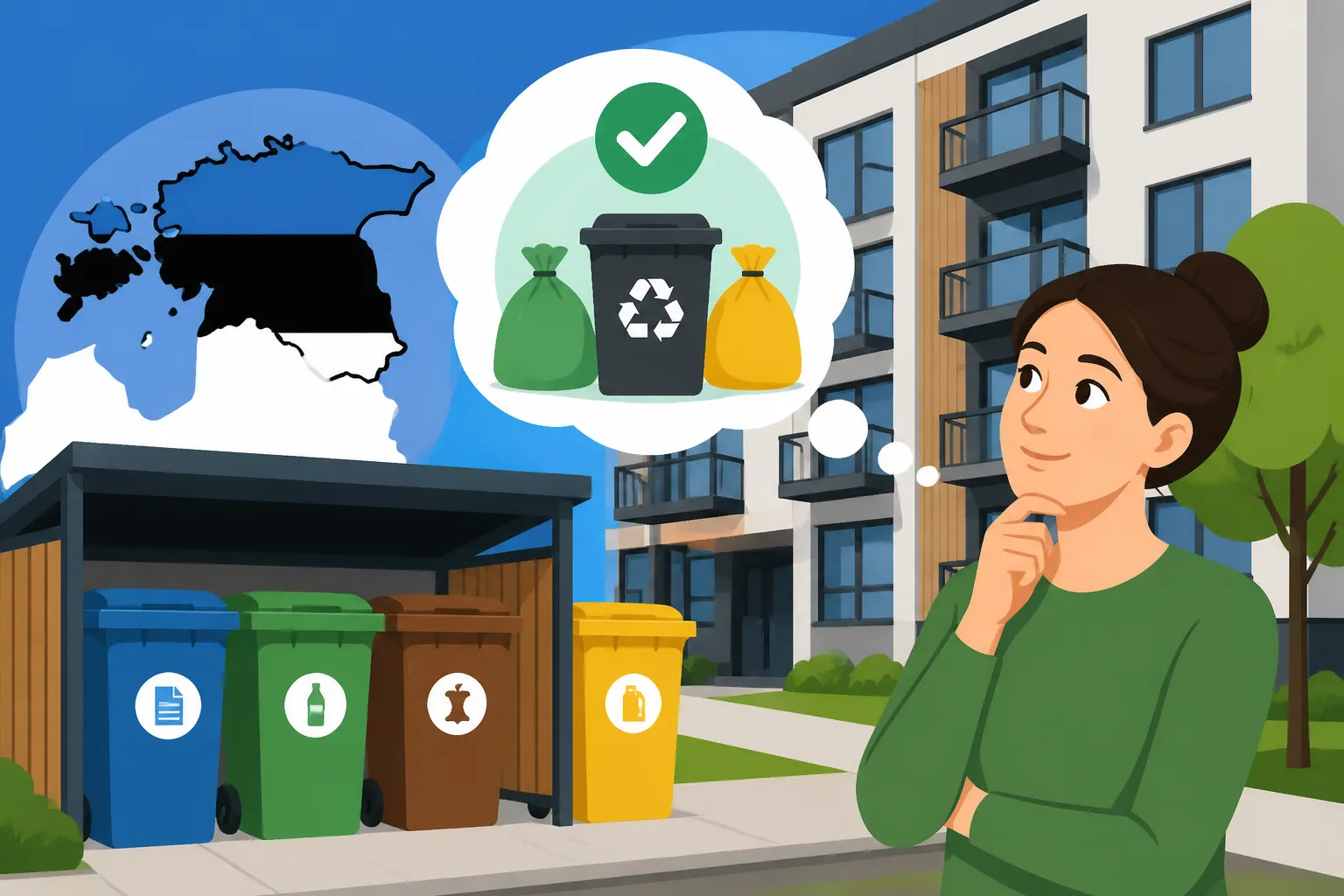
How Do I Set Up Waste Collection in My Apartment Building in Estonia?
Moving into an apartment in Estonia often brings a wave of excitement, quickly followed by a sprinkle of bureaucratic confusion, and nothing quite highlights this like figuring out the waste collection system. You might be staring at a row of colourful bins, utterly baffled, or worse, wondering why there aren't any bins for your recycling. This guide is here to untangle the complexities of waste management in Estonian apartment buildings, explaining exactly how it works and what you need to do.
Understanding Estonia's Approach to Waste Management
When you first arrive in Estonia, you might notice a distinct approach to waste compared to what you're used to back home. It's not just about throwing things into one big bin and forgetting about it; here, there's a strong emphasis on sorting at the source. This might feel like an extra chore, especially when you’re already swamped with getting your temporary residence permit in Estonia sorted and finding your feet, but it’s rooted in a broader environmental philosophy that many Estonians genuinely embrace.
The Underlying Philosophy: Why So Much Sorting?
Estonia, like many Nordic and Baltic countries, is genuinely committed to reducing its environmental footprint. The push for detailed waste sorting isn't just about ticking boxes; it's about minimizing the amount of waste sent to landfills and maximizing recycling and reuse. The idea is that if waste is properly separated into different streams – paper, plastic, glass, organic, mixed – it can be processed more efficiently. This means fewer raw materials are extracted, less energy is consumed in production, and ultimately, less pollution is generated. It’s a collective effort, and as a resident, you're expected to play your part. You might find locals are quite passionate about explaining (and sometimes correcting) how you sort your rubbish, so be prepared!
This focus on environmental responsibility also extends to how services are managed. The more efficiently your building sorts waste, the lower the costs associated with its removal can potentially be. Landfill taxes are significant, so reducing mixed waste volumes directly impacts everyone's utility bills. It’s a win-win, even if it feels a bit overwhelming at first glance.
From Individual to Collective Responsibility
While you, as an individual, are responsible for sorting your waste within your apartment, the broader responsibility for waste collection, infrastructure, and contracts in an apartment building usually falls to the collective – your apartment association, or korteriühistu. This is a crucial distinction that often catches expats off guard. You won't typically be signing your own waste collection contract directly with a company like Ragn-Sells or Eesti Keskkonnateenused; instead, the building's management handles it all.
This means that while you need to know how to sort, you often don't need to know who collects it or when they do so in intricate detail. Your building will have designated bins, and the collection schedule is arranged by the korteriühistu. This communal approach streamlines the process for residents but also means you need to communicate with your building management or landlord to understand the specifics of your particular location. It’s a stark contrast to some countries where individual households manage their own subscriptions, so prepare for a more integrated, albeit sometimes opaque, system.
The Crucial Role of Your Korteriühistu in Waste Collection
Okay, let's talk about the korteriühistu, or apartment association. If you live in an apartment building in Estonia, especially one that's been around for a while, you'll quickly learn that this entity is the backbone of almost everything that happens in your building, from heating to snow removal, and yes, waste collection. Understanding their role is absolutely paramount to navigating your waste duties. You might even find yourself diving into understanding Apartment Association (Korteriühistu) Fees in Estonia just to get a full picture of where your money goes.
Your Apartment Association: The Unsung Hero (or Headache)
The korteriühistu is legally responsible for managing the common property of the building, which includes negotiating contracts with service providers. For waste collection, this means they will have an agreement with a local waste management company. They determine the types and number of bins available, the frequency of collection, and ensure that the bins comply with local municipal regulations. For you as a resident, this essentially means you don't pick your waste provider; your building already has one.
This setup can be both a blessing and a curse. On the one hand, you don't have to shop around for waste services, which saves you a headache, especially if your Estonian isn't fluent yet. On the other hand, if you have complaints or suggestions about the waste service (e.g., bins always overflowing, new bin types needed), you'll have to go through the korteriühistu management. They are your primary point of contact for all building-related queries, and a good relationship with them, or at least understanding their processes, will save you a lot of grief. Make sure to get familiar with who the building manager is shortly after registering your place of residence in Estonia.
Who Pays for What? Unpacking Waste-Related Fees
Waste collection isn't free, of course, but how you pay for it is typically integrated into your broader utility and maintenance bills, known as kommunaalkulud. These are the bills you receive, usually monthly, from your korteriühistu or landlord, detailing all the shared expenses for the building. Your portion of the waste collection cost is calculated based on factors like the size of your apartment, the number of residents in your household, or sometimes simply as a flat fee per apartment.
It’s important to clarify these costs when you're signing a rental contract (Üürileping) in Estonia, or if you've recently purchased your apartment. Often, the waste collection fee is a relatively small component of the overall kommunaalkulud, which also includes heating, water, electricity for common areas, and maintenance. If you're wondering how these costs stack up, it's worth checking out guides on understanding Utility and Maintenance Costs (Kommunaalkulud) in Estonia or even how much it costs to live in Tartu for expats. What might seem like a small line item can add up, and knowing what you're paying for brings clarity.
The Practicalities: Setting Up and Using Waste Services in Your Building
Alright, so you know the korteriühistu handles the contracts and you'll pay through your kommunaalkulud. Now for the actual doing. The biggest hurdle for most expats is simply knowing where the bins are and what the local rules are. It sounds basic, but believe me, it can be a riddle. This is part of the overall adventure of the expat guide to moving to Estonia: your first 90 days (2026), where every little detail feels like a new quest.
Locating Your Building's Waste Bins and Schedule
First things first: find the bins! In apartment buildings, waste bins are usually located in a designated waste room or an outdoor enclosure, often locked for security and cleanliness. You might need a key or a specific code to access it. Your landlord or the korteriühistu should provide this information upon your arrival. Don't be shy about asking. If you're new to the building, a friendly neighbour might also point you in the right direction.
Once you’ve found the bins, take a moment to observe them. There will typically be several containers, each clearly marked (usually with stickers and sometimes text in Estonian and English) for different types of waste. These markings are your bible for sorting. The korteriühistu will also have an internal system for communicating collection schedules – sometimes it's a notice board in the stairwell, sometimes it's on a building-specific online portal. With a local eSIM from Airalo, you can quickly look up specific recycling instructions or translate signs if you need to, ensuring you're always connected. If your landlord hasn't given you this information, they are the first person to ask.
Navigating the Digital Realm for Waste Information
Estonia is a digital society, and waste management is no exception. Many municipalities and waste management companies provide detailed sorting instructions and schedules online. For example, Tallinn’s waste department or the websites of major waste companies like Ragn-Sells and Eesti Keskkonnateenused often have comprehensive guides, sometimes in English. With a reliable internet connection set up (perhaps you've already checked out how to set up home internet and TV in Estonia), you can easily access these resources.
Furthermore, some korteriühistus use digital communication platforms or even Facebook groups to share important updates, including changes to waste collection. Being proactive in seeking out this information, or asking your landlord to share it with you, will ensure you're always in the loop. It’s a good idea to know which company handles your building's waste (your korteriühistu can tell you) so you can directly check their specific guidelines, as practices can vary slightly between providers and municipalities.
A Deep Dive into Estonian Waste Sorting Categories
Now for the part that can feel like a pop quiz every time you clear out your kitchen: actually sorting your rubbish. This is where many expats stumble, not because they don't want to sort, but because the rules can be surprisingly nuanced and different from what they're used to. Getting this right is key to being a good neighbour and preventing those awkward glances from locals.
Mandatory Sorting: What Goes Where?
Generally, Estonian apartment buildings are mandated to sort at least four main categories of waste:
- Mixed Municipal Waste (Segajäätmed): This is for everything that cannot be recycled or composted. Think hygiene products, dirty food packaging that can't be cleaned, broken ceramics, ash, etc. This is usually the largest bin.
- Paper and Cardboard (Paber ja Kartong): Clean paper, newspapers, magazines, cardboard boxes (flattened!), paper bags. No wet, greasy, or dirty paper here.
- Packaging Waste (Pakendijäätmed): This is a broad category and often the most confusing. It includes plastic packaging (yogurt cups, plastic bottles, films), glass packaging (jars, bottles), and metal packaging (cans, foil). It's crucial that these items are clean and dry.
- Organic/Biodegradable Waste (Biolagunevad jäätmed or Köögijäätmed): Food scraps, fruit and vegetable peels, coffee grounds, tea bags, garden waste. This is typically collected in a separate, often brown, bin.
Not all buildings will have a separate organic waste bin, especially older ones or those in smaller towns. If your building doesn't have one, food waste usually goes into the mixed municipal waste, which isn't ideal but is the reality in some places. Always check with your korteriühistu first!
The Nitty-Gritty of Packaging and Other Recyclables
The "packaging waste" category is the one that causes the most confusion. In many countries, plastics, glass, and metals are sorted into individual bins. In Estonia, these often go into one large bin designated for "packaging." The key is cleanliness. If your plastic yogurt pot still has half its contents, or your glass jar is covered in sauce, it belongs in mixed waste, not recycling. A quick rinse is usually enough.
Here's a breakdown of common items:
| Waste Type | Estonian Term | What Goes In | What Stays Out |
|---|---|---|---|
| Mixed Municipal Waste | Segajäätmed | Non-recyclable waste, hygiene products (diapers, cotton pads), broken ceramics, ash (cooled), dirty food packaging, textile scraps, old light bulbs (non-fluorescent), small unusable items. | Anything that can be recycled (paper, clean packaging, organics), hazardous waste, electronics, bulky items, batteries. |
| Paper and Cardboard | Paber ja Kartong | Clean newspapers, magazines, brochures, advertising flyers, books, notebooks, paper bags, clean cardboard boxes (flattened), paper packaging for dry goods. | Wet, greasy, or very dirty paper/cardboard, beverage cartons (milk/juice), foil-lined paper, used tissues, toilet paper. |
| Packaging Waste | Pakendijäätmed | Plastic: clean plastic bottles, containers, yogurt cups, plastic bags, films. Glass: clean glass bottles (wine, beer), food jars (jam, pickles). Metal: clean food cans, beverage cans, aluminum foil (clean). Composite: beverage cartons (milk/juice). |
Dirty packaging, hazardous waste containers (paint cans), broken glass (windows, mirrors, ceramics – these go to mixed waste), electronics, batteries, medical waste. |
| Organic Waste | Biolagunevad jäätmed | Food scraps, fruit and vegetable peels, coffee grounds, tea bags, eggshells, meat and fish scraps, bread, withered flowers, small amounts of garden waste. (Collected in compostable bags or loose). | Large bones, liquids, cooking oil, textile, plastic bags, mixed waste. |
| Special Collections | Suurjäätmed, ohtlikud jäätmed | Furniture, large appliances, electronics, batteries, paint, chemicals, medication, tires. (Requires specific drop-off points or scheduled collection). | Regular household waste. |
Remember, the goal is to keep contamination low. One incorrectly sorted item can contaminate an entire batch of recyclables, rendering it useless. So, when in doubt, clean it out, or if it's really dirty, into the mixed waste it goes.
Organic Waste and Food Scraps: A Growing Focus
The separate collection of organic waste, or food scraps, is becoming more common, especially in Tallinn and Tartu. This is fantastic for reducing landfill waste and creating compost. If your building has a dedicated organic waste bin, you'll need to collect your food scraps in compostable bags (often available at supermarkets) or simply dispose of them directly into the bin.
If your building doesn't have an organic waste bin, then unfortunately, food waste typically goes into the mixed municipal waste. While this isn't ideal, it's what you're expected to do in that scenario. However, many larger supermarkets also have collection points for specific items that might not be collected at your building, like batteries or light bulbs, which brings us to special waste.
Handling Special and Bulky Items
Not everything fits into those regular apartment building bins. Estonia has a system for handling larger, more problematic items, but it requires a bit more effort on your part. This is particularly relevant when you first move in, dealing with packing materials, or when you decide it's time to replace some old furniture. If you’re coordinating a big move, perhaps through a service like Sirelo, you’ll definitely encounter these types of waste.
When Regular Bins Just Won't Do: Bulky Waste Disposal
Bulky waste (suurjäätmed) refers to large household items like old furniture, mattresses, carpets, large appliances (fridges, washing machines), or construction debris from minor renovations. You absolutely cannot just leave these next to your building's regular bins – you'll likely face a hefty fine.
The general approach for bulky waste is:
- Scheduled Collection: Your korteriühistu might organize periodic bulky waste collection days for the entire building or neighbourhood. Keep an eye on announcements for these.
- Waste Stations (Jäätmejaam): The most common method is to take these items yourself to a municipal waste station or recycling centre (jäätmejaam). These centres accept a wide range of materials, often free of charge for residents (up to a certain limit) for sorted items. You’ll need a vehicle to transport them, and possibly an ID card with your isikukood to prove residency. A quick online search for "jäätmejaam Tallinn" or "jäätmejaam Tartu" will show you the nearest locations and their opening hours.
- Private Waste Removal: If you have too much or lack transport, you can hire a private waste removal company to pick up items from your home. This is a paid service.
Make sure you understand the difference between items the jäätmejaam accepts for free and those that incur a fee. It's usually about proper sorting and quantity.
Electronics, Hazardous Waste, and Medications
These categories deserve special attention because of their potential environmental impact and specific disposal requirements:
- Electronics (Elektroonikajäätmed): Old TVs, computers, phones, small appliances – these are categorized as WEEE (Waste Electrical and Electronic Equipment). They contain valuable materials but also hazardous substances. You can't put them in mixed waste. Many electronics retailers (especially larger ones like Euronics or Klick) have collection points for old electronics when you buy new ones. Otherwise, jäätmejaams are the place to go.
- Hazardous Waste (Ohtlikud jäätmed): This includes paints, solvents, chemicals, motor oils, batteries, certain light bulbs (fluorescent tubes). These are highly regulated due to environmental and health risks. Batteries and small light bulbs often have collection points at supermarkets and hardware stores (e.g., Prisma, Selver, K-Rauta). For larger quantities or more serious chemicals, jäätmejaams have dedicated sections for hazardous waste.
- Medications (Ravimijäätmed): Expired or unused prescription and over-the-counter medications should never be flushed down the toilet or thrown in mixed waste. Instead, take them to any pharmacy (apteek) in Estonia. They are legally obligated to accept old medications free of charge for proper disposal. This is a super important one for public health!
Navigating these specific disposal channels might feel like an extra layer of bureaucracy, but it’s a vital part of responsible living in Estonia.
Expat Hacks and Troubleshooting Common Issues
Living in a new country, even one as digital and organised as Estonia, always throws up unexpected challenges. Waste management, surprisingly, is one of those mundane things that can cause real stress. But don't worry, you're not alone in feeling a bit lost!
Language Barriers and Information Overload
One of the biggest hurdles is often the language. While many signs in Tallinn or Tartu might have English translations, this isn't always the case for specific waste instructions on bins or municipal websites. This is where a good translation app comes in handy, and why having reliable mobile data (perhaps with an Airalo eSIM) is essential. Don't be afraid to use it to translate labels on bins or sections of websites.
Another issue is information overload – or lack thereof. Sometimes, your korteriühistu might assume everyone knows the rules, or the information is only communicated in Estonian. If you're struggling to understand the system, politely ask your landlord or a trusted Estonian colleague or friend to help clarify. They can often point you to the most relevant resources or directly interpret instructions from your building's management. Remember, most Estonians are very helpful if approached respectfully.
When Things Go Wrong: Common Problems and Solutions
You’ve tried your best, but what happens if something goes awry?
- Overflowing Bins: If you notice a specific bin type is constantly overflowing, it might indicate that the collection frequency isn't adequate or the bin size is too small for the building's needs. This is a point to raise with your korteriühistu. They are responsible for ensuring sufficient waste collection capacity. You can contact them directly, or if you're renting, inform your landlord, who can then escalate the issue.
- Confused About What Goes Where: When in doubt, search online for "jäätmete sorteerimine" (waste sorting) along with your municipality name (e.g., "jäätmete sorteerimine Tallinn"). The official websites often have visual guides. If you're still unsure, defaulting to placing a questionable item in the mixed waste bin is generally safer than contaminating a recycling stream.
- Dealing with Moving Waste: When moving in or out, you'll inevitably have a lot of packaging waste, perhaps even old furniture or appliances. As mentioned, for large items, the jäätmejaam is your friend. For excessive cardboard and plastic packaging from new purchases, check if your korteriühistu has a special temporary collection point for moving days, or plan a trip to the jäätmejaam. If you've used an international moving service, perhaps arranged through Sirelo, they sometimes offer unpacking and waste removal services, which can be a lifesaver.
- Understanding Your Bills: If your kommunaalkulud seem unusually high for waste, don't hesitate to ask your landlord or korteriühistu for a breakdown. Transparency is usually good, and understanding the costs (as discussed in how to pay your utility bills in Estonia) can bring peace of mind.
Ultimately, remember that waste management in Estonia is a shared responsibility. By understanding the system, communicating with your building management, and making an effort to sort correctly, you'll contribute positively to your community and the environment.
Disclaimer
The information provided in this guide is for general informational purposes only and does not constitute legal or professional advice. Waste management regulations and practices can vary by municipality and may change over time. Always consult with your apartment association (korteriühistu), landlord, or local municipal waste management authorities for the most accurate and up-to-date information specific to your location in Estonia.