Is Childbirth Free Under the Tervisekassa in Estonia?
One of the most heart-racing moments for any expat is seeing a positive pregnancy test while living in a country where you don’t fully understand the medical system yet. You find yourself wondering if you will be hit with a massive hospital bill or if your residency status actually entitles you to care. This guide explains exactly how childbirth coverage works under the Estonian Tervisekassa system.
Understanding Tervisekassa Coverage for Pregnancy and Birth
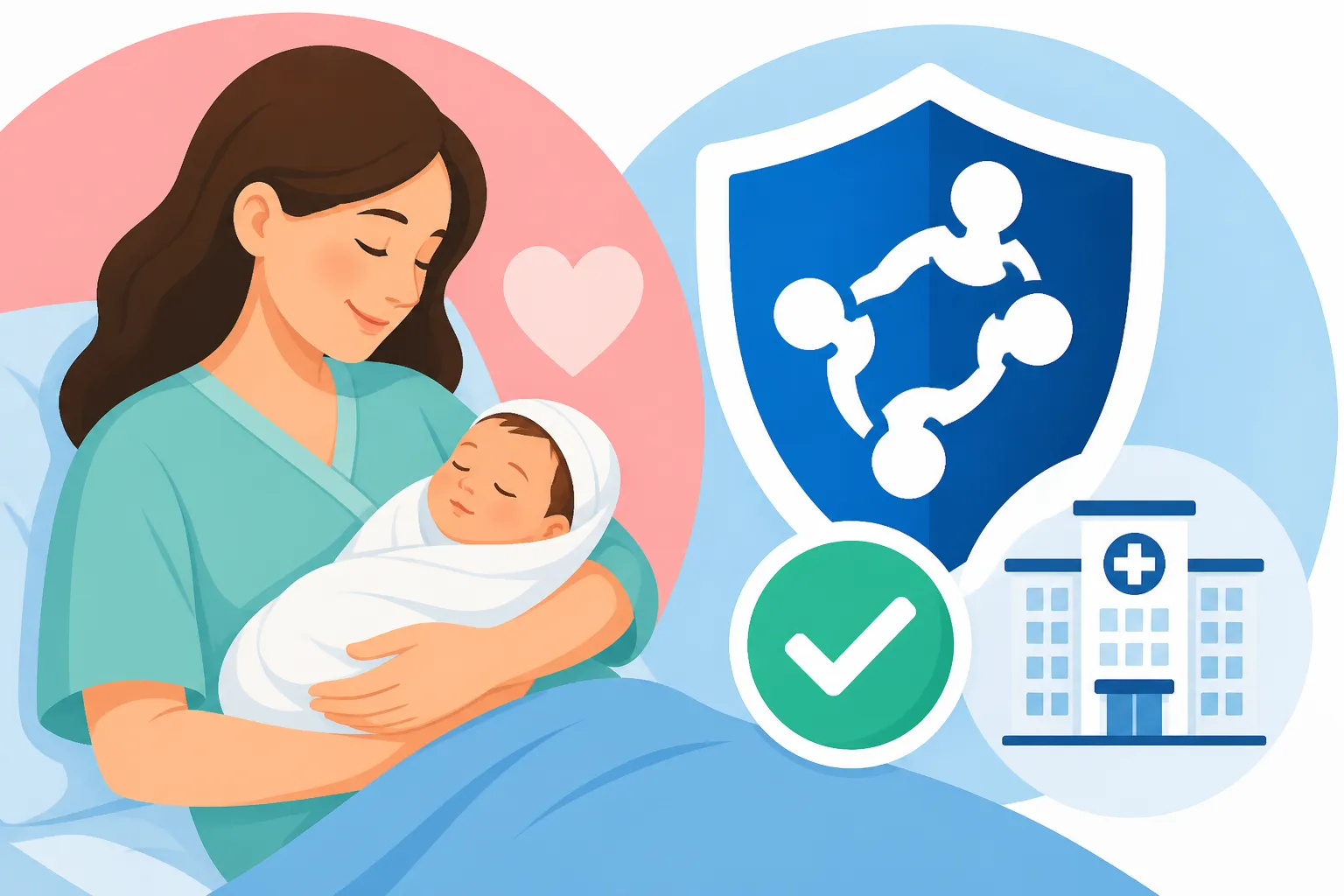
The short answer to the question of whether childbirth is free in Estonia is a resounding yes, provided you are covered by the Estonian Health Insurance Fund, known locally as the Tervisekassa. For most expats, this coverage comes through employment, where your employer pays the mandatory social tax on your behalf. However, Estonia has a remarkably compassionate stance compared to many other nations: according to Estonian law, even pregnant women who do not have insurance are entitled to prenatal care and childbirth services funded by the state once their pregnancy has been medically confirmed.
This means that from the moment your pregnancy is registered with a gynaecologist or a midwife at a facility like the East Tallinn Central Hospital (ITK) or West Tallinn Central Hospital (LTKH), the state begins to cover the costs of your visits, ultrasounds, and blood tests. You won’t see a bill for the actual delivery, the medical staff’s time, or the standard hospital stay in a shared room. This is a massive relief for those of us who moved from countries where a hospital birth can cost as much as a new car.
It is important to understand that this "free" care is part of a broader social safety net. To truly navigate this, you should look into how the Tervisekassa works to see how the funding mechanism works behind the scenes. While the medical care itself is covered, you still need to ensure your residency paperwork is in order so the hospital can easily find you in the system using your Estonian personal code.
Who is Eligible for Covered Childbirth?
Eligibility for a "free" birth primarily rests on your status in the national population register. If you are working legally and your employer is contributing to the system, you are fully covered. If you are the spouse of an insured person, you may also be eligible for coverage, though the rules for dependents can be specific. It is always wise to double-check the rules for registering family members to ensure there are no gaps in your specific situation.
For those who are in Estonia on a temporary basis or are still waiting for their first residence permit to be processed, the situation is slightly different. While the state covers the birth itself for pregnant women, the period leading up to that registration can be nerve-wracking. This is often where digital nomads or those on a D-visa find themselves in a gray area. In these transitional periods, having a plan like SafetyWing can provide peace of mind for general health issues that might arise before your Tervisekassa status is finalized. SafetyWing is particularly popular among the expat community here because it understands the nomadic lifestyle that often precedes settling down in Tallinn or Tartu.
What Exactly is Included in the Free Package?
When we talk about childbirth being free, we are referring to the standard medical necessity. This includes all regular check-ups with your midwife (ämmaemand), the required screenings for chromosomal abnormalities (the OSCAR test), and all necessary ultrasounds. In Estonia, the midwife is usually your primary point of contact throughout a healthy pregnancy, rather than a gynaecologist, which is a cultural shift for some expats.
During the delivery, the Tervisekassa covers the cost of the delivery room, the assistance of the on-call midwife and doctor, an epidural if medically requested or deemed necessary, and any emergency interventions like a C-section. After the baby is born, the standard postnatal care in a shared ward is also covered. You will be provided with hospital meals and basic supplies for the baby during your stay. To get a better sense of the scope, you can read more about maternity and prenatal care in Estonia to see what other services follow the birth.
The Financial Reality When is it Not Free
While the medical procedure of having a baby is covered, there are "luxury" or "optional" services that almost every expat chooses, and these do come with a price tag. The most common expense is the "Family Room" (perepalat). In Estonia, the standard coverage provides a bed in a shared room with other new mothers. If you want a private room where your partner can also stay overnight and support you, you will have to pay a daily rate.
These family rooms are highly sought after at hospitals like the Pelgulinna Maternity Hospital. They usually cost between 30 EUR and 80 EUR per night depending on the level of comfort and the specific hospital. Since you typically stay in the hospital for two to three days after a standard birth, this is a manageable cost for most, but it is not "free." You should also be aware that if you want a specific, named midwife to be present at your birth (a "private midwife" service), this is a significant out-of-pocket expense, often costing upwards of 500 EUR to 700 EUR.
Optional Paid Services and Comfort Upgrades
Many expats prefer to have a more personalized experience. In the public system, you get the midwife who is on shift when you arrive. If you feel more comfortable having someone you have built a relationship with over nine months, you can opt for a private midwife contract. This ensures that your chosen midwife will come to the hospital specifically for you, regardless of whether they are on shift.
Additionally, some hospitals offer "luxury" suites which are larger and more like a hotel room. These are not covered by the Tervisekassa and must be paid for at discharge. It’s also worth noting that while medications administered in the hospital are free, any prescriptions you are given to take home—such as iron supplements or specific postnatal meds—will follow the standard prescription rules, where you pay a small co-payment at the pharmacy.
The Cost for Uninsured Residents and Tourists
If you do not have Tervisekassa coverage and you do not qualify for the "pregnant woman" state exemption (for example, if you are just visiting Estonia as a tourist), the costs are significant. A standard, uncomplicated vaginal delivery for a private patient can cost between 1,500 EUR and 2,500 EUR. A C-section can easily double that amount.
For foreigners who are not yet residents, this highlights the importance of having comprehensive travel or international health insurance. Using a service like SafetyWing can be a vital safety net if you experience complications while traveling or before your local insurance kicks in. While SafetyWing is not a maternity-specific plan for planned births, it is essential for the "what-ifs" of expat life. If you are curious about the general costs of the system, check out what a private birth costs for a full comparison.
Navigating the System From First Appointment to Discharge
The journey begins with the "Rasedakaart" or pregnancy card. This is a small paper passport (though increasingly digitized) that tracks every measurement, blood test, and scan. You will usually have your first "official" appointment around week 8 or 10. During this time, the midwife will enter your data into the Digilugu system, which is Estonia's central health database.
One of the most impressive things about having a baby in Estonia is how the digital infrastructure simplifies the bureaucracy. You don’t need to carry stacks of medical records; any doctor you see in the future can see your pregnancy history via your personal code. If you haven't received yours yet, you'll need to learn how to get your isikukood as this code is the key to everything in the medical world here.
Registering with a Midwife or Gynaecologist
Most expats in Tallinn will choose between ITK (Ravi street) or Pelgulinna (Sõle street). Both have excellent reputations and English-speaking staff. You can simply call their registration desk and say you want to register a pregnancy. You do not strictly need a referral from a family doctor for this, although having a good relationship with your family doctor is still recommended for your overall health.
In your first appointment, they will confirm the pregnancy with an ultrasound and take a battery of blood tests. From this point on, you are "in the system." The frequency of visits increases as you get closer to the due date. All of these routine visits are fully covered by the Tervisekassa.
Post-Birth Administration and the Isikukood
Once the baby is born, the hospital will automatically register the birth in the electronic system. However, as an expat, you still have some footwork to do. You need to officially name the child and register their birth at the local vital statistics office (Perekonnaseisuamet) or online if both parents have Estonian ID cards.
The baby will receive their own isikukood almost immediately. This code is essential for the baby to receive their own health insurance coverage. In Estonia, all children are insured by the state until they turn 18, regardless of whether their parents are working, as long as the child is a resident.
| Service Type | Tervisekassa Covered? | Estimated Out-of-Pocket Cost |
|---|---|---|
| Prenatal Check-ups | Yes | 0 EUR |
| Standard Ultrasound | Yes | 0 EUR |
| Vaginal Delivery (Standard) | Yes | 0 EUR |
| Emergency C-Section | Yes | 0 EUR |
| Shared Postnatal Ward | Yes | 0 EUR |
| Family Room (Private) | No | 30 – 80 EUR / night |
| Private Midwife Contract | No | 500 – 700 EUR |
| Home Prescriptions | No | 2 – 15 EUR (Co-pay) |
Comparing Public and Private Options
In Estonia, the distinction between "public" and "private" for childbirth is a bit blurry compared to the US or the UK. Almost all births happen in public hospitals because that is where the specialized neonatal intensive care units (NICU) are located. Even if you see a doctor at a private clinic like Fertilitas for your prenatal check-ups, they will often refer you to a public hospital for the actual delivery to ensure maximum safety for the baby.
The "public" hospitals in Tallinn and Tartu are exceptionally modern. They often feel more like private clinics anyway, with updated equipment and highly trained staff. The benefit of staying within the Tervisekassa system is that you get world-class care for virtually no cost. To decide which path is right for you, it's worth reading up on public versus private healthcare to understand the nuances of the two sectors.
Benefits of the Public System
The primary benefit is, of course, the cost. Childbirth and the associated prenatal care are the crown jewels of the Estonian healthcare system. The staff at the major maternity hospitals are very used to expats and almost everyone speaks English, especially the younger midwives and doctors.
Another benefit is the continuity of care. The system is designed to catch risks early, and the referral system to specialists is seamless. If your midwife detects a potential issue, she can send you to a specialist within the same building, and the saatekiri system ensures that your e-referral is waiting for you when you arrive.
When to Consider Private Support
You might consider the private route if you want more "hand-holding" or if you want to avoid any potential wait times for non-essential check-ups. Some expats choose to pay for extra ultrasounds just for peace of mind or to get high-quality 3D/4D images of the baby, which aren't always covered under the standard "medical necessity" rule.
If you are an expat who travels frequently or if your residency status is complicated, having secondary coverage is a smart move. While SafetyWing doesn't replace the Tervisekassa for a routine birth, it is an excellent companion for the international lifestyle many of us lead. It's also helpful to look into private health insurance if you are considering adding an extra layer of comfort to your healthcare plan while living here.
Practical Steps for Expat Parents
If you’ve just found out you’re pregnant, don't panic. The first step is to book an appointment with a midwife at a maternity clinic. You do not need to wait for your ID card to be in your hand if you have a positive test, though it makes the process smoother. Bring your passport and any residency documents you have to your first appointment.
The second step is to ensure your "place of residence" is registered in the population register. This is a prerequisite for many local benefits, including the "birth grant" (sünnitoetus) provided by the city of Tallinn or Tartu. You can find out more about this by reading our guide to registering your place of residence to ensure you don't miss out on financial support from the municipality.
Documentation Needed for the Hospital
When you go to the hospital to give birth, you don't actually need much in terms of paperwork because of Estonia's digital society. However, you should have:
- Your Passport or ID-card.
- Your Pregnancy Card (Rasedakaart).
- Your Birth Plan (if you have one, in English is fine).
The hospital will handle the medical side of the registration. If you are not married to the baby's father, he will need to be present at the birth registration (later at the municipal office) to acknowledge paternity. If you are married, the process is even simpler. For those still navigating the early stages of moving, our list of medical documents to bring can help you get the rest of your documents in order.
Post-Birth Care and Support
Once you are home, the care doesn't stop. You will have a follow-up appointment with your midwife, and your baby will need to be registered with a family doctor. Finding a doctor who is taking new patients and speaks English can be a challenge in some districts. I highly recommend checking out how to find an English-speaking doctor as soon as you can, even before the baby arrives, to ensure a smooth transition.
Estonia also offers one of the most generous parental leave systems in the world. As long as you were insured and working, you are entitled to shared parental income for over 600 days. This is the real "win" for expat parents in Estonia—not just the free birth, but the supported life that follows it.
Disclaimer
This guide is for informational purposes only and is based on the regulations and typical experiences of expats in Estonia as of 2026. Healthcare laws and Tervisekassa policies can change. Always verify your insurance status and the specific costs of services with your healthcare provider or the Tervisekassa directly before making medical decisions. This article does not constitute legal or professional medical advice.