How to Register Family Members for Health Insurance in Estonia
Moving your entire life to Estonia is an exhilarating adventure, but the moment your child develops a fever or your spouse needs a routine check-up, the reality of navigating a foreign medical system sets in. Many expats arrive assuming their family is automatically covered under their work contract, only to find themselves stuck in a bureaucratic loop of "isikukoods" and waiting periods. This guide solves that confusion by providing a step-by-step roadmap to successfully registering every family member for Estonian health insurance, ensuring your loved ones are protected from day one.
Understanding the Estonian Health Insurance Landscape for Families
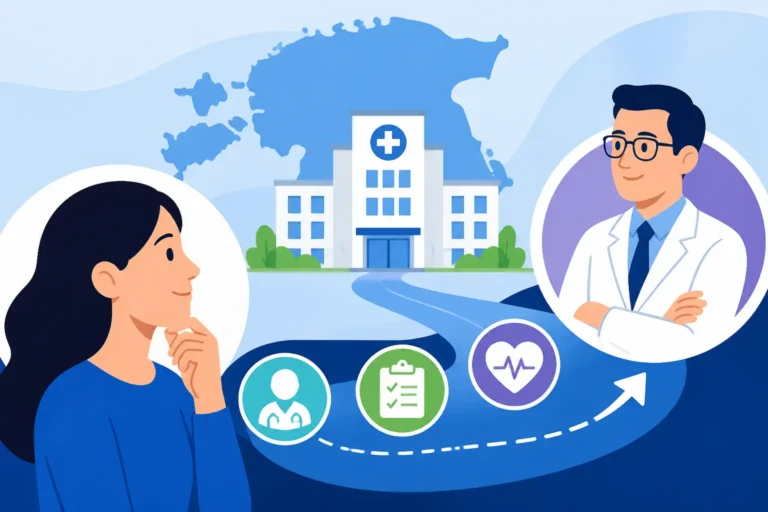
Estonia’s healthcare system is built on a principle of solidarity, funded primarily through social tax. For most of us moving here for work, our own coverage feels seamless because our employers handle the registrations and tax payments. However, the system does not automatically "see" your family members the moment you sign an employment contract. You have to actively bridge the gap between your residency and their inclusion in the public system, which is managed by the Tervisekassa (the Estonian Health Insurance Fund).
The Role of the Tervisekassa
The Tervisekassa is the heartbeat of the Estonian medical world. It isn't just an insurance provider; it is a massive public fund that negotiates prices with hospitals and pays for your family's prescriptions and doctor visits. When you are looking at How Estonia's Health Insurance Fund (Tervisekassa) Works: A Full Overview, you realize that the system is designed to be digital-first. Everything is linked to your personal identification code, the isikukood. Without this code, your family members essentially do not exist in the eyes of the healthcare system.
I remember the stress of my first month in Tallinn, trying to figure out if my daughter’s cough was worth a 50-euro private visit or if I could use the public system yet. The Tervisekassa provides incredible coverage, including almost entirely subsidized hospital stays and a wide range of specialist care, but the entry gate is strictly controlled by your residency status and the registration of your family ties in the Population Register.
Eligibility for Family Members
Not every relative you bring to Estonia is eligible for "free" insurance through your contributions. Generally, the system covers "dependent" family members. This primarily includes your children under the age of 19, your spouse who is raising a child under 8 (or three children), and in some specific cases, a spouse who is within five years of retirement age. If your spouse is also working, they will have their own insurance through their employer.
The complexity often arises for partners who are not working and do not fall into those specific "caregiver" categories. In those instances, you might need to look into How to Register with the Tervisekassa as a Foreigner in Estonia through voluntary contracts or rely on private providers until they find employment. It is vital to verify the exact category your family member falls into before you start the paperwork, as the Tervisekassa is quite rigid about these definitions.
Registering Your Children for Public Health Insurance
Children are the highest priority in the Estonian healthcare system. The state ensures that every child living in Estonia has access to medical care, but the "living in Estonia" part must be legally documented. If your child was born abroad, the process is slightly more manual than if they were born at a local hospital like Pelgulinna or Ida-Tallinna Keskhaigla.
Automatic vs. Manual Registration
For babies born in Estonia to parents who are already residents, the process is wonderfully "e-Estonia." The hospital registers the birth, the Population Register generates an isikukood, and the Tervisekassa usually picks up the data automatically. You just need to choose a doctor. You can find more details on this in How Do I Register My Newborn for Health Insurance in Estonia?.
However, for those of us who moved here with toddlers or teenagers, the path is different. You first must visit the local district government office (Linnaosavalitsus) to register their place of residence. Once they are in the Population Register and have their isikukood, the Tervisekassa system usually updates within a few days. If it doesn't, you must submit a formal application through the state portal, Riigi.ee, or via email with a digitally signed document. It’s a bit of a dance, but once that isikukood is linked to a registered address, the green light for healthcare usually follows.
Documents Needed for Children Born Abroad
When I brought my kids over, I underestimated the importance of "apostilled" documents. To register your child in the Population Register—which is the prerequisite for health insurance—you need their birth certificate. If that certificate was issued outside the EU (and some other treaty countries), it must be apostilled or legalized.
You also need to provide your own ID card and proof of your employment or residency permit. The Tervisekassa needs to see the "link." If you are a non-EU citizen, the process often coincides with the application for a temporary residence permit (TRP). It is a common frustration that the TRP can take months. During this gap, your child won't have Tervisekassa coverage. This is exactly why many of us veterans suggest using SafetyWing to cover the family during those first 90 days of "administrative limbo." It’s a small price to pay for the peace of mind that a playground accident won't result in a four-figure bill.
Adding a Spouse to Your Health Insurance Plan
Adding a spouse is often where expats hit the most friction. Unlike some countries where a "family plan" covers everyone under one umbrella, Estonia looks at each adult individually. If your spouse is not working, they are not automatically covered by your social tax unless they meet very specific criteria.
The Dependent Spouse Rule
The most common way for a non-working spouse to get Tervisekassa coverage is if they are stay-at-home parents. If your spouse is raising a child under 8 years old, or at least three children under 16, the state provides them with health insurance. The logic is that they are performing a socially valuable role that prevents them from working.
If your spouse does not fit this description—perhaps you moved here as a couple without children—they will generally not receive public health insurance through your employment. They would need to register as unemployed with the Töötukassa (Unemployment Insurance Fund) to receive coverage, which requires them to be actively looking for work. Understanding How to Add My Spouse to My Estonian Health Insurance is about knowing whether you are applying through the "parent" route or the "unemployed" route.
Registration Steps for Spouses
If your spouse qualifies as a dependent caregiver, you don't just "tell" the doctor. You must ensure the marriage is registered in the Estonian Population Register. If you were married abroad, you'll need that marriage certificate (translated and apostilled) to be entered into the system.
- Submit the foreign marriage certificate to the Tallinn Vital Statistics Office (or your local equivalent).
- Once the marriage is in the system, check the e-MTA (Tax and Customs Board) portal to see if the family connection is visible.
- Apply to the Tervisekassa via the "Application for health insurance" form on the state portal.
The Tervisekassa will verify the age of your children and the employment status of both parents. If everything aligns, the insurance will be activated. If there is a delay, don't hesitate to call their helpline (16662). They are surprisingly helpful and usually speak excellent English. In the meantime, having a plan like SafetyWing ensures that if your spouse needs a doctor before the Tervisekassa records update, you aren't paying out of pocket for everything.
Health Insurance for Parents and Older Relatives
Bringing elderly parents to Estonia is a beautiful way to keep the family together, but it is the most difficult category for health insurance. The Estonian system is quite protective of its resources, and there is no automatic coverage for parents of working expats.
Conditions for Sponsoring Parents
To get a residence permit for a parent, you generally have to prove that they require your care and that you have the financial means to support them. Even then, they do not automatically get Tervisekassa. If your parent is an EU pensioner, the process is smoother. They can usually transfer their insurance from their home country using an S1 form. You can learn more about this in Can EU Pensioners Use Estonian Public Healthcare?.
For non-EU parents, the options are limited. They will either need to be covered by private insurance indefinitely or, after they have lived in Estonia for five years on a residence permit, they might become eligible for certain state benefits. Most expats in this situation end up paying for private medical consultations or maintaining a robust private insurance policy for their parents to satisfy the residence permit requirements.
Navigating the 90-Day Waiting Period
Even when a family member is eligible—for example, if you've just started a new job or your spouse has just registered as a caregiver—there is often a waiting period. For many registration types, the insurance doesn't kick in the second you hit "submit." It can take up to 14 days for the system to process, and in the case of voluntary contracts, there is a mandatory two-month waiting period to prevent people from only buying insurance when they are already sick.
This "gap" is the most dangerous time for an expat family. I've seen friends ignore this, thinking "it's only a few weeks," only to have a kid break an arm at a trampoline park. A trip to the emergency room without insurance can cost hundreds, if not thousands, of euros. This is where a flexible, month-to-month policy like SafetyWing is a lifesaver. You can keep it active just for those first few months until you see the "Kindlustus on kehtiv" (Insurance is valid) status on your Digilugu portal.
Practical Steps and Digital Tools for Management
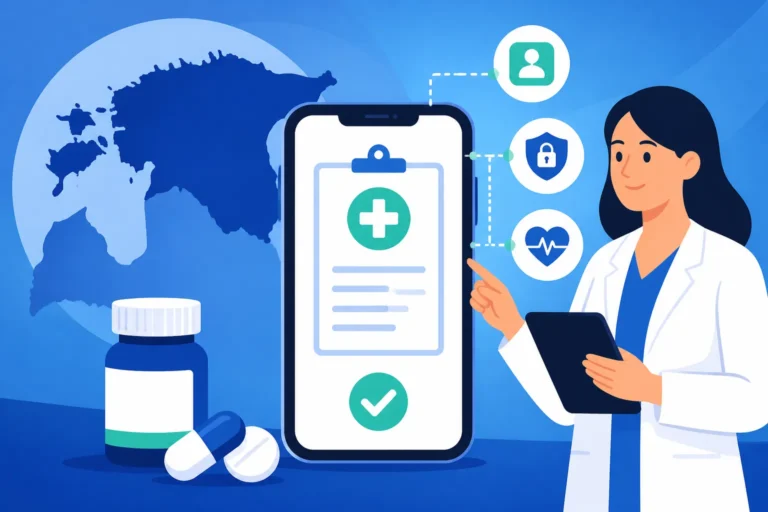
Once the paperwork is done, the real work of managing your family’s health begins. Estonia is famous for its "Paperless" approach, and healthcare is no exception. You will rarely carry a physical insurance card; your ID card is your insurance card.
Using the Digilugu Portal
The Health Information System, or Digilugu, is where every family member's medical history lives. As a parent, you can see your children's data by logging in with your own ID card or Smart-ID. You can see their vaccinations, their Understanding the Digiretsept (Digital Prescription) System in Estonia, and even the notes the doctor took during their last visit.
If you are an expat, navigating this the first time can be overwhelming. The portal (terviseportaal.ee) is available in English, but the actual medical notes written by doctors are almost always in Estonian. It’s helpful to use a browser translator or, better yet, ask your doctor to summarize the key points in English during the visit. This digital roadmap is essential for Navigating Estonia's Digital Healthcare System: An Expat's Roadmap (2027), as it allows you to book appointments and view test results without making a single phone call.
Finding a Family Doctor for the Whole Family
Registration with the Tervisekassa is only half the battle; the other half is finding a "Perearst" (Family Doctor). In Estonia, the family doctor is the gatekeeper to the entire system. You cannot see a specialist (like a cardiologist or a neurologist) without a "saatekiri" (referral) from your family doctor.
Finding a doctor who is accepting new patients and speaks fluent English can be a challenge, especially in Tallinn and Tartu. I recommend starting this search the moment your family gets their isikukoods. You have to submit an application directly to the doctor's office. If you're struggling, check out The Expat Guide to Finding a Family Doctor (Perearst) in Estonia for tips on which clinics are more expat-friendly.
| Family Member | Eligibility Basis | Key Document Needed | Action Portal |
|---|---|---|---|
| Child (<19) | Residence in Estonia | Birth Certificate (Apostilled) | Population Register / Riigi.ee |
| Working Spouse | Own Employment | Employment Contract | Managed by Employer |
| Stay-at-home Parent | Raising child <8 | Marriage Cert + Child's Birth Cert | Tervisekassa / Riigi.ee |
| Unemployed Spouse | Seeking Work | Residence Permit | Töötukassa |
| Non-EU Parent | Dependent Permit | Proof of Support / Private Insurance | PPA / Private Insurer |
Bridging the Gap: What to Do Before Public Coverage Starts
It is a common misconception that having a residence permit equals having health insurance. In reality, the residence permit is just the "ticket" that allows you to apply for the insurance. There is almost always a gap of several weeks, or even months for non-EU families, between arriving in the country and having that "Active" status in the Tervisekassa system.
The Waiting Period Reality
For those moving on a D-visa, you are generally required to have private insurance to even enter the country. However, once you transition to a TRP (Temporary Residence Permit), you might think you can drop the private cover immediately. Don't. The Tervisekassa registration is not instantaneous. It requires your address to be registered, then the application to be processed, and then a potential 14-day activation period.
During this time, your family is essentially "uninsured" in the eyes of the Estonian state. If you go to the ER, you will be treated—Estonia never denies emergency care—but you will be handed a bill at the end. These bills are calculated at the full "private" rate. This is the primary reason why SafetyWing has become a staple in the expat community here; it acts as a safety net that covers you globally and locally while the Estonian wheels of bureaucracy turn at their own pace.
Why Digital Nomad and Work Visa Holders Need Extra Care
If you are here on a Digital Nomad Visa, you are actually not eligible for Tervisekassa at all, as you aren't paying social tax into the Estonian system. Your family must remain on private insurance for the duration of your stay. Even for work visa holders, if your contract is short-term (less than six months), your family might not be eligible for the same benefits as a permanent resident.
Always double-check your contract type. If you are an FIE (Sole Trader), you have to pay your own social tax for a certain period before coverage begins. For anyone in these transitional or non-standard categories, maintaining a reliable private policy is not just a luxury—it’s a logistical necessity. You can find more on the specifics in Health Insurance in Estonia: Mandatory, Private and Travel Options Explained to ensure you haven't missed a hidden requirement.
Common Pitfalls and How to Avoid Them
Even with the best intentions, things go wrong. The most common pitfall is the "Address Trap." In Estonia, your health insurance is often tied to your municipality. If you move from Tallinn to Tartu and forget to update your address in the Population Register, you might find that your family doctor "drops" you because you are no longer in their catchment area.
Another issue is the expiration of documents. If your residence permit is up for renewal, your health insurance will often expire on the same day as your card. There is sometimes a "grace period," but it is notoriously finicky. Always start your renewal process at least three months in advance to avoid a lapse in coverage. If you do find yourself in a lapse, remember that What Happens If I Get Sick Before My Health Insurance Starts in Estonia? offers some practical advice on clinics like Confido or Fertilitas that take private patients quickly, albeit at a higher cost.
Ultimately, registering your family for health insurance in Estonia is a test of patience and digital literacy. It feels cold and mechanical at first, dealing with portals and codes, but once you are in the system, the care is world-class. My children have had everything from routine vaccinations to minor surgeries here, and once the "system" knew who they were, we never had to worry about a bill again. Just make sure you cover those first few months with a backup like SafetyWing, and you’ll be able to enjoy the Estonian lifestyle without the weight of medical "what-ifs" hanging over your head.
Disclaimer
The information provided in this guide is for informational purposes only and does not constitute legal or professional medical advice. Healthcare regulations and immigration laws in Estonia are subject to change. Always verify current requirements with the Estonian Health Insurance Fund (Tervisekassa) and the Police and Border Guard Board (PPA) before making decisions regarding your family's health coverage.