Understanding Vaccination Schedules and Requirements in Estonia
Navigating the Estonian healthcare system often feels like trying to solve a Rubik's Cube while wearing mittens, especially when you are standing in a pharmacy in Tallinn trying to explain your child's immunization history from back home. This guide explains the Estonian vaccination schedule, how to transfer your foreign records, and what is required for school or work residency.
The Estonian National Immunization Schedule for Children
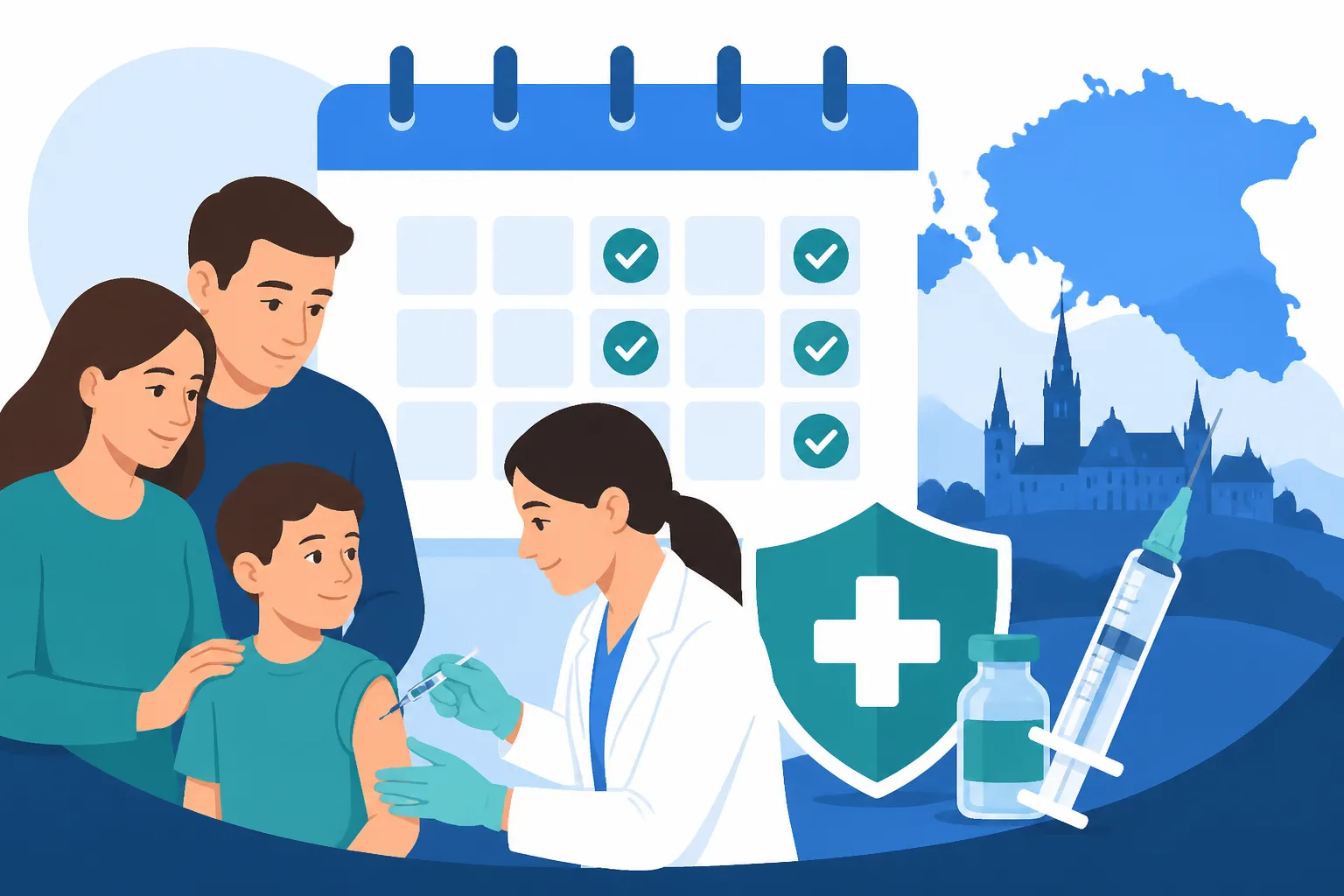
When you first arrive, the sheer efficiency of Estonia’s digital society can be intimidating. One day you are unpacking boxes, and the next, you realize your toddler is due for a booster shot. The Estonian state-funded immunization program is quite comprehensive, covering the most critical infectious diseases from birth through late adolescence. Most of these vaccinations are administered by your family doctor or a school nurse and are fully covered by the public system if you have health insurance.
The schedule begins almost immediately at the maternity hospital. Newborns are typically given the BCG (tuberculosis) vaccine and the first dose of Hepatitis B within the first few days of life. As an expat, if your child was born elsewhere, the first thing your local doctor will ask for is a translated copy of these early records. They need to ensure the timing aligns with the Estonian rhythm, which usually includes the 6-in-1 vaccine (diphtheria, tetanus, pertussis, polio, Haemophilus influenzae type b, and Hepatitis B) at three, five, and twelve months.
By the time children reach school age, the focus shifts toward boosters. At age seven, just as they are starting the first grade, they receive a booster for DTaP-IPV. Later, at age 13, the MMR (measles, mumps, and rubella) booster is administered. It is important to know that while these are "recommended," the social and medical expectation to follow this schedule is very high. If you are still waiting for your public coverage to kick in, having a plan like SafetyWing can provide peace of mind for general medical consultations while you sort out the paperwork for the state system.
In recent years, Estonia has also added the HPV vaccine to the national schedule for both girls and boys, typically starting around age 12. This is a significant step forward in public health here, and the school nurses are the primary point of contact for this. If you are Understanding Vaccination Schedules and Requirements in Estonia, you will find that the school health system is remarkably proactive; you will often receive a notification via the e-school system (Stuudium or Ekool) asking for consent before any jab is given.
Adult Boosters and the Tetanus-Diphtheria Requirement
Many of us move to Estonia as adults and completely forget that vaccines aren't just for kids. In Estonia, the state is particularly diligent about the Tetanus and Diphtheria booster, which is recommended every ten years. The best part? This booster is completely free for adults covered by the Tervisekassa. You don't even need a special appointment in some cases; you can simply message your doctor and ask to come in for your "ten-year jab."
The challenge for many expats is remembering when their last shot was. If you come from a country where medical records are still kept in dusty paper folders, you might not have a clue. When you finally Registering with the Tervisekassa in Estonia: The Complete Expat Guide (2027), your doctor will likely suggest starting a fresh cycle if you cannot provide proof of your last booster. It’s a bit of a "better safe than sorry" approach that the Estonian medical community embraces.
Beyond the free boosters, many adults choose to opt into the seasonal flu vaccine. While the flu shot is not free for everyone, it is highly encouraged, especially given the long, dark, and crowded winters in the Baltics. You can get these at your family doctor's office or even at some larger pharmacies in shopping centers like Ülemiste or Viru Keskus during the peak season. It’s a very low-friction process—usually just a quick digital registration and a small fee.
For those who are frequently traveling back and forth between Estonia and their home country before they have settled into the local system, having private travel medical insurance is a common bridge. Using a service like SafetyWing can help cover the costs of unexpected illness while you are in that "limbo" period of waiting for your residency documents to be finalized and your social tax contributions to begin.
Tick-Borne Encephalitis: The Non-Negotiable Local Vaccine
If there is one thing that unites Estonians, it is their love for the forest. Whether it is mushroom picking, berry hunting, or just a weekend hike in Lahemaa National Park, being outdoors is a national pastime. However, this comes with a catch: Estonia is a high-risk area for Tick-Borne Encephalitis (TBE). Unlike Lyme disease, which is bacterial and treated with antibiotics, TBE is viral and can be quite severe.
The TBE vaccine is not part of the free national immunization schedule, meaning you have to pay for it out of pocket. However, almost every veteran expat will tell you it is the best money you will ever spend here. The process involves three initial doses: the first two are usually given a month apart, and the third is given 9 to 12 months later. After that, you just need a booster every three to five years depending on your age.
You can get the TBE vaccine at most private clinics like Confido or at the infectious disease centers in hospitals such as Lääne-Tallinna Keskhaigla. I remember my first spring in Tallinn, every local friend asked me, "Have you had your tick shots yet?" It felt like a rite of passage. If you are How to Find an English-Speaking Doctor in Estonia, they will invariably recommend this if you plan on spending any time at a "suvila" (summer house).
| Vaccine Type | Target Group | Cost (with Tervisekassa) | Frequency |
|---|---|---|---|
| Diphtheria/Tetanus | Adults | Free | Every 10 years |
| MMR (Measles, Mumps, Rubella) | Children/Adults | Free for children | Two doses total |
| Tick-Borne Encephalitis | All ages | Paid (approx. €30-€45) | 3 doses + boosters |
| Seasonal Flu | Risk groups/All | Free for risk groups / Paid for others | Annual |
| HPV | Adolescents | Free | Two doses |
Navigating the Digilugu and Transferring Foreign Records
Estonia’s healthcare is famous for being digital, but for an expat, the "Digilugu" (Health Information System) is a double-edged sword. On one hand, every vaccine you receive in Estonia is automatically logged and accessible via your ID-card. On the other hand, the system starts as a blank slate when you arrive. It does not automatically "talk" to the medical systems in the US, UK, or India.
To get your foreign records into the system, you need to take your physical immunization passport or a certified translation of your records to your new family doctor. The doctor then has to manually enter this data into your digital record. This is a crucial step because without it, the system might flag you or your child as "unvaccinated," which can cause hiccups when trying to How to Enrol Your Child in an Estonian Public School.
I highly recommend doing this as soon as you get your "isikukood" (personal code). Do not wait until there is a medical emergency or a school deadline. The doctors are generally helpful, but they aren't translators. If your records are in a language other than English, Estonian, or Russian, you will likely need a sworn translation. Once the data is in the system, you can see your entire history by logging into the patient portal at terviseportaal.ee.
When you are in the process of Understanding the Digilugu (Digital Health Record) System in Estonia, you will realize that this digital transparency is actually quite liberating. You no longer have to worry about losing that little yellow WHO booklet. If you ever need to prove your vaccination status for travel or work, you can simply download a digitally signed PDF from the portal. It’s one of those "only in Estonia" perks that makes the initial paperwork headache worth it.
School and Kindergarten Requirements
One of the biggest concerns for expat parents is whether their child will be denied entry to a "lasteaed" (kindergarten) or school if they aren't fully vaccinated. In Estonia, vaccinations are not strictly mandatory by law for school attendance in the way they are in some other countries. However, there is a strong institutional push, and the school doctor or nurse will closely monitor each child's health card.
If you choose not to vaccinate, you will usually be asked to sign a waiver or a statement of refusal. However, you should be aware that during an outbreak of something like whooping cough or measles, unvaccinated children may be asked to stay home for their own safety and the safety of others. Most international schools in Tallinn, such as the International School of Estonia or the Tallinn European School, follow the national guidelines quite closely and will request your child’s How to Get Proof of Address from the Population Register in Estonia and their medical history during enrollment.
The school nurse is an incredible resource. They handle the routine check-ups and the scheduled boosters. If your child is due for a shot, you’ll get a note or an email. It’s a very communal approach to health. If you are coming from a private-healthcare-heavy country, the idea of a nurse giving your child a vaccine at school might seem strange, but here it is the standard. For any specialized medical needs that the school nurse can't handle, having a flexible plan like SafetyWing can be useful for seeing private specialists on short notice.
If you are Understanding International Schools and Their Costs in Estonia, remember that while the tuition might be high, the health services provided within the school are usually excellent. They work in tandem with the national system, ensuring that even if your child is in an international bubble, their health records remain compliant with Estonian standards.
Travel Vaccinations and Specialty Clinics
Estonians love to travel, especially to warmer climates during the "muddy season" (rehekuu). As a result, travel medicine is quite advanced here. If you are planning a trip to a tropical region, you shouldn't just rely on your family doctor. Instead, you should visit a specialized travel medicine clinic. The most well-known is the "Nakkuskliiniku polikliinik" (Infectious Diseases Outpatient Clinic) at the West Tallinn Central Hospital on Paldiski mnt.
These clinics provide specialized vaccines like Yellow Fever, Typhoid, and Japanese Encephalitis. They also provide the necessary international certificates (the yellow booklet) that are still required for entry into certain countries. These visits and vaccines are not covered by the Tervisekassa, so you will need to pay. If you have private insurance or a global health plan like SafetyWing, check if they cover preventative travel medicine, though many standard policies do not.
When booking these appointments, do it well in advance. Some vaccines, like Hepatitis A, require multiple doses over several months for full protection. The doctors at these clinics are incredibly knowledgeable and will give you a "region-specific" consultation based on exactly where you are going. This is also where you would go if you need a prescription for malaria prophylaxis.
For those How to Access Specialist Care Through the Estonian Public System, travel medicine is one of the few areas where the private and public systems feel very similar because almost everyone pays out of pocket. Whether you go to a big hospital or a private clinic like Qvalitas, the service is professional, usually available in English, and the digital record of your visit will still end up in your Digilugu.
What Happens if You Miss a Vaccination?
Life happens. You move countries, you lose your luggage, you forget the date. If you realize you’ve missed a scheduled vaccine, the first step is not to panic. The Estonian healthcare system is designed to be catch-up friendly. Your first point of contact should always be your "Perearst" (Family Doctor). They can create a customized "catch-up schedule" for you or your child.
The beauty of the Estonian system is that if you are Understanding the Role of the Family Doctor Centre (Perearstikeskus) in Estonia, you’ll find that they are very used to dealing with people who have fragmented medical histories. They won't judge; they just want to get the records straight. If you are an adult who never finished their Polio series or a parent whose child missed their 12-month MMR, the doctor will simply book the next available slot.
In cases where you are unsure of your immunity, doctors can also order "antibody tests" (vereproov antikehadele). While these usually cost a small fee if not medically urgent, they can confirm whether you actually need a booster or if you are already protected. This is particularly common for expats who had childhood illnesses but no formal vaccination records.
Understanding Healthcare Costs in Estonia
Disclaimer: This article is for informational purposes only and does not constitute professional medical or legal advice. Vaccination requirements and schedules can change, and you should always consult with a qualified healthcare provider or the Estonian Health Board (Terviseamet) for the most current information regarding your specific situation.
For those just starting their journey in the country, the costs can be a bit of a surprise. While much is free, there are always exceptions. If you are currently Understanding the Cost of Healthcare in Estonia: A Complete Breakdown for Foreigners (2026), you will see that the system is built on the foundation of social tax. If you aren't working yet, or are a digital nomad, you might need to pay for everything from the visit fee to the vaccine itself. This is why many foreigners maintain a private policy like SafetyWing until they are fully integrated into the Estonian social system.
The "visit fee" (visiiditasu) for a family doctor is usually non-existent or very low (around €5) for insured people, but if you are uninsured, a consultation can cost between €40 and €100. The vaccines themselves range from €15 for a simple flu shot to €100+ for specialized travel vaccines. Keeping a clear record of these expenses is vital if you plan on seeking reimbursement from any private insurer later.
Finally, remember that the "Health Board" (Terviseamet) website is the ultimate source for official updates. They track outbreaks and change recommendations based on real-time data. Being an informed expat means more than just knowing where to get your shots; it means understanding the "why" behind the local requirements so you can keep yourself and your new community safe.