What Is the Emergency Phone Number in Estonia?
One of the most terrifying moments of expat life is facing a medical crisis and realizing you don't know the local emergency protocols. Whether it’s a sudden injury or a kitchen fire in your Tallinn apartment, knowing exactly who to call can save lives. This guide breaks down the essential emergency numbers in Estonia, including 112 and 1220, to ensure you get help fast.
The Universal Emergency Number in Estonia: 112
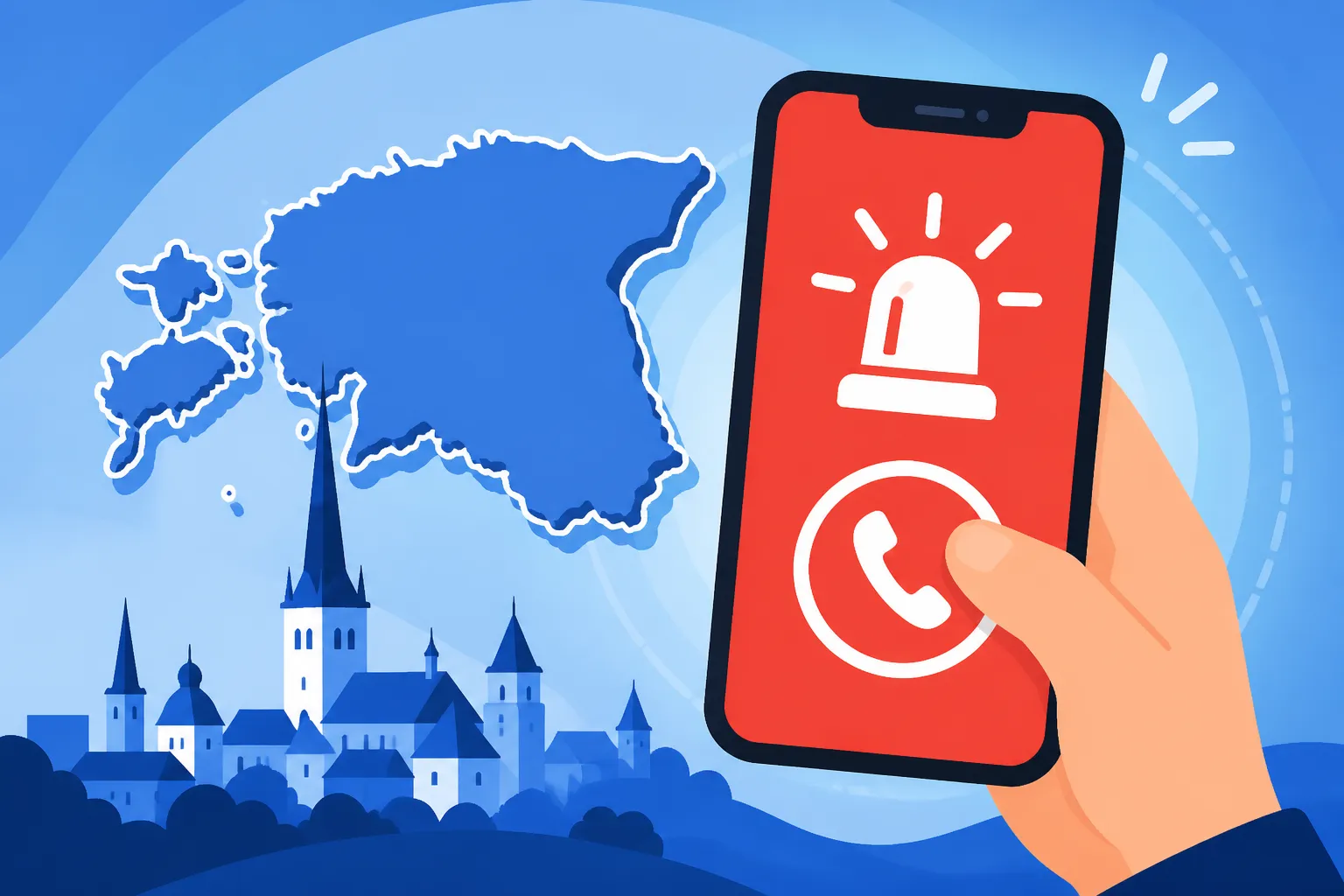
If you are facing a life-threatening situation, the only number you need to remember is 112. This is the pan-European emergency number, and in Estonia, it serves as the centralized hub for the police, the fire department (Rescue Board), and the ambulance services (kiirabi). Unlike some countries where you might have separate numbers for a fire versus a medical emergency, the Estonian "Häirekeskus" (Emergency Response Centre) handles everything through this single line.
When you dial 112, you are connected to a professional dispatcher who is trained to assess the severity of your situation within seconds. In Estonia, these dispatchers are remarkably efficient, but they will ask a series of pointed questions: What happened? Where are you? Is anyone’s life in danger? It is vital to stay calm and answer as clearly as possible. For many foreigners, the fear of a language barrier is the biggest hurdle, but the system is designed to accommodate the international community.
If you find yourself in a situation where you cannot speak—perhaps due to an intruder or a medical condition that prevents vocalization—you can also send an SMS to 112. However, this service requires prior registration for the SMS-112 service, which is a detail many expats overlook until it is too late. For most, the voice call remains the primary and most effective method of contact.
Languages Spoken by 112 Dispatchers
Estonia is a digital-first society with a very high level of English proficiency, especially in the public service sectors. When you call 112, the dispatcher will almost certainly be able to communicate in Estonian and Russian. Fortunately for the expat community, English is also widely spoken among dispatchers. If the person who answers struggles with English, they can quickly route the call to a colleague who is fluent.
It is helpful to remember that while the dispatcher speaks English, the emergency responders (like the ambulance crew or firefighters) who arrive at your door might have varying levels of English. If you are in a high-stress situation, try to have your Isikukood (Personal Code) and Why It Matters for Healthcare ready, as this is the primary way they will identify you and pull up your digital medical history.
In the rare event that no English speaker is immediately available, try to learn a few basic phrases in Estonian, such as "Appi!" (Help!) or "Kiirabi" (Ambulance). Even if you only speak English, the dispatch system uses advanced geolocation technology to find your mobile phone's position, which is a relief for those who are still learning their way around the winding streets of Tallinn’s Old Town or the forests of South Estonia.
When to Call 112 vs. Other Services
One of the common frustrations for new residents is understanding the threshold for an emergency. In Estonia, 112 is strictly for "life and limb" situations. This includes heavy bleeding, unconsciousness, chest pain, difficulty breathing, or serious accidents. If you call 112 for a mild fever or a prescription renewal, the dispatcher will politely redirect you to a different service, as they must keep the lines open for true crises.
For situations that are urgent but not life-threatening, you should familiarize yourself with Emergency Medical Care in Estonia: What Every Expat Needs to Know. Understanding the nuance between a crisis and an urgency will help you avoid the guilt of "wasting" emergency resources and ensure you get the right type of care. If you are a digital nomad or a tourist without local state insurance, having a plan with SafetyWing can be incredibly helpful here, as they provide coverage for unexpected medical evacuations and urgent care that doesn't quite fit the 112 criteria.
If you are unsure whether your situation is a true emergency, it is always better to err on the side of caution and call. The dispatchers are trained to make that call for you. If they determine an ambulance is not needed, they will often give you advice on which hospital to visit or provide the number for a medical advice line.
The Family Doctor Advice Line: 1220
For those times when you are sick but not "112-sick," Estonia offers a brilliant service: the Family Doctor Advice Line, or 1220. This is a 24/7 national helpline staffed by experienced family doctors and nurses. It is the perfect middle ground for an expat who feels unwell but doesn't yet have a local perearst.
The 1220 service is designed to provide medical consultation for acute health problems when your own doctor is unavailable or when you are away from home. I’ve found this service particularly useful during the dark Estonian winters when a sudden flu hits on a Saturday night and you aren't sure if you need to rush to the ER. They can give you advice on dosage for over-the-counter medications, how to treat a child's fever, or whether your symptoms require a visit to the Estonian Pharmacy (Apteek) System and Opening Hours.
One important thing for expats to note: while the service is 24/7 in Estonian and Russian, English-language consultations are generally available every day between 15:00 and 17:00. Outside of these hours, you may still find an English-speaking nurse on duty, but it is not guaranteed.
Benefits for Expats and Foreigners
The 1220 line is a lifesaver for those still figuring out How to Choose and Register with a Family Doctor (Perearst) in Estonia. If you don't have a local doctor yet, you are often left feeling adrift in the medical system. The 1220 staff can help bridge that gap. They can also see your digital health records if you give them permission, which allows them to provide more personalized advice.
Another hidden benefit of 1220 is their ability to issue "emergency" digital prescriptions in specific circumstances. If you have run out of chronic medication and your doctor's office is closed for the weekend, the advice line doctor may be able to see your history and issue a temporary prescription to get you through until Monday. This is a level of digital integration that often shocks newcomers from more analog countries.
For those traveling on a budget or working remotely, using a service like SafetyWing ensures that even if 1220 recommends a private clinic visit, you aren't stuck with a massive bill. SafetyWing is particularly popular among the tech-nomad crowd in Tallinn for this very reason—it acts as a safety net when the public advice line suggests more formal intervention.
Practicalities of Calling 1220
When calling 1220 from an Estonian SIM card, the first five minutes are free (after which you pay a local call rate). However, if you are calling from a foreign phone number, you must dial +372 634 6630. This is a vital number to save in your phone the moment you land.
Be prepared to provide your personal identification code (isikukood) if you have one. If you don't, you can still receive general advice, but the medical professional won't be able to access your records or issue prescriptions. They will ask you for a detailed description of your symptoms, so it's a good idea to have your temperature or any other relevant "stats" ready before you dial.
| Number | Name of Service | Best Used For | Languages |
|---|---|---|---|
| 112 | Emergency Response | Life-threatening crises, accidents, fire, police | EST, RUS, ENG |
| 1220 | Family Doctor Advice | Medical advice, fever, minor injuries, prescriptions | EST, RUS, ENG (limited) |
| 16662 | Poison Hotline | Accidental ingestion of chemicals, plants, or meds | EST, RUS, ENG |
| 116 123 | Emotional Support | Mental health crises, extreme stress, loneliness | EST, RUS, ENG |
| 1247 | State Info Line | Non-medical emergencies, road conditions, general info | EST, RUS, ENG |
What Happens When You Call the Kiirabi (Ambulance)
If you have made the call to 112 and an ambulance is dispatched, it is helpful to know what to expect. The Estonian kiirabi is highly professional and usually arrives very quickly, especially in urban centers like Tallinn, Tartu, or Pärnu. The crew typically consists of three people: a driver, a nurse or paramedic, and sometimes a doctor (depending on the severity reported).
When they arrive, they will perform an initial assessment on the spot. Unlike in some countries where the ambulance is just a transport vehicle, the Estonian crew is equipped to perform a wide range of emergency treatments in your living room or on the street. If they can stabilize you without a hospital visit, they might do so and advise you to follow up with your doctor. However, if the situation is serious, you will be taken to the nearest EMO (Erakorralise meditsiini osakond or Emergency Medicine Department).
For many expats, the fear of the cost is a major stressor. It is important to know How Much Does an Ambulance (Kiirabi) Cost in Estonia? before you are in the back of one. Generally, for those covered by the Tervisekassa (the Estonian Health Insurance Fund), the service is free. However, for those without local insurance, the rules can be different. If you are in Estonia on a visa that requires private insurance, SafetyWing is a solid choice because it is designed to cover these exact types of emergency interventions.
Navigating the EMO (Emergency Room)
The EMO is where the real waiting begins. In Estonia, the emergency room operates on a triage system, not a first-come, first-served basis. When you arrive (either by ambulance or by walking in), a triage nurse will categorize you based on the urgency of your condition:
- Red: Life-threatening, immediate intervention.
- Orange: Very urgent, usually seen within 15 minutes.
- Yellow: Urgent, but stable. Expect to wait up to an hour.
- Green: Non-urgent. In a busy city like Tallinn, a "green" patient might wait up to 6 hours.
This is where the frustration often peaks for foreigners. If you have a broken finger, you are likely "green" or "yellow" and will be sitting in the waiting room for a long time while the doctors handle more critical cases. Understanding this system is key to managing your expectations. You can find more detail on this in the guide to Public vs Private Healthcare in Estonia: Which Should Expats Choose?.
While you are waiting, make sure you have your ID card or passport. If you are a non-EU citizen, the staff will eventually ask for your insurance details. If you have SafetyWing, keep your digital insurance card accessible on your phone to show the administrative staff. This will streamline the billing process later on.
Major Hospitals with Emergency Departments
In Tallinn, there are three main hospitals with EMOs. The North Estonia Medical Centre (PERH) in Mustamäe is the largest and handles the most critical traumas. East Tallinn Central Hospital (ITK) on Ravi street and West Tallinn Central Hospital (LTKH) in Pelgulinn also have busy emergency departments.
In Tartu, the Tartu University Hospital (TÜK) is the primary destination. It is one of the most advanced medical facilities in the Baltics. If you are living in a smaller town, you should check Where Is the Nearest Family Doctor Centre in Tartu? or your respective city to know where the local hospital is located. Even small regional hospitals in Estonia are generally well-equipped for stabilization before transferring patients to the bigger cities if necessary.
Other Essential Emergency and Support Lines
While 112 and 1220 are the big ones, there are several other numbers that can be incredibly useful depending on your specific situation. Many expats forget about these, but they can prevent a minor incident from turning into a full-blown emergency.
One such number is the Poisoning Information Centre at 16662. If you, your child, or even your pet ingests something suspicious—whether it's a strange berry from an Estonian forest or a household cleaning product—call this number immediately. They are experts in toxicology and can tell you exactly what steps to take. This service is available 24/7 and is often faster than calling 112 for non-life-threatening ingestions.
For those struggling with the mental toll of relocation or personal crises, the Emotional Support and Prayer Line at 116 123 is available. Moving to a new country like Estonia can be isolating, and How to Access Mental Health Services in Estonia as an Expat is a topic every long-term resident should research. Having a number to call when you just need someone to talk to in English or Estonian is a vital part of your "emergency" toolkit.
Using 1247 for State Information
The number 1247 is the "State Information Line." While not a medical emergency number, it is the one you call for things like blocked roads, environmental pollution, or questions about state services. During the pandemic, this was the primary line for COVID-19 information. If you see something that seems dangerous but isn't an immediate threat to life—like a fallen power line or a massive pothole—1247 is the correct place to report it.
Knowing these numbers helps you feel like a part of the community rather than a confused bystander. It also ensures that the 112 dispatchers can focus on the most critical emergencies. If you are ever in doubt about What Happens If I Get Sick Before My Health Insurance Starts in Estonia?, remember that the advice lines (1220 and 16662) are there to help everyone, regardless of their insurance status.
Summary of Tips for Emergency Calls
- Stay Calm: The dispatcher needs clear information to help you.
- Know Your Location: If you are at home, have your address ready. If outside, look for landmarks or use your phone's GPS.
- State Your Language: If you need an English speaker, say "English, please" immediately.
- Answer the Questions: Do not hang up until the dispatcher tells you to. They may provide life-saving instructions while the ambulance is en route.
- Prepare Your Documents: Have your ID card and Understanding Health Insurance Through Social Tax in Estonia details or private insurance like SafetyWing ready for the medical team.
Navigating a medical crisis in a foreign country is never easy, but Estonia’s digital infrastructure and highly trained personnel make it one of the safer places to be an expat. By keeping these numbers in your phone and understanding the triage system, you are taking the most important step in protecting yourself and your family.
For more information on the long-term aspects of health in Estonia, you might want to look into The Complete Guide to Healthcare in Estonia for Expats (2027) to ensure you are fully covered and prepared for any eventuality.
Medical Disclaimer
The information provided in this guide is for informational purposes only and does not constitute professional medical advice, diagnosis, or treatment. Always seek the advice of your physician or other qualified health provider with any questions you may have regarding a medical condition. If you think you may have a medical emergency, call 112 or go to the nearest emergency room immediately. Relying on any information provided in this article is solely at your own risk.