How to Use Your EHIC (Euroopa Ravikindlustuskaart) in Estonia
Moving to a new country often involves a mountain of paperwork, but few things are as stressful as falling ill before you have fully settled into the local system. If you are an EU citizen or a resident of a participating country, you might be relying on your European Health Insurance Card (EHIC) to bridge the gap. This guide explains exactly how to use your EHIC in Estonia, what costs to expect, and where the limitations might catch you off guard.
Understanding the EHIC Framework in the Estonian Context
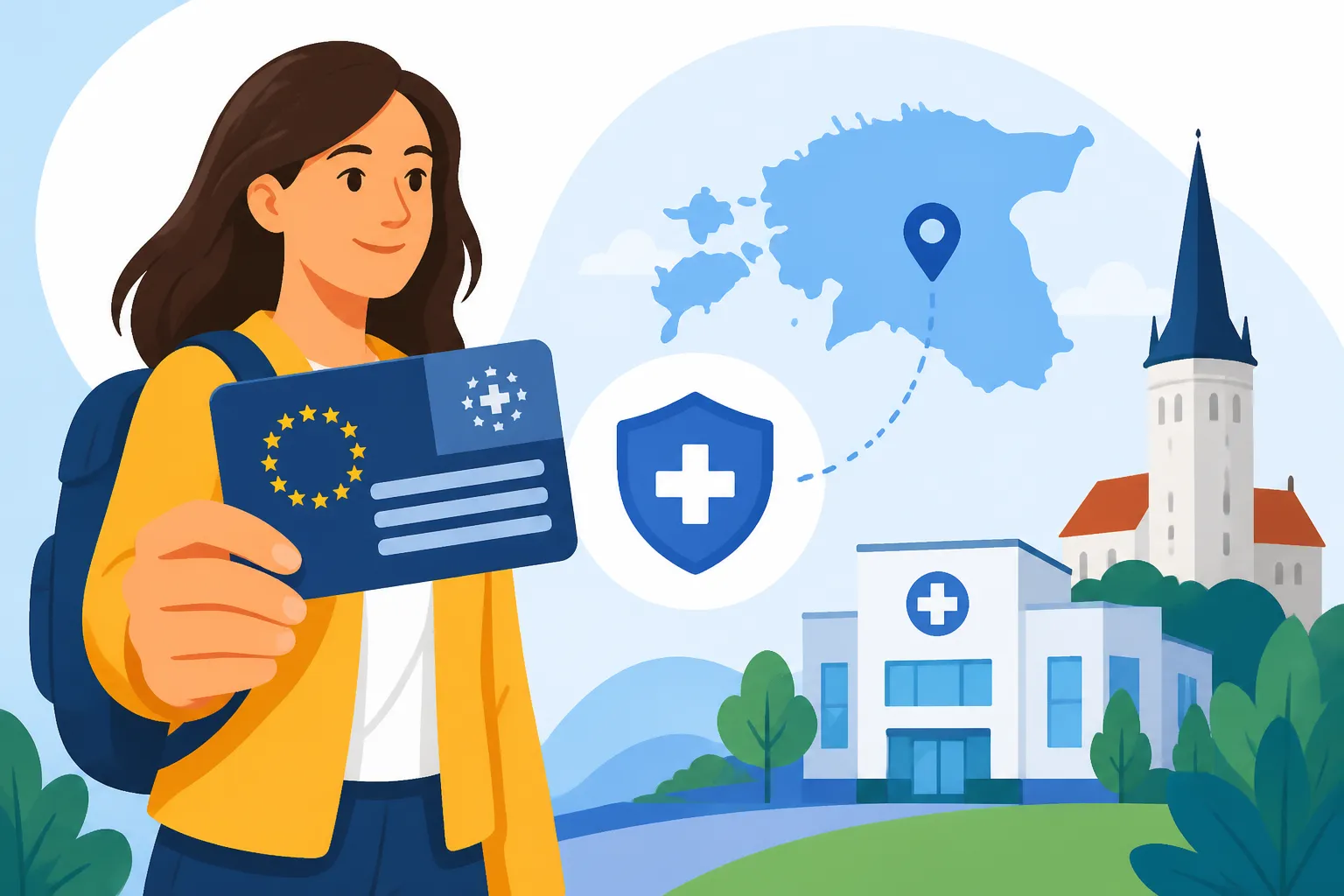
The European Health Insurance Card, known locally as the Euroopa Ravikindlustuskaart, is a vital tool for any European traveler or new arrival in Estonia. However, there is a common misconception that this card makes all medical care entirely free. In reality, the EHIC ensures that you are treated under the same conditions and at the same cost as an Estonian resident covered by the national health insurance fund. If an Estonian pays a co-payment for a doctor's visit, you will too. If a service is free for them, it is free for you.
When I first arrived in Tallinn, I assumed the EHIC was a sort of "all-access pass." I quickly learned that while it provides a massive safety net, it is designed for "necessary care." This means treatment that cannot wait until you return home. If you are in Tartu for a three-month project and develop a chest infection, the EHIC has you covered. However, if you are looking to have a pre-existing condition treated through a series of elective surgeries, you will find the system much less accommodating. The goal is to keep you healthy enough to continue your stay or get home safely.
It is also important to remember that the EHIC is not a substitute for travel insurance. While it covers medical emergencies, it will not help you if your luggage is stolen or if you need a medical evacuation back to your home country. For those who want more comprehensive protection, especially during the transition period before they are fully registered in the local system, a provider like SafetyWing can offer a much-needed layer of security that picks up where the EHIC leaves off.
What the EHIC Covers and What It Doesn't
In Estonia, the EHIC covers a wide range of services provided by the public healthcare sector. This includes visits to a family doctor, specialist consultations (with a referral), hospital treatment, and emergency care. The key is that the provider must be a part of the Tervisekassa network. If you wander into a high-end private clinic in the Rotermann Quarter without checking their affiliations, your EHIC might be as useful as a library card.
On the flip side, the EHIC does not cover private healthcare or the costs of being flown home after a serious accident. It also does not cover "medical tourism." If the authorities determine you traveled to Estonia specifically to seek treatment for a condition, they may refuse to honor the card. This is why many expats choose to supplement their EHIC with private options like SafetyWing to ensure they aren't left with a five-figure bill for a private hospital room or emergency repatriation.
Eligibility for EU EEA and UK Citizens
Eligibility is generally straightforward: if you are insured by a social security system in any EU Member State, Iceland, Liechtenstein, Norway, or Switzerland, you are entitled to an EHIC. Since the Brexit transition, UK citizens can use their Global Health Insurance Card (GHIC) in much the same way, as Estonia and the UK have maintained reciprocal healthcare agreements.
However, keep in mind that the EHIC is intended for temporary stays. If you have moved to Estonia for work, you will eventually need to transition into the local system. Understanding How Estonia's Health Insurance Fund (Tervisekassa) Works: A Full Overview is crucial for anyone planning to stay long-term, as your EHIC eligibility from your home country will eventually lapse once you become a resident and start paying social tax in Estonia.
Step-by-Step How to Access Medical Care with Your EHIC
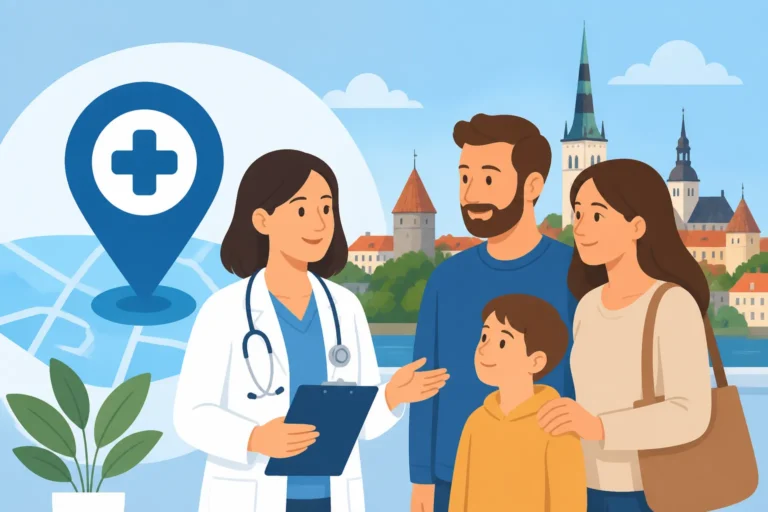
Actually using the card is quite simple, provided you follow the right sequence of events. In Estonia, the healthcare system is very structured. Your first point of contact should almost always be a family doctor, known as a Perearst. Unlike some countries where you can go straight to a specialist, Estonia requires a "gatekeeper" approach. If you have a non-emergency issue, you should find a family doctor's center (Perearstikeskus) that has a contract with the Tervisekassa.
When you call to make an appointment, it is vital to mention that you are an EU resident using an EHIC. Some clinics might be more accustomed to dealing with local residents who have an Estonian personal code, or Isikukood. If you haven't received yours yet, you should read up on How to Get Your Isikukood (Personal Code) and Why It Matters for Healthcare to see how it simplifies your long-term interactions with the state. Without an Isikukood, the clinic will need to manually record your EHIC details, so make sure you have the physical card or a PDF of your Provisional Replacement Certificate ready.
Finding a Tervisekassa-Contracted Provider
The easiest way to find a provider is to look for the Tervisekassa logo on a clinic’s website or at their entrance. Most major hospitals, such as the North Estonia Medical Centre (PERH) in Tallinn or the Tartu University Hospital, are public and fully accept the EHIC for both emergency and referred care. If you are looking for a general practitioner, you can search the Tervisekassa database, though the interface is primarily in Estonian.
If you are in a pinch and cannot find a public doctor with an opening, you might be tempted to go private. This is where you need to be careful. Private clinics often charge "market rates" which can be significantly higher than the Tervisekassa co-payment. In these instances, having secondary insurance like SafetyWing is a lifesaver, as it can help cover the costs of private consultations that the EHIC simply doesn't touch.
Presenting Your Card and Identification
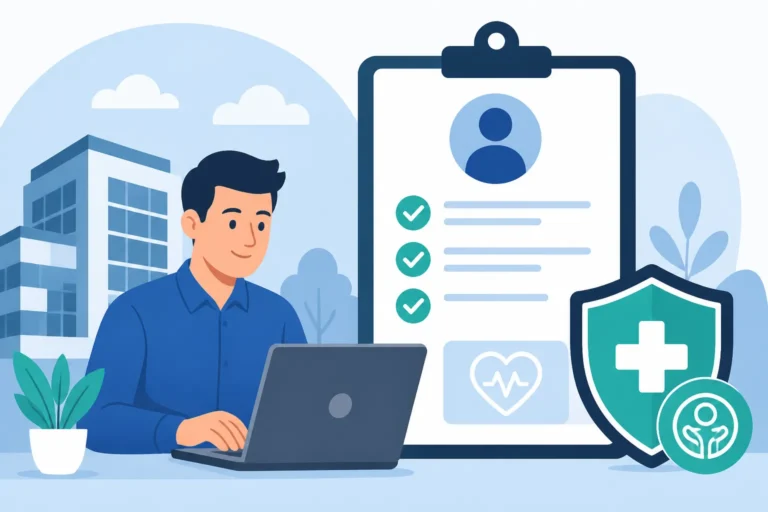
When you arrive at the clinic or hospital, you must present your EHIC along with a valid form of identification, such as your passport or a national ID card. The staff will take a copy of your EHIC. It is important to ensure that your card is still valid; if it has expired, you will be treated as a private patient and billed for the full cost of the visit.
In some cases, a clinic might ask you to pay upfront and then claim a refund later. This is rare for Tervisekassa-contracted providers, but it does happen. If it does, make sure you get a detailed, itemized invoice in English or Estonian. If the administrative hurdles feel overwhelming, remember that Navigating Estonia's Digital Healthcare System: An Expat's Roadmap (2027) can provide more context on how the backend of these processes works.
The Financial Reality Co-payments and Out-of-Pocket Costs
One of the biggest shocks for newcomers is that "public" doesn't always mean "free." Estonia uses a system of small co-payments to help fund the healthcare system. These fees are generally very low compared to the US or even other parts of the EU, but they are mandatory. As an EHIC holder, you are responsible for these payments just like a local would be.
For a home visit by a family doctor, the fee is capped at 5 EUR. For a specialist visit, the fee is also usually 5 EUR, provided you have a referral. If you go to a specialist without a referral (except for specific cases like ophthalmologists or gynecologists), you will likely have to pay the full private price. This is why Understanding the Role of the Family Doctor Centre (Perearstikeskus) in Estonia is so important—it's the only way to keep your costs down.
| Service Type | Estimated EHIC Co-payment | Private Price (approx.) |
|---|---|---|
| Family Doctor Visit | 0 – 5 EUR | 40 – 80 EUR |
| Specialist Consultation | 5 EUR | 70 – 150 EUR |
| Inpatient Hospital Stay | 2.50 EUR per day | 100+ EUR per day |
| Emergency Room (EMO) | 5 EUR | 50 – 100 EUR |
| Prescription Medicine | 10% – 50% of cost | 100% of cost |
Standard Fees for Inpatient and Outpatient Care
If you are admitted to the hospital (inpatient care), you will be charged a fee of 2.50 EUR per day for up to 10 days per hospital stay. This means the maximum you would pay for a two-week stay is 25 EUR. This covers your bed, meals, and the medical procedures themselves. It’s an incredible deal, but it only applies to standard wards. If you want a private room or additional amenities, you will be paying out of pocket.
Outpatient care, which includes things like lab tests or X-rays ordered by your doctor, is generally covered by the Tervisekassa once you have paid your initial 5 EUR consultation fee. However, some specialized tests may have a waiting list. If you are unwilling to wait weeks for a non-urgent MRI, you might choose to go the private route. Again, this is where SafetyWing can be a huge advantage, as it often covers private diagnostics that the public system would make you wait for.
Prescription Costs and Pharmacies (Apteek)
Estonia has a highly efficient digital prescription system. Even as an EHIC holder, your doctor can issue a Digiretsept. When you go to an Apteek (pharmacy), you simply show your ID, and they pull up your prescription on their computer. However, the EHIC only provides the "discounted" rate for prescriptions if the medication is on the national list of subsidized drugs.
Most essential medications are subsidized at 50%, 75%, or even 100%. You will usually pay a small standard fee (about 2.50 EUR) plus the remaining percentage of the drug's price. If you are coming from a country with a completely free prescription system, this might be a small adjustment. For more details on this, check out the guide on Prescription Medications and Pharmacies in Estonia: The Complete Guide.
Limitations of the EHIC When Public Care Is Not Enough
While the EHIC is a fantastic resource, it is not a silver bullet. The Estonian public healthcare system, while advanced, faces the same challenges as many other European nations: long waiting lists for non-urgent specialist care and a shortage of English-speaking doctors in certain rural areas. If you are living in Tallinn or Tartu, you'll likely find someone who speaks English, but the wait to see a dermatologist or an ENT specialist can be several months.
Furthermore, the EHIC only works at facilities that are part of the state system. Estonia has a thriving private medical sector with clinics like Confido or Qvalitas. These clinics offer world-class service, often with zero wait time and excellent English-speaking staff, but they do not accept the EHIC. If you value your time and comfort, you will likely find yourself using these private clinics at least once.
Private Clinics vs Public Hospitals
Public hospitals in Estonia are excellent, but they can feel a bit "Soviet-chic" in their efficiency—functional but perhaps lacking in the "customer service" department. Doctors are highly trained, but they are often overworked. In a public hospital, you are a patient; in a private clinic, you are a client.
For many expats, the middle ground is the best approach. Use the EHIC for emergencies and major issues through the public system, but use private care for routine check-ups or when you need a specialist quickly. Because private care can be expensive, having a policy from SafetyWing ensures that you can afford these private visits without draining your savings, providing a level of flexibility that the EHIC simply cannot match.
The Role of Supplementary Travel Insurance
I cannot stress this enough: do not rely solely on the EHIC if you are moving or traveling extensively. The EHIC will not pay for a helicopter to pick you up off a hiking trail in Lahemaa National Park, nor will it pay for a flight home if you need long-term recovery with your family.
Supplementary insurance like SafetyWing is designed to fill these gaps. It’s specifically built for nomads and expats who are in between systems. It covers things like emergency dental (which is barely covered by the EHIC for adults), ambulance costs that might not be fully covered, and most importantly, repatriation. If you are curious about how these two interact, you might want to read Health Insurance in Estonia: Mandatory, Private and Travel Options Explained to see where you sit.
Handling Emergencies Ambulance Services and Urgent Care
If you find yourself in a life-threatening situation, the first thing to do is call 112. This is the universal emergency number in Estonia. The dispatchers generally speak English, Estonian, and Russian. In a true emergency, an ambulance will be dispatched regardless of your insurance status. However, once you are stabilized and at the hospital, the EHIC comes into play to cover the costs of your treatment.
Estonian emergency rooms are known as EMO (Erakorralise meditsiini osakond). Be prepared for a triage system. If you show up with a broken toe, you might be waiting for six hours while the doctors handle more critical cases. If you show up with chest pains, you will be seen immediately. The standard co-payment for an EMO visit is 5 EUR, but this may be waived if you are admitted to the hospital.
Calling 112 and Using Emergency Departments
When the ambulance arrives, they will ask for your identification. If you are conscious and have your EHIC, show it then. If not, a family member or friend should bring it to the hospital as soon as possible. The ambulance service itself is generally free for "necessary care" under the EHIC, but there are complex rules about what constitutes an "emergency" vs. "transport." For a deeper dive into this, I recommend Emergency Medical Care in Estonia: What Every Expat Know.
One thing to watch out for is the "unnecessary" use of the EMO. If you go to the emergency room for something that could have been handled by a family doctor during business hours, you might be charged a higher fee or simply told to go home and call a Perearst. If you're unsure if your situation is an emergency, you can call the family doctor advisory line at 1220, though be aware that English support on that line can be hit or miss.
EHIC vs Private Coverage in Crisis Situations
In a crisis, the EHIC is your best friend because public hospitals are the only ones equipped to handle major trauma in Estonia. Private clinics generally do not have ERs. However, the EHIC's usefulness ends at the hospital exit. If the crisis requires you to move to a specialized facility in another country or requires family members to fly in to be with you, the EHIC will not help.
This is where the value of SafetyWing becomes crystal clear. While the EHIC manages the immediate medical bill at the Estonian hospital, your private insurance handles the logistical nightmare that follows a major accident. It’s about peace of mind—knowing that the medical side is covered by the EHIC and the "everything else" side is covered by your private policy.
Navigating the Digital Health Landscape as a Visitor
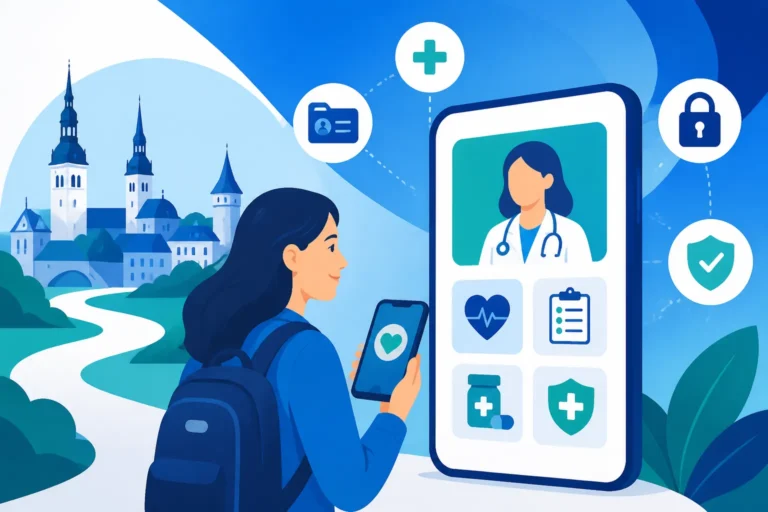
Estonia is famous for being a digital society, and the healthcare system is no exception. Almost everything is tracked through the Digilugu (Digital Health Record). As a visitor using an EHIC, you won't automatically have an Estonian digital ID or access to this portal. This can make things slightly more "old school" for you than for a local resident.
You will likely receive paper summaries of your visits and physical copies of your test results. Keep these! They are vital if you need to follow up with a doctor back home or if you need to prove what treatment you received. If you do eventually get your residence permit, you can learn How to Use the Digilugu (Digital Health Record) System in Estonia to see how all your past records (even those from your EHIC days) might be integrated.
The Digilugu and Electronic Prescriptions for Foreigners
Even though you can't log in to the portal yourself, the Estonian doctor you see will still enter your data into the system using your EHIC details and date of birth. This allows them to issue electronic prescriptions. When you go to the pharmacy, tell them you have a digital prescription. They will find it by searching for your name and date of birth in the system.
It is a remarkably smooth process, but it relies on the doctor entering your information correctly. Always double-check that they have your name exactly as it appears on your passport and EHIC. If there is a typo, the pharmacist might not be able to find your medication, and you'll be stuck making more phone calls than you'd like. For those moving here, Understanding the Digiretsept (Digital Prescription) System in Estonia is a huge help.
Language Barriers and Finding English-Speaking Support
Most younger doctors in Estonia speak excellent English, as do many specialists. However, the administrative staff at the front desk or the nurses in the wards might only speak Estonian or Russian. This can be intimidating when you are feeling unwell.
If you are struggling to communicate, don't be afraid to use a translation app or ask if there is an English-speaking colleague available. In my experience, Estonians are very helpful once they understand you are trying your best to navigate their system. If you are specifically looking for a primary care provider who is known for being expat-friendly, you should check out How to Find an English-Speaking Doctor in Estonia.
Comparing EHIC with Other Insurance Options for Expats
If you are just visiting Estonia for a week, the EHIC plus a basic travel policy is plenty. But what if you are here on a D-visa, a Digital Nomad Visa, or waiting for a residence permit? This is where the EHIC starts to show its age. It is a temporary solution for a permanent problem.
The EHIC doesn't count as "health insurance" for the purposes of most residence permit applications. The Police and Border Guard Board (PPA) usually requires a policy that covers at least 30,000 EUR of medical expenses without the limitations of "necessary care only." This is why many people use SafetyWing to satisfy their visa requirements while still keeping their EHIC in their wallet for those trips to the public hospital.
EHIC vs Mandatory Estonian Health Insurance (Tervisekassa)
Once you start working for an Estonian company, your employer pays social tax, and you become eligible for full Tervisekassa coverage. At this point, you are no longer a "visitor" and your EHIC from your home country is technically no longer the primary way you should access care. You will be fully integrated into the system, enjoying all the benefits of Public vs Private Healthcare in Estonia: Which Should Expats Choose?.
The main difference is that with Tervisekassa, you have a dedicated family doctor who manages your long-term health, whereas, with an EHIC, you are often treated as a "transient" patient. The level of care is the same, but the continuity of care is much better once you are in the local system.
EHIC vs International Private Medical Insurance
International Private Medical Insurance (IPMI) like SafetyWing or Cigna offers a completely different experience. It allows you to bypass the public system entirely and head straight to the best private clinics in the country. There are no referrals needed, no months-long waiting lists, and you are guaranteed service in English.
For many, the cost of IPMI is worth it for the time saved. If you are a high-earning freelancer or a tech worker, your time is literally money. Waiting three months for a specialist appointment through the public system (even with an EHIC) can be more expensive in lost productivity than the monthly premium for a private policy. You can find more on the costs of these options in The Cost of Healthcare in Estonia: A Complete Breakdown for Foreigners (2026).
Disclaimer
The information provided in this guide is for informational purposes only and does not constitute legal or medical advice. Healthcare regulations and EHIC policies can change, and you should always verify the latest requirements with the Estonian Health Insurance Fund (Tervisekassa) or your national health provider before seeking treatment. Neither the author nor this website is responsible for any costs incurred or medical outcomes resulting from the use of this information. Always consult with a qualified medical professional for health concerns.