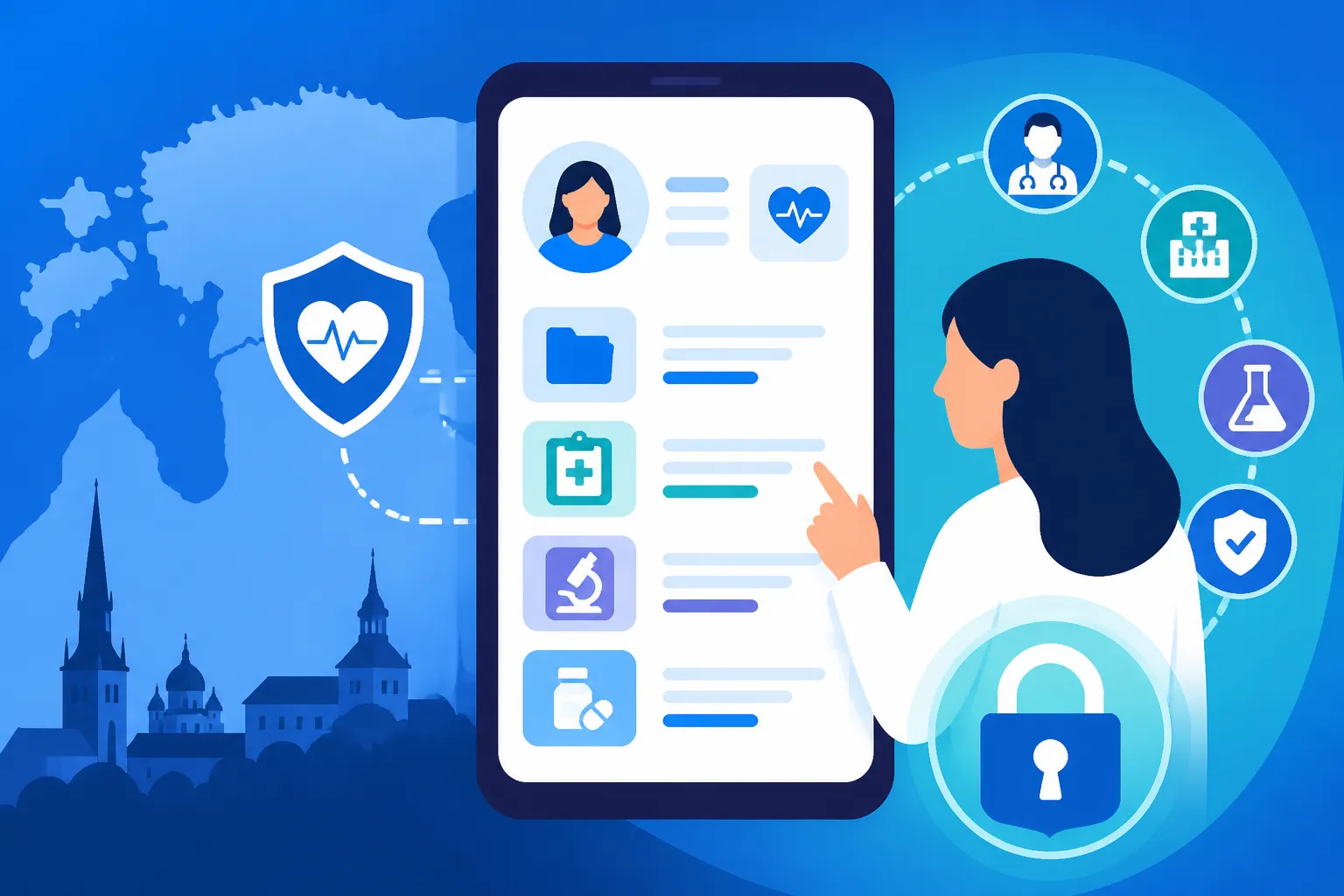
Understanding the Digilugu (Digital Health Record) System in Estonia
The transition to Estonia’s paperless society can be a shock to the system, especially when you realize your entire medical history is stored in a digital cloud you don’t yet know how to access. This guide demystifies the Digilugu system, showing you how to track prescriptions, view test results, and manage your health data without needing a degree in computer science.
What Exactly Is the Digilugu and Why Does It Matter
When I first arrived in Tallinn, I spent far too much time carrying around physical folders of my previous medical records from home. I soon realized that in Estonia, doctors rarely want to see a crumpled piece of paper. The Digilugu, officially known as the Health Information System, is a centralized database where every medical interaction you have within Estonia is recorded. Whether you visit a public hospital or a tiny private clinic in Tartu, the details of your visit, your diagnosis, and your recovery plan are uploaded here. It is the "source of truth" for your physical well-being.
The beauty of this system is its continuity of care. If you see a specialist for a knee injury and then six months later end up in the emergency room, the attending physician can instantly see your previous X-rays and what medications you were prescribed. This prevents the dangerous fragmentation of care that so many of us experienced in our home countries. However, for a newcomer, it can feel like a "black box" where your data disappears into a government server. Understanding how to interact with this data is the first step toward feeling in control of your life here.
One thing many expats miss is that the system only works if you have a valid Estonian identity. Before you can even dream of seeing your records online, you must navigate the initial administrative hurdles of residency. If you are still waiting for your residency card to arrive, you might feel a bit exposed. In these gap periods, having a flexible backup like SafetyWing can provide peace of mind while you wait for your official integration into the digital ecosystem. It bridges the gap between being a "visitor" and a "resident" in the eyes of the digital state.
Navigating the Terviseportaal Dashboard
For years, we used a somewhat clunky website called digilugu.ee, but Estonia recently upgraded to a much slicker interface known as the Terviseportaal (Health Portal). This is your personal window into the national health database. When you log in, you are greeted with a dashboard that summarizes your recent health events, upcoming appointments, and active prescriptions. It is incredibly efficient, but it can be overwhelming because the default language is Estonian. While some parts are translated into English, the deep clinical notes written by your doctors will almost always be in the local tongue.
The first thing you should do upon logging in is check your personal contact information. The system uses this data to send you reminders for vaccinations or health screenings. I remember missing a crucial follow-up appointment because my phone number wasn't updated in the portal. It is also where you can designate "representative" persons—like a spouse or a parent—who are allowed to see your data or act on your behalf in a medical emergency. Setting this up early is a vital piece of "life admin" that most people forget until it's too late.
If you are currently in the process of moving and haven't yet secured your residency, you should prioritize How to Get Your Isikukood (Personal Code) and Why It Matters for Healthcare because your personal code is the "key" that unlocks the Terviseportaal. Without it, you are essentially invisible to the digital health system. During this "invisible" phase, using a service like SafetyWing is a smart move to ensure you have coverage while you wait for your digital identity to be minted. Once your Isikukood is active, the portal becomes your best friend for managing everything from the flu to chronic conditions.
Mastering Digital Prescriptions and E-Referrals
One of the most praised features of the Estonian system is the Digiretsept. Gone are the days of trying to decipher a doctor’s messy handwriting on a scrap of paper. In Estonia, when a doctor prescribes a medication, they "send" it directly to the digital system. You then go to any pharmacy in the country, hand over your ID card, and the pharmacist pulls up the prescription instantly. You can track all your active and expired prescriptions within the Terviseportaal, which is a lifesaver if you forget the name of a medication you took three years ago.
For a deeper dive into how this works on the ground, you should read our guide on Understanding the Digiretsept (Digital Prescription) System in Estonia. It’s not just about getting the medicine; it’s about understanding the costs and the renewal process. Most prescriptions can be renewed with a simple phone call or email to your family doctor, who then clicks a button to extend the prescription in the portal. You don’t even need to leave your house, which is a blessing during those dark, frozen February mornings in Tallinn.
The other pillar of the system is the "Saatekiri" or e-referral. In Estonia, you cannot simply walk into a specialist's office and demand an appointment (unless you are paying full price at a private clinic). You usually need a digital referral from your family doctor. These referrals are stored in the Digilugu, and when you call a specialist to book an appointment, they will check the system to ensure the referral is there. To understand the nuances of this process, check out How E-Referrals (Saatekiri) Work for Specialists in Estonia. It can be a bit of a waiting game, but knowing your referral is safely logged in the system at least removes the fear of lost paperwork.
Transparency and Data Privacy Rights
A common concern for expats coming from less digitalized nations is: "Who is looking at my data?" Estonia has built-in safeguards that are actually more transparent than most paper-based systems. Every time a doctor, nurse, or even a clerk accesses your health record, a digital "footprint" is left behind. You can see a full list of these accesses in the "Log files" section of the portal. If you see that a doctor you’ve never met has looked at your files, you have the right to ask the Health Board for an investigation.
Furthermore, you have the ultimate power to "close" your data. In the portal, you can toggle a switch to hide certain medical entries or your entire health history from all doctors. However, I must warn you from personal experience: be very careful with this. If you are unconscious in an ambulance and your data is "closed," the paramedics won't be able to see if you have life-threatening allergies or a specific heart condition. Most expats find that the benefits of transparency and data sharing far outweigh the risks.
Understanding these rights is part of a broader journey into the local system. If you're curious about how the overall structure compares to what you're used to, The Complete Guide to Healthcare in Estonia for Expats (2027) offers a high-level view of the entire landscape. It’s also worth noting that while the public system is robust, many foreigners choose to supplement it. Understanding the difference between Public vs Private Healthcare in Estonia: Which Should Expats Choose? is essential for deciding how much of your data you want flowing through the national system versus private providers who might use different internal tools but still sync with Digilugu.
The Expat Reality: Language and Foreign Records
One of the biggest frustrations you will face is the "Language Barrier 2.0." Even if you find a doctor who speaks perfect English, their clinical notes in the Digilugu will almost certainly be written in Estonian. This is because these notes are legal documents intended for other Estonian medical professionals. When you’re trying to understand the results of a complex blood test, you’ll find yourself copy-pasting long strings of medical Estonian into Google Translate. It’s not perfect, but it’s the reality of living in a country with a unique national language.
Another hurdle is getting your foreign medical history into the system. The Digilugu doesn't automatically "fetch" records from your home country. If you have a chronic condition, you should ask your previous doctor for a comprehensive summary in English. You can then bring this to your first appointment with your new Perearst (Family Doctor). They can then manually enter the most critical data points—like chronic diagnoses or major surgeries—into the Estonian system so that your digital record is complete.
For those who are just starting out and haven't yet settled on a doctor, finding the right fit is crucial. You should look at our tips on How to Find an English-Speaking Doctor in Estonia to ensure your initial data entry is handled by someone you can communicate with clearly. If you are still in the "tourist" or "nomad" phase and don't yet have access to a family doctor, SafetyWing is an excellent alternative for getting medical advice and coverage. They understand the lifestyle of someone who isn't yet fully "plugged in" to a national digital system like Estonia's.
| Feature | What You See in Digilugu/Terviseportaal | Action Required by Expat |
|---|---|---|
| Prescriptions | Active, expired, and "bought" status | Check before heading to the pharmacy to ensure it's active. |
| Test Results | Blood work, X-rays, MRI reports | Use a translator for the notes; check "norm" ranges. |
| Referrals | Open referrals and their expiration dates | Book appointments before the referral expires (usually 6-12 months). |
| Log Files | Name of the person and institution that viewed your data | Review periodically for unauthorized access. |
| Immunizations | Full history of vaccines taken in Estonia | Upload your childhood records if possible during a doctor visit. |
| Health Declarations | Forms required for driving licenses or work | Fill these out digitally before your physical appointment. |
Managing Emergency Situations and the Digital Trail
In an emergency, the Digilugu system truly shines, but it requires you to have done a bit of legwork beforehand. If the ambulance is called, the paramedics can use your Isikukood to pull up your "Emergency Card"—a summarized version of your most critical health data. If you have a rare blood type or a severe allergy to penicillin, this is where that information is displayed. You should check your portal to ensure this "Emergency Card" section is accurately populated.
I’ve had friends who were worried about the cost of these emergency interactions. If you are fully registered, most of this is covered by your social tax. You can find a detailed breakdown in How Estonia's Health Insurance Fund (Tervisekassa) Works: A Full Overview. However, if you are a freelancer or working for a foreign company, you might not be automatically covered. In those cases, understanding Health Insurance in Estonia: Mandatory, Private and Travel Options Explained is vital so you don't end up with a surprise bill for an emergency room visit.
Always remember that even if you are using private insurance like SafetyWing for your primary coverage, any treatment you receive in an Estonian hospital will still be logged in the Digilugu. This is a legal requirement. Therefore, even if you are "private," you are still part of the digital ecosystem. This is actually a benefit, as it means your medical history stays in one place regardless of who paid for the bill. It makes the administrative side of Emergency Medical Care in Estonia: What Every Expat Needs to Know much less stressful than in countries where every hospital is its own isolated island of data.
Practical Steps for a Smooth Digital Health Journey
To make the most of this system, you need to be proactive. Don't wait until you are sick to log in to the Terviseportaal for the first time. Log in today, explore the menu, and see what is already there. If you’ve recently had a medical check-up for your residence permit, those results should already be visible. If you find errors, such as a misspelled name or an incorrect birth date, contact your family doctor immediately to have it rectified.
If you haven't yet found a doctor, I highly recommend reading How to Choose and Register with a Family Doctor (Perearst) in Estonia. Your family doctor is the "gatekeeper" of your digital record. They are the ones who can add missing information from your home country and help you navigate the specialist system. If you're feeling a bit under the weather and don't want to wait for an appointment, you can also use the How to Use the Family Doctor Advice Line (1220) in Estonia service, which is a great middle-ground for non-emergencies.
Finally, keep an eye on your Sick Leave (Haigusleht) and Sick Pay in Estonia. In Estonia, your "sick note" is entirely digital. Your doctor opens it in the Digilugu system, and your employer sees it automatically in their own portal. You don't have to carry a physical note to your boss. When you're ready to return to work, the doctor "closes" the note, and the system calculates your benefit payment. It is a seamless, albeit highly regulated, process that exemplifies why Estonia is considered a world leader in e-governance.
Professional Medical Disclaimer
The information provided in this guide is for informational purposes only and does not constitute professional medical advice, diagnosis, or treatment. Always seek the advice of your physician or other qualified health provider with any questions you may have regarding a medical condition. Never disregard professional medical advice or delay in seeking it because of something you have read in this article. The Estonian digital health system and its regulations are subject to change, and you should always consult official government sources or your local Perearst for the most up-to-date information regarding your specific health records and insurance status.