Can Americans Get a Digital Nomad Visa for Estonia?
If you're an American dreaming of swapping your cubicle for a cozy cafe in Tallinn, or perhaps a remote cabin by an Estonian bog, and taking your work with you, you've likely heard whispers about Estonia's groundbreaking Digital Nomad Visa. The good news is, Estonia has explicitly opened its doors to remote workers from around the globe, and yes, that absolutely includes Americans. This guide will meticulously walk you through everything you need to know about qualifying for and obtaining this visa, turning that dream into a very real adventure.
The Short Answer: Yes, Americans Can Get Estonia's Digital Nomad Visa
Estonia truly rolled out the red carpet for remote workers, becoming one of the first countries in the world to introduce a dedicated Digital Nomad Visa (DNV) in 2020. This wasn't just a quirky marketing stunt; it was a clear signal that Estonia understands the evolving nature of work and actively seeks to attract talent and fresh perspectives to its shores. For Americans, who often face complex visa situations for long-term stays in Europe, this visa offers a remarkably clear and legitimate pathway to live and work from the heart of the Baltics.
Understanding Estonia's Pioneering Digital Nomad Visa
Estonia’s Digital Nomad Visa is essentially a long-stay D-visa that grants non-EU/EEA citizens the right to reside in Estonia for up to 365 days while working remotely for an employer or clients registered outside of Estonia. It’s a game-changer because it moves beyond the typical tourist visa limitations, which usually don't permit any form of work, and offers a proper legal framework for remote professionals. The Estonian government, known for its innovation in e-governance, designed this visa to be straightforward, reflecting their general approach to digital services. They wanted to make it as simple as possible for people to come, experience Estonia, and contribute to its vibrant ecosystem without bureaucratic nightmares.
It's important to grasp that this isn't a free pass to work for Estonian companies in Estonia, nor is it a route to instant residency or citizenship. It's specifically tailored for those whose source of income is external to the country, allowing them to bring their work with them. This nuance is crucial, as it distinguishes the DNV from other work permits or residence permits designed for those employed by local businesses. It's about bringing your existing remote career to a new, exciting location.
Why Estonia is a Magnet for American Digital Nomads
For many Americans, Estonia might seem like a dark horse in the race for digital nomad destinations, perhaps overshadowed by sunnier, more traditionally "expat-friendly" locales. However, Estonia offers a unique blend that is incredibly appealing, especially to those who value efficiency, innovation, and a high quality of life.
Firstly, there's the unparalleled e-governance. Everything from filing taxes to managing healthcare is largely digital, secure, and surprisingly easy once you get the hang of it. After years of dealing with paper forms and endless queues in other countries, stepping into Estonia’s digital ecosystem feels like a breath of fresh air. It’s a real testament to how a modern society can function, and it significantly cuts down on the administrative headaches that often plague expats. The startup scene in Tallinn is buzzing, attracting bright minds and offering a collaborative, forward-thinking environment even if you're not directly working for a local startup.
Then there's the lifestyle. English is widely spoken, especially among younger generations and in the tech sector, which eases the initial language barrier fears. The country boasts stunning natural beauty, from dense forests and pristine bogs to a picturesque coastline with thousands of islands. It’s a paradise for nature lovers, offering a tranquil contrast to the bustling city life. While the winters are certainly long and dark, the summers are absolutely glorious, with nearly 24 hours of daylight – a magical experience you truly have to live to understand. The cost of living, while rising, remains generally lower than in major US cities, offering a good balance between comfort and affordability, especially outside of Tallinn.
The Specific Requirements for American Applicants
Now, let's get down to the nitty-gritty. While the Estonian Digital Nomad Visa is accessible to Americans, it's not without its specific requirements. These are in place to ensure that applicants are genuinely remote workers with sufficient means to support themselves.
Financial Stability: Proving Your Income
This is arguably the most critical requirement for the Estonian DNV. You need to demonstrate that you have the financial means to support yourself independently during your stay, without relying on the Estonian social welfare system. The current requirement is that you must have earned a gross income of at least €3,500 per month for the six months preceding your application.
Here's how you might prove this:
- Bank Statements: The most straightforward evidence. You'll need statements from your bank (or banks) clearly showing deposits or transfers that amount to at least €3,500 gross per month over the past half-year. These should ideally be in English or officially translated.
- Employment Contracts: If you're employed by a company outside Estonia, a valid employment contract clearly stating your salary and the remote nature of your work will be vital. Your employer might also need to provide a letter confirming your remote status and income.
- Service Contracts/Invoices: For self-employed individuals or freelancers, you'll need to provide copies of contracts with your clients based outside Estonia, along with corresponding invoices and bank receipts showing payment for your services over the required six-month period. This demonstrates a consistent income stream.
- Company Statements: If you run your own foreign-registered company, you might need to provide official company statements, profit and loss reports, or a letter from an accountant confirming your consistent income from the business.
Let's imagine you're a freelance graphic designer. You've been working with clients in the US and Canada for the past year. To meet the financial criteria, you'd compile your invoices from the last six months, show corresponding payments in your bank account, and present your contracts. It’s crucial that these documents clearly demonstrate that your income meets or exceeds the €3,500 threshold gross (before taxes) consistently. Any large, one-off payments might be scrutinized, so a steady flow is preferred. This proof isn't just a formality; it’s the backbone of your application, reassuring the Estonian authorities that you won't be a burden on their system.
Remote Work Status: Who Qualifies?
Beyond the financial aspect, your work itself must fit the digital nomad criteria. The Estonian Digital Nomad Visa is designed for individuals who:
- Are employed with a contract of employment with an employer registered in a foreign country. This means your US-based company allows you to work entirely remotely.
- Conduct business through a company registered in a foreign country in which they are a partner or shareholder, and perform duties independently of the location. Think of someone running their own US-based LLC or S-Corp and serving clients globally.
- Provide services as a freelancer or consultant to clients whose place of business is in a foreign country. This covers the vast majority of freelancers working for international clients.
The key takeaway here is "foreign country." Your employer or primary client base must be outside Estonia. While you can establish an Estonian private limited company (OÜ) as an e-resident or resident, the DNV specifically targets those whose primary income source remains external. If you're looking to actually start a business in Estonia and work for Estonian clients, you might be looking at a different type of residence permit, like one for entrepreneurship. The DNV is for bringing your existing international remote work to Estonia. It's not a path to employment in Estonia, though naturally, networking in the vibrant local startup scene is always an option once you're here.
Necessary Documentation: Your Application Checklist
Gathering the right documents is like assembling a puzzle; every piece must fit perfectly. Beyond the income and work proof, here's a general checklist for American applicants:
- Valid Travel Document: Your US passport, valid for at least six months beyond your intended stay in Estonia, and with at least two blank pages for the visa stamp.
- Passport Photos: Two recent passport-sized color photos that meet Schengen visa requirements (usually 3.5 x 4.5 cm).
- Completed Application Form: The official D-visa application form, filled out truthfully and completely.
- Proof of Remote Work Status: As detailed above, employment contracts, service agreements, letters from employers/clients, company registration documents.
- Proof of Financial Means: Bank statements, income tax returns, salary slips, invoices, showing consistent income meeting the €3,500/month threshold for the past six months.
- Travel Itinerary (if applicable): If you're applying from outside Estonia, details of your planned entry into the Schengen Area and Estonia.
- Proof of Accommodation: While not always strictly required at the application stage, it's highly recommended. This could be a hotel booking, a rental agreement, or a letter from a host if you're staying with friends. Having this ready demonstrates you've thought through your move.
- Travel Health Insurance: This is absolutely non-negotiable. You need comprehensive travel medical insurance valid for the entire Schengen area, covering at least €30,000 for medical expenses, including emergency medical treatment and repatriation. Many expats find global health insurance providers like Cigna Global to be excellent options, as they understand the specific needs of international residents and offer plans tailored for long-term stays. Ensure your policy clearly states its coverage limits and validity in Estonia and the wider Schengen zone.
- Letter of Motivation: A personal letter explaining why you want to come to Estonia, how you qualify as a digital nomad, and what your plans are during your stay. This is your chance to really connect with the visa officer and show your genuine interest.
Remember, all documents not in Estonian or English might need an official translation. Always check the latest requirements on the Estonian Ministry of Foreign Affairs or Police and Border Guard Board (PPA) websites, as they can be updated. Having your How to Get Your Isikukood Personal Code and Why It Matters for Healthcare sorted out upon arrival will be crucial for accessing many services.
The Application Process: Step-by-Step for Americans
Navigating any visa application process can feel like a labyrinth, but with the Estonian DNV, it's surprisingly streamlined if you come prepared. Here’s a breakdown for American applicants.
Where to Apply: Embassy, Consulate, or PPA?
For most Americans, the application process will begin outside of Estonia. You have a couple of main routes:
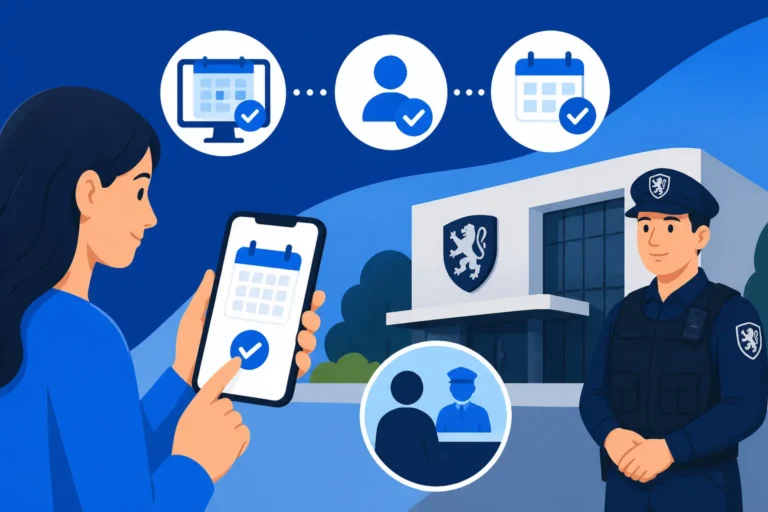
- Estonian Embassies or Consulates in the US: This is the most common path. You'll need to locate the nearest Estonian diplomatic mission (e.g., the Embassy in Washington D.C., or a Consulate General in New York or San Francisco). You typically submit your application documents in person after booking an appointment. This is where your biometrics (fingerprints and photo) will be taken.
- Applying from another country: If you happen to be legally residing in another country (e.g., on a long-term visa in a Schengen member state), you might be able to apply at the Estonian embassy or consulate in that country.
- Applying from within Estonia (with a valid visa): This is a less common but possible scenario. If you are already legally present in Estonia on another valid long-stay visa (like a student visa or another D-visa that allows you to apply for an extension or change of status), you might be able to apply directly at a service point of the Police and Border Guard Board (PPA) in Estonia. However, it's generally recommended to apply from your home country to avoid any complications, especially for a first-time DNV. Always confirm this possibility with the PPA directly before making assumptions, as rules can be strict.
Regardless of where you apply, the initial application often involves filling out an online form on the Estonian Ministry of Foreign Affairs portal, but physical submission of documents and biometrics will always be required. Booking an appointment well in advance is crucial, as slots can fill up, especially in larger consulates.
The Timeline and Potential Hurdles
Once you submit your complete application, the waiting game begins. The official processing time for an Estonian D-visa is usually stated as 15 to 30 days. However, this can vary based on the volume of applications, the time of year, and whether additional information or clarification is requested. It’s always wise to apply with ample time before your intended travel date, perhaps a couple of months, to account for any unforeseen delays.
Common hurdles that applicants might face include:
- Incomplete Documentation: The biggest culprit. Missing a single document, or having one that doesn't meet the precise requirements (e.g., bank statements not showing enough months, or insurance not covering the full required amount), can lead to delays or outright rejection. Double-check everything before your appointment.
- Proving Genuine Remote Work: The authorities want to be sure you're a bonafide digital nomad and not using the visa as a loophole for other intentions. Clear, unambiguous contracts and client testimonials can help strengthen your case.
- Demonstrating Sufficient Funds: Any inconsistencies in your financial proof can raise red flags. Make sure your income is clearly evidenced and consistent.
- Appointment Availability: As mentioned, getting an appointment at an embassy or consulate can sometimes take weeks. Factor this into your planning.
A little planning and meticulous organization go a long way here. Don't underestimate the power of a well-organized folder of documents!
What Happens After Approval? Your Next Steps in Estonia
Congratulations, your visa has been approved! That exciting D-visa sticker in your passport means Estonia is ready for you. But the journey doesn't end there. Once you arrive, there are a few essential steps to take to ensure your long-term stay is smooth and legal:
- Arrive in Estonia: Your D-visa is valid for entry into the entire Schengen Area, but your primary destination should, of course, be Estonia.
- Register Your Place of Residence: This is absolutely critical for any long-term stay. Within one month of your arrival, you must register your official place of residence with the local government authority (e.g., the Tallinn City Office if you're in the capital). This links you to the Estonian population register and is a prerequisite for getting your Estonian ID card. You can find more detailed guidance in our article on Registering Your Place of Residence in Estonia: The Complete Guide.
- Get Your Estonian ID Card: After registering your residence, you can apply for an Estonian ID card at a PPA service point. This card is your official identification and also functions as your digital ID, allowing you to access Estonia's incredible e-services, like the Digilugu (digital health record) and the e-MTA (online tax portal). It's a game-changer for daily life here.
- Understand Healthcare Options: Your D-visa requires you to have private health insurance, and this typically remains your primary healthcare coverage while on the DNV. However, it's vital to understand the local healthcare system. Our comprehensive guide, The Complete Guide to Healthcare in Estonia for Expats (2027), will walk you through everything, from finding a family doctor (perearst) to emergency services. You'll want to ensure your chosen private insurance, perhaps from a provider like Cigna Global, is sufficient and explore all your options for Health Insurance in Estonia: Mandatory, Private and Travel Options Explained.
Living and Working in Estonia as a Digital Nomad
Moving to a new country is about more than just visas and paperwork; it's about building a life. Estonia offers a vibrant experience for digital nomads, blending innovation with a deep appreciation for nature and culture.
Life Beyond the Laptop: Integrating into Estonian Society
While your laptop might be your lifeline, Estonia offers a rich life beyond screen time. Tallinn, the capital, is a UNESCO World Heritage site with a medieval Old Town, a burgeoning tech scene, and a lively cultural calendar. Cities like Tartu, Estonia's university town, offer a more bohemian and relaxed atmosphere. Our guide on The Complete Guide to Cost of Living in Estonia for Expats (2026) can give you a clear picture of what to expect financially, from rent to groceries.
Integrating into Estonian society can be a gradual process. Estonians are generally reserved but incredibly kind and welcoming once you get to know them. Learning a few basic phrases in Estonian goes a long way, and there are plenty of options for Learning Estonian: A Complete Guide to Language Courses and Levels if you want to dive deeper. The expat community, particularly in Tallinn, is active and supportive, making it easy to connect with fellow foreigners and locals alike. You'll find co-working spaces, meetups, and plenty of opportunities to network or simply socialize.
The digital infrastructure is second to none, with fast, reliable internet virtually everywhere, making remote work seamless. Public transport is efficient, and in Tallinn, it's even free for residents! The country is incredibly safe, boasting clean air and a high quality of life, which are huge draws for anyone looking to escape the hustle and bustle of larger nations.
Tax Implications for American Digital Nomads
This is where things can get a bit complex, and it’s where I urge you to seek professional tax advice specific to your situation. As an American digital nomad in Estonia, you're dealing with two distinct tax systems: the Estonian one and the US one.
- Estonian Tax Residency: Generally, if you spend more than 183 days in Estonia within any 12-month period, you become an Estonian tax resident. This means your worldwide income could be subject to Estonian income tax. However, the DNV specifically targets those working for foreign entities. Estonia has a flat income tax rate, and its corporate tax system is unique (taxing only distributed profits, not retained ones). Our article Tax Residency in Estonia: A Definitive Guide for Expats (2027) provides a deep dive into how tax residency is determined. It's crucial to understand this, as becoming a tax resident has significant implications for your earnings. You can also explore Understanding Income Tax (Tulumaks) in Estonia: The Full Expat Guide for more details.
- US Tax Obligations: As an American citizen, you are subject to US taxation on your worldwide income, regardless of where you live. You'll still need to file US tax returns annually. However, mechanisms like the Foreign Earned Income Exclusion (FEIE) or foreign tax credits can help you avoid double taxation. This is why professional advice is paramount; navigating the intersection of US and Estonian tax law requires expertise.
Don't assume that just because you have a DNV, you're automatically exempt from local taxes. If you become an Estonian tax resident, you'll have obligations here. It's a key part of financial planning for your time in Estonia.
Planning Your Move: Logistics and Resources
Moving country is a huge undertaking, even for the most seasoned expat. Getting your DNV is just the first step; the practicalities of moving can be overwhelming.
- Moving Your Belongings: Whether you're coming with just a suitcase or a few boxes, planning is key. International moving services can be invaluable. Platforms like Sirelo can help you compare quotes from various moving companies, ensuring your precious possessions make it safely to your new Estonian home. They offer a great resource for understanding the logistics and costs involved in moving internationally.
- Finding Accommodation: Securing a place to live is high on the priority list. Websites like City24.ee and Kinnisvara24.ee are popular for rentals, and expat Facebook groups often list available apartments. Be prepared for a security deposit (usually 1-3 months' rent) and potentially an agent's fee. Our The Complete Guide to Renting an Apartment in Estonia (2027) will walk you through the entire process.
- Setting Up Utilities: Once you have a place, you'll need to set up electricity, internet, and possibly gas or district heating. Many apartments are managed by apartment associations (korteriühistu) that handle some utilities, but you’ll typically set up your own electricity and internet contracts. This might sound daunting, but Estonian providers are generally quite efficient. Our guide, The Expat Guide to Setting Up Utilities in Estonia, can help demystify this process.
- Exploring Work and Study Beyond DNV: While your DNV allows you to work remotely for foreign entities, Estonia also offers a wealth of opportunities if you decide to dive deeper. You might consider The Complete Guide to Working in Estonia as a Foreigner (2027) or even The Expat Guide to Finding a Job in Estonia (2027) if you fall in love with the country and wish to seek local employment or establish a business.
Becoming a digital nomad in Estonia as an American is a fantastic opportunity to experience a truly unique and forward-thinking country while maintaining your professional life. It takes preparation and understanding of the requirements, but the rewards are a high quality of life, a welcoming (if sometimes reserved) culture, and the chance to be part of a truly digital society.
| Requirement | Details | Proof Needed (Examples) |
|---|---|---|
| Nationality | Non-EU/EEA citizen (e.g., American). | Valid US Passport |
| Remote Work Status | Employed by a foreign company; self-employed for foreign clients; or partner/shareholder in a foreign-registered company performing duties independently of location. Work must NOT be for an Estonian entity. | Employment contract (foreign company); service contracts/invoices (freelancer); company registration documents & business statements (company owner); letter from employer/clients confirming remote work. |
| Financial Means | Gross income of at least €3,500 per month for the last 6 months preceding the application. | Bank statements (past 6 months); salary slips; income tax returns (from foreign country); invoices and bank receipts for freelance/consulting work. |
| Health Insurance | Comprehensive travel medical insurance valid for the entire Schengen area, covering at least €30,000 for medical expenses, including emergency medical treatment and repatriation. | Insurance policy document, clearly stating coverage, validity period, and geographical scope (Schengen/Estonia). |
| Application & Biometrics | Complete the official D-visa application form online, then submit documents and provide biometrics (fingerprints, photo) at an Estonian embassy/consulate outside Estonia, or potentially at a PPA service point if already legally present in Estonia on another long-stay visa. | Completed application form; 2 passport-sized photos; proof of appointment. |
| Accommodation | (Highly Recommended, often requested) Proof of where you will stay in Estonia. | Hotel booking; signed rental agreement; letter of invitation from host (if staying with friends/family). |
| Letter of Motivation | A personal statement explaining your intent to come to Estonia as a digital nomad, your professional background, and how you meet the criteria. | Personal letter. |
Disclaimer
The information provided in this guide is for general informational purposes only and does not constitute legal, financial, or immigration advice. While we strive to keep the information up-to-date and accurate, requirements for visas, taxes, and other administrative processes in Estonia can change without prior notice. It is essential to consult with official Estonian government sources, such as the Estonian Ministry of Foreign Affairs and the Police and Border Guard Board (PPA), or seek professional legal and tax advice for your specific situation before making any decisions related to your move or visa application. We are not responsible for any actions taken based on the information presented herein.