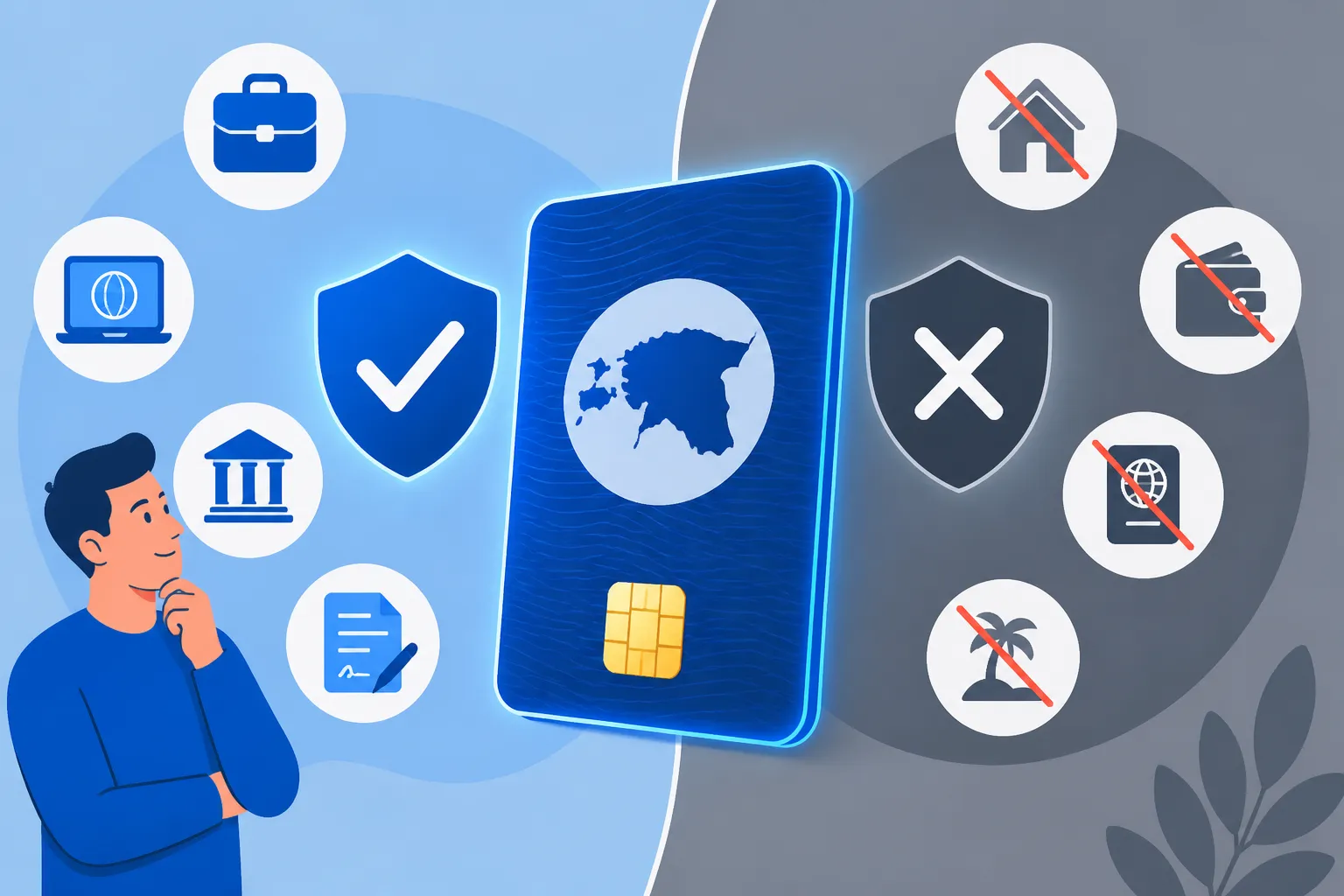
Understanding e-Residency and What It Does and Doesn’t Provide
It’s easy to get swept up in the global buzz around Estonian e-Residency, and many newcomers arrive with the impression that it's their golden ticket to living in Estonia, or even a fast track to EU citizenship. This isn't just a minor misunderstanding; it's a fundamental misconception that can lead to significant frustration and misplaced effort. This comprehensive guide is here to meticulously unravel what Estonian e-Residency actually is, the incredible benefits it truly offers, and, crucially, what it absolutely does not provide, ensuring you have clear, realistic expectations.
What Exactly is Estonian e-Residency?
Estonian e-Residency is a truly groundbreaking initiative, but its purpose is often blurred by overenthusiastic interpretations. Let's get down to the brass tacks of what it actually entails.
The Core Concept and Vision
At its heart, Estonian e-Residency is a digital identity issued by the Republic of Estonia to non-residents. Think of it less like a passport and more like a digital key that unlocks Estonia's advanced public e-services. Its vision is ambitious: to create a borderless digital society, fostering global entrepreneurship, driving economic growth, and solidifying Estonia's position as a world leader in digital governance.
This isn't about inviting people to physically live here, but rather extending Estonia's highly efficient digital infrastructure to individuals across the globe. With an e-Residency card, you can perform tasks like digitally signing documents that are legally binding in Estonia and recognized throughout the EU under eIDAS regulations, establish companies with remarkable speed, declare taxes for your Estonian company, and manage your business finances. It’s a testament to Estonia's commitment to innovation and digital transparency, but it remains a tool for digital administration, not physical immigration.
Who is it For?
The profile of a typical e-resident is quite specific, usually someone who operates in the digital sphere and values efficiency and a global reach.
Firstly, it's a game-changer for entrepreneurs looking to establish and run an EU-based business entirely remotely. If you're building a startup or expanding an existing venture and need an EU legal entity without the complexities of physical relocation, e-Residency offers an unparalleled solution.
Secondly, freelancers and consultants often find e-Residency incredibly appealing. It provides a reputable, low-bureaucracy base for their operations, allowing them to invoice clients globally through an Estonian company while benefiting from a streamlined administrative environment.
Thirdly, for startup founders who are looking for an EU legal entity with minimal administrative hurdles and the unique corporate tax advantages Estonia offers, e-Residency is a significant draw. It allows them to focus on growing their business rather than getting bogged down in red tape.
Finally, anyone interested in participating in Estonia's transparent, efficient, and forward-thinking digital ecosystem will find value. However, it is fundamentally not intended for individuals whose primary goal is to live in Estonia or move here permanently without taking additional, separate steps towards actual residency.
The Benefits and Opportunities of e-Residency
While it doesn't grant physical residency, e-Residency certainly opens up a world of opportunities for digital entrepreneurs. These benefits are precisely why so many people choose to become e-residents.
Establishing an EU Company Remotely
One of the most compelling advantages of e-Residency is the unparalleled ease with which you can establish an EU company, specifically an OÜ (private limited company), entirely online. This process can often be completed within a day or two, a feat that would be unthinkable in many other jurisdictions. This rapid, remote company formation capability is a cornerstone of the e-Residency programme.
Having an Estonian OÜ provides invaluable access to the vast EU market. For businesses operating globally, having a legal entity registered within the European Union simplifies transactions, builds trust with European clients and partners, and can streamline compliance with EU regulations. This is a significant competitive advantage for non-EU businesses seeking a foothold in the European economic area.
Furthermore, operating under Estonian law lends considerable credibility and reputation. Estonia is known for its high standards of transparency, low corruption, and robust digital security, all of which reflect positively on an Estonian-registered company. Finally, Estonia's unique corporate tax system is a major draw: companies pay 0% corporate income tax on reinvested profits, only taxing profits when they are distributed. It's crucial to remember that this applies to the company's profits, not your personal income tax, which is tied to your physical tax residency. For more detailed information on company setup, you might want to read our guide on How to Set Up an OÜ Private Limited Company in Estonia.
Accessing Estonia's Digital Infrastructure
Estonia's digital infrastructure is world-renowned, and e-Residency is your gateway to harnessing its power. The ability to perform secure digital signing is perhaps the most fundamental feature. Your e-Residency card allows you to apply a legally binding digital signature to documents, contracts, and agreements. This signature is not only valid within Estonia but also recognized across the European Union, thanks to the eIDAS regulation, making cross-border business incredibly efficient.
With your e-Residency, you gain full access to Estonia's comprehensive suite of e-services. This includes the e-MTA (the Tax and Customs Board portal), where you can manage your company's tax declarations with ease. You can also interact with the Estonian Company Register to manage your business details, and generally leverage other government services, all from the comfort of your own home, regardless of your physical location.
The remote management capabilities offered by e-Residency mean you can oversee all aspects of your Estonian company without ever needing to step foot in the country. You can sign critical contracts, file necessary declarations, and update company information, all through a secure online environment. This digital-first approach significantly reduces paperwork, minimizes the need for in-person visits to government offices, and ultimately saves considerable time and resources for global entrepreneurs.
Simplified Administration and Trust
Estonia has painstakingly built a reputation for its highly efficient and transparent administrative environment, and e-Residency extends this to a global audience. The country is widely recognized for its low levels of corruption and a clear, predictable legal framework, which offers a stable and trustworthy foundation for businesses.
The efficiency of Estonian administration is truly remarkable. Many business processes that typically take weeks or even months to complete in other countries can be accomplished in a matter of days online through the e-Residency system. This agility allows entrepreneurs to respond quickly to market demands and reduces operational friction.
By becoming an e-resident, you are essentially plugging into Estonia's forward-thinking digital society. This connection can provide a valuable sense of being part of an innovative and respected international business community. While e-Residency provides a robust digital identity for business, individuals establishing companies still need to consider broader business services, such as accounting or virtual office providers. For those considering a full relocation to Estonia down the line, reputable moving services are vital. When you're ready to make that leap, services like Sirelo, a moving marketplace, can help you find reliable international movers who understand the complexities of bringing your life to a new country.
What e-Residency Absolutely Isn't
This is perhaps the most crucial section of this guide, as it directly addresses the most common and impactful misunderstandings about e-Residency. Failing to grasp these distinctions can lead to significant disappointment and even legal complications.
Not a Visa or Residence Permit
Let's be unequivocally clear: your Estonian e-Residency card is not a visa, and it does not grant you the right to live, work, or even visit Estonia for any period longer than what your existing passport and visa status would otherwise allow. This is the single biggest point of confusion for many aspiring e-residents. The e-Residency card is a digital identification document used to access online services; it is not a travel document and cannot be used to cross borders.
If you are a non-EU citizen, you still need to adhere to the Schengen Area visa rules. This means you are typically limited to 90 days of stay within any 180-day period. Your e-Residency status does not change this fundamental immigration rule. Many people get tripped up here, mistakenly believing that having the card gives them some inherent right to extended stay, which it absolutely does not. The frustration of realizing this after investing time and money is very real, and we want to prevent that for you. If your goal is to physically move to Estonia, you will need to pursue a separate application for a long-stay visa (Type D) or a The Complete Guide to Estonian Residence Permits for Expats 2026 based on your purpose for living here.
No Tax Residency by Itself
Another pervasive myth is that simply having an Estonian e-company automatically makes you an Estonian tax resident. This is incorrect and can lead to serious legal and financial issues if misunderstood.
Your personal tax residency is determined by where you physically live and spend the majority of your time, typically defined as spending more than 183 days a year in a particular country. While your Estonian company benefits from Estonia's favorable corporate tax system (0% on reinvested profits), your personal income tax liability remains in your country of physical residence. This means that if you live in, say, Germany, and run an Estonian e-company, you will still pay personal income tax on your salary or distributed profits in Germany, according to German tax laws.
Estonia's tax system is designed to tax the company's distributed profits, not the personal income of its remote e-resident owners, unless those owners are also physically residing and working in Estonia. It is crucial to understand these distinctions to avoid unintended tax obligations in multiple jurisdictions. For a deeper dive into this, check out our guide on Tax Residency in Estonia A Definitive Guide for Expats 2026.
Not a Path to Citizenship
To further clarify what e-Residency isn't, let's address the misconception that it's a direct or accelerated path to Estonian citizenship. This simply isn't the case. e-Residency is entirely separate from the process of naturalisation or acquiring Estonian citizenship by other means.
To become an Estonian citizen, one typically needs to fulfill stringent requirements that go far beyond holding an e-Residency card. These usually include physically residing in Estonia for a significant number of years, demonstrating proficiency in the Estonian language by passing official exams, understanding the Estonian Constitution, and meeting other criteria related to loyalty and good conduct. Your e-Residency card is an administrative tool, providing digital access to services, not an immigration or naturalisation document. It has no bearing on your eligibility for Estonian citizenship. For those interested in the actual routes to citizenship, our guide on Estonian Citizenship Routes Through Naturalisation and Descent 2026 provides a full overview.
The Practicalities of Obtaining e-Residency
So, now that we’ve cleared up the common myths, let’s talk about the straightforward process of actually becoming an e-resident. It’s designed to be efficient, but it does involve a few key steps.
The Application Process
Becoming an e-resident starts with an online application, which is conveniently handled through the official e-Residency website. You’ll be asked to fill out a comprehensive form that gathers your personal details and asks about your motivation for applying – essentially, what you plan to do with your e-Residency. Be clear and concise in your intentions; the Estonian authorities want to understand how you’ll leverage the digital identity.
Along with the form, you’ll need to provide certain documents. This typically includes a high-quality copy of your valid passport and a recent, passport-style digital photo. The clarity and accuracy of these documents are paramount for a smooth application process. Take your time to ensure everything is perfect.
Once your application is submitted, the Estonian Police and Border Guard Board (PPA) initiates a thorough background check. This isn't a formality; it's a serious security measure to ensure the integrity of Estonia's digital society. They will assess your suitability based on international and national security concerns, among other factors. This vetting process is why the application isn't instant. Finally, there's an application fee, which is currently around €120, though it's always wise to check the official e-Residency website for the most up-to-date figures, as these can be subject to change. The processing time typically ranges from a few weeks to a couple of months, depending on the volume of applications and the complexity of background checks.
Collecting Your e-Residency Kit
Upon successful approval of your application, you will receive notification, and the next step is to collect your e-Residency kit. This is where the physical world briefly intersects with the digital. You'll need to choose a convenient pick-up location. For many international applicants, this means selecting an Estonian embassy or consulate in their home country or a country they can easily access. Alternatively, if you happen to be in Estonia, you can pick up your kit from one of the designated PPA offices.
The e-Residency kit itself contains several crucial components. The most important is, of course, your e-Residency card, which is a smart card containing your digital identity. You’ll also receive a small card reader, which connects to your computer and allows you to use the card to access e-services. Finally, a set of PIN codes will be provided; these are essential for authenticating yourself and signing documents digitally.
Once you have your kit, you'll need to activate your card and codes. This is typically a straightforward process following instructions provided, and it's the point at which your digital identity becomes fully operational. It's worth noting that this collection step often involves a trip for many applicants, underscoring that while e-Residency enables remote business, there's usually a physical touchpoint in the process.
Beyond e-Residency: When You Need to Physically Move
If your aspirations go beyond remote business administration and you actually want to live in Estonia, e-Residency is just the beginning of a completely separate journey. Let's explore what's involved in making the full leap.
Understanding Real Residency Requirements
If your genuine desire is to physically live in Estonia, you'll need to navigate the country's immigration system, which operates independently of e-Residency. For non-EU citizens, this typically begins with obtaining a long-stay (Type D) visa, which allows you to stay in Estonia for a specific period, usually for up to a year. This visa is generally a precursor to applying for a temporary residence permit.
Once you are physically in Estonia with the appropriate visa, you'll need to apply for a residence permit. These permits are granted based on specific grounds, such as employment, studying at an Estonian university, family reunification (if you have family already here), or running a business that genuinely contributes to the Estonian economy and requires your physical presence. Our comprehensive guide on The Complete Guide to Estonian Residence Permits for Expats 2026 delves into all the different pathways available.
Upon arrival and after securing a stable address, one of your absolute first administrative tasks is to Registering Your Place of Residence in Estonia: The Complete Guide in the Estonian Population Register. This is not optional; it’s a legal requirement and fundamental to accessing many public services. Crucially, obtaining your Isikukood (personal identification code) is paramount for virtually everything you'll do here, from opening bank accounts and accessing healthcare to signing up for utilities. Without it, you’ll hit bureaucratic walls at every turn. You can learn more about its importance in How to Get Your Isikukood Personal Code and Why It Matters for Healthcare.
The Importance of Tax Implications
When you shift from being an e-resident doing remote business to becoming a physical resident of Estonia, your personal tax implications change dramatically. As a physical resident, you become subject to Estonian income tax laws. This means your worldwide income, unless exempted by a double taxation treaty, will be taxed in Estonia.
Estonia famously has a flat income tax rate, currently at 20%. This applies to salaries, freelance income, and other personal earnings. Understanding how this flat rate impacts your overall financial situation is crucial for budgeting and financial planning. We have a detailed guide on Understanding Income Tax Tulumaks in Estonia The Full Expat Guide that breaks this down for you.
For expats, especially those with income sources in their home country or other jurisdictions, avoiding double taxation becomes a real concern. Estonia has signed double taxation treaties with many countries to prevent you from being taxed twice on the same income. Understanding how these treaties apply to your specific situation is vital, and you might want to consult our article on How to Avoid Double Taxation as an Expat in Estonia.
Furthermore, if you are physically living and working in Estonia, your health insurance coverage will typically be linked to the social tax contributions made by your employer (or yourself, if self-employed). While public health insurance is comprehensive, for some expats, especially during initial waiting periods or for specific private services, private health insurance can offer additional peace of mind. International providers like Cigna Global offer plans that can cover you globally and can be a valuable consideration when planning your relocation and ensuring seamless healthcare access. This can be particularly relevant if you're exploring options beyond the public system or managing pre-existing conditions.
Making the Full Move to Estonia
Relocating your entire life to a new country is a monumental task, extending far beyond simply obtaining a permit. It involves meticulous planning and significant logistical hurdles, from finding suitable housing and understanding rental agreements to researching schools for your children and integrating into a new social environment.
Beyond the administrative side, there are the practicalities of daily life. Finding a job, if that's your reason for moving, requires understanding the local job market and cultural nuances of Estonian workplaces. Learning Estonian, while not always strictly necessary for basic daily life in Tallinn or Tartu, is immensely beneficial for deeper integration and accessing more opportunities. Adapting to the local culture, understanding social norms, and building a new support network are all part of the expat experience.
For a smoother transition, it’s worth diving into resources like The Complete Guide to Moving to Estonia Your First 90 Days 2026, which provides a step-by-step roadmap for those crucial initial months. When you're ready to physically move your belongings, especially for a larger relocation, comparing quotes and services from reputable international movers is essential. Services like Sirelo can simplify this process, connecting you with trusted companies that understand the logistics of international shipping, customs, and delivery, making your move to Estonia as stress-free as possible.
Common Misconceptions and Clarifications
Even after understanding the core purpose of e-Residency, there are still nuanced areas where confusion often arises. Let's tackle some of the most common ones head-on.
e-Residency vs. Digital Nomad Visa
This is a point of significant misunderstanding, especially since Estonia launched its own Digital Nomad Visa (DNV). It's crucial to understand that e-Residency and the Digital Nomad Visa are fundamentally different beasts.
Estonia's Digital Nomad Visa is an actual, legitimate visa and residence permit. It grants eligible non-EU citizens the legal right to live in Estonia and work remotely for up to a year (with possibilities for extension). This means you can physically reside in Estonia, enjoy its beautiful nature, and participate in local life, all while earning income from clients or employers outside of Estonia. It is a pathway to physical residency. Our comprehensive guide on How to Get Estonia's Digital Nomad Visa The Full Guide 2026 provides all the details you need.
E-Residency, on the other hand, remains purely a digital ID. It is your key to Estonia's e-services and primarily enables you to establish and manage an EU company remotely. It does not give you any right to reside in Estonia, nor does it allow you to stay beyond standard tourist visa limits. You can, of course, hold both an e-Residency card and a Digital Nomad Visa. In fact, many digital nomads find having both beneficial: the DNV allows them to live here, while e-Residency simplifies running an Estonian business or accessing digital government services. However, one does not automatically lead to the other, and holding e-Residency does not grant you the benefits of a DNV.
e-Residency and Banking
Another area ripe with confusion revolves around e-Residency and the ability to open bank accounts in Estonia. While e-Residency significantly simplifies the process for opening a company bank account for your Estonian OÜ, it does not automatically guarantee you a personal bank account as a non-resident.
Estonian banks have become increasingly stringent in recent years, often requiring a demonstrable physical link to Estonia for personal accounts. This could be actual physical residency, local employment, or a clear business connection that necessitates a local personal account. Simply having e-Residency is usually not enough to open a personal bank account. This can be a source of frustration for e-residents who mistakenly believe their digital status grants them full banking access.
However, for your Estonian company's banking needs, e-Residency is a powerful enabler. Many e-residents successfully open business accounts with Estonian banks, particularly those that are more expat-friendly, or with various fintech solutions. Services like Wise (formerly TransferWise) or Revolut have become popular choices among e-residents for managing multi-currency business accounts, facilitating international payments, and generally bridging the gap where traditional Estonian banks might be hesitant to open personal accounts for non-residents. Our guide on The Expat Guide to Opening a Bank Account in Estonia offers a deeper look into the options available.
Comparison Table: e-Residency vs. Physical Residency Options
To help clarify the core differences, here's a handy comparison of e-Residency against Estonia's main physical residency options for foreigners:
| Feature | Estonian e-Residency | Estonian Digital Nomad Visa (DNV) | Estonian Temporary Residence Permit (TRP) |
|---|---|---|---|
| Primary Purpose | Digital identity for remote business | Right to reside and work remotely | Right to reside based on specific purpose |
| Grants Right to Reside? | No | Yes (up to 1 year, extendable) | Yes (1-5 years, extendable based on purpose) |
| Travel Document? | No (not for border crossing) | No (D-visa stamp in passport) | Yes (Physical Residence Card for Schengen travel) |
| Access to EU? | No (digital access only) | Yes (Schengen travel for DNV holders) | Yes (Schengen travel for TRP holders) |
| Personal Tax Residency? | No (determined by physical presence elsewhere) | Potentially, if residing >183 days | Yes (if living in Estonia) |
| Company Formation? | Yes, easy remote setup | Possible, but not primary purpose | Possible, if resident & meet business criteria |
| Required Physical Presence in Estonia? | Only for card pick-up (optional) | Yes (to reside in Estonia) | Yes (to reside in Estonia) |
| Eligibility | Global entrepreneurs, freelancers | Non-EU citizens working remotely | Non-EU citizens for work, study, family, business |
| Application Via | e-Residency website | Estonian Police & Border Guard Board (PPA) or Estonian representation | PPA or Estonian representation |
| Cost (approx.) | €120 (application fee) | €120 (D-visa) + €60 (permit) | €60 – €120 (application fee, depending on type) |
Disclaimer
The information provided in this guide is intended for general informational purposes only and does not constitute legal, financial, or immigration advice. While we strive to provide accurate and up-to-date information, regulations and procedures in Estonia can change. We recommend consulting with official Estonian government sources, legal professionals, or immigration specialists for advice tailored to your specific situation before making any decisions related to e-Residency, visas, or relocation to Estonia.