Health Insurance in Estonia: Mandatory, Private and Travel Options Explained
Moving to Estonia often feels like stepping into the future with its paperless bureaucracy and e-solutions, but the healthcare system can be a source of immense stress for the uninitiated. Many expats arrive assuming they are covered the moment they land, only to find themselves caught in a complex web of "waiting periods" and specific employment requirements. This guide explains how to navigate mandatory state insurance, private alternatives, and travel options to ensure you are never left vulnerable.
Understanding the Estonian Public Health System Tervisekassa
The cornerstone of life in Estonia is the Estonian Health Insurance Fund, now officially rebranded as Tervisekassa. For many expats, this is the "holy grail" of coverage because it offers comprehensive medical services with very little out-of-pocket cost. However, it is not a residency-based system where living here automatically grants you rights. Instead, it is a solidarity-based system primarily funded through social taxes. If you are coming from a country with a purely private system, the transition to a state-managed fund can be jarring, especially when you realize that your access is tied directly to your tax contributions or a specific legal status.
How the System is Funded through Social Tax
In Estonia, health insurance is funded by a 13% social tax portion paid by employers on behalf of their employees. It is vital to understand that this is not deducted from your gross salary but is an additional cost paid by the employer. This distinction is important because it reflects the "solidarity" aspect of the system: everyone who works contributes to a giant pot that covers everyone from children to pensioners. For an expat, this means your coverage is only as solid as your employment contract. If your employer fails to register you correctly in the Employment Register (Töötamise register), your insurance status will show as inactive.
The bureaucratic reality is that once you are registered by your employer, there is often a 14-day bridge before your coverage becomes active. Many expats ignore this two-week gap, only to end up paying hundreds of euros for a simple clinic visit because they fell ill on day three of their new job. You must be proactive in checking your status on the state portal, eesti.ee. Understanding Health Insurance Through Social Tax in Estonia is the first step toward peace of mind, as it allows you to verify that your contributions are actually being made.
Who is Automatically Covered
Beyond employees on Estonian contracts, certain groups receive Tervisekassa coverage automatically. This includes pregnant women, children under 19, students, and registered unemployed persons. If you are moving with a family, your children will be covered, but your non-working spouse may not be unless they fall into a specific category or you pay for voluntary insurance. This creates a significant "coverage gap" for expat families where only one partner is working.
For those on a specific path to residency, such as those wondering Can I Use Public Healthcare in Estonia on a Work Visa?, the answer is a resounding yes, provided the employer is paying those taxes. However, the coverage is limited to the duration of your contract plus a short grace period. Students should also be aware that their coverage is tied to their active status at an Estonian university; if you take a gap year or drop out, your insurance can vanish overnight without a friendly warning letter.
The Concept of the Waiting Period
Estonia has a peculiar rule regarding the commencement of insurance for those who are not automatically covered by a work contract or state status. If you are entering the system as a self-employed person (FIE) or through voluntary contract, there is often a two-month waiting period before you can claim benefits. This is designed to prevent people from only joining the fund when they already know they need expensive surgery.
This waiting period is the single most common reason why expats find themselves in financial trouble. If you are transitioning between roles or moving from a non-EU country, you cannot simply "buy in" and see a doctor the next day. This is where many of us have had to rely on nomadic or international solutions to bridge the gap. For instance, SafetyWing is often used by newcomers to cover these first few months while the Tervisekassa clock is ticking in the background. Without this bridge, a simple appendix issue could cost you thousands in the private ward of a regional hospital.
Mandatory Insurance for Foreigners and Residence Permits
If you are a non-EU citizen applying for a D-visa or a Temporary Residence Permit (TRP), the Estonian government requires you to prove you have valid health insurance. This isn't just a suggestion; it is a hard requirement for your application to be processed by the Police and Border Guard Board (PPA). The insurance must cover any costs related to medical treatment due to illness or injury and it must be valid for the entire duration of your stay.
EU vs Non-EU Requirements
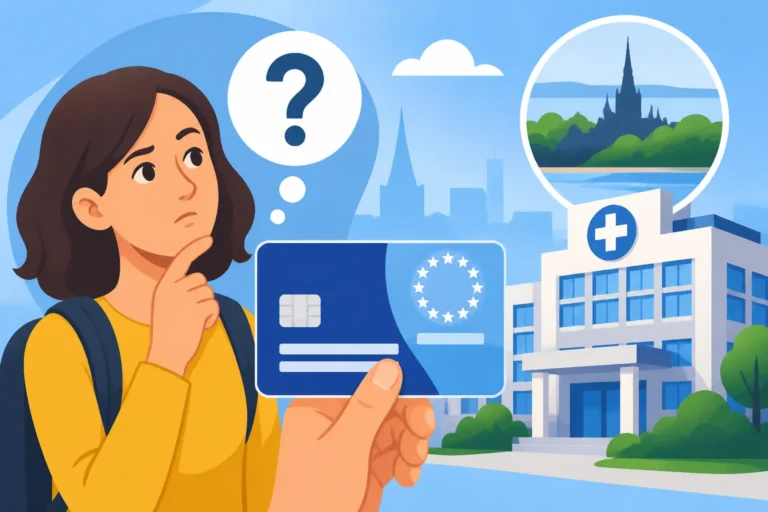
EU nationals have it much easier. If you are from the European Union, the European Economic Area, or Switzerland, your European Health Insurance Card (EHIC) covers you for necessary medical care during a temporary stay. However, once you register your residence in the Estonian Population Register and obtain an Estonian ID card, you are expected to move into the local Tervisekassa system. You cannot rely on your home country’s EHIC indefinitely if you are officially "living" here and working.
Non-EU nationals, on the other hand, face much stricter scrutiny. When applying for your initial visa, you must show a policy that has at least 30,000 EUR in coverage. The PPA is quite specific about this; they want to see that you won't become a burden on the state. Many expats use specialized products like SafetyWing during this phase because they are familiar to the authorities and meet the specific criteria for visa approvals. Once your TRP is granted and you start working, your Tervisekassa coverage eventually takes over, but that initial private policy is your ticket into the country.
Insurance for the D-Visa and Temporary Residence Permits
The D-visa is a long-stay visa often used by remote workers or those entering for short-term employment. For this visa, your insurance must cover the entire period of validity. If you apply for a 12-month D-visa, you need 12 months of coverage. It is a common mistake to buy a "travel policy" that only covers 30 days, thinking you can renew it later. The PPA will likely reject the application or grant a visa only for those 30 days.
When transitioning from a visa to a TRP, you must maintain continuous coverage. Any gap in your insurance can technically jeopardize your residency status. This is why it is so important to understand How to Get Your Isikukood (Personal Code) and Why It Matters for Healthcare. Your Isikukood is the anchor for all your digital records, including your insurance status. Without it, you are a ghost in the system, and neither the state nor the private clinics will be able to easily process your claims or track your medical history.
Using the EHIC Card for European Nationals
For my fellow Europeans, the EHIC is a lifesaver for those first few weeks of exploring Tallinn or Tartu. It grants you the same rights as an Estonian insured person, meaning you only pay the standard co-payments (usually around 5 EUR for a home visit or specialist appointment). However, the EHIC only covers "medically necessary" care. It won't cover a routine check-up or a planned surgery that could wait until you return home.
Once you have settled and are wondering How Do I Register with the Tervisekassa After Moving to Tallinn?, remember that the EHIC is merely a temporary shield. The moment you become a tax resident and start working for a local company, the local system becomes your primary provider. Using an EHIC while also being registered for local social tax can lead to administrative confusion, so it’s best to keep your documents updated and inform your "Perearst" (Family Doctor) of your status changes.
Private Health Insurance Options in Estonia
While the public system is robust, it is not without its flaws—the most significant being long waiting lists. If you need to see a dermatologist or an ophthalmologist through Tervisekassa, you might be waiting three to six months. This reality drives many expats, and increasingly many Estonians, toward private health insurance. Private options offer speed, more English-speaking staff, and a level of comfort that the public hospitals sometimes lack.
Why Expats Choose Private Coverage
The primary reason is access. In the private sector, you can often get a specialist appointment within 48 hours. For someone who is used to the efficiency of private healthcare in North America or other parts of Europe, the public waiting times in Estonia can be distressing. Furthermore, private insurance often covers things that the state system is stingy with, such as adult dental care and mental health services.
Another factor is the "Family Doctor" hurdle. Finding a Perearst who is accepting new patients and speaks fluent English can be a challenge in certain neighborhoods. With private insurance, you can often bypass the GP referral system entirely and go straight to the specialist you need. When considering your options, asking Is Private Health Insurance Worth It for Expats in Estonia? really depends on your health needs and your patience for the state’s administrative pace.
Popular Local and International Providers
There are two main routes for private coverage: local "Health Insurance" (Tervisekindlustus) provided by companies like Confido or If Kindlustus, and international "Expat/Nomad Insurance." Local providers usually work on a reimbursement basis or have direct billing agreements with specific clinics like Confido Medical Centre or Qvalitas. These are excellent for those who are settled in Estonia and want a supplement to their Tervisekassa.
For those who are more mobile, or who haven't yet qualified for the state system, international providers are the way to go. SafetyWing is a frequent choice here, particularly for those on the Digital Nomad Visa. It is designed for people who live outside their home country and need a flexible, monthly subscription model. It covers emergencies and unexpected illnesses, which are the biggest financial risks when you are "between" systems. These international plans are often more affordable than comprehensive local private plans but focus more on catastrophe than routine dental cleaning.
Understanding the Cost of Private Plans
The cost of private insurance in Estonia varies wildly based on your age and the level of coverage. A basic local plan that covers specialist visits and some diagnostic tests might cost between 400 EUR and 800 EUR per year. More comprehensive plans that include dental, glasses, and rehabilitation can easily exceed 1,200 EUR annually. It is a significant investment, but when you consider that a single private specialist visit out-of-pocket can cost 70 EUR to 150 EUR, the math starts to make sense for those with chronic conditions.
| Insurance Type | Eligibility | Primary Benefit | Typical Cost (Monthly) |
|---|---|---|---|
| Tervisekassa (Public) | Employees, Students, FIEs | Comprehensive, Low co-pay | Funded by 13% Social Tax |
| Local Private | Residents | Speed, Specialist access | 40 EUR – 100 EUR |
| Nomad/Travel (SafetyWing) | Everyone/Nomads | Visa compliance, Emergencies | ~45 EUR – 90 EUR |
| Voluntary State | Non-working residents | Public system access | ~200+ EUR |
Digital Healthcare and Modern Convenience
One area where Estonia truly shines is in the digitalization of health data. Once you have your health insurance sorted, you will interact with the system through your digital identity. This is where the Isikukood becomes your most valuable possession. Everything from your blood test results to your prescriptions is stored in a centralized cloud, accessible only by you and your authorized medical professionals.
The Digilugu and Digiretsept System
The "Digilugu" (Health Record) is a portal where every doctor's visit, every diagnosis, and every vaccination record is logged. No more carrying folders of paper from one clinic to another. If you see a specialist in Tartu and then visit your family doctor in Tallinn, they both see the same history. This transparency is incredibly efficient, though it requires you to be comfortable with your data being on the "X-Road" (the national data backbone).
Equally impressive is the Understanding the Digiretsept (Digital Prescription) System in Estonia. When a doctor prescribes medication, it is linked to your Isikukood. You simply walk into any "Apteek" (pharmacy), hand over your ID card, and the pharmacist sees exactly what you need. There are no paper slips to lose. For expats, this makes managing chronic conditions much easier. You can even see your prescription history online and see when a refill is available.
Telemedicine and Remote Consultations
Since the pandemic, Estonia has leaned heavily into telemedicine. Many private clinics and some public family doctor centers now offer video or phone consultations. This is particularly useful for renewing prescriptions or getting a "Haigusleht" (Sick Leave Certificate). If you wake up with a fever, you don't necessarily have to drag yourself to a waiting room; you can call your doctor or use a private service.
These remote options are often covered by private insurance plans, and some are even integrated into the state system. If you are struggling with the language barrier at a local clinic, many telemedicine platforms allow you to specifically book English-speaking doctors. This is a game-changer for new arrivals who aren't yet confident navigating the Estonian-language menus of the public hospital websites.
Managing Your Health Data with the Isikukood
Your ID card (or Mobile-ID/Smart-ID) is the key to all of this. Without a functioning digital ID, you cannot access your health records or see your insurance status. New expats are often advised that their first week in Estonia should be focused on getting that ID card active. It is the only way to prove you have Tervisekassa coverage at a hospital if the database is lagging.
It also allows you to manage "Representative" rights. For example, if you are an expat with an elderly parent or a child, you can link their records to yours so you can view their prescriptions and book their appointments. This level of digital integration is a major reason why many of us put up with the dark winters—it makes the administrative side of life remarkably simple once you are "in."
Cost Comparison and Practical Scenarios
Even with insurance, there are costs to consider. Estonia does not have a "100% free" system; it is a co-payment system. These fees are generally small, but they can add up if you are dealing with a complex health issue. Understanding these costs beforehand prevents "sticker shock" when you are asked to pay at the reception of a public hospital.
Out-of-Pocket Expenses in Public vs Private
In the public Tervisekassa system, a visit to a specialist requires a referral (Saatekiri) from your family doctor. Once you have that referral, the visit fee is capped at 5 EUR. If you go to a public hospital for a specialist visit without a referral, or if you choose to see a private doctor, you will pay the full "market" price. This can range from 50 EUR for a quick consultation to 200 EUR for advanced diagnostics like an MRI.
Hospital stays in the public system also carry a small daily fee (usually around 2.50 EUR per day), which is capped at a certain amount for long stays. Compared to the US or even parts of Western Europe, these costs are negligible. However, if you choose a private hospital for surgery or childbirth, you could be looking at bills in the thousands. For instance, many expat families wonder about the costs of delivery, which is why Is Childbirth Free Under the Tervisekassa in Estonia? is such a frequent query. The answer is yes in public hospitals, but very much no in private clinics like Fertilitas.
Specialist Visits and Dental Care
Adult dental care is the one "weak link" in the Estonian public system. While children get free dental care until age 19, adults only receive a small annual benefit (currently around 40-60 EUR, or more for specific groups like pregnant women). This doesn't go far when a single filling costs 80 EUR. Most of us pay for dental care entirely out-of-pocket or through a dedicated private insurance policy.
Specialist visits are where the "speed vs. cost" trade-off is most evident. If you have an ear infection and your Perearst is busy, you might pay 70 EUR at a private clinic to be seen today. If you have Tervisekassa and can wait a week, it will cost you 5 EUR. For minor issues, most expats find a middle ground—using the state system for long-term health and private clinics for acute, non-emergency issues that need immediate attention.
Emergency Services and Hospitalization
If you have a genuine emergency, the "Kiirabi" (Ambulance) will come, and the "EMO" (Emergency Room) will treat you regardless of your insurance status in the moment. However, if you are not insured, you will receive a bill afterward. This bill can be substantial, as it includes the cost of the ambulance team, the ER doctors, and any stabilization drugs used.
For those traveling or just arriving, SafetyWing serves as an excellent fallback for these emergency scenarios. It gives you the comfort of knowing that an unexpected trip to the EMO at Ida-Tallinna Keskhaigla won't drain your relocation savings. Once you are stabilized and admitted to a ward, the billing continues, so having that insurance bridge is vital. For more on the logistics of emergencies, check Understanding Emergency Numbers (112) and Ambulance Care in Estonia.
Transitioning Between Insurance States
Life happens—jobs are lost, people go freelance, and visas expire. In Estonia, your health insurance is often tied to your current situation, which means you need to be very careful during transitions. The "insurance gap" is a real phenomenon here, and the state is not particularly forgiving if you forget to make alternative arrangements.
What Happens If You Lose Your Job
If your employment ends, your Tervisekassa insurance usually continues for another two months. This is a generous grace period designed to give you time to find a new job or register with the Unemployment Insurance Fund (Töötukassa). If you register as unemployed, the state continues to pay your social tax, and your insurance remains active.
The danger lies in "quitting and traveling" or "quitting to freelance" without a plan. The moment those two months are up, you are uninsured. I have known expats who forgot this, went on a hike in Kõrvemaa, broke an ankle, and were shocked to find they were no longer in the system. Always check your end date on the eesti.ee portal. If you are starting your own business, you'll want to read up on How to Register as an FIE (Sole Proprietor) in Estonia to ensure your social tax contributions continue under your own name.
Voluntary Insurance with Tervisekassa
If you are not working, not a student, and not a pensioner, you can still join the state system by paying for a voluntary insurance contract. To qualify, you must have been insured for at least 12 months in the past two years or be a resident for a certain period. The cost is calculated based on the average salary and is currently around 200 EUR per month.
This is a expensive option for many, but it provides the full weight of the public system, which is invaluable if you have a pre-existing condition that private insurers might exclude. For families where one spouse is the high-earner and the other stays home, this voluntary contract is often the only way to get the stay-at-home partner into the public system without them finding a "token" job.
Bridging the Gap with Travel/Nomad Insurance
For the frequent movers or those waiting for their TRP to be approved, nomad insurance is the standard solution. SafetyWing is built for this exact scenario—it's meant to be a safety net for people who don't have a permanent "home" system yet or who are in the middle of a move. It's often cheaper than the voluntary state contract and much easier to set up.
This is often recommended to people who are moving to Estonia on the Digital Nomad Visa. Since you aren't working for an Estonian company, you aren't paying Estonian social tax, and therefore you don't get Tervisekassa. You must have your own private insurance, and it must be robust enough to satisfy the PPA. Having a policy like SafetyWing ensures you are compliant with the law while giving you access to the high-quality private clinics in Tallinn and Tartu.
Finding Care and English-Speaking Doctors
Once the insurance is in place, the next hurdle is actually finding a doctor. The system is built around the "Perearst" (Family Doctor), who acts as the gatekeeper to the rest of the medical world. For an expat, finding a doctor who understands both your medical history and your language can be the hardest part of the entire process.
The Family Doctor Perearst System
Every resident is assigned to a list (Nimistu) of a specific family doctor based on their registered address. However, the best doctors—especially those who speak English well—often have full lists. You are not stuck with the one assigned to you; you can apply to join any doctor's list, but they can refuse you if they are at capacity or if you don't live in their service area.
This is a frequent point of frustration for expats in Tallinn's city center, where lists are perpetually full. You might have to call five or six clinics before you find one. When you do, you will need to fill out an application in Estonian. I highly recommend reading The Expat Guide to Finding a Family Doctor (Perearst) in Estonia to understand the nuances of this "matching" process. It is the most important relationship you will have in the Estonian health system.
Private Clinics in Tallinn and Tartu
If the Perearst system feels too slow, the private clinics are your best friends. Confido, Qvalitas, and Fertilitas are the "big three" in the private sector. They are modern, have multilingual staff, and offer everything from general check-ups to complex surgeries. They operate much like a high-end hotel—everything is clean, efficient, and expensive.
Many of these clinics have their own "packages" or subscriptions, which can be a good alternative if you don't want a full private insurance policy but want better access than the state provides. If you are living in the university city, you'll want to look specifically at How Do I Find a Pediatrician (Lastearst) in Tartu? or similar localized guides, as the private landscape there is slightly different than in the capital.
Using the 1220 Advice Line
One of the best-kept secrets in Estonia is the 1220 Family Doctor Advice Line. It is a 24/7 service where you can get medical advice for non-emergency situations. They can help you decide if you need to go to the ER or if your symptoms can wait until Monday morning. They also provide advice in English, though you might have to wait a bit longer for an English-speaking operator.
This service is free for the first five minutes and then charged at a standard rate. It is a lifesaver for parents whose child has a fever at 2:00 AM. They can't prescribe medication over the phone, but they can guide you on dosages for over-the-counter meds. For more details on how to use this service effectively, see How to Use the Family Doctor Advice Line (1220) in Estonia.
Essential Disclaimer
The information provided in this guide is for educational and informational purposes only and does not constitute legal or professional medical advice. Healthcare regulations, insurance requirements, and state fees in Estonia are subject to change. Always consult with the Estonian Health Insurance Fund (Tervisekassa), the Police and Border Guard Board (PPA), or a qualified legal professional regarding your specific residency and insurance status. The author is an expat sharing personal experiences and research, not a government official or insurance broker.