How Do I Switch from Private to Public Healthcare in Estonia?
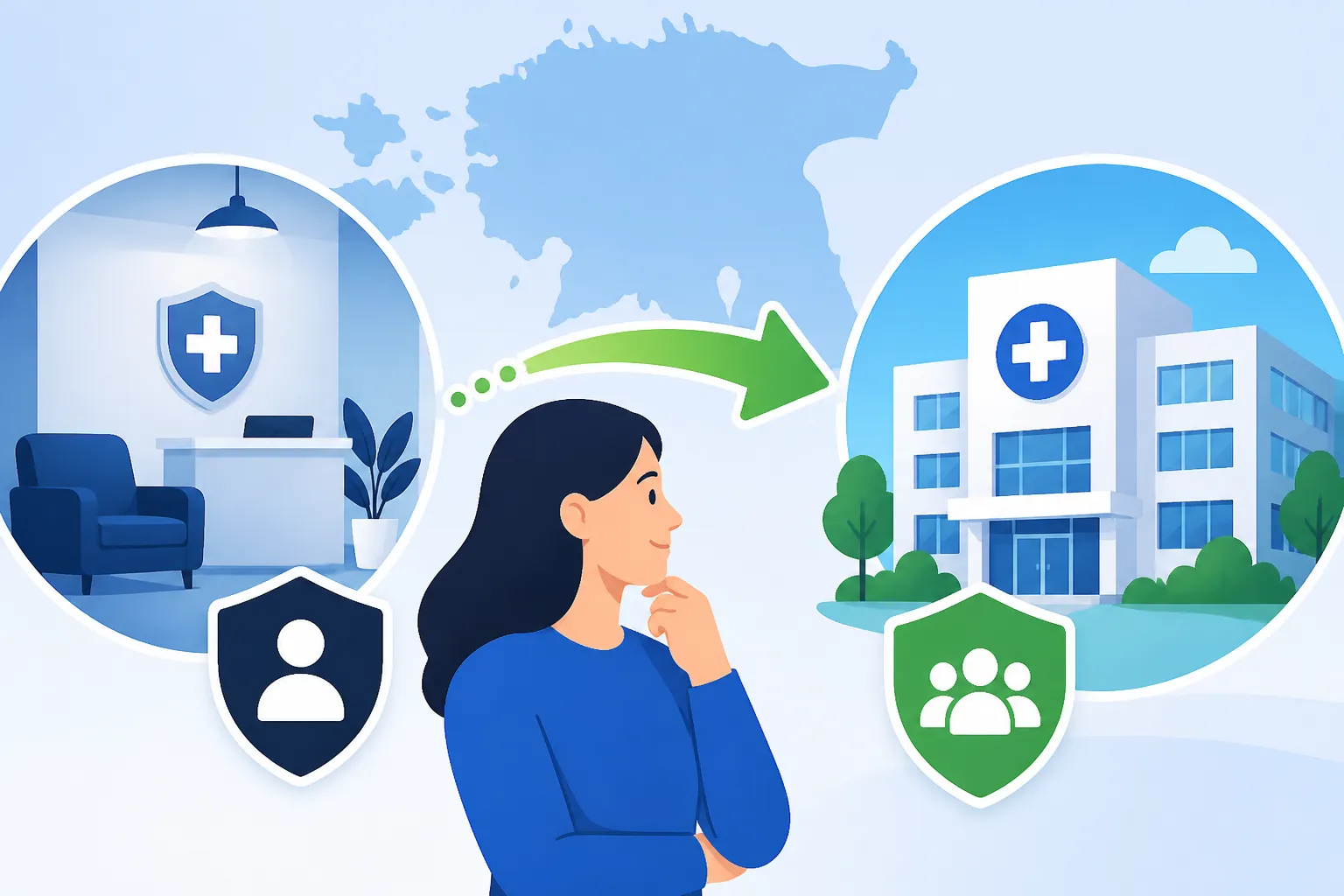
Navigating the Estonian healthcare system can feel like deciphering an ancient rune, especially when you've started your expat journey with private insurance and are now wondering how to make the leap to public coverage. It's a common dilemma, often born from changing employment, residency status, or simply realizing the public system might be a better fit long-term. This guide will meticulously walk you through the process of transitioning from private to public healthcare, outlining the eligibility, practical steps, and what you can realistically expect.
Understanding Estonia's Dual Healthcare System: Why You Might Switch
Estonia, like many European countries, operates with a mixed healthcare system. You have the public system, primarily funded by social tax contributions and managed by the Estonian Health Insurance Fund (Haigekassa, often known as Tervisekassa), and then there's the private sector, offering supplementary or alternative services often covered by private insurance. When you first arrive, especially if you're on a startup visa, digital nomad visa, or even certain types of work permits, private insurance is often your first port of call, sometimes even a legal requirement. This is where providers like SafetyWing come in handy for initial coverage. But as life here settles, many expats find themselves wanting to switch.
The Initial Landscape: Private Healthcare as a First Step
For many of us, private health insurance felt like the most straightforward option when we first landed. Perhaps your residence permit application specifically required it, or your initial employer hadn't yet sorted out your social tax contributions. Private plans offer a sense of control, often with English-speaking services readily available and potentially shorter wait times for specialists. You might have found yourself booking appointments directly at private clinics in Tallinn or Tartu, enjoying the flexibility. However, this flexibility often comes with a higher price tag for routine care, and once you become a legal resident contributing to the Estonian social security system, continuing with purely private coverage can feel redundant or overly expensive, especially when you consider that What Is Covered by Estonian Public Health Insurance?.
The Drive to Transition: Why Public Healthcare Becomes Appealing
The primary motivation for switching to public healthcare, or Tervisekassa, usually boils down to cost-effectiveness and comprehensive coverage. Once you're legally employed in Estonia, or self-employed and meeting certain income thresholds, you (and often your registered family members) become eligible for public health insurance through your social tax payments. This means your healthcare costs are largely taken care of by the state, covering everything from general practitioner visits and specialist consultations to hospital stays and prescription subsidies. It's a system designed to be universal, and for those planning to stay long-term, it’s undeniably the more financially sensible path. Moreover, once you're in the Tervisekassa system, you can register with a family doctor (perearst), which is the gateway to most public services and truly integrates you into the local healthcare landscape.
Eligibility and Prerequisites for Public Healthcare (Tervisekassa)
Before you can even think about ditching your private plan, you need to firmly establish your eligibility for the public system. This isn't just a matter of deciding; it's about meeting specific criteria set by the Estonian state.
Employment and Social Tax Contribution
The cornerstone of Tervisekassa eligibility for most expats is being employed by an Estonian company or being registered as a self-employed person (FIE) or an OÜ (private limited company) owner who is actively paying social tax. When your employer makes social tax payments (sotsiaalmaks) on your behalf, a portion of this goes directly to fund the Tervisekassa. This connection is vital. It's not enough to simply have a job; your employer must be correctly registering you and making the required contributions. You can always check your social tax payments through the e-MTA portal, which is a fantastic digital tool provided by the How the Estonian Tax and Customs Board Maksu- ja Tolliamet Works. For those who are self-employed, you'll be responsible for making your own social tax payments, which then qualify you for Tervisekassa coverage. This typically kicks in after you've made a certain amount of contributions over a specified period.
Let's say you started your job on the first of the month. Your employer would typically pay social tax by the 10th of the following month. Once those payments are registered, Tervisekassa usually activates your insurance status within a few days. However, there can be a waiting period for new residents. It's crucial to understand How Long Does It Take to Get Health Insurance as a New Resident in Estonia?, as this can sometimes mean a short gap in public coverage where your private plan, perhaps even a short-term solution like SafetyWing, would still be indispensable.
Residence Permit and Isikukood
Beyond employment, your legal residency status plays a critical role. To access public healthcare, you generally need to have a valid Estonian residence permit (or registered right of residence for EU citizens) and an Isikukood (personal identification code). The Isikukood is your golden ticket for pretty much everything administrative in Estonia, including healthcare. It links your identity to your social tax contributions and enables the Tervisekassa to identify you in their system.
If you arrived on a D-visa and subsequently applied for a temporary residence permit, your Isikukood would typically be issued as part of that process. Without a proper residence permit and Isikukood, even if an employer is making social tax payments, activating your Tervisekassa coverage can be problematic. This is why getting your How to Get Your Isikukood Personal Code and Why It Matters for Healthcare is one of the very first things you should do upon arrival and before attempting any major administrative shifts. For EU citizens, registering your right of residence at your local government office (e.g., population register office) and getting an Isikukood is also a prerequisite.
The Step-by-Step Process of Transitioning to Tervisekassa
Once you've confirmed your eligibility, the actual process of switching isn't overtly complicated, but it does require some attention to detail and patience.
Confirming Your Tervisekassa Coverage Status
The very first practical step is to verify that you are, indeed, covered by Tervisekassa. You can do this easily online via the state portal, eesti.ee. Simply log in with your Estonian ID card, Mobile-ID, or Smart-ID, and navigate to the "Health Insurance" section. It will display your current health insurance status, including the start and end dates of your coverage. This is often the most anxiety-inducing part for many expats – will it be active? Has my employer done everything right? Seeing that green "active" status is a huge relief! If it's not active and you believe it should be, immediately contact your employer's HR department or, if self-employed, verify your payments with the Maksu- ja Tolliamet.
Choosing and Registering with a Family Doctor (Perearst)
Once your Tervisekassa coverage is active, the next crucial step is to choose and register with a family doctor (perearst). In Estonia, the family doctor is your primary point of contact for healthcare. They manage your general health, provide referrals to specialists, issue prescriptions, and are generally your medical home. You cannot directly access most specialist care or many other services within the public system without a referral from your perearst.
To find a family doctor, you can use the Tervisekassa website's search tool, which allows you to filter by location (e.g., Tallinn, Tartu), and sometimes even by language capabilities, though English-speaking doctors might be harder to find outside major cities. When you find a doctor or family doctor centre (perearstikeskus) with available patient slots, you'll need to submit a written application to them. This can often be done via email or in person. They will then process your request, and once accepted, Tervisekassa will be notified, and you’ll officially be registered. This usually takes a few working days.
Here’s a simplified process:
- Check Tervisekassa status: Use eesti.ee to confirm your public health insurance is active.
- Research family doctors: Browse the Tervisekassa website or local directories for perearstid accepting new patients in your area. Consider factors like location, accessibility, and whether they have English-speaking staff, which you might need to confirm by calling. Many expat groups on social media can offer recommendations on How to Find an English-Speaking Doctor in Estonia.
- Submit an application: Contact the chosen family doctor's practice and submit their required application form. This usually asks for your personal details, Isikukood, and contact information.
- Confirmation: You should receive confirmation from the practice once your registration is successful. Tervisekassa updates typically follow shortly after.
Cancelling Your Private Health Insurance
With your Tervisekassa coverage confirmed and your family doctor chosen, you can now confidently move to cancel your private health insurance policy. This step needs to be handled carefully to avoid any gaps in coverage or unnecessary payments.
Most private insurance companies, including international providers like SafetyWing, have specific procedures for cancellation. You'll typically need to:
- Review your policy contract: Check the terms and conditions regarding cancellation, especially notice periods and any potential fees. Some policies might require a 30-day notice, for example.
- Contact your provider: Reach out to their customer service, usually via email or phone, to initiate the cancellation process. State clearly that you wish to cancel your policy as you are now covered by the Estonian public health insurance system.
- Provide necessary documentation: They might ask for proof of your Tervisekassa coverage, such as a screenshot from eesti.ee or a letter from Tervisekassa (though less common).
- Confirm cancellation: Ensure you receive written confirmation that your policy has been cancelled and that no further payments will be taken. Check your bank statements for a few months to verify this.
It's a good idea to keep a buffer, perhaps having both policies overlap for a week or two, just to be absolutely certain your public coverage is fully operational before cutting ties with your private provider. This minimizes risk.
Navigating the Practicalities and Potential Hiccups
While the process sounds straightforward, there are always little bumps in the road unique to the expat experience.
Common Challenges and Solutions
- Waiting Periods: As mentioned, there might be a short waiting period for Tervisekassa to activate, especially if you're a new resident or moving between jobs. During this time, your private insurance is critical. Plan this transition carefully to avoid any periods without coverage, which could be financially disastrous in case of an emergency.
- Finding an English-Speaking Perearst: While Tallinn and Tartu have options, finding an English-speaking family doctor in smaller towns can be a real challenge. Don't be afraid to call different practices and ask. If you're struggling, consider a practice in a larger city and be prepared for potential travel, or utilize online resources and expat networks for recommendations. The Tervisekassa often advises using their list as a starting point, but personal referrals from other expats can be invaluable.
- Understanding the Digital System: Estonia prides itself on its digital services, and healthcare is no exception. From your Digilugu (digital health record) to Digiretsept (digital prescriptions), most interactions are electronic. While incredibly efficient, it can take some getting used to. Your family doctor's assistant will often be your best resource for navigating this initially. For a deeper dive, check out guides like Navigating Estonia's Digital Healthcare System An Expat's Roadmap 2026.
- Communication Barriers: Even if your perearst speaks English, the support staff (nurses, receptionists) might not. Have a translation app handy or, if possible, bring a friend who speaks Estonian for initial appointments, especially when dealing with scheduling or complex questions.
What to Expect from Public Healthcare
Once you're firmly in the Tervisekassa system, here's a general idea of what to expect:
| Aspect | Private Healthcare (Typical) | Public Healthcare (Tervisekassa) |
|---|---|---|
| Cost | Monthly premiums, higher co-pays, full cost for many services | Covered by social tax, small co-pays for doctor visits, some Rx |
| Access to GP | Direct access, usually shorter wait times | Register with a Perearst, appointments usually within a few days |
| Access to Specialists | Direct booking, often shorter wait times | Requires Perearst referral, potentially longer wait times |
| Hospital Care | Covered if policy allows, often high deductibles | Fully covered if referred, small daily hospital fee may apply |
| Prescriptions | Varies by policy, often reimbursed or discounted | Significant subsidies for most medications, requires Digiretsept |
| Geographic Coverage | Global or regional, depends on policy (e.g., SafetyWing for travel) | Primarily Estonia, EHIC for EU travel |
| Digital Services | Clinic-specific online portals | Integrated national Digilugu, Digiretsept, eesti.ee |
Continuing Supplementary Private Insurance
It's worth noting that some expats, even after switching to Tervisekassa, choose to maintain a supplementary private health insurance policy. This is usually for specific reasons, such as:
- Avoiding Public System Wait Times: For certain non-urgent specialist appointments or procedures, public system wait times can be long. Supplementary private insurance can offer faster access.
- Dental Care: Dental care for adults is generally not fully covered by Tervisekassa, though there are some adult dental benefits available. Many opt for private dental insurance to cover these costs.
- Specific Treatments: If you have particular needs that Tervisekassa might not cover to your desired extent, a private plan can fill the gap.
- International Coverage: If you travel frequently outside the EU/EEA, Tervisekassa doesn't provide comprehensive coverage, even with an EHIC. A travel insurance policy (like some offerings from SafetyWing) would still be necessary.
However, for most day-to-day healthcare needs and emergencies within Estonia, the Tervisekassa provides robust coverage, especially once you've learned How Estonia's Health Insurance Fund Tervisekassa Works A Full Overview.
What Happens to Your Private Insurance?
So, you’ve successfully transitioned to the public system. Now what about that private policy you had? It's time to make a clean break, but understanding the financial implications is important.
Cancellation and Refunds
As discussed, once your Tervisekassa coverage is active and you've confirmed your family doctor registration, you should contact your private insurance provider to cancel your policy. Most policies will allow for cancellation, but the terms can vary.
- Pro-rated Refunds: If you've paid premiums in advance (e.g., annually or semi-annually), you should generally be eligible for a pro-rated refund for the unused portion of your coverage, minus any administrative fees stipulated in your contract.
- Notice Periods: Be mindful of any required notice periods. If your policy demands a 30-day notice, you'll still be liable for that month's premium, even if you’re already covered by Tervisekassa. Factor this into your transition timeline.
- No Refunds for Used Coverage: Of course, you won't receive a refund for any period during which you actually utilized your private insurance for medical services.
Always get written confirmation of your cancellation and the expected refund amount. Keep these documents for your records. It's not uncommon for expats to simply let their annual private policy expire without renewal once they're comfortably integrated into the public system, especially if the timing lines up well with Tervisekassa activation.
Avoiding Gaps in Coverage
The critical takeaway here is timing. Never cancel your private health insurance until you have absolute confirmation that your Tervisekassa coverage is active and that your chosen family doctor has officially accepted you. A gap in coverage, even for a few days, could leave you vulnerable to significant medical bills in case of an unforeseen illness or accident.
Think of it this way: your private insurance has been a reliable bridge, getting you from your home country to stability in Estonia. Once the public system is fully ready to take over, that bridge is no longer needed. The goal is a seamless transition, ensuring you always have a safety net beneath you.
By carefully following these steps and understanding the nuances of the Estonian healthcare system, you can successfully switch from private to public healthcare, embracing the comprehensive benefits of the Tervisekassa and simplifying your expat life in Estonia.
Disclaimer
The information provided in this guide is for general informational purposes only and does not constitute professional medical, legal, or financial advice. While we strive to keep the content up-to-date and accurate, regulations and procedures in Estonia can change. Always consult with official government sources, the Estonian Health Insurance Fund (Tervisekassa), or a qualified professional for advice tailored to your specific situation.