How to Claim Healthcare Cost Reimbursement in Estonia
Navigating the paperwork after a medical emergency or a simple dental check-up in Estonia can feel like solving a digital puzzle while you are already feeling under the weather. Whether you are dealing with the state system or a private provider, knowing exactly how to get your money back is essential for your financial peace of mind. This guide provides a step-by-step roadmap for claiming healthcare cost reimbursements, ensuring you never leave money on the table.
Understanding the Estonian Reimbursement Landscape
When you first move to Tallinn, Tartu, or any of the smaller towns across this digital nation, the healthcare system seems incredibly streamlined. You hear about the magic of the e-Health system and the ID card that holds all your medical secrets. However, the reality for many expats is that the "reimbursement" process is not a single, unified path. It varies wildly depending on whether you are covered by the public Health Insurance Fund (Tervisekassa), a private provider like SafetyWing, or if you are using an EHIC card from another EU member state.
The most common point of confusion is the difference between a "benefit" and a "reimbursement." In the Estonian public system, many costs are subsidized at the point of sale. For example, when you go to the pharmacy with a digital prescription, you don't pay the full price and then ask for money back; the discount is applied immediately. However, for things like dental care, medical devices, or specialized treatments abroad, you often have to pay upfront and navigate the Tervisekassa portal to see that money again. This requires a solid understanding of How Estonia's Health Insurance Fund (Tervisekassa) Works: A Full Overview to ensure you are eligible before you spend a single cent.
The Tervisekassa Framework
The Estonian Health Insurance Fund, or Tervisekassa, is the backbone of the national system. It is funded by the social tax paid by employers or the self-employed. For most expats working on a local contract, your coverage is automatic, but the reimbursement for specific services is not always a given. Tervisekassa operates on a principle of "necessary care," which means they are quite strict about what qualifies for a refund. If you decide to skip the queue and see a private specialist without a referral, the state will almost never reimburse those costs.
To successfully claim from the state, you must ensure that your Isikukood (personal code) is correctly linked to your bank account in the state portal. This is a step many foreigners miss. They assume the government knows where to send the money because they pay taxes. In reality, you must manually enter your IBAN in the Terviseportaal. Without this, your dental benefits or sick leave payments will simply sit in a state-held account until they eventually expire or you remember to update your profile.
Private Insurance vs. Public Coverage
Many expats choose to supplement their state coverage or use private insurance during the initial "waiting period" when they first arrive. If you are a digital nomad or waiting for your residence permit to process, you might be relying on a provider like SafetyWing to cover your initial medical needs. The reimbursement process here is entirely different from the state system. While Tervisekassa is largely automated and integrated with your ID card, private insurers require a manual trail of invoices, medical reports, and proof of payment.
The benefit of private insurance is the speed and the ability to access private clinics like Confido or Fertilitas without waiting months for a public appointment. However, the burden of proof is on you. You must be meticulous. If you are used to the "set it and forget it" nature of Estonian digital services, the manual nature of private claims can be a bit of a shock. It is often wise to keep a dedicated digital folder on your phone for photos of every receipt and medical summary you receive, as these are the primary documents requested by companies like SafetyWing during the claims process.
How to Claim for Public Healthcare Services
In Estonia, the public system handles reimbursements for several categories including dental care, medical devices, and high-cost prescriptions. The process has moved almost entirely online, away from the old days of mailing paper forms to the Tervisekassa offices. Today, your primary tool is the Health Portal (Terviseportaal), where you can track your benefits and see what has already been paid out to providers on your behalf.
The most important thing to remember is that Estonian public health insurance operates on a "co-payment" model for many services. This means the state pays a percentage, and you pay the rest. For some benefits, like the adult dental benefit, the state provides a fixed annual sum. If you do not use it by December 31st, it does not roll over to the next year. Understanding these timelines is crucial for maximizing the value of the taxes you pay into the system.
Medical Devices and Compensation
If you require specialized medical devices—ranging from glucose monitors for diabetics to orthotic insoles or CPAP machines for sleep apnea—the reimbursement process is highly structured. You cannot simply buy a device at a retail store and expect a refund. First, you need a digital "medical device card" issued by your specialist or family doctor. This card is stored electronically against your Isikukood.
Once the card is in the system, you must purchase the device from a vendor that has a contract with Tervisekassa. At the point of purchase, the vendor will see your digital entitlement and apply the discount (often 50% to 90%) immediately. If for some reason you had to pay the full price—perhaps because the system was down or you were in an emergency situation—you can file a manual claim. This involves submitting an application through the Terviseportaal or via email, attaching the invoice and a copy of the doctor’s recommendation. For more on the initial steps of getting into the system, see How to Get Your Isikukood (Personal Code) and Why It Matters for Healthcare.
Dental Care Benefits for Adults
The adult dental benefit is one of the most frequently used "reimbursements" in Estonia, although it technically functions as a direct subsidy. As of 2024/2025, the standard benefit is €60 per year, with a 50% co-payment. This means if your dental bill is €100, the state pays €50 and you pay €50. If the bill is €150, the state pays its maximum of €60, and you pay the remaining €90. For pregnant women, elderly people, and those with increased dental needs, this benefit is higher, often reaching €105.
To "claim" this, you don't actually need to do anything after the visit, provided your dentist has a contract with Tervisekassa. Most private clinics in Tallinn and Tartu do, but it is always worth asking "Kas teil on leping Tervisekassaga?" (Do you have a contract with the Health Insurance Fund?) before the procedure. The amount is deducted from your bill automatically. You can check your remaining balance for the year by logging into the Terviseportaal. If you are looking for a provider, you might find it helpful to read How to Find an English-Speaking Doctor in Estonia to ensure there are no communication barriers during your treatment.
Pharmaceutical Cost Caps and Automatic Discounts
Estonia has a unique system for pharmaceutical reimbursements called the "additional drug benefit." If you have chronic conditions and spend a significant amount on Prescription Medications and Pharmacies in Estonia: The Complete Guide, the system automatically kicks in to prevent financial hardship. Once your out-of-pocket spending on reimbursed medications exceeds €100 in a calendar year, the state begins covering a larger percentage of the costs.
Between €100 and €300 of spending, you get an extra 50% discount. If your spending exceeds €300, the discount on further prescriptions jumps to 90%. The beauty of the Estonian digital system is that you don't have to file a claim or save receipts for this. The "Digiretsept" system tracks your spending across all pharmacies. When the pharmacist scans your ID card, the price you are quoted at the counter already includes these extra tiers of reimbursement. This is a lifesaver for expats managing long-term health issues who might be worried about the cumulative cost of medications.
Claiming Through Private Insurance with SafetyWing
For many foreigners, especially those on a Startup Visa or Digital Nomad Visa, private insurance is a mandatory part of the journey. Even if you have Tervisekassa, you might use a private policy to cover items the state doesn't, such as private hospital rooms, specialized mental health services, or medical evacuation. Using a provider like SafetyWing is common because it is designed for people living outside their home country, but it requires a proactive approach to reimbursement.
Unlike the state system, where "claiming" is often invisible and automatic, a private insurance claim is a formal transaction. You are essentially presenting a case to the insurer that your medical expense falls within the policy's terms. This can be intimidating if you are navigating a foreign hospital system for the first time, but if you follow the rules of documentation, the process is generally straightforward.
When to Use Private Insurance in Estonia
In Estonia, you would typically use your SafetyWing policy when visiting private medical centers like Confido or Qvalitas. These clinics offer faster access to specialists than the public system. If you wake up with a strange rash and don't want to wait three weeks for a public dermatologist, you can book a private appointment for the next day. You will pay the full consultation fee—often between €80 and €150—upfront.
Another critical scenario is when you require medical services while traveling outside of Estonia. While the EHIC covers you in the EU, it only covers "necessary" care in public hospitals. For anything else, or for travel to the US or Asia, your private policy is your primary shield. In these cases, SafetyWing acts as the payer of last resort or your primary insurer, depending on the situation. Knowing What Happens If I Get Sick Before My Health Insurance Starts in Estonia? can help you decide when to lean on your private policy.
The Claims Submission Process for Expats
To get your money back from SafetyWing, you need three things: the medical report (summary of the visit), the itemized invoice (Arve), and proof of payment (usually a bank transfer confirmation or a card receipt). In Estonia, doctors are required to enter your visit details into the digital health record, but you should always ask for a paper or PDF "Visit Summary" (Visiidi kokkuvõte) in English if possible. Most private clinics are happy to provide this.
Once you have your documents, you log into the insurer's portal and upload them. A common mistake expats make is waiting too long to submit. Most policies have a 60 or 90-day window for filing. Be specific in your description of the symptoms; private insurers need to rule out "pre-existing conditions," so clear documentation from the doctor stating that the condition was acute and unexpected is your best friend. This is particularly relevant if you are Understanding Private Health Insurance Plans in Estonia and how they interact with local private clinics.
| Type of Cost | Tervisekassa Method | Private Insurance (SafetyWing) Method |
|---|---|---|
| GP / Family Doctor | €0 (Fully covered) | Pay upfront, submit invoice |
| Specialist (Public) | €5 co-pay (needs referral) | Not usually used |
| Specialist (Private) | No reimbursement | Pay upfront, claim via portal |
| Emergency Room | €5 co-pay | Fully covered after deductible |
| Prescriptions | Automatic at pharmacy | Pay upfront, submit receipt |
| Dental Care | Automatic €60/year | Usually emergency only |
Navigating the Sick Leave and Wage Reimbursement System
One of the most vital forms of "reimbursement" in Estonia isn't for the doctor's bill itself, but for your lost wages while you are unable to work. This is known as "haigushüvitis." For expats used to systems where the employer pays everything or the state pays nothing, the Estonian "split" model can be confusing. It involves three different parties: you, your employer, and Tervisekassa.
The system is designed to ensure that you aren't financially ruined by a week of the flu, but it also discourages taking "mental health days" without a doctor's note. Everything hinges on The Expat Guide to Finding a Family Doctor (Perearst) in Estonia. Without a registered Perearst, you cannot officially "open" a sick leave certificate (haigusleht), and without that certificate, no reimbursement for lost wages is possible.
Registering a Sick Leave Certificate (Haigusleht)
When you fall ill, the very first thing you must do—ideally on day one—is contact your family doctor. In Estonia, you don't just "call in sick" to your boss; you call your doctor's registry. They will "open" a digital sick leave certificate in the system. You don't need to physically go to the clinic if you have a standard virus; a phone consultation is often enough. The certificate is visible to your employer and the Tax and Customs Board in real-time.
While you are sick, you don't need to do anything. Once you are healthy enough to return to work, you contact the doctor again to "close" the certificate. This triggers the reimbursement calculation. It is a completely paperless process, but it requires that you have already completed Registering with the Tervisekassa in Estonia: The Complete Guide (2026). If you aren't in the system, the doctor cannot open the certificate, and you will effectively be taking unpaid leave.
Calculation and Payment Timelines
The reimbursement for your salary follows a specific "1-3-4-9" rule that every expat should memorize:
- Days 1–3: These are "responsibility days." No one pays you. You bear the cost of being sick.
- Days 4–8: Your employer pays you 70% of your average salary.
- Day 9 onwards: Tervisekassa pays you 70% of your average salary (calculated based on the previous year's social tax data).
The money from Tervisekassa is transferred directly to the bank account you have listed in the Health Portal. This usually happens within a few business days after the doctor closes the certificate, but it can take up to 30 days. If you are a new arrival and didn't work in Estonia last year, your payment will be calculated based on the minimum wage, which can be a significant drop if you have a high-tech salary. For a deeper look into this, check out Understanding Sick Leave (Haigusleht) and Sick Pay in Estonia.
Essential Documentation and Digital Portals
To successfully claim any money in Estonia, you must become proficient in the digital ecosystem. The days of walking into a government building with a folder of papers are 95% over. For health matters, the two most important sites are eesti.ee (the general state portal) and terviseportaal.ee (the specialized health portal). Logging in requires a secure digital ID—either your ID card with a reader, Smart-ID, or Mobile-ID.
The frustration many expats face isn't the lack of a system, but the language barrier within the system. While the main buttons are often translated into English, the deep "fine print" or the specific names of medical procedures on your invoices might be in Estonian. This is where using browser translation tools or having a local friend help can be invaluable.
Mastering the Terviseportaal (Health Portal)
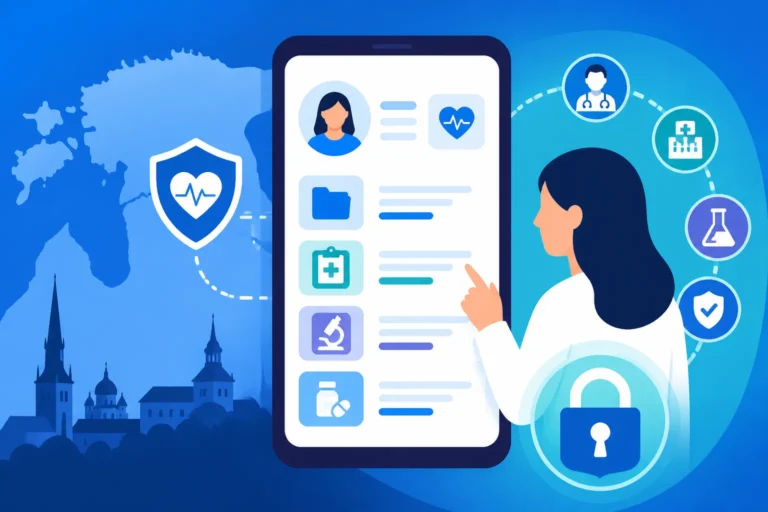
The Terviseportaal is where you can see your entire medical history in Estonia. This is where "Saatekirjad" (referrals) are stored. If you see a specialist and want to be reimbursed or covered by the state, the referral must be here before the appointment happens. You can also see your "Digilugu" (Health Record), which contains the notes from every doctor's visit. This is useful for private insurance claims, as you can download a PDF summary of your visit to send to companies like SafetyWing.
One of the most important sections is "Health Insurance and Benefits." Here, you can see your current insurance status. If you are between jobs, you might see that your insurance is "ending soon." Understanding What Happens to My Health Insurance If I Lose My Job in Estonia? is vital to avoid a situation where you pay for a surgery thinking you are covered, only to find out your status became inactive the week before.
Submitting Invoices and Bank Details
For the few things that aren't automatic—like reimbursement for medical treatment received in another EU country—you will need to submit a manual application. The Tervisekassa website has a section for "Applications" where you can download the form. You fill it out, sign it digitally (using your ID card), and email it to info@tervisekassa.ee along with your scanned invoices.
Always ensure your invoice is "itemized." A receipt that just says "Medical Services – €200" will likely be rejected. It needs to list the specific codes for the procedures performed. In Estonia, these are standard codes used by all doctors. If you are claiming from a foreign doctor, you may need to provide a translation of the invoice if it's not in English, Estonian, or Russian. This is a common requirement when How to Claim Healthcare Cost Reimbursement in Estonia involves cross-border care.
Common Pitfalls and Veteran Tips
The same mistakes come up again and again among new arrivals. The biggest pitfall is the "Referral Trap." In the public system, if you don't have an electronic referral (Saatekiri) from your Perearst, the state will not pay for your specialist visit, and you cannot claim it back later. It doesn't matter how sick you were; the bureaucracy requires that digital trail.
Another tip is to check your "Tax-Free Income" settings. While not directly a healthcare reimbursement, your medical leave payments (Haigushüvitis) are considered taxable income. If you have already used up your monthly tax-free allowance at your main job, Tervisekassa will withhold 20% income tax from your sick pay. This can result in a smaller-than-expected deposit in your bank account.
The 90/180 Day Rule and Insurance Gaps
If you are a non-EU citizen, your right to Tervisekassa is tied strictly to your residence permit or your employment status. If you change jobs, there is usually a "grace period" of two months, but if you are unemployed longer than that, your insurance stops. If you have a medical emergency during this gap, the bills will be 100% your responsibility. This is where having a backup policy like SafetyWing is not just a luxury, but a necessity for your financial safety.
For those waiting for their first Estonian residence permit, remember that you are often required to have private insurance as a condition of your visa. You cannot "back-claim" costs to Tervisekassa for things that happened before your state insurance became active. If you broke your leg on Monday and your Tervisekassa started on Tuesday, Monday's bills are yours to pay—or for your private insurer to cover. Always be aware of Is There a Waiting Period for Health Insurance in Estonia? to avoid these expensive gaps.
Dealing with "Private-Public" Clinics
In Tallinn, many clinics like Confido operate in a "dual mode." They have some slots funded by Tervisekassa (where you pay €5) and some slots that are purely private (where you pay €100). When you book online, it is incredibly easy to accidentally book a private slot. If you do this, you cannot ask Tervisekassa for a reimbursement later. You are essentially paying for the "convenience" of a faster appointment.
If you are on a budget, always look for the words "Tervisekassa vastuvõtt" (Health Insurance Fund appointment). If you are in a rush and choose the private option, make sure you have your SafetyWing details ready to see if you can claim the cost through them. The Estonian system is excellent, but it requires you to be an active, informed participant in your own care and financial management.
Disclaimer
This guide is for informational purposes only and does not constitute professional legal or financial advice. Healthcare laws, Tervisekassa regulations, and insurance policy terms in Estonia are subject to change. Always verify the latest requirements on the official Tervisekassa (Health Insurance Fund) website or consult with your insurance provider directly before making medical or financial decisions. The author is an expat blogger, not a government official or insurance broker.