How Do I Get a Long-Stay Visa for Estonia from the US?
The dream of moving to Estonia, with its blend of medieval charm and digital innovation, captures the imagination of many Americans. But, let's be honest, crossing the Atlantic and navigating the bureaucracy to live here for more than a tourist visit can feel like trying to untangle a particularly stubborn knot. If you're coming from the US and planning to spend more than 90 days out of any 180-day period in our lovely corner of the Baltic, you're going to need a Long-Stay Visa, also known as a Type D visa. This guide is going to walk you through exactly how to get that visa, cutting through the confusion with real, practical advice straight from someone who's been there.
Understanding the Estonian Long-Stay Type D Visa
So, you're an American, and you've decided Estonia is the place for you. Fantastic! But here's the first hurdle: as a non-EU citizen, while you can visit Estonia (and the entire Schengen area) for up to 90 days within any 180-day period without a visa, anything beyond that requires more formal permission. That's where the Long-Stay (Type D) Visa comes in. It’s essentially your golden ticket to stay in Estonia for an extended period, typically up to 12 months, and it's also a crucial stepping stone if your ultimate goal is a residence permit.
Who Needs a Type D Visa?
This is a question many US citizens ponder, often confused by the visa-free travel status for short stays. The bottom line is, if you're a US citizen and your intended stay in Estonia is longer than 90 days within a 180-day rolling period, you absolutely need a Type D visa. This applies whether you're coming for work, study, family reunification, or even just long-term tourism or retirement. Think of it this way: the Schengen "tourist" allowance is great for short trips, but for truly immersing yourself in Estonian life, for becoming more than a transient visitor, the Type D is non-negotiable. Without it, you risk overstaying your welcome, which can lead to hefty fines and future entry bans – a headache you definitely want to avoid.
What if you're planning to apply for a residence permit soon after arriving? The Type D visa still serves a vital purpose. It allows you to enter and remain in Estonia legally while your residence permit application is being processed. This is incredibly important because applying for a residence permit from outside Estonia, or trying to do it on a tourist visa, is often far more complicated, if not impossible in some cases. Having that Type D in your passport provides legal clarity and peace of mind during what can be a stressful period of transition. If you want to dive deeper into the overarching process, take a look at our guide on The Complete Guide to Estonian Residence Permits for Expats (2027).
Key Benefits and Limitations of the Type D Visa
The Type D visa offers several significant benefits that go beyond simply allowing you to stay longer. Firstly, it grants you mobility within the Schengen area. While your primary purpose for the Type D visa is Estonia, you can travel to other Schengen countries for short periods (up to 90 days within any 180-day period) without needing separate visas for those countries. This is a huge perk for weekend getaways to Helsinki or quick trips to Riga.
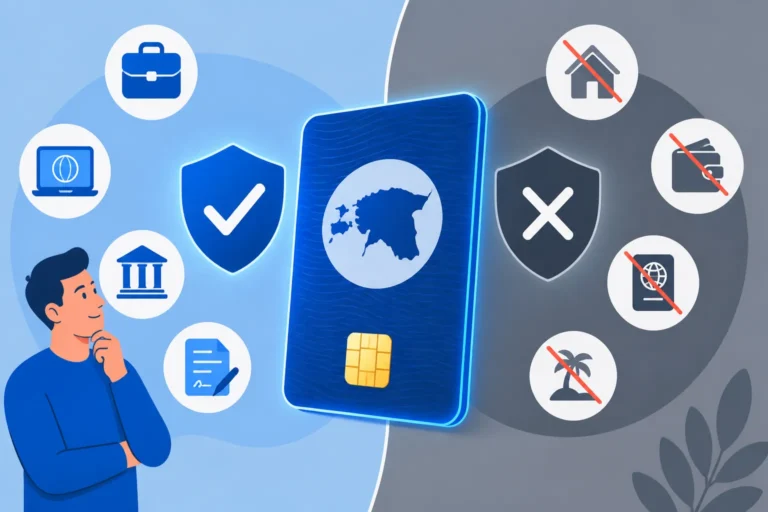
However, it's crucial to understand its limitations. A Type D visa is not a residence permit. It does not automatically grant you the right to work, establish a business, or access public services in the same way a residence permit does. While some Type D visas might be issued based on an approved work or study purpose, the visa itself is just permission to enter and stay. For full integration into Estonian society and access to all the good stuff like public healthcare and long-term employment rights, a residence permit is the next step. If your Type D visa is tied to a specific purpose, like employment, make sure you understand the conditions. It's not a free pass to do whatever you want.
Moreover, while a Type D visa can be extended, it’s typically for a maximum cumulative period of 12 months. This means it’s designed to bridge the gap until you get a residence permit. Don't expect to live on Type D visas indefinitely; they're temporary solutions. For those considering a longer-term future, understanding Long-Term Residence in Estonia: The Complete Pathway (2027) will be vital.
Essential Documents for Your Application
This is where the rubber meets the road, and honestly, it's where many people stumble. The Estonian authorities, like any other, require a precise set of documents. Don't even think about submitting an incomplete application; it will likely be rejected, costing you time and money. Here’s a breakdown of what you'll typically need:
- Passport: Your valid US passport, issued within the last 10 years, and valid for at least three months beyond your intended departure date from Estonia. Make sure it has at least two blank pages for the visa sticker.
- Application Form: Duly completed and signed. Often, this is done online, but a printout of the signed form will be required. Double-check every field for accuracy.
- Photo: One recent passport-sized color photo (35×45 mm), meeting Schengen photo requirements. No selfies, no blurry shots, no glasses unless absolutely necessary for medical reasons, and a neutral expression.
- Travel Medical Insurance: This is a big one. You need travel medical insurance that is valid for the entire duration of your stay in Estonia (or at least for the first period of your Type D visa) and for the entire Schengen area. It must cover emergency medical treatment, urgent hospital treatment, and repatriation with a minimum coverage of €30,000. Many US policies won't cut it, so look specifically for international travel or expat health insurance. Providers like Cigna Global are often recommended for their comprehensive coverage suitable for international moves, and they understand these specific requirements. For more on this, check out What Health Insurance Do I Need for an Estonian Residence Permit?.
- Proof of Sufficient Financial Means: You need to show you can support yourself financially during your stay without relying on the Estonian state. This typically means bank statements from the last three to six months, proof of employment and salary slips, or a letter from a sponsor. The minimum required amount can change, but generally, expect to prove you have at least €168 for each day of your stay, or €2,016 per month. This can feel like a lot, and it is a significant hurdle for many.
- Proof of Accommodation: This could be a rental agreement, a letter of invitation from a host in Estonia, or a hotel booking for your initial period. It needs to show you have a place to stay.
- Proof of Purpose for Stay: This is crucial and varies widely depending on why you're coming.
- For Work: An employment contract with an Estonian employer, registration of short-term employment with the Police and Border Guard Board (PPA), or a letter from your employer.
- For Study: An acceptance letter from an Estonian educational institution.
- For Business/Self-Employment: Your business registration documents, a business plan, and financial forecasts.
- For Digital Nomads: Proof of remote work for a foreign company, or self-employment contracts, and income documentation. See How to Apply for Estonia's Digital Nomad Visa for specific details.
- For Family Reunification: Marriage certificates, birth certificates, and proof of relationship to an Estonian resident or citizen.
- Travel Itinerary: While not always mandatory, having a tentative flight booking and a general plan for your arrival can demonstrate seriousness.
- Visa Fee: Be prepared to pay the non-refundable application fee. It's usually around €100 for a Type D visa, but always check the most current fees on the consulate website.
It’s often helpful to create a checklist and gather everything meticulously. Photocopy everything, keep originals safe, and organize your documents logically. It might seem like overkill, but it will save you immense stress later.
The Application Process from the United States
Applying for an Estonian Long-Stay Visa from the US involves a few specific steps. Unlike some other countries, Estonia doesn't have a massive consular presence across the US, so understanding where and how to apply is key.
Finding Your Nearest Estonian Embassy or Consulate
For US applicants, the primary point of contact is usually the Embassy of Estonia in Washington D.C. or the Consulate General of Estonia in New York. While there might be honorary consuls in other states, they typically handle very limited services and often cannot process visa applications.
Before you do anything else, check the official website of the Estonian Embassy in Washington D.C. or the Consulate General in New York. This is your single most important resource for the most up-to-date requirements, application forms, and appointment booking procedures. Visa rules and requirements can shift, so always verify directly with the source. You will almost certainly need to schedule an appointment for your interview and document submission. These appointments can sometimes have a lead time, especially during peak seasons, so don't delay in booking one once you have all your documents mostly in order. Remember, showing up unannounced will likely get you nowhere fast.
Preparing Your Application Package Meticulously
Once you've booked your appointment, the real work begins. You'll need to submit your application in person. This isn't a process you can entirely complete online from the US, as biometric data (fingerprints) are usually collected at the same time.
Here’s a rough sequence of how to approach it:
- Fill out the online application: Most Estonian visa applications start with an online form. Be precise. Any inconsistencies between your online application and your physical documents can raise red flags. Print out the completed form.
- Gather all supporting documents: Refer to the comprehensive list in the previous section. Put everything in order. Use tabs, dividers – whatever helps keep it organized. Imagine you’re a busy consular officer; make their job easy, and yours will be too.
- Ensure financial readiness: This isn't just about having money in your bank account; it's about proving it to a level that satisfies the authorities. If you're relying on a sponsor, ensure they provide a detailed letter of support and their own financial statements. If you're working, bring employment contracts, recent pay stubs, and a letter from your employer confirming your position and salary. This is often where applicants falter, so make sure your proof of funds is robust. For more detail on demonstrating this, read our guide on How Do I Prove My Income for an Estonian Residence Permit?.
- Secure compliant health insurance: As mentioned, this is often a sticking point. Don't just get any travel insurance. Make sure it explicitly states Schengen-wide coverage, the minimum €30,000, and includes repatriation. Double-check the policy wording. Providers like Cigna Global are familiar with these specific requirements and can issue compliant documentation.
- Proof of accommodation: A signed rental agreement is ideal. If you're staying with friends or family, a formal invitation letter from them, along with a copy of their ID and proof of address, will usually suffice.
- Compile your purpose-of-stay documents: This is where you connect your personal situation to the specific type of visa you're applying for. For example, if you're a student, your acceptance letter from the University of Tartu or Tallinn University is paramount. If you're working for an Estonian company, your signed employment contract and confirmation that your employer has registered your short-term employment with the PPA are non-negotiable.
Remember, the officials are looking for clarity and evidence that you meet all the requirements and that your intentions are legitimate. Over-preparing is always better than under-preparing.
Attending Your Visa Interview and What to Expect
The interview at the embassy or consulate is a formal step, but it's not designed to trick you. It's an opportunity for the consular officer to clarify information, verify documents, and understand your intentions for moving to Estonia.
- Be Punctual: Arrive on time, if not a little early, for your appointment.
- Dress Appropriately: While you don't need a suit and tie, present yourself respectfully.
- Be Honest and Direct: Answer all questions truthfully and concisely. Don't volunteer unnecessary information, but don't withhold anything pertinent either. The officers are experienced and can spot inconsistencies.
- Know Your Application: Be familiar with every detail of your application and supporting documents. If you have a work contract, know the start date, your position, and your salary. If you're studying, know your program, course duration, and university details.
- Be Prepared for Questions About Your Intentions: They might ask about your plans after the visa expires (e.g., "Do you plan to apply for a residence permit?"). Be clear about your long-term goals. They’ll want to ensure you don’t intend to overstay or violate visa conditions.
- Language: The interview will generally be conducted in English.
- Biometrics: Your fingerprints and a digital photo will typically be taken during this appointment.
After the interview, the waiting game begins. The processing time for a Type D visa from the US can vary significantly, from a couple of weeks to over a month. Factors like the completeness of your application, the volume of applications, and the specifics of your case can all play a role. Patience is a virtue here. If you're starting to wonder, "how long does it take to get an Estonian residence permit?" you can find more insights into that process in our dedicated article.
Crucial Considerations and Common Pitfalls for US Applicants
Moving to Estonia from the US is a big undertaking, and while the Type D visa is a key hurdle, there are other practicalities that US applicants often overlook or struggle with.
Health Insurance Requirements: A Non-Negotiable
Seriously, I can't stress this enough: health insurance is not something to skimp on or assume your existing US policy covers. Estonia's healthcare system, while excellent, operates differently, and without proper coverage, you could face massive bills for even minor incidents.
The visa requirement for €30,000 coverage, including repatriation, is a strict minimum. For long-term peace of mind, especially if you plan to stay and eventually get a residence permit, you'll want more comprehensive coverage. Many US insurance plans do not provide adequate international coverage, and certainly not the type of coverage needed for a long-stay visa or potential residence permit in Estonia. It’s vital to get a policy from an international provider like Cigna Global or another company that specializes in expat insurance, which explicitly states compliance with Schengen visa requirements.
Think about it: even if you eventually qualify for the Estonian Health Insurance Fund (Tervisekassa) through employment or a residence permit, there might be a waiting period. What if you get sick during that gap? Having robust private insurance in place, from day one of your Type D visa, is not just a visa requirement – it's plain common sense and good financial planning. For a deeper understanding, definitely check out our post on How Estonia's Health Insurance Fund (Tervisekassa) Works: A Full Overview.
Proving Sufficient Funds for Your Stay
This is another area where many US applicants, particularly those who are self-employed or freelancers, can find themselves scrambling. The Estonian authorities need concrete proof that you won't become a burden on their social system. Simply stating you have money isn't enough; you need documented evidence.
What kind of proof are they looking for?
- Bank Statements: Not just a current balance, but statements for the past 3-6 months, showing consistent income and healthy balances. These should ideally be in English or officially translated.
- Employment Contracts & Pay Stubs: If you have an Estonian job offer, great. If you’re working remotely for a US company, you’ll need a letter from your employer confirming your employment, salary, and that you're permitted to work remotely from Estonia. Recent pay stubs (last 3-6 months) are also essential.
- Business Registration & Financials: For entrepreneurs or self-employed individuals, copies of your business registration (if applicable), tax returns, and recent client contracts or invoices can demonstrate a stable income stream.
- Sponsorship Letter: If someone else is supporting you, they'll need to provide a formal, notarized letter stating their commitment, along with their own financial documentation.
Don't underestimate the minimum daily requirement. While the official number is around €168 per day, or €2,016 per month, it’s always wise to show a bit more if you can. Estonia is not as expensive as, say, Switzerland, but cities like Tallinn still have a significant cost of living. Imagine yourself explaining your finances to a skeptical official – have all your ducks in a row.
Navigating the Waiting Game and Post-Approval Steps
Once you've submitted your application and completed your interview, all you can do is wait. This period can be frustrating, especially when you're eager to start your new life. Try to avoid contacting the embassy daily; they will reach out if they need more information or if your visa is ready.
After Approval:
If your Type D visa is approved, congratulations! You'll typically be notified to pick up your passport with the visa sticker inside. Double-check all the details on the visa – your name, passport number, validity dates, and the number of entries allowed. Any errors should be reported immediately.
Upon Arrival in Estonia:
Your Type D visa allows you to enter Estonia. However, it's just the beginning.
- Register Your Residence: This is critical. Within one month of arriving, you need to register your place of residence in the Population Register. This isn’t just for bureaucracy; it’s essential for many subsequent steps, like getting an Isikukood (personal code) and applying for a residence permit. Find out more about this process in Registering Your Place of Residence in Estonia: The Complete Guide.
- Apply for Your Residence Permit (if applicable): If your Type D visa was a precursor to a residence permit, begin that application process as soon as possible after arriving and registering your address. Don't wait until your Type D visa is about to expire! You can typically apply for a temporary residence permit at the Police and Border Guard Board (PPA) service points. Learn more about the specific steps in How to Apply for a Temporary Residence Permit in Estonia.
- Get Your Isikukood: This personal identification code is your key to unlocking virtually everything in Estonia, from opening a bank account to accessing digital services. You’ll usually get it automatically once your residence is registered or when you apply for your residence permit. We have a detailed guide on How to Get Your Isikukood (Personal Code) and Why It Matters for Healthcare.
- Consider Moving Logistics: For US citizens making such a big move, logistics can be a beast. Tools and platforms like Sirelo can be incredibly helpful for comparing international moving companies, getting quotes, and finding resources on packing and shipping. Planning ahead for your move will save you a world of hurt.
Moving from the US to Estonia is an adventure, but like any adventure, it requires careful planning and a bit of perseverance. The Type D visa is your first major step, and by following these guidelines, you'll be well on your way to enjoying everything Estonia has to offer. Tere tulemast!
Disclaimer
The information provided in this guide is intended for general informational purposes only and does not constitute legal, financial, or immigration advice. Visa regulations, requirements, and fees can change frequently. It is imperative to verify all information with the official Embassy of Estonia in Washington D.C., the Estonian Ministry of Foreign Affairs, or the Estonian Police and Border Guard Board (PPA) before making any decisions related to your visa application or move to Estonia. The author and publisher are not responsible for any errors or omissions, or for any actions taken based on the information provided herein.