Can EU Pensioners Use Estonian Public Healthcare?
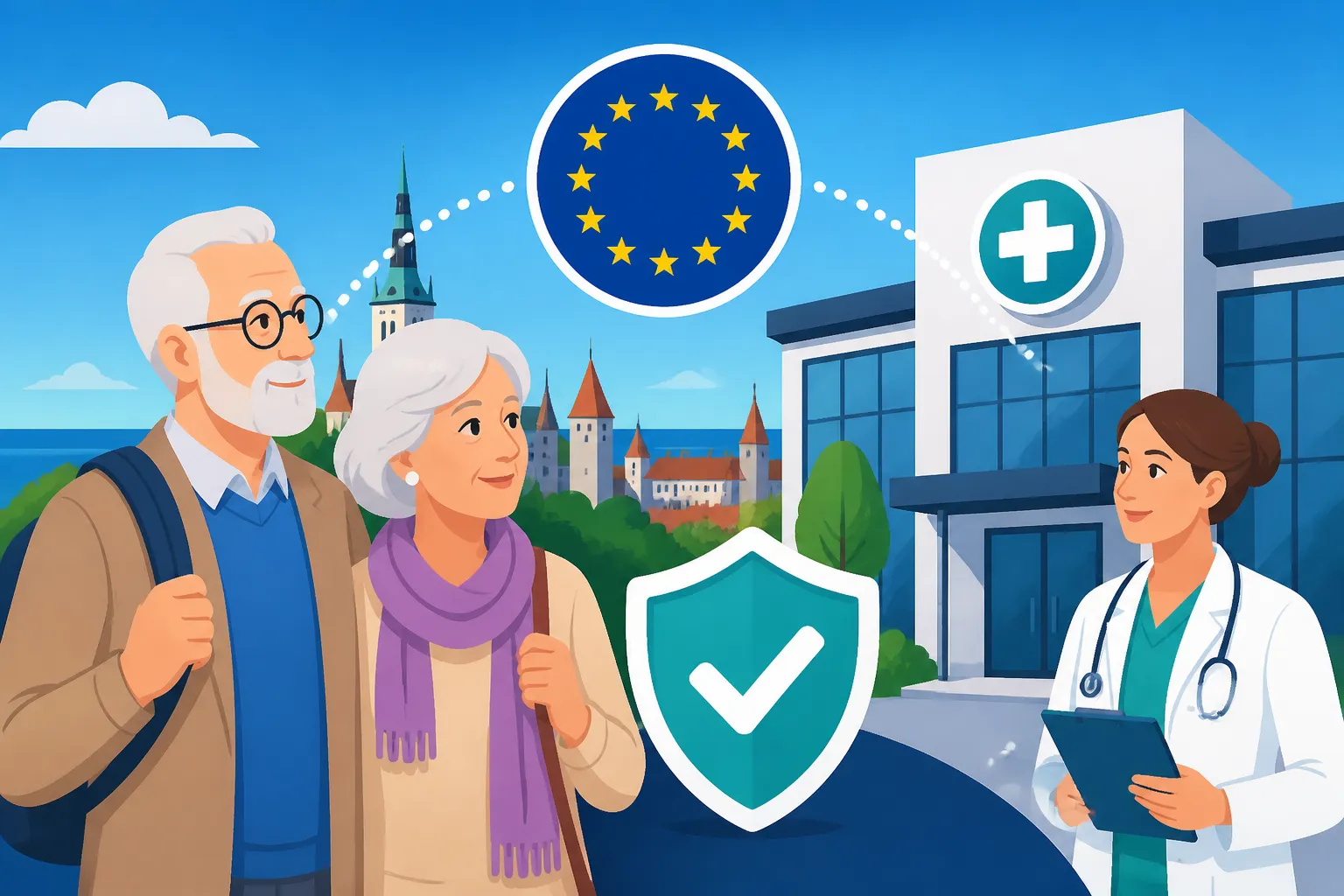
Retiring to the quiet, pine-scented forests of Estonia or the medieval charm of Tallinn’s Old Town is an appealing prospect for many EU citizens. However, the anxiety of losing access to reliable medical care often dampens the excitement of a move. This guide explains exactly how EU pensioners can transition into the Estonian public healthcare system, covering the S1 form, registration hurdles, and local medical realities.
Understanding EU Reciprocity and the Estonian Health Insurance Fund
If you are an EU pensioner moving to Estonia, the first thing you need to understand is that you aren't starting from scratch. You have already paid into a system in your home country, and thanks to EU social security coordination, those rights travel with you. The primary entity you will deal with here is the Tervisekassa (formerly known as Haigekassa). This is the Estonian Health Insurance Fund that manages the state-funded system.
For many retirees, the confusion starts with the difference between a tourist visit and a permanent move. When you are just visiting, you use your European Health Insurance Card (EHIC). But once you register your residence in Estonia, the EHIC is no longer the correct tool for primary care. You need to become a formal part of the local system. This is where the S1 form becomes your most important document. The S1 form is a certificate of entitlement to healthcare if you do not live in the country where you are insured. You must request this from your home country’s pension or health authority before you leave or shortly after arriving.
The beauty of the S1 system is that it allows How Estonia's Health Insurance Fund (Tervisekassa) Works: A Full Overview to bill your home country for your care. You get the same treatment as an Estonian retiree, but the financial burden stays with the nation where you spent your working life. Many expats get frustrated trying to explain their situation to local clerks without this form; save yourself the headache and have the S1 ready before you even pack your first suitcase.
The Step by Step Registration Process for Retirees
The administrative trail in Estonia is famously digital, but for a new arrival, it still requires a few physical steps. First, you cannot access healthcare without a local identity. You must obtain your Estonian personal identification code, known as the Isikukood. This is the "golden key" to almost every service in the country. You can apply for this at the local prefecture of the Police and Border Guard Board (PPA) or a local government office. Understanding How to Get Your Isikukood (Personal Code) and Why It Matters for Healthcare is essential because, without it, you simply do not exist in the digital health registers.
Once you have your Isikukood, the next step is Registering Your Place of Residence in Estonia: The Complete Guide. You need a rental agreement or proof of home ownership to do this at your local district administration office (Linnaosavalitsus). Only after you are officially a resident in the Population Register can you submit your S1 form to the Tervisekassa. You can do this via email with a digital signature (if you already have your ID card) or by visiting one of their customer service desks in Tallinn, Tartu, Pärnu, or Jõhvi.
While waiting for your residency and Tervisekassa registration to process—which can sometimes take a few weeks—many retirees feel vulnerable. This is a common pain point. During this "gap" period, having a bridge plan like SafetyWing can be a lifesaver. It provides a safety net so you aren't paying full price out of pocket if you trip on a cobblestone in Tallinn before your Estonian insurance is officially active. SafetyWing is often used by expats as a flexible solution while they navigate the initial bureaucratic maze.
| Step | Action Required | Location/Entity |
|---|---|---|
| 1 | Obtain S1 Form | Health Authority in Home Country |
| 2 | Get Isikukood | Police and Border Guard (PPA) |
| 3 | Register Residence | Local District Government Office |
| 4 | Submit S1 Form | Tervisekassa Customer Service |
| 5 | Find a Family Doctor | Local Perearstikeskus |
| 6 | Access Digilugu | Online Health Portal (health.ee) |
Finding and Registering with a Family Doctor
In Estonia, the gatekeeper to the entire medical system is the Family Doctor, or Perearst. You cannot simply walk into a specialist's office for a chronic issue without a referral, or Saatekiri. For a pensioner, finding a doctor who speaks your language and has an open list is the most significant cultural hurdle. The Expat Guide to Finding a Family Doctor (Perearst) in Estonia is a task you should start the moment your residency is confirmed.
Most doctors in major cities like Tallinn or Tartu speak Estonian and Russian fluently. English proficiency is very high among younger doctors, but in some smaller towns, it can be hit or miss. It is wise to look into larger health centers like the West Tallinn Central Hospital (Lääne-Tallinna Keskhaigla) or the University of Tartu Hospital. These institutions often have more experience dealing with international patients and the administrative nuances of the S1 form.
When you find a doctor, you must submit a signed application. The doctor has seven days to review it. They can only refuse you if their list is full (usually capped at 2,000 patients) or if your registered address is outside their designated service area. If you find yourself struggling with the language barrier or a complex medical history, remember that you can always call the How to Use the Family Doctor Advice Line (1220) in Estonia. This service offers advice in English and can be a great help when you are unsure if your symptoms require an emergency visit.
Coverage Benefits for Pensioners in Estonia
Once you are in the system, you will find that Estonian healthcare is highly efficient, though sometimes austere. For pensioners, most primary care visits with your Perearst are free of charge. If you are referred to a specialist, there is usually a small "visit fee" (visiditasu), which is currently capped at five euros. If you are hospitalized, there is a small daily fee for the first ten days, but compared to many other EU nations, these costs are negligible.
One of the highlights of the Estonian system is the Understanding the Digiretsept (Digital Prescription) System in Estonia. You will never have to worry about losing a paper prescription again. Your doctor enters the prescription into the central system, and you simply present your Estonian ID card at any pharmacy (Apteek) across the country. As a pensioner with Tervisekassa coverage, you are often eligible for significant discounts on medicines for chronic conditions, sometimes up to 75% or 90% of the cost.
Dental care is another area where pensioners receive extra support. While adults generally pay for their own dental work in Estonia, pensioners receive a specific annual benefit that covers a portion of their costs. Understanding Dental Care and Adult Dental Benefits in Estonia is vital because dental work can be expensive. The benefit is deducted directly from your bill at participating clinics, so you don't have to worry about complicated reimbursement paperwork.
Navigating Waiting Lists and Private Alternatives
The "elephant in the room" in the Estonian public system is the waiting list. For non-urgent specialist appointments—like a routine cardiologist check-up or a hip consultation—the wait can be several months. This is a common frustration for retirees who are used to faster service in countries like Germany or France. This is why many expats engage in a "hybrid" approach, weighing the pros and cons in Public vs Private Healthcare in Estonia: Which Should Expats Choose?.
If you don't want to wait three months for a specialist, you can opt for a private consultation. Clinics like Confido or Fertilitas allow you to book an appointment within days if you are willing to pay the full price. This is another area where having supplemental coverage like SafetyWing can provide peace of mind, especially if you plan on traveling back to your home country or around the Schengen area frequently. SafetyWing offers a level of flexibility that the state system simply isn't designed for, especially for those who don't want their mobility limited by local waiting times.
Even if you see a private specialist, they can still access your Understanding the Digilugu (Digital Health Record) System in Estonia. This central database stores all your test results, X-rays, and visit summaries. It ensures that whether you see a state doctor in Pärnu or a private specialist in Tallinn, your medical history follows you seamlessly. Just make sure to log in to the portal with your ID card and ensure your contact details are up to date.
Emergency Situations and Out-of-Hours Care
No one likes to think about emergencies, but as a retiree, it’s crucial to know the protocol. The emergency number in Estonia is 112. If you are experiencing a life-threatening situation, the ambulance (kiirabi) will take you to the nearest Emergency Medicine Department (EMO). For EU pensioners with Tervisekassa coverage, emergency care is fully covered, though a small fee for the EMO visit (usually five euros) may apply if you are not admitted to the hospital.
In Tallinn, the main EMOs are at the North Estonia Medical Centre (PERH) in Mustamäe and the East Tallinn Central Hospital (ITK) in central Tallinn. In Tartu, the University of Tartu Hospital is the primary hub. Be prepared for long waits at the EMO if your condition is not life-threatening; the "triage" system is very strict here. If it is 8:00 PM and you have a high fever or a minor injury, it is often better to call the 1220 advice line first rather than sitting in a hospital waiting room for six hours.
For those who travel often between Estonia and their home country, remember that your Estonian-issued EHIC (which you can apply for once you are in the Tervisekassa system) covers you for necessary care elsewhere in the EU. However, for total coverage that includes medical evacuation or specialized private care abroad, many retirees keep a policy like SafetyWing active. It acts as a global layer of protection that the S1 form and the state system don't provide, particularly when you are crossing borders.
H2 Disclaimer
The information provided in this guide is for informational purposes only and does not constitute legal or professional medical advice. Immigration laws and healthcare regulations in Estonia are subject to change. Always verify the latest requirements with the Estonian Health Insurance Fund (Tervisekassa) and the Police and Border Guard Board (PPA) before making residency or healthcare decisions.