How Do I Get Reimbursed for Medical Costs Paid Abroad?
Getting sick or injured while traveling away from your home base in Tallinn or Tartu is stressful enough without the looming shadow of a massive medical bill. Many expats mistakenly believe their Estonian health coverage automatically functions like a global credit card, only to find themselves paying out-of-pocket at a foreign clinic. This guide provides the exact steps to navigate the Estonian Health Insurance Fund's reimbursement process and explains how to recover your hard-earned euros.
Understanding Your Coverage Under the Estonian Tervisekassa
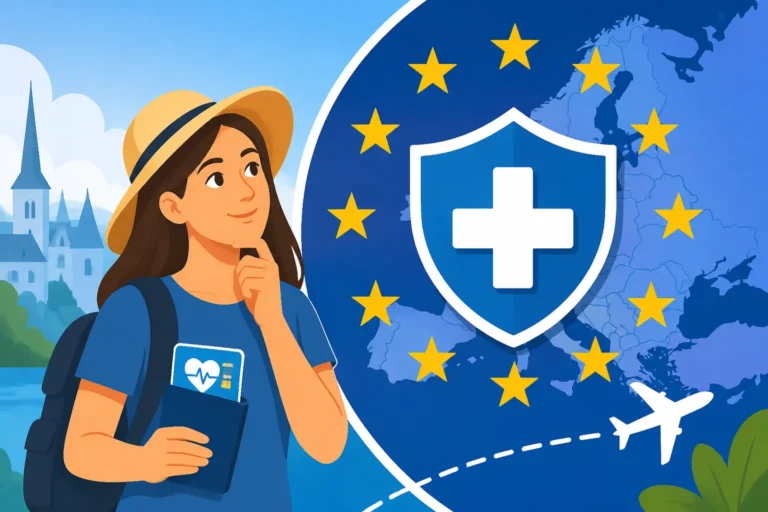
Living in Estonia, you quickly become accustomed to the seamless, digital nature of the How Estonia's Health Insurance Fund (Tervisekassa) Works: A Full Overview system. However, the moment you cross the border into Latvia, fly back to your home country, or vacation in Southern Europe, the rules of engagement change significantly. The Tervisekassa (the Estonian Health Insurance Fund) primarily operates on the principle of the European Health Insurance Card (EHIC). This card is your lifeline within the European Union, the European Economic Area, and Switzerland. It entitles you to necessary healthcare under the same conditions and at the same cost as people insured in that country.
But here is the reality check: "the same conditions" might still mean you have to pay a patient co-payment that isn't required in Estonia, or you might find yourself in a region where the only available doctor is a private practitioner who doesn't accept the EHIC. If you forget your card or are forced to pay upfront, you enter the world of reimbursement. It is a process that is famously slower than Estonia's typical e-services, often requiring manual review and physical documentation. You aren't just dealing with the Estonian system; you are dealing with the intersection of two different national health systems.
For those traveling outside of the EU—say, to the United States, Thailand, or even the United Kingdom post-Brexit—the Tervisekassa provides almost zero coverage. This is a massive trap for new residents. In these cases, the Estonian state will not reimburse you for medical costs unless there was a very specific, pre-approved medical reason for your travel. This is why many veteran expats rely on supplemental travel insurance like SafetyWing to cover the gaps that the state system leaves wide open, especially regarding medical evacuations or high-cost private care in non-EU nations. Understanding How Estonia's Health Insurance Fund (Tervisekassa) Works: A Full Overview is the first step, but knowing its geographic limits is what saves your bank account.
The Step-by-Step Process for Claiming Reimbursement from Tervisekassa
If you have already paid for medical treatment abroad and believe you are entitled to get that money back from the Estonian state, you need to act methodically. The Tervisekassa allows for reimbursement in two main scenarios: you had your EHIC but were still charged (perhaps for a mandatory co-payment or a service that should have been free), or you didn't have your card and had to pay the full "private" price at a public hospital.
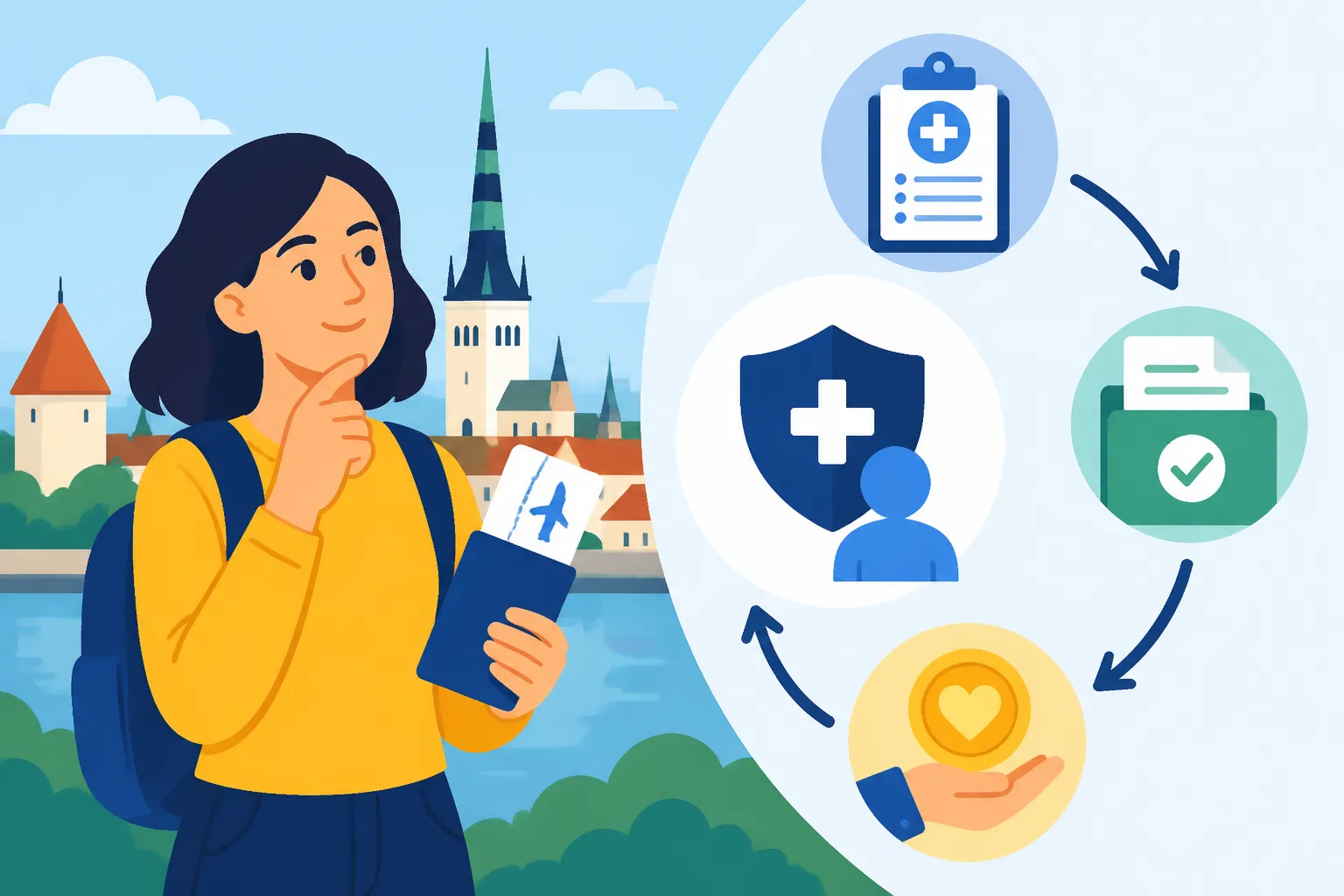
First, you must gather every single piece of paper related to your visit. This includes the medical report (diagnoses are essential), the invoice, and the proof of payment (a credit card receipt or bank statement). The Estonian authorities are strict; they need to see exactly what treatment was administered to ensure it falls under "necessary care." Routine check-ups or elective procedures performed abroad are almost never reimbursed. Once you have your documents, you need to fill out the formal application for the "reimbursement of healthcare expenses incurred in a foreign state," which can be found on the Tervisekassa website or through the Navigating Estonia's Digital Healthcare System: An Expat's Roadmap (2027) portal.
The timeline is critical. You generally have up to three years to submit your claim, but I strongly advise doing it within thirty days of returning to Estonia. Memories fade, and doctors' offices abroad become harder to reach if the Tervisekassa asks for clarification. When you submit your claim, the Estonian Health Insurance Fund will contact the health insurance institution of the country where you received treatment. They will ask that country's authorities: "How much would this have cost if the patient had used a valid EHIC?" You will only be reimbursed that specific amount. If you paid a premium for a private clinic, you will likely only receive a small fraction of that back—the "state price" of the country where you were treated. This is one of the many reasons why The Cost of Healthcare in Estonia: A Complete Breakdown for Foreigners (2026) feels so much more manageable than the unpredictable costs of international care.
| Feature | Tervisekassa (EHIC) | Private Travel Insurance (e.g., SafetyWing) |
|---|---|---|
| Geographic Scope | EU, EEA, Switzerland | Global (with some exceptions) |
| Coverage Type | State-level public care | Public and Private hospitals |
| Payment Method | Usually reimbursement (if card not used) | Direct billing or reimbursement |
| Medical Evacuation | Not covered | Covered |
| Claim Speed | 2-6 months | Usually 2-4 weeks |
| Co-payments | You pay the local rate | Often $0 or a fixed deductible |
When the Public System Isn't Enough: Private Insurance and Global Coverage
One of the hardest lessons for expats to learn is that the EHIC and the Tervisekassa are not "travel insurance." They are "reciprocal health agreements." This means if a French citizen has to pay 20% of their hospital bill in Paris, you, as an Estonian resident, will also have to pay that 20%—and the Tervisekassa will not give that money back to you. Furthermore, if you need to be flown back to Tallinn in a specialized medical plane because of a serious injury, the state will not cover a single cent of that five-figure bill.
This is where private solutions like SafetyWing become essential for the modern nomad or expat. While you are Registering with the Tervisekassa in Estonia: The Complete Expat Guide (2027), you should also be looking at how to protect yourself during those weekends in Berlin or trips home for the holidays. Private insurance provides a layer of protection that actually covers the out-of-pocket costs that the state ignores. If you are treated in a private facility because the public hospital was overcrowded or too far away, SafetyWing can step in to cover those costs, whereas the Tervisekassa would simply reject the claim.
For those who frequently travel outside the EU, the Tervisekassa is essentially dormant. If you are an American expat visiting family in New York or a Brazilian expat heading to São Paulo, you are effectively uninsured the moment your flight leaves Estonian airspace. Many of us have heard horror stories of expats facing $50,000 bills for a simple appendectomy abroad because they relied solely on their Estonian residency. Having a flexible, monthly subscription like SafetyWing ensures that you have a fallback that understands the needs of someone who lives in one country but travels to many others. It complements the Health Insurance in Estonia: Mandatory, Private and Travel Options Explained framework by filling the gaps the government was never designed to fill.
Managing Medical Records and Receipts for a Successful Claim
The success of your reimbursement claim hinges entirely on the quality of your documentation. In Estonia, we are spoiled by the Understanding the Digilugu (Digital Health Record) System in Estonia where every prescription and doctor’s note is automatically uploaded to our profile. Outside of Estonia, the world is still very much reliant on physical paper, stamps, and signatures. If you leave a hospital in Spain or Greece without a stamped medical certificate, your chances of getting reimbursed by the Tervisekassa drop to near zero.
Always ask for a "medical certificate for insurance purposes" in English. While the Tervisekassa can technically handle some translations, providing a clear document in a common language will speed up your claim by weeks. Ensure the document includes your full name (matching your Estonian ID card), the date of the visit, the specific symptoms or diagnosis, and a detailed list of the services provided. A receipt that just says "Medical Services – €200" is insufficient; the auditors need to see the breakdown—consultation, blood tests, X-rays, and so on. This level of detail is also required if you are using Emergency Medical Care in Estonia: What Every Expat Needs to Know as a reference point for what is considered an "actual emergency" versus "preventative care."
Lastly, keep digital copies of everything. Take a high-resolution photo of every receipt the second you get it. If you lose the original slip of paper during your travels, the Tervisekassa might be lenient if the digital copy is clear, but they are under no legal obligation to accept it. If you are juggling multiple claims or have complex medical needs, you might also want to look into How to Claim Healthcare Cost Reimbursement in Estonia to see if your specific situation—such as a chronic condition—requires additional prior authorization before you even leave Estonia. Being proactive is the only way to ensure that "medical costs paid abroad" don't become a permanent hole in your savings.
Common Pitfalls and How to Avoid Them
The most common reason for a rejected claim is seeking "planned" treatment under the guise of an emergency. If you go to a specialist in Germany because the waiting list in Tallinn is too long, the Tervisekassa will not reimburse you unless you have an S2 form (prior authorization) in your hand before you leave. Many expats find the How to Access Specialist Care Through the Estonian Public System a bit frustrating due to wait times, but trying to bypass it by going abroad and asking for a refund later is a recipe for financial disaster.
Another pitfall is the "Private Clinic Trap." In many European cities, the most visible medical centers are private. If you walk into a private clinic in Prague, they might take your EHIC card number, but they will still charge you the full private rate because they are not part of the state system. The Tervisekassa only reimburses what the treatment would have cost in a public facility. If the public rate was €40 and you paid a private clinic €300, you are out €260. This is specifically where having a secondary policy from a provider like SafetyWing is a lifesaver, as they are often more flexible with private facility reimbursements.
Finally, do not forget about your Isikukood (Personal Code) and Why It Matters for Healthcare when filing your paperwork. Every form you submit to the Estonian government requires this number. If you are a new arrival and haven't fully completed your How to Get Your Isikukood (Personal Code) and Why It Matters for Healthcare registration, your insurance might not even be active yet, making you ineligible for any reimbursement regardless of how much documentation you have. Always check your insurance status on the eesti.ee portal before departing on any international trip.
Healthcare Reimbursement Disclaimer
This guide is for informational purposes only and does not constitute legal or professional medical advice. The rules regarding the Estonian Health Insurance Fund (Tervisekassa) and international health agreements are subject to change. Always verify the current requirements and claim procedures directly with the Tervisekassa or your private insurance provider before making financial decisions or traveling abroad. The author and publisher are not responsible for any rejected claims or financial losses incurred while following this advice.