Can I Use My Estonian Health Insurance When Travelling in the EU?
Many of us expats living in Estonia get comfortably settled into the local healthcare system, thinking we've got it all figured out. But then the wanderlust kicks in, and a familiar question pops up: "Can I use my Estonian health insurance when travelling in the EU?" It's a fantastic question, and one that often causes a fair bit of confusion, even panic. You're diligently paying your social tax here, so surely that covers you across the border in Latvia, or even for a longer trip to Spain, right? The short answer is yes, to a certain extent, but it's not quite as simple as flashing your Estonian ID card and expecting everything to be free. This guide will meticulously break down exactly what your Estonian health insurance covers when you're exploring the European Union, what it doesn't, and how to properly prepare for peace of mind so you can actually enjoy your travels without medical anxieties.
The European Health Insurance Card EHIC Your EU Travel Companion
Moving to a new country, even within the EU, brings its own set of administrative hurdles. Getting your head around the Estonian healthcare system, like how Estonia's Health Insurance Fund (Tervisekassa) Works: A Full Overview, is one thing. Understanding how that translates when you cross a border is another. For EU/EEA citizens and those legally residing in Estonia and covered by the Tervisekassa, your key companion for travel within this zone is the European Health Insurance Card, or EHIC.
What Exactly is the EHIC and How Do I Get One in Estonia?
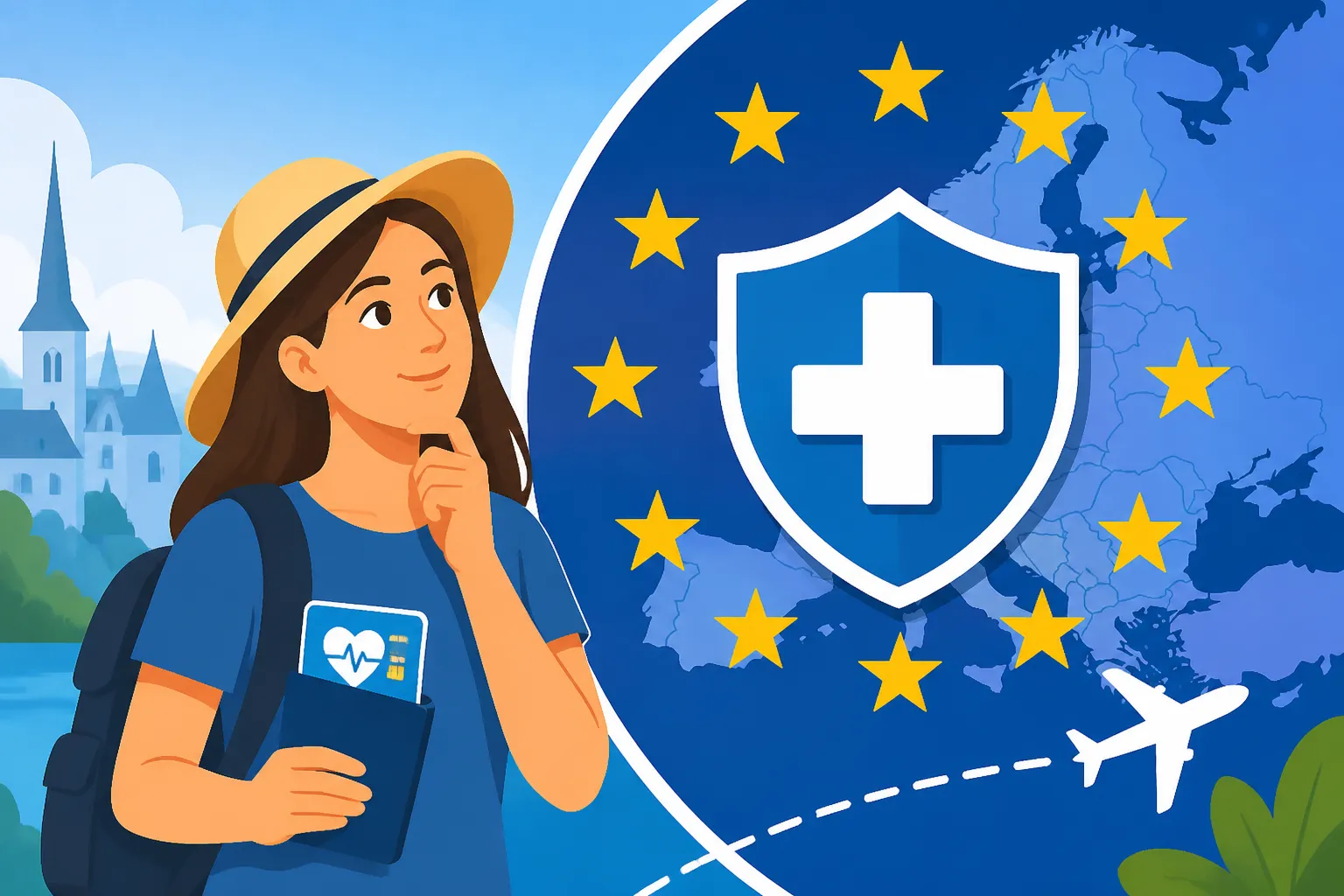
The EHIC, known as the Euroopa Ravikindlustuskaart in Estonian, is a free card that gives you access to medically necessary, state-provided healthcare during a temporary stay in any of the 27 EU countries, Iceland, Liechtenstein, Norway, and Switzerland. "Medically necessary" is the key phrase here, and we'll delve deeper into what that truly means in a moment.
Think of the EHIC as your proof that you're insured by a public health system within the EU. When you present it, you're entitled to healthcare under the same conditions and at the same cost (i.e., often free, but sometimes with a co-payment) as people insured in the country you are visiting. This means if locals have to pay a certain percentage for a doctor's visit, you will too. If they get it for free, so do you.
So, how do you get this vital little card in Estonia? If you are a legal resident and covered by the Estonian Tervisekassa – meaning you've successfully navigated the process of How to Register with the Tervisekassa as a Foreigner in Estonia – applying for an EHIC is fairly straightforward. You can usually apply for it online through the e-Tervisekassa portal or by contacting the Tervisekassa directly. Make sure your health insurance status is active before applying. It's usually valid for a few years, so check the expiry date on your existing card before you jet off!
What Does "Medically Necessary" Really Mean for Expats?
This is where many expats get tripped up, and understandably so. The term "medically necessary" isn't always as clear-cut as it sounds. For the Tervisekassa, and by extension the EHIC, it refers to healthcare that cannot reasonably wait until you return home. This covers sudden illnesses, accidents, or flare-ups of chronic conditions that require immediate attention to prevent your health from deteriorating.
Let's imagine you're hiking in the Austrian Alps and twist your ankle badly. That's medically necessary. You wake up in Rome with a raging fever and suspect strep throat. Also medically necessary. But if you decide to get a routine dental check-up in Finland because you heard their dentists are excellent, that's generally not considered medically necessary care under the EHIC, as it could have waited until you returned to your family doctor (perearst) in Estonia.
A key point that often causes frustration is that the EHIC isn't designed for you to seek planned treatment abroad. If you have a specific surgery or therapy in mind that you want to undergo in another EU country, you usually need prior authorisation from the Tervisekassa, and different rules and reimbursement levels apply. So, no elective surgeries or cosmetic procedures on the EHIC, no matter how much you wish they were covered!
Common Misconceptions and Why Your EHIC Isn't a Magic Wand
It's easy to fall into the trap of thinking the EHIC is a substitute for comprehensive travel insurance. Let me tell you, as someone who has seen and heard many expat travel woes, it absolutely is not. The EHIC will not:
- Cover private healthcare providers: In many EU countries, there's a mix of public and private healthcare. Your EHIC is only valid for state-provided services. If you end up in a private clinic or hospital, you'll be footing the entire bill, which can be astronomical. And trust me, when you're in pain or distress, it's not always easy to differentiate between public and private options in a foreign language.
- Cover repatriation costs: If you get seriously ill or injured and need to be flown back to Estonia, the EHIC will not cover the cost of a medical evacuation or repatriation. This alone can run into tens of thousands of euros.
- Cover search and rescue: If you get lost or injured while adventuring, and mountain rescue or other specialised services are needed, the EHIC won't help with those costs.
- Cover stolen luggage or trip cancellation: This should be obvious, but it's worth stating. The EHIC is purely for medical emergencies.
- Guarantee free care: As mentioned, you're subject to the local system's rules. If locals pay a co-payment for consultations, prescriptions, or certain treatments, you will too. These can add up.
So, while your EHIC is an essential safety net, it has significant limitations that any seasoned expat will advise you to be aware of. It's truly a "good to have" rather than an "all-inclusive" solution.
Understanding How Local Rules Affect Your Care Abroad
One of the beautiful, yet sometimes bewildering, aspects of the European Union is the diversity of its member states. This extends to their healthcare systems. While the EHIC grants you access, it doesn't homogenise the experience.
Navigating Different Healthcare Systems with Your EHIC
Every country in the EU/EEA and Switzerland has its own way of running its public healthcare system. What's completely free and easily accessible in Estonia might have hoops to jump through or small charges in France or Italy. For instance, in some countries, you might need to pay the doctor directly and then seek reimbursement from their national health insurer, who then liaises with the Tervisekassa. In others, your EHIC is directly accepted, and you pay nothing (or just a co-payment).
It's a good idea to do a quick search on the Tervisekassa website or the European Commission's EHIC portal for the specific country you're visiting. They often provide details on what to expect and how to access care using your EHIC in that particular member state. Trying to figure this out mid-emergency in a bustling foreign city, possibly in a language you don't speak, is not ideal. This is also why having a backup plan, like Understanding Private Health Insurance Plans in Estonia, can give you extra peace of mind.
Unexpected Costs and the Reality of Co-Payments
Let's talk about those pesky co-payments. While Estonian public healthcare is largely free at the point of use for insured residents (beyond minor doctor visit fees and prescription co-pays), this isn't universally true across the EU.
Imagine you're on a city break in Spain and suddenly develop a nasty ear infection. You go to a public health centre, present your EHIC, and get treated. Great! But then you're asked to pay a small fee for the consultation, and another, larger fee for your prescription at the pharmacy. In Spain, this is normal for residents, so it's normal for you too. These aren't hidden fees or scams; they're simply how the local system operates.
This also applies to things like ambulance services. While Emergency Medical Care in Estonia: What Every Expat Needs to Know generally covers ambulance rides in Estonia for emergencies, some countries might charge for non-life-threatening ambulance transport, even if you have an EHIC. It's about being aware of the nuances and having a little extra cash or your credit card ready, just in case.
Planned Treatment vs. Urgent Care When Travelling
It bears repeating: the EHIC is for urgent, unforeseen medical care. If you have a chronic condition, say diabetes or asthma, and you run out of your regular medication, visiting a doctor to get a prescription renewal could be covered, as it's maintaining your health to prevent an emergency. However, if you plan to get a new set of prescription glasses in Germany because it's cheaper there, that would generally fall outside the scope of "medically necessary" and your EHIC.
Similarly, if you're in Estonia and your doctor recommends a knee surgery, you can't simply decide to fly to France for the operation and expect your EHIC to cover it without prior authorisation from the Tervisekassa. For planned treatments, there's a separate process, often requiring specific forms and approvals from your home country's health insurance fund, and reimbursement might only be up to the cost that would have been incurred in Estonia. Trying to bypass waiting lists or seek specialist care without prior approval is a recipe for a very expensive surprise.
The Indispensable Role of Private Travel Insurance
Given the limitations of the EHIC, it becomes clear why relying solely on your Estonian public health insurance for EU travel is a gamble. This is where private travel insurance steps in to fill the crucial gaps.
Why Your EHIC Isn't Enough: Gaps in Coverage
Let's summarise the big-ticket items where the EHIC simply doesn't cut it, and where these gaps can leave you financially devastated:
| Feature | EHIC (Estonian Tervisekassa) | Comprehensive Travel Insurance (e.g., SafetyWing) |
|---|---|---|
| Medical Treatment | Medically necessary, public system only, local co-pays apply | Medically necessary, includes private clinics, usually covers co-pays, broader range of treatments |
| Repatriation/Evacuation | No coverage | Full coverage for medical transport back home or to nearest suitable facility |
| Search & Rescue | No coverage | Often included, especially for adventure sports policies |
| Lost/Stolen Belongings | No coverage | Often included as part of the policy |
| Trip Cancellation/Interruption | No coverage | Often included, reimburses non-refundable costs |
| Emergency Dental Care | Limited to urgent, pain-relieving treatment in public system | Broader coverage for emergency dental, sometimes includes private |
| Planned Treatment | Requires prior authorisation and often partial reimbursement | No coverage (specific medical tourism policies exist but are different) |
| Legal Assistance | No coverage | Sometimes included for travel-related incidents |
As you can see, the differences are stark. Imagine you're in Portugal, and you need a serious operation after an accident. The EHIC will cover the public hospital bill. But if the doctors decide you need specialist care back in Estonia or your family wants you repatriated for recovery, the EHIC offers absolutely zero help. That's a bill you'd be personally liable for, and medical repatriations are incredibly expensive, easily reaching tens of thousands of euros. This is why a good private travel insurance policy is not just a recommendation, it's often a necessity for true peace of mind.
Choosing the Right Travel Insurance for Your Adventures
When selecting a travel insurance policy, don't just go for the cheapest option. Read the fine print! Here are a few things to consider, especially as an expat living in Estonia:
- Coverage Limits: Ensure the medical coverage limits are high enough. Standard policies often have limits of €1 million or more, which sounds like a lot until you consider serious accidents or long hospital stays.
- Repatriation and Evacuation: Confirm that these are explicitly covered, and understand the process for initiating them. This is one of the most vital aspects missing from EHIC coverage.
- Pre-Existing Conditions: If you have any ongoing medical conditions, make sure they are declared and covered by the policy. Many standard policies exclude them or require an additional premium.
- Activities: Are you planning any adventure sports? Skiing, diving, hiking, or even just cycling can sometimes be excluded or require an add-on.
- Duration and Frequency of Travel: If you travel frequently, an annual multi-trip policy might be more cost-effective than buying single-trip policies.
- "Home Country" vs. "Country of Residence": Some travel insurance policies define your "home country" as your country of citizenship, while others use your country of residence (Estonia, in this case). This can impact coverage, especially if you plan trips back to your actual home country. Clarify this with the insurer.
For many digital nomads and expats who travel frequently, options like SafetyWing offer flexible travel medical insurance that can be a real lifeline. They are specifically designed for people on the move, providing comprehensive coverage that goes far beyond the EHIC's basic medical emergency provisions, including things like emergency medical evacuation and even incidental home country coverage. While the EHIC covers your basic medically necessary care in public facilities, SafetyWing steps in to provide that critical additional layer of protection for repatriation, private treatment options, and other travel-related emergencies that your Tervisekassa simply won't.
Specific Scenarios Where Travel Insurance Shines
Let's look at a few examples where private travel insurance, unlike your EHIC, would be an absolute godsend:
- A Skiing Accident in the Alps: You break your leg badly on a slope in Switzerland. Your EHIC covers the emergency surgery in a public hospital. But you need to be flown home to Estonia in a special medical transport to recover. Travel insurance covers the flight and medical assistance.
- Severe Food Poisoning on a Mediterranean Cruise: You fall violently ill. You're taken to a private hospital on shore because it's the closest, or the public one has a long wait. Your travel insurance can cover the private hospital bills.
- Stolen Luggage and Passport in Paris: While enjoying the sights, your bag with your passport, wallet, and EHIC is snatched. Travel insurance helps with emergency cash, passport replacement costs, and lost belongings.
- Sudden Family Emergency Back Home: You're in Portugal when you get news of a critical illness in your family back in Estonia. You need to cut your trip short. Travel insurance can reimburse your unused flights and accommodation.
These are the real-life situations that can turn a dream holiday into a financial nightmare if you're not adequately covered. The Tervisekassa is fantastic for your needs within Estonia and provides a basic safety net in the EU, but it's crucial to understand its limitations when travelling.
Practical Preparations for Healthy Travels
Being an expat often means being more organised than your local counterparts. When it comes to healthcare abroad, that organisation really pays off.
Essential Steps Before You Even Pack Your Suitcase
Before you start tossing clothes into your bag, dedicate a little time to your health preparations:
- Check Your EHIC: First and foremost, make sure your EHIC is valid and hasn't expired. If you don't have one, apply for it through the Tervisekassa well in advance of your trip. Don't leave it to the last minute; it can take some time to arrive. If you're wondering How to Use Your EHIC (Euroopa Ravikindlustuskaart) in Estonia, remember it's primarily for using abroad, but understanding its principles helps.
- Assess Your Travel Insurance Needs: Honestly evaluate the risks of your trip. Are you doing anything adventurous? Do you have pre-existing conditions? Are you travelling with expensive gear? Get a quote for a comprehensive travel insurance policy. Consider companies like SafetyWing, especially if your lifestyle involves frequent travel. It's an investment, not an expense.
- Research Destination Healthcare: A quick online search for "healthcare in [country you're visiting]" can provide invaluable information. Look for how locals access emergency care, if there are co-payments, and if you'll need to pay upfront for certain services.
- Medication Check: If you take regular medication, bring enough for your entire trip, plus a few extra days' supply, just in case of delays. Keep it in its original packaging with the prescription label. Carry a copy of your prescription and, if possible, a doctor's letter explaining your condition and the medication, especially if it's a controlled substance.
- Digital Copies: Keep digital copies of your EHIC, travel insurance policy, passport, and any relevant medical documents on your phone, in cloud storage, and perhaps email them to yourself. This can be a lifesaver if your physical documents are lost or stolen.
- Emergency Contacts: Make sure your phone's emergency contacts are up-to-date and known to your travel companions.
What to Do If a Medical Emergency Strikes Abroad
Even with all the preparation, things can still go wrong. Here’s a basic plan if you need medical attention while travelling in the EU:
- Assess the Urgency: For a life-threatening emergency, call the local equivalent of 112 (which is 112 across the EU!). Explain the situation clearly.
- Locate Public Healthcare: For non-life-threatening but urgent issues, seek out a public hospital or a public general practitioner (GP). Use online maps or ask at your accommodation.
- Present Your EHIC: Always present your EHIC at the registration desk. State that you are from Estonia and are covered by Tervisekassa. You might also need to show your passport or ID.
- Contact Travel Insurance: If you have private travel insurance (which you absolutely should!), call their emergency assistance number as soon as it's safe and practical to do so. They can often guide you to appropriate facilities, arrange direct billing, or advise on the reimbursement process. This is particularly important for anything that might lead to an evacuation or extended hospital stay.
- Keep Records: Keep all medical reports, receipts, and prescription details. You'll need these for any potential reimbursement claims. Take photos of documents if you can.
Claiming Reimbursement for Healthcare Costs
If you had to pay for medically necessary, state-provided healthcare yourself while abroad (e.g., due to local co-payments or a system that requires upfront payment), you can usually seek reimbursement from the Tervisekassa upon your return to Estonia.
The process for How to Claim Healthcare Cost Reimbursement in Estonia typically involves:
- Gathering Documents: You'll need original receipts, invoices detailing the services received, and possibly medical certificates or reports. Make sure these documents are clear and preferably in English or translated.
- Submitting to Tervisekassa: Contact the Tervisekassa to inquire about the exact forms and procedures for claiming reimbursement for healthcare received abroad. You'll usually submit these documents along with a completed application form.
- Reimbursement Amount: The Tervisekassa will generally reimburse you up to the amount that the same treatment would have cost in Estonia. If the cost abroad was lower, you'll get that lower amount. This means you might not get 100% of your money back if the treatment was significantly more expensive in the country you visited.
- Travel Insurance Claims: For costs not covered by the EHIC or Tervisekassa (e.g., private clinic fees, repatriation, deductibles), you'll submit a claim directly to your private travel insurance provider, following their specific claims process.
Navigating healthcare abroad, even within the seemingly seamless EU, can feel like a labyrinth. But armed with your EHIC, a robust travel insurance policy, and a little bit of preparation, you can confidently explore Europe knowing you're well-protected.
Disclaimer
The information provided in this guide is for general informational purposes only and does not constitute legal, medical, or financial advice. Healthcare regulations and insurance policies are subject to change. While we strive to provide up-to-date and accurate information, it is essential to consult with the Estonian Health Insurance Fund (Tervisekassa) and a reputable travel insurance provider for the most current and personalised advice regarding your specific situation before travelling.