Can I Use My German EHIC Card at an Estonian Hospital?
Moving to Estonia from Germany often feels like a seamless transition, but the moment you face a medical issue, the administrative differences can become glaringly obvious. If you are standing in a clinic in Tallinn or Tartu clutching your German health card, you are likely wondering if it will be accepted or if you are about to face a massive bill. This guide breaks down exactly how your German EHIC functions within the Estonian healthcare landscape and what steps you must take to ensure you are covered.
Understanding the EHIC System and Reciprocity in Estonia
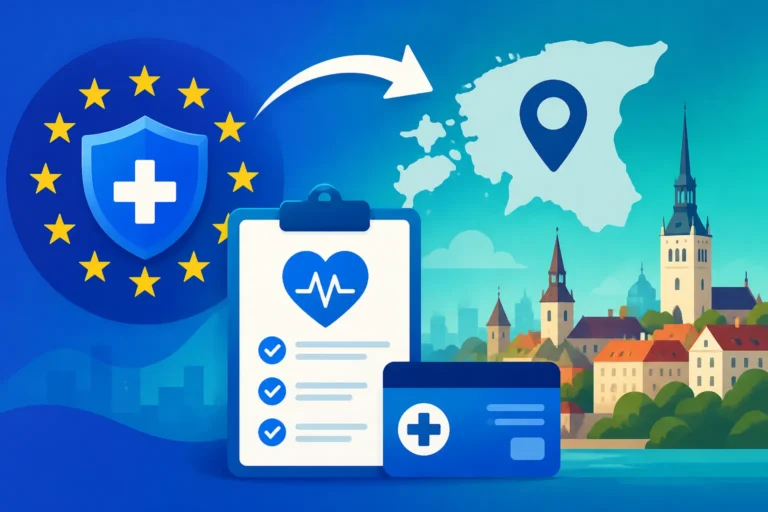
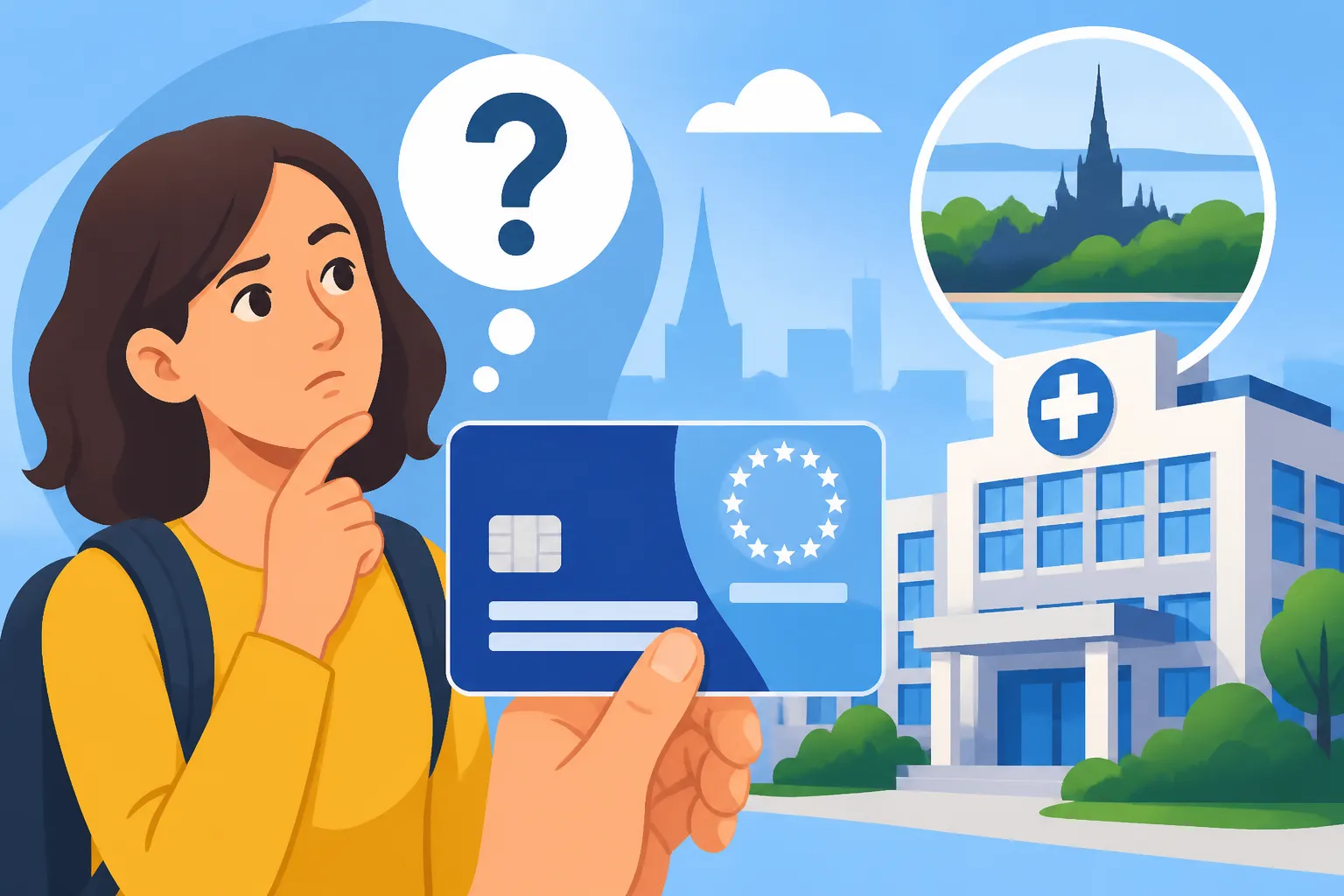
If you are coming from Germany, you are likely carrying a card from Techniker Krankenkasse (TK), AOK, or Barmer. On the reverse side of that national card is your European Health Insurance Card (EHIC). In Estonia, this card is your golden ticket to the public healthcare system, known locally as the Tervisekassa. The two countries have a reciprocal agreement under EU law that allows you to access "medically necessary" care under the same conditions as an Estonian resident. However, "medically necessary" is a term that often causes confusion for expats. It does not mean just emergency care; it includes treatment for chronic conditions or pregnancy, provided the purpose of your trip was not specifically to seek medical treatment.
When you use your German EHIC, the Estonian medical provider treats you as if you were insured by the local system. They will later bill your German provider directly. It is a fantastic safety net, but it is vital to remember that you are bound by Estonian rules, not German ones. If a certain procedure requires a small co-payment in Estonia, you will have to pay it, even if it would be free back in Berlin or Munich. This is one of the first hurdles many expats face—assuming the coverage is an exact mirror of their home country. To get a broader view of the landscape, you should check out The Complete Guide to Healthcare in Estonia for Expats (2027) to see how these pieces fit together.
The Estonian system is highly digitized, and while your EHIC is a physical card, the backend relies on specific registrations. If you are just visiting, the physical card is enough. But the moment you become a resident, the rules change. The EHIC is intended for temporary stays. If you have registered your place of residence in the Estonian Population Register, the state expects you to transition into the local system. Understanding How to Use Your EHIC (Euroopa Ravikindlustuskaart) in Estonia is critical for those first few months before your local insurance kicks in.
What is Covered and What is Not
Your German EHIC covers a wide range of services at public hospitals (Haigla) and family doctor centers (Perearstikeskus). This includes visits to specialists if you have a referral, hospital stays, and emergency room visits. However, it does not cover private healthcare providers. Estonia has a growing private sector with clinics that offer shorter wait times and more English-speaking staff, but these clinics generally do not accept the EHIC. If you walk into a private clinic, you will be expected to pay the full price out of pocket unless you have a supplement like SafetyWing to help cover those unexpected private costs.
Furthermore, the EHIC does not cover "medical repatriation." If you are seriously injured and need to be flown back to Germany in a specially equipped aircraft, your German public insurance and the EHIC will not foot that bill. This is a common realization for expats who assume the EU has solved all cross-border medical costs. While the EHIC covers the treatment in Tallinn, the logistics of getting you home remain your responsibility. This is why many veteran expats suggest keeping a flexible plan like SafetyWing active during your transition or for those gaps where public coverage feels insufficient.
Lastly, dental care for adults in Estonia is largely a private expense, even for residents. While there is a small annual benefit for those in the Tervisekassa system, your EHIC will generally only cover emergency dental work (like extreme pain or an abscess) that cannot wait until you return to Germany. For routine check-ups or fillings, expect to pay the local market rate. You can find more detail on these specific out-of-pocket expenses in The Cost of Healthcare in Estonia: A Complete Breakdown for Foreigners (2026).
The Role of the Isikukood in Your Medical Journey
While your EHIC is your proof of insurance, your Isikukood (Estonian personal identification code) is your key to the entire digital health ecosystem. Even if you are using a German card, Estonian doctors will often ask if you have an Isikukood. Why? Because the Estonian health system is built on the Digilugu (Digital Health Record). Every time a doctor sees you, they want to log that data against your ID code so that your medical history, prescriptions, and test results are accessible to any other doctor you see in the future.
If you don't have an Isikukood yet—perhaps you just arrived and haven't visited the city government office—the hospital can still treat you using your passport and EHIC. However, it makes the process slower. They have to manually enter your data into their system rather than just swiping your ID card. It also means you won't be able to easily access the Understanding the Digilugu (Digital Health Record) system in Estonia portal to see your own lab results or renew prescriptions online.
For anyone staying longer than a few weeks, getting that 11-digit code should be your priority. It links your EHIC usage to the local infrastructure, making it much easier if you later need to prove your medical history to a local Family Doctor. Without it, you are a "ghost" in their digital system, which can be frustrating when you are trying to follow up on a specialist appointment or get a digital prescription.
Using Your German EHIC at Estonian Hospitals
When you need to visit a hospital in Estonia—such as the East Tallinn Central Hospital (ITK) or the North Estonia Medical Centre (PERH)—the first place you will go is the registration desk (Registratuur). This is where the "German efficiency" meets "Estonian digitalization." You must present your physical German EHIC card and your passport or ID card. The staff will check the validity dates on the back of your card. If your card has expired, they will treat you as an uninsured patient, which can lead to bills in the hundreds or thousands of euros.
The staff at these major hospitals are generally accustomed to seeing EHIC cards from across the EU, but German cards are particularly common. They know how to process the AOK or TK cards. However, do not expect the hospital to contact your German insurer for you to verify coverage for elective things. They will only use the EHIC for what is necessary at that moment. If you are unsure if a specific treatment is covered, you might want to look into Public vs Private Healthcare in Estonia: Which Should Expats Choose? to understand the boundaries of the state system.
Step-by-Step at the EMO (Emergency Medicine Department)
If you have an urgent issue, you will head to the EMO (Erakorralise meditsiini osakond). In Tallinn, the EMOs can be quite busy, and they operate on a triage system (Red, Orange, Yellow, Green). As a German EHIC holder, you go through the same triage as everyone else. You pay the standard visit fee, which is usually around 5 euros. This fee is a "participation fee" (visiiditasu) that applies to almost everyone in the public system.
Once you are triaged, you will wait. If your case is "Green" (not life-threatening), the wait can be several hours. During this time, the hospital is essentially treating you as a Tervisekassa member. If you are admitted to the hospital, there is a daily "in-patient fee" (voodipäevatasu), which is capped at 2.50 euros per day for up to 10 days. These are the "hidden" costs that your EHIC covers the majority of, but these small out-of-pocket fees remain your responsibility.
It is worth noting that if you use a service like SafetyWing, you might have additional layers of support for these emergencies, especially if you prefer to be treated in a facility that has shorter queues or specialized English-speaking support. For most, the EMO experience is efficient but can feel a bit clinical and direct. For more on handling these high-stress situations, read Emergency Medical Care in Estonia: What Every Expat Needs to Know.
Costs and Patient Fees Explained
As mentioned, the EHIC does not make healthcare 100% free; it makes it "as cheap as it is for locals." In Estonia, the healthcare system is funded by a 13% social tax on salaries, but patients still contribute small amounts to prevent system abuse. For a specialist visit with a referral, the fee is generally 5 euros. If you go to a specialist without a referral, the EHIC will likely not cover it, and you will be billed the full "uninsured" price, which can be 50 to 100 euros or more.
| Service Type | Cost with German EHIC | Cost for Uninsured |
|---|---|---|
| Emergency Room (EMO) Visit | ~5 EUR | 50 – 150 EUR |
| Hospital Stay (per day) | 2.50 EUR | 200 – 500+ EUR |
| Specialist Visit (with referral) | ~5 EUR | 50 – 120 EUR |
| Prescription Medication | Varies (Subsidized) | Full Market Price |
| Dental Emergency | Free or small fee | Full Market Price |
If you find yourself needing a lot of specialist care, the 5-euro fees add up, but the real cost to watch out for is the "uninsured" rate if your card is rejected or if you seek non-essential care. This is a common pitfall for those who haven't yet mastered the referral system. You generally need to see a Family Doctor first to get a "Saatekiri" (referral). Without that, the EHIC's power is significantly diminished for anything non-emergency.
Moving from EHIC to the Estonian System (Tervisekassa)
The EHIC is a bridge, not a permanent solution. If you move to Estonia for work, your employer will start paying social tax on your behalf. Once this happens, you are entitled to Estonian national health insurance. At this point, you should stop relying on your German EHIC and start using your Estonian ID card for medical services. In fact, keeping your German insurance active while working in Estonia can sometimes lead to "double insurance" complications or issues with your German provider if they discover you are no longer a resident in Germany.
The transition process involves registering your residence and then waiting for the Tervisekassa to update your status. There is often a waiting period of about 14 days after your employment contract starts before your insurance becomes "active" in the state database. During this two-week gap, your German EHIC is still your primary safety net. If you are a freelancer or a digital nomad, the path is different, and you might find the guide on How Estonia's Health Insurance Fund (Tervisekassa) Works: A Full Overview particularly enlightening.
When EHIC is Not Enough
There are several scenarios where your German EHIC will leave you vulnerable. First, as mentioned, is the lack of private clinic coverage. Many of the most specialized, English-speaking doctors in Tallinn work in private practices like Confido or Qvalitas. These clinics do not accept the EHIC. If you want the comfort of a private clinic, you need either deep pockets or a private insurance plan like SafetyWing that is designed to cover these types of visits.
Second, the EHIC does not help with the logistics of navigating a foreign system. If you are in a hospital and don't speak Estonian or Russian (the two most common languages in hospitals), you might struggle to understand your treatment plan. Private insurance often comes with a 24/7 helpline that can help coordinate care. Furthermore, for those who travel frequently between Estonia, Germany, and other countries, having a global plan like SafetyWing ensures that you aren't constantly worrying about whether you are in a "temporary stay" or "resident" status in the eyes of an insurance auditor.
Finally, the EHIC provides no coverage for things like travel delays, lost luggage, or emergency evacuation—things that are often bundled into expat-focused insurance. If you are moving your whole life to Estonia, these "non-medical" emergencies can be just as costly as a doctor's visit. Transitioning into the local system is the goal, but understanding the gaps in the meantime is vital. You can read more about this in Registering with the Tervisekassa in Estonia: The Complete Expat Guide (2027).
Registering for Local Coverage
Once you are officially an Estonian resident, you will likely want to find a Family Doctor (Perearst). This is the gatekeeper of the Estonian system. Even with a German EHIC, you can technically visit a Perearst for an acute issue, but they are not required to take you onto their permanent list unless you have Estonian health insurance. The process of finding a doctor who has space on their list and speaks good English can be a challenge in certain districts of Tallinn.
I remember when I first moved; I thought I could just keep using my German insurance forever. But then I needed a specific prescription that required a local specialist's sign-off. The specialist wouldn't see me without a referral from a local Perearst, and the Perearst wouldn't add me to their list without my Tervisekassa status being active. It's a bit of a "chicken and egg" situation that is best solved by getting your residency and employment paperwork done as quickly as possible. For help with this, check The Expat Guide to Finding a Family Doctor (Perearst) in Estonia.
Practical Tips for Expats and Visitors
Navigating the Estonian medical system with a foreign card requires a bit of local "know-how." First, always carry a physical copy of your EHIC. While Germany is moving toward digital solutions, Estonian hospital receptionists are often strict about seeing the physical plastic or a very high-quality scan. If you lose your card, you must contact your German insurer (like TK or AOK) immediately and ask for a "Provisional Replacement Certificate" (PEB). They can usually email this to you, and the Estonian hospital will accept it as a temporary measure.
Another tip is to be aware of the 1220 helpline. This is a 24/7 family doctor advice line. They speak English, and while they cannot "see" your EHIC, they can give you advice on whether your symptoms require an emergency room visit or if you can wait for a clinic to open. This can save you the 5-euro fee and a six-hour wait at the EMO. If they tell you to go to the hospital, you can arrive with a bit more confidence that you are doing the right thing.
Finding English-Speaking Doctors
While many younger doctors in Estonia speak excellent English, the administrative staff and nurses might not. When you go to a public hospital with your German EHIC, it is helpful to have your symptoms written down or a translation app ready. If you are in Tartu, the University Hospital is generally very accommodating. In Tallinn, the larger hospitals have some English capacity, but it can be hit or miss.
If your German insurance is through a provider that offers an international desk, call them before you go. Sometimes they can provide a list of preferred partners in Estonia that are more "expat-friendly." However, for a truly smooth experience, most expats eventually seek out a Perearst who is known for working with the international community. You can find strategies for this in How to Find an English-Speaking Doctor in Estonia.
Pharmacies and Digital Prescriptions
One of the coolest things about Estonia is the digital prescription system (Digiretsept). If an Estonian doctor prescribes you something, it is linked to your Isikukood and you can pick it up at any pharmacy (Apteek) by showing your ID. But what if you are using a German EHIC and don't have an Isikukood?
The doctor will issue a paper prescription or a special digital one tied to your passport number. It is a bit more manual, but it works. Note that the EHIC does not make prescriptions free. You will pay the price of the medicine, though often at a subsidized rate if the medicine is on the national list of compensated drugs. To understand how to handle your medications, take a look at Understanding the Digiretsept (Digital Prescription) System in Estonia.
Disclaimer
The information provided in this guide is for informational purposes only and does not constitute legal or professional medical advice. Healthcare regulations and insurance policies in Estonia and Germany are subject to change. Always verify your coverage with your specific insurance provider (e.g., TK, AOK, or Tervisekassa) before seeking non-emergency treatment. The author is an expat blogger, not a government official or a medical professional.