How Do I Transfer My EU Health Insurance to Estonia?
Moving from one EU country to another should be seamless, but as any expat in Tallinn will tell you, the administrative transition is rarely a simple "plug and play" experience. This guide solves the confusion surrounding health insurance portability, detailing exactly how to transition your coverage from your home EU state to the Estonian Tervisekassa system without losing protection.
Understanding the EU Framework and Your Rights in Estonia
When you first arrive in Estonia from a country like Germany, France, or Latvia, you aren't immediately plugged into the local system. The European Union provides a safety net, but it is nuanced. Many newcomers mistakenly believe that their existing insurance from back home covers everything indefinitely. In reality, the "transfer" of insurance is less about moving a policy and more about notifying the Estonian authorities of your right to be insured based on your EU status.
The Role of the EHIC During Your Transition
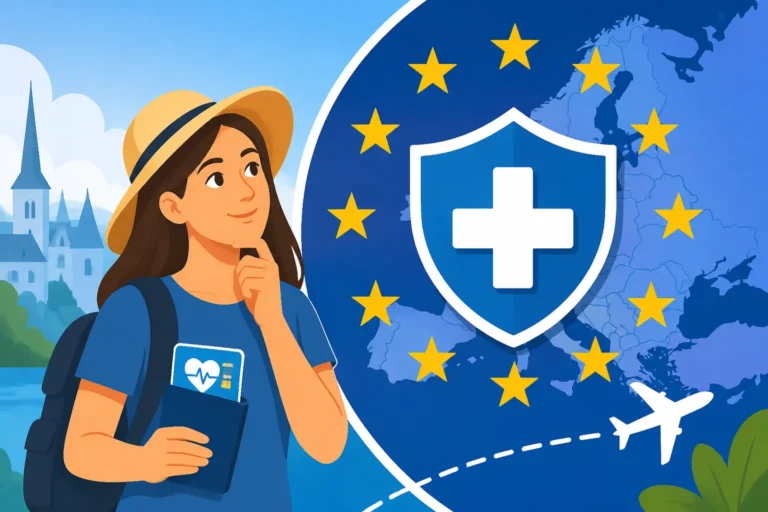
Your European Health Insurance Card (EHIC) is your primary tool during the first few weeks of your move. It is designed for temporary stays and covers "necessary" medical care. This means if you trip on the cobblestones of Old Town or catch a severe flu, your EHIC ensures you are treated under the same conditions as an Estonian resident. However, the EHIC is not a substitute for local residency-based insurance. It does not cover elective procedures or long-term chronic management once you have officially moved your center of life to Estonia. You should check How to Use Your EHIC (Euroopa Ravikindlustuskaart) in Estonia to understand the specific limitations of this card while you wait for your local registration to finalize.
The S1 Form for Pensioners and Cross-Border Workers
If you are a pensioner, a cross-border worker, or a posted employee, the S1 form is your most critical document. This form allows you to register for healthcare in Estonia while your home country remains responsible for the costs. It is essentially a certificate of entitlement. You must request this from your home country's health insurance provider before you leave. Once you arrive in Tallinn or Tartu, you submit this form to the Tervisekassa (Estonian Health Insurance Fund). This ensures that you get full access to the Estonian system without needing to pay local social taxes, which is a common point of confusion for retirees moving to the Baltics.
Bridging the Gap with Private Solutions
There is often a "grey zone" between the moment you arrive and the moment your Estonian insurance becomes active. This gap occurs because the Tervisekassa coverage usually triggers only after your residence is registered and your employment contract is logged in the employment register. For many expats, especially those moving before they have a finalized job contract or those waiting for bureaucratic wheels to turn, having a plan like SafetyWing can provide necessary peace of mind. SafetyWing acts as a flexible bridge, ensuring that if an emergency happens while you are "between systems," you aren't left with a massive bill. This is particularly relevant because Estonia has strict rules about insurance gaps, and private options like SafetyWing are a favorite among the digital nomad and "pre-resident" community for their ease of use.
Step-by-Step Guide to Registering for Estonian Health Insurance
Once you have decided to stay long-term, the clock starts ticking on your official registration. Estonia is famous for its "e-everything," but the initial setup for a foreigner still requires a few physical or highly specific digital steps. You cannot simply walk into a hospital and show your foreign passport to get long-term care; you need to be in the system.
Step 1: Securing Your Isikukood
Everything in Estonia revolves around the Isikukood, your 11-digit personal identification code. Without this, you effectively do not exist in the eyes of the Tervisekassa. To get this, you usually need to visit the Police and Border Guard Board (PPA) or a local government office. For EU citizens, this is part of the process of registering your right of residence. I remember the frustration of trying to book a doctor's appointment only to be told that without an Isikukood, they couldn't even put me in the queue. You can find more detail on this in How to Get Your Isikukood (Personal Code) and Why It Matters for Healthcare. Once you have this number, it will be the key to your digital health records and your insurance status.
Step 2: Registering Your Place of Residence
To be eligible for the Estonian health system as a resident, you must officially register your address in the Population Register. This is often done at the local city district government (Linnaosavalitsus). In Tallinn, for instance, you might go to the office in Kesklinn or Mustamäe. This step is vital because the Tervisekassa system checks your residency status. If the system shows you are not a resident, your insurance might be denied even if you are working. Many expats forget this step after signing a lease. For a deep dive into this, see Registering Your Place of Residence in Estonia: The Complete Guide. Once your address is in the system, you are one step closer to full coverage.
Step 3: Employment and the Social Tax
For the vast majority of expats, health insurance is funded through the social tax paid by their employer. In Estonia, the employer pays a 33% social tax on top of your gross salary, and 13% of that goes directly to health insurance. The moment your employer registers you in the Employment Register (Töötamise register), your insurance status usually becomes active within 14 days, provided the contract is for more than one month. It is a good idea to check your status on the state portal, eesti.ee, a few days after starting work. If you are worried about that 14-day waiting period, having supplemental coverage like SafetyWing ensures you are protected from the moment you land until the Tervisekassa kicks in. You can also read more on the specifics in How to Register with the Tervisekassa as a Foreigner in Estonia.
Navigating the Estonian Healthcare System Post-Transfer
Once your rights have been successfully transferred and your Tervisekassa coverage is active, the real work of navigating the local medical landscape begins. The Estonian system is highly efficient but follows a very specific hierarchy that can be jarring if you are used to different EU models.
Finding a Family Doctor (Perearst)
In Estonia, the Family Doctor (Perearst) is the gatekeeper. You cannot simply go to a specialist for a routine issue; you need a referral (saatekiri) from your Perearst. Finding a doctor who accepts new patients and speaks fluent English can be one of the biggest hurdles. Many practices in central Tallinn are full, and you might have to look in suburban areas like Nõmme or even nearby towns. It is a manual process of emailing or calling clinics. Do not wait until you are sick to find one. For tips on how to handle this, check The Expat Guide to Finding a Family Doctor (Perearst) in Estonia. Once you are on a doctor's list, your medical history begins to populate in the digital system.
Embracing the Digital Health Infrastructure
Estonia’s health system is almost entirely paperless. Your prescriptions are digital (Digiretsept), and your health history is stored in the Digilugu. When your EU insurance transfers, your past records from home do not automatically follow you into the Estonian cloud. You should bring physical copies of important records to your first Perearst appointment so they can manually enter relevant data. To understand how to access your new digital records, see Understanding the Digilugu (Digital Health Record) System in Estonia. You will quickly find that being able to renew a prescription via a simple email to your doctor is one of the best perks of living here. To understand how the pharmacy side works, look into Understanding the Digiretsept (Digital Prescription) System in Estonia.
Emergency Care and Out-of-Pocket Costs
Even with full Tervisekassa coverage, there are small fees to keep in mind. A visit to the Emergency Room (EMO) usually carries a small fee (around 5 euros), and specialized visits also have a nominal "visiting fee." If you haven't completed your transfer from your home EU country yet and find yourself in a crisis, you need to know where to go. The EMO at East Tallinn Central Hospital (ITK) or North Estonia Medical Centre (PERH) are the primary spots. For a full breakdown of what to do in a crisis, see Emergency Medical Care in Estonia: What Every Expat Needs to Know. During these emergency visits, if your Tervisekassa isn't active yet, you might be asked to pay upfront and claim it back later from your home country or your private provider like SafetyWing.
| Feature | EHIC (Temporary) | Tervisekassa (Resident) | Private (e.g., SafetyWing) |
|---|---|---|---|
| Eligibility | EU Tourists/Temporary Visitors | Registered Residents/Workers | Anyone |
| Cost | Free (from home country) | Funded via Social Tax | Monthly Premium |
| Primary Use | Unforeseen/Emergency Care | Full primary & specialist care | Travel & Emergency medical |
| Referrals | Not required for emergency | Required for specialists | Depends on policy |
| Digital Integration | Limited | Full (Digilugu) | No |
Common Pitfalls and Expert Tips for EU Expats
The transition period is where most people stumble. One major pitfall is the "overlap period" where your home country thinks you have left, but Estonia hasn't fully "onboarded" you yet. If you cancel your insurance in your home country too early, you might find yourself uninsured for a month or two. This is exactly when SafetyWing becomes an essential tool for an expat. It provides that continuous coverage regardless of which government database you are currently sitting in.
Another tip is to always keep your EHIC updated. Even after you get Estonian insurance, you will eventually want to apply for an Estonian-issued EHIC to use when you travel back home or to other EU countries. Estonia will only issue this to you once you are fully covered by the Tervisekassa. Until then, your home country is technically responsible for your EHIC, creating a bit of a circular logic puzzle if you aren't careful with your residency dates.
Lastly, be proactive about your S1 form if you are a freelancer or a retiree. The Tervisekassa staff are generally very helpful and speak good English, but they cannot help you if you don't have the specific EU forms from your previous country. Make sure all your documents are translated into English or Estonian, although most EU-standard forms are accepted in their original multi-language formats.
Disclaimer
The information provided in this guide is for informational purposes only and does not constitute legal or medical advice. Health insurance regulations in Estonia and the EU are subject to change. Always consult with the Estonian Health Insurance Fund (Tervisekassa) or a qualified legal professional regarding your specific residency and insurance status.