What Documents Do I Need to Get an Isikukood in Estonia?
The moment you land in Tallinn or Tartu with your suitcases and big dreams, you quickly realize that the 11-digit number known as the isikukood is the actual currency of Estonian life. Without it, you are essentially invisible to the digital state. This guide provides an exhaustive breakdown of the specific documents required to secure your Estonian personal code and solve the administrative deadlock.
Understanding the Isikukood and Why the State Demands It
The isikukood is not just a random string of numbers; it is a coded identifier that tells the state your gender, birth date, and birth order. In Estonia, this number is the master key. You will find yourself reaching for it when you want to open a bank account, sign a rental contract, or even pick up a parcel from an automated locker. Most importantly for your well-being, it is the foundation of your medical identity. You cannot even begin the process of Registering with the Tervisekassa in Estonia: The Complete Expat Guide (2027) until this number is assigned to you.
For many expats, the frustration begins when they realize that "just showing up" at a government office isn't enough. Estonia is a digital society, but the bridge into that society—the initial registration—is still a very human process involving physical documents. If you are a non-EU citizen, the pressure is even higher because your isikukood is often tied to your right to stay. Even if you are just here on a temporary basis, knowing How to Get Your Isikukood (Personal Code) and Why It Matters for Healthcare is the difference between a smooth transition and a week of bureaucratic headaches.
I remember my first week in Tallinn, trying to get a bus card personalized to save a few euros. The clerk looked at me as if I were a ghost because I didn't have an isikukood. It felt like I existed in a physical space but didn't exist in the system. To avoid that "ghost" status, you need to have your paperwork perfectly aligned before you set foot in the Police and Border Guard Board (PPA) or the local municipality office.
The Essential Document Checklist for EU and Non-EU Citizens
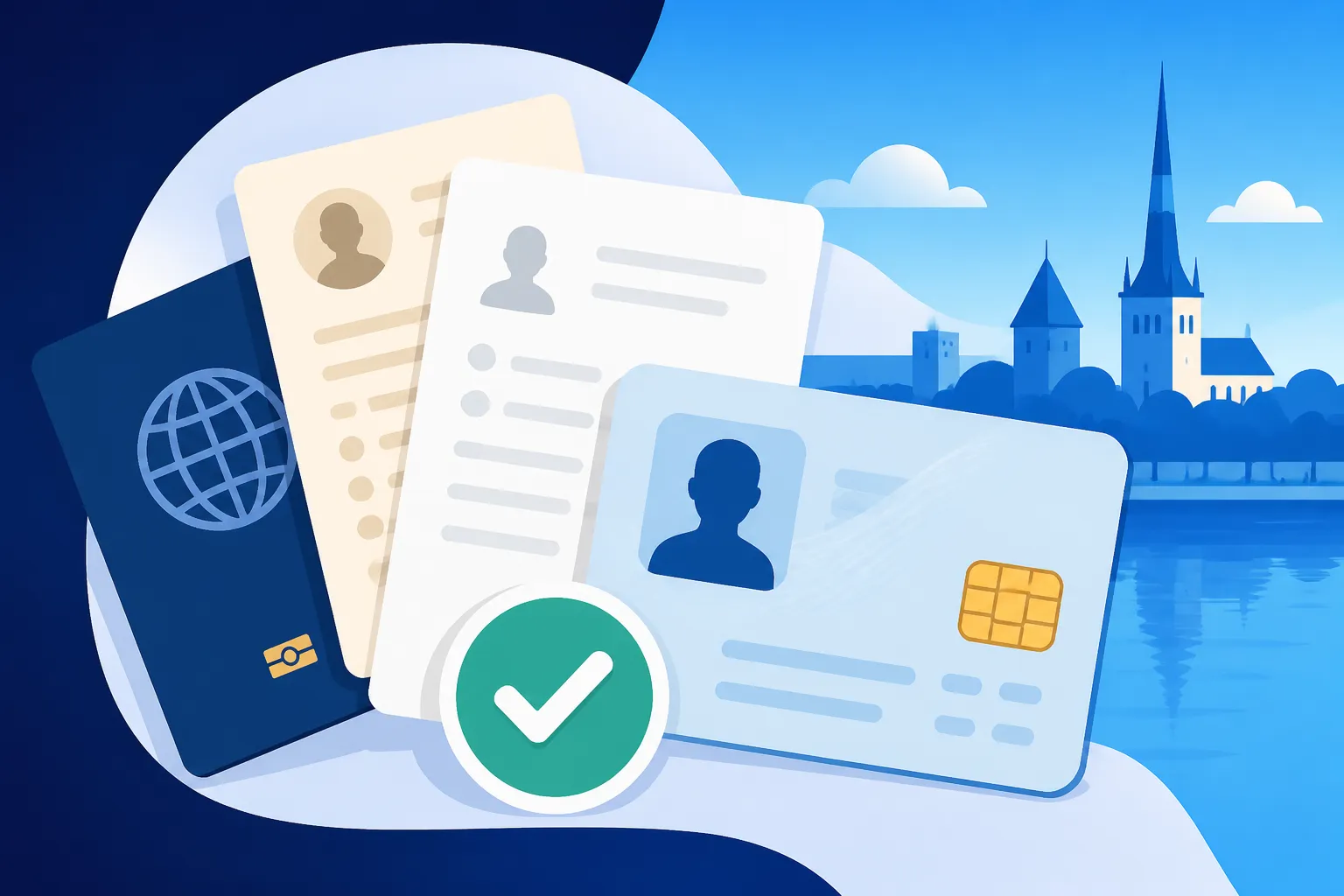
The documents you need will vary significantly based on your citizenship and the reason for your stay. Estonia treats EU/EEA citizens and non-EU citizens differently during the initial intake. However, the one universal requirement is a valid travel document. Do not show up with a photocopy or a digital scan on your phone; the officials need to see the physical document and will likely scan it themselves.
Identity and Travel Documents
For EU citizens, a valid national ID card or passport is sufficient. For non-EU citizens, a passport is mandatory. If you are entering on a specific visa, ensure that the visa sticker is intact and legible. If you have recently changed your name through marriage or deed poll, you must bring the official certificate proving this change. This is a common trip-wire for expats; if your passport name doesn't match your birth certificate or other supporting documents, the process will grind to a halt.
Proof of Entitlement and Basis for Stay
This is where things get detailed. The Estonian government needs to know why you are here. If you are an employee, bring a signed copy of your employment contract. While the system is increasingly automated, having a physical copy helps the official cross-reference your employer’s registration in the employment register. If you are a student, an original acceptance letter from your university is required.
For those on a more flexible path, such as digital nomads, you should bring proof of your remote work status. Often, people moving here without a traditional job yet will find that they need private insurance to bridge the gap. In these cases, having a policy from a provider like SafetyWing is incredibly useful. SafetyWing is often recognized as a legitimate way to show you are covered while the state processes your long-term status.
Documents for Family Members and Children
If you are moving with a spouse or children, the document load increases. You will need original marriage certificates and birth certificates. Here is the part that catches everyone off guard: these documents must be in English, Estonian, or Russian, or be accompanied by a sworn translation. Furthermore, depending on your home country, these documents may need an Apostille or to be legalized.
Imagine spending three hours in a queue at the PPA only to be told your child's birth certificate isn't "official enough" because it lacks a specific stamp from your home country. It is a heartbreaking experience that costs you weeks of time. Always check if your country is part of the Apostille convention before you leave home.
| Document Category | Requirement for EU Citizens | Requirement for Non-EU Citizens |
|---|---|---|
| Primary ID | National ID or Passport | Valid International Passport |
| Proof of Stay | Not usually required initially | Long-stay (D) Visa or Residence Permit App |
| Employment | Employment Contract (Optional but helpful) | Registered Short-term Employment or Contract |
| Family Status | Apostilled Marriage/Birth Certificates | Apostilled & Translated Marriage/Birth Certificates |
| Health Insurance | EHIC Card or Private Policy | Private Policy (e.g., SafetyWing) or Tervisekassa |
| Application Form | Completed "Application for Personal Code" | Completed "Application for Personal Code" |
Where to Submit Your Application: PPA vs. Local Municipality
One of the most confusing aspects for new arrivals is knowing which office to visit. In Estonia, you generally have two choices: the Police and Border Guard Board (Politsei- ja Piirivalveamet or PPA) or the local Vital Statistics Office (Perekonnaseisuamet).
If you are a non-EU citizen applying for a residence permit, the isikukood is usually generated as part of that process at the PPA. However, if you are here on a D-visa and need the code immediately for work or health reasons, you might find yourself heading to the local municipality office. In Tallinn, this is often the office on Pärnu mnt 67.
The PPA usually requires an appointment, which can be booked online. Be warned: appointments in Tallinn can be booked out for weeks. If you are in a rush, consider looking for appointments in smaller towns like Rapla or Paide. It’s a short train ride, and you can often get seen much faster. When you go, bring your completed application form. While you can fill it out there, doing it in advance saves you from fumbling with Estonian terms while standing at a high desk.
Once you have your code, you can finally begin Navigating Estonia's Digital Healthcare System: An Expat's Roadmap (2027). This number will allow you to log into the national health portal, where you can see your Understanding the Digilugu (Digital Health Record) System in Estonia once it is populated.
The Critical Intersection of the Isikukood and Healthcare
The reason you are likely hunting for this code so urgently is health insurance. In Estonia, the healthcare system is highly efficient, but it is strictly gated by the isikukood. You cannot register with a local doctor or get a digital prescription without it.
If you are employed, your employer will use your isikukood to pay your social tax. This is the mechanism for Understanding Health Insurance Through Social Tax in Estonia. However, there is often a "waiting period" or a lag between getting your code, starting work, and the insurance becoming active in the system. During this window, you are essentially uninsured by the state. This is why many expats maintain a SafetyWing policy during their first few months. Having that SafetyWing coverage ensures that if you trip on the cobblestones of Old Town before your Tervisekassa status is "Active," you aren't stuck with a massive bill.
Once the code is in the system and your insurance is active, your next step should be The Expat Guide to Finding a Family Doctor (Perearst) in Estonia. You will need to submit an application to a specific doctor, and—you guessed it—the very first line of that application asks for your 11-digit isikukood.
Handling Common Hurdles and Mistakes
Even with all the documents in hand, things can go sideways. A common issue is the "Address Requirement." To get an isikukood through the local municipality, you often need a registered address in the Population Register. But to get a rental contract for an apartment where you can register your address, the landlord often asks for an isikukood. It’s a classic Catch-22.
To break this cycle, you can sometimes request an isikukood for "Short-term Employment" or other "Vital Interests" without having a permanent residential address registered yet. You will still need to provide a contact address (like a temporary Airbnb or a hostel), but it won't be "registered" as your legal residence.
Another tip: always keep digital copies of all your submitted documents on a secure cloud drive. While Estonia is the king of paperless government, the initial entry point often requires you to provide the same birth certificate or marriage license multiple times to different departments.
If you find yourself waiting for the PPA to process your documents, remember that you are not yet covered by the state. This is another moment where SafetyWing proves its value. It acts as a safety net while the gears of the Estonian state turn. Once everything is approved, you will finally be able to understand How Estonia's Health Insurance Fund (Tervisekassa) Works: A Full Overview and see how it applies to your specific situation.
Lastly, don't forget that once you have the code, you should also look into How to Get Your Isikukood (Personal Code) and Why It Matters for Healthcare in the context of your digital ID card. The code is the number, but the ID card (or Mobile-ID/Smart-ID) is the tool that lets you actually use that number to sign documents and access services. Without the ability to digitally sign, having the code is only half the battle.
Disclaimer
The information provided in this guide is for informational purposes only and does not constitute legal or administrative advice. Estonian immigration laws and document requirements are subject to change. Always consult the official website of the Estonian Police and Border Guard Board (PPA) or the Ministry of Interior for the most current regulations and specific requirements related to your individual case.