Can I Apply for Long-Term Residence as an e-Resident?
One of the most common misconceptions I hear from hopeful expats looking to move to Estonia is the idea that their shiny new e-Residency card is some kind of golden ticket to actually living here. Many newcomers experience the disappointment when people realize it's not. This guide is here to clear up that confusion once and for all, explaining why e-Residency doesn't grant you long-term physical residence and, more importantly, detailing the real, official pathways you can take to make Estonia your home.
Demystifying e-Residency: What It Is (and Isn't) for Physical Residence in Estonia
It's completely understandable why so many people get confused about e-Residency. The name itself, "e-Resident," sounds a lot like "resident," doesn't it? When you're dreaming of moving to a new country, especially one as digitally advanced as Estonia, it’s easy to latch onto something that sounds like it could simplify the whole process. But having lived here for years, and having seen many people arrive with this exact misunderstanding, I can tell you straight up: e-Residency is not a residence permit, nor does it give you the right to live in Estonia.
The True Purpose of e-Residency
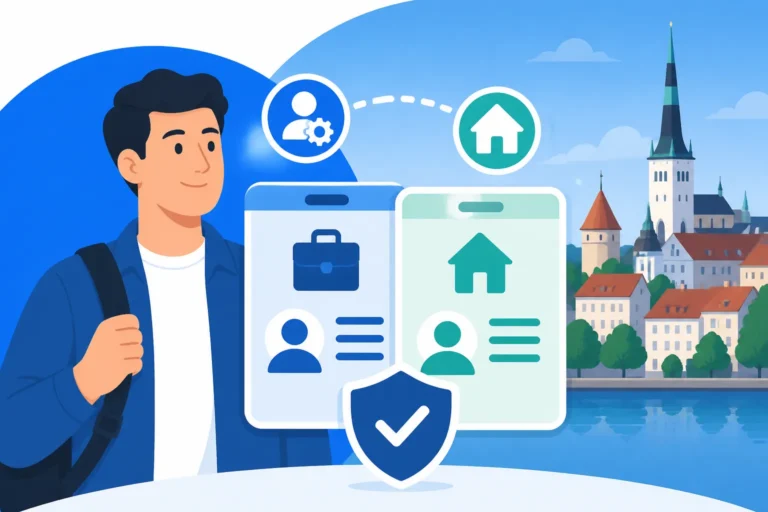
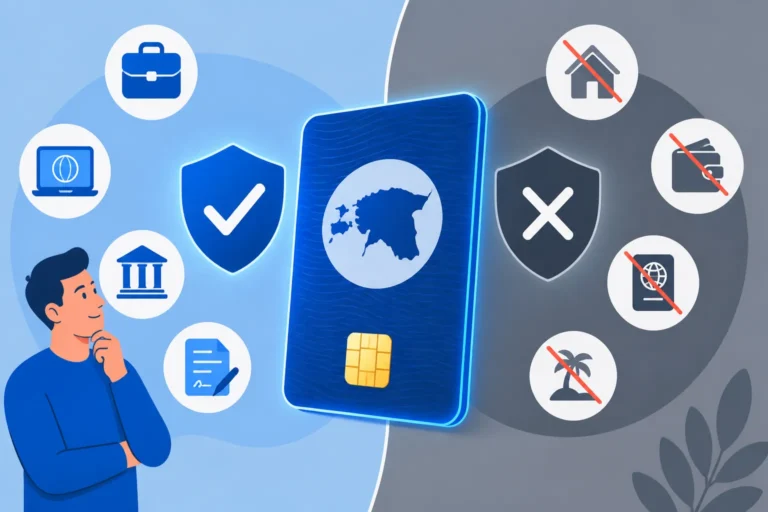
Let's get down to brass tacks about what e-Residency actually is. At its heart, e-Residency is a digital identity issued by the Estonian government. Think of it as a virtual key to Estonia's incredible digital public services. With this digital ID, you can do things like establish an Estonian company entirely online, manage its operations from anywhere in the world, digitally sign documents with legal validity, and access banking services that support your Estonian business. It's truly revolutionary for entrepreneurs and remote workers who want to leverage Estonia's business-friendly environment and flat tax system without necessarily relocating.
For example, if you're a freelancer in, say, Argentina, and you want to set up an EU-based company to streamline your invoicing and potentially lower your tax burden, e-Residency is perfect. You can register an OÜ (private limited company) in a matter of hours, file your taxes through the e-MTA portal, and conduct all your business operations from your home country. It’s about doing business in Estonia, not necessarily from Estonia in a physical sense. It’s a powerful tool for global entrepreneurs, offering unparalleled ease of doing business across borders.
Why e-Residency Doesn't Grant Physical Stay or Long-Term Residence
This is where the crucial distinction lies, and it's a point that cannot be stressed enough: e-Residency provides absolutely no right to physical entry, stay, or residence in Estonia. None. Zero. It doesn't give you a visa, it doesn't give you a residence permit, and it certainly doesn't fast-track your path to long-term residence. Your e-Residency card is a digital ID for online interactions; it has no bearing on your immigration status.
When you arrive at Tallinn Airport (or any other port of entry), border officials won't look at your e-Residency card as proof of your right to enter. They'll ask for your passport and, depending on your nationality, a valid visa or residence permit. If you're a non-EU citizen and you don't have one of these, your e-Residency card won't help you get past immigration. It's for your digital footprint, not your actual physical footprint in Estonia. This is a common point of confusion, and frankly, a source of significant frustration for those who haven't done their research. For a deeper dive into this specific issue, you might want to read our article on Does e-Residency Give Me the Right to Live in Estonia?.
Actual Pathways to Long-Term Residence in Estonia
So, if e-Residency isn't the answer, what is? Getting a long-term residence permit in Estonia is a multi-step journey, typically starting with a temporary permit. Estonia, like most countries, has specific grounds on which it grants individuals the right to live within its borders, and these are tied to actual commitments like work, study, or family.
Temporary Residence Permits: The Stepping Stone
For most non-EU citizens looking to make Estonia their home, the first step is usually securing a Temporary Residence Permit (TRP). These permits are generally issued for a specific purpose and for a limited duration, typically up to five years. They are your official permission to live here physically, to work or study, and to integrate into society. The grounds for obtaining a TRP are well-defined and include:
- Work: If you've landed a job with an Estonian employer, they can sponsor you for a work-based TRP. This requires a valid employment contract, and often, your employer needs to prove that they couldn't find a suitable candidate from Estonia or the EU/EEA. It's a formal process, but a very common route. For more detailed insights, our guide on The Expat Guide to Estonian Work Visas and Permits (2027) is an excellent resource.
- Study: Being accepted into an accredited Estonian university program is another popular pathway. A student TRP allows you to live here for the duration of your studies. While it usually comes with restrictions on working hours, it’s a legitimate way to establish a presence. You can find more information in our article Understanding Residence Permits for Students in Estonia.
- Business: If you’re an entrepreneur genuinely looking to run an innovative business from Estonia, you might qualify for a TRP based on business activity, often through the startup visa program. This is different from e-Residency, as it requires you to actually relocate and contribute to the Estonian economy.
- Family Reunification: If you have family members (spouse, children) who are already legal residents or citizens of Estonia, you might be eligible for a TRP based on family ties. This aims to keep families together and is a compassionate route for many.
Each of these avenues has its own set of requirements, documentation, and processing times. It’s crucial to understand that these permits are about physical presence and integration, not just digital access. For a comprehensive overview of all the options, check out The Complete Guide to Estonian Residence Permits for Expats (2027) or How to Apply for a Temporary Residence Permit in Estonia.
Meeting the Criteria for Long-Term Resident (EU) Status
The holy grail for many expats is often the Long-Term Resident (EU) status. This status is a significant upgrade from a temporary permit because it offers more stability and even allows for easier mobility within other EU member states under certain conditions. However, it's not something you can apply for right off the bat; it's a privilege earned after years of commitment to Estonia.
The primary requirement for obtaining Long-Term Resident (EU) status is having continuously resided in Estonia with a valid Temporary Residence Permit for at least five years. "Continuously" is the key word here – there are limits on how much time you can spend outside of Estonia during this period. For example, your absence from Estonia should not exceed six consecutive months, and not exceed ten months in total over the five-year period. This ensures you’ve genuinely established your life here.
Beyond the continuous residence, you’ll also need to demonstrate:
- Stable Legal Income: You must prove that you have sufficient and regular legal income to support yourself and any dependents without relying on social welfare benefits. The exact amount is subject to change, so always check the latest Police and Border Guard Board (PPA) guidelines.
- Valid Health Insurance: You need to have valid health insurance covering all risks in Estonia. For most employed individuals, this comes through the Tervisekassa (Estonian Health Insurance Fund) via social tax contributions. For others, private insurance will be necessary.
- Registered Place of Residence: Your place of residence must be registered in the Estonian Population Register. This is a fundamental step for all residents and crucial for your long-term status.
- Estonian Language Proficiency: This is often the biggest hurdle for many. You must demonstrate proficiency in the Estonian language at a B1 level. This typically involves passing a state-administered language exam. This requirement underscores Estonia’s commitment to integration and ensuring residents can function within society. It’s a serious exam, and preparation is key.
Obtaining this status grants you significant peace of mind and fewer administrative hurdles compared to renewing a TRP every few years. It's a testament to your long-term commitment. To learn more about this process, refer to Long-Term Residence in Estonia: The Complete Pathway (2027) and Understanding Long-Term Resident (EU) Status in Estonia. For those concerned about the language requirement, our article on Understanding the Estonian Language and Constitution Exams for Citizenship offers valuable insights into preparing for such tests.
Essential Requirements and the Application Process
Navigating the application process for any residence permit in Estonia can feel like a labyrinth, especially when you’re dealing with a new language and a different administrative system. Generally speaking, meticulous preparation is your best friend.
Key Documents and Financial Stability
When you’re preparing your application, whether it’s for an initial TRP or for the coveted Long-Term Resident (EU) status, the Police and Border Guard Board (PPA) will require a precise set of documents. Missing even one piece of paper can lead to delays or outright rejection. Common documents include:
- Valid Travel Document: Your passport or other internationally recognised travel document must be valid for at least three months beyond the expiry of the requested permit.
- Application Form: Duly completed and signed. These are available on the PPA website.
- Passport-Sized Photo: A recent, high-quality photograph meeting specific size and background requirements.
- Proof of Legal Income: This is critical. For work permits, it's your employment contract and salary statements. For business permits, it's your business plan and financial projections. For long-term residence, it’s evidence of consistent income (e.g., bank statements, tax declarations). The amount needed is typically higher than the minimum wage and must be sufficient for your livelihood.
- Proof of Accommodation: A rental agreement or proof of property ownership in Estonia.
- Health Insurance: You must have health insurance coverage. If you’re employed and contributing to social tax, you’ll typically be covered by the Tervisekassa. However, for those who don't yet qualify, or as an interim solution, private health insurance is mandatory. This is where options like Cigna Global come in handy, offering comprehensive plans designed for expats, ensuring you're covered from day one, which can provide immense peace of mind. For a comprehensive look, see What Health Insurance Do I Need for an Estonian Residence Permit? and How Estonia's Health Insurance Fund (Tervisekassa) Works: A Full Overview.
- State Fee Payment: There’s always an administrative fee associated with applications. Ensure you pay the correct amount and include proof of payment.
The financial stability requirement is not just a formality; it’s a genuine assessment of your ability to sustain yourself without burdening the Estonian social system. Be prepared to show clear evidence of your financial standing, including regular income and sufficient funds in your bank account.
The Role of the Police and Border Guard Board (PPA)
The PPA (Politsei- ja Piirivalveamet) is the central authority for all matters related to visas, residence permits, and citizenship in Estonia. They are the gatekeepers, and all your applications will go through them.
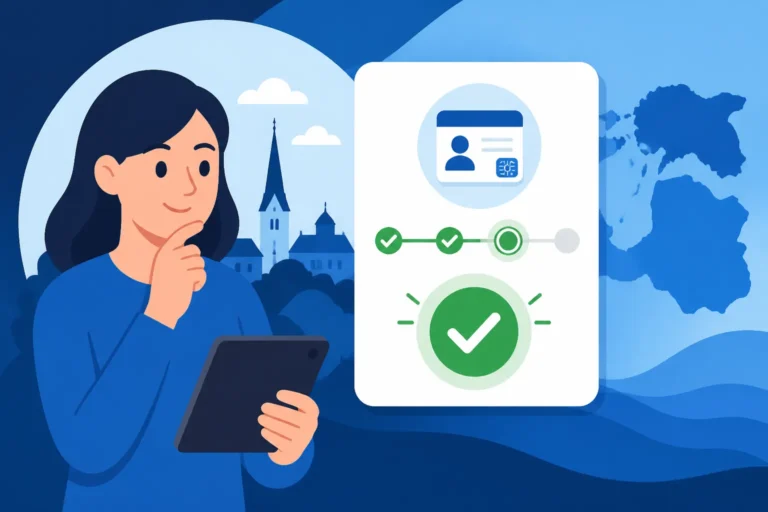
You can typically submit your application online through the e-PPA portal for certain types of permits, or in person at a PPA service point. For first-time TRP applications, an in-person visit is usually required for biometric data collection (fingerprints and photo). They might also conduct an interview to clarify details about your application, your intentions, and your ties to Estonia. These interviews can feel daunting, but being prepared, honest, and having all your documents in order will make a big difference.
Processing times can vary significantly depending on the type of permit and the time of year. While the PPA strives for efficiency, it’s not uncommon for applications to take several weeks or even a few months. Patience is definitely a virtue here. Always check the official PPA website for the most current processing estimates and application guidelines. You can often track the status of your application online. Our article How to Book an Appointment at the Police and Border Guard Board (PPA) can help you navigate scheduling your visit, and How Long Does It Take to Get an Estonian Residence Permit? provides a realistic timeframe.
Navigating the Practicalities of Relocation and Staying Compliant
Once you've successfully navigated the permit application maze, your journey to making Estonia home truly begins. This is where the rubber meets the road, and you start building your life here.
Registering Your Place of Residence and Isikukood
This step is absolutely non-negotiable once you have your temporary residence permit. Within one month of arriving in Estonia with a residence permit (or once your permit is granted if you applied from within Estonia), you must register your place of residence in the Estonian Population Register. This isn't just a bureaucratic formality; it's the official act that confirms your physical address and allows you to access various public services, from healthcare to local government support. Without it, you’re essentially off the official radar.
Simultaneously, if you don't already have one (which is common if you’ve only interacted with e-Residency), you'll receive your Isikukood (Personal Code). This unique 11-digit number is your digital identifier for nearly everything in Estonia: opening a bank account, signing up for a family doctor, applying for benefits, and even getting a library card. It's often issued automatically as part of your residence permit process or when you register your address. To fully understand its importance, check out How to Get Your Isikukood (Personal Code) and Why It Matters for Healthcare. For the process of official registration, our guide Registering Your Place of Residence in Estonia: The Complete Guide will walk you through it.
Managing Your Move and Life in Estonia
With your residence permit secured and your address registered, you're ready to embrace life in Estonia. This involves all the practicalities of setting up a new home: finding long-term accommodation, setting up utilities like electricity and internet, opening a local bank account, and potentially enrolling children in school. These can be daunting tasks in any new country, but Estonia's digital infrastructure often makes them smoother than elsewhere, though language can still be a barrier.
Remember, while the initial administrative hurdles can feel overwhelming, Estonia is a country that genuinely welcomes expats and offers a high quality of life. The digital efficiency that e-Residency promises for business often extends to daily life for residents too. But getting to that point requires respecting the clear distinctions between digital and physical residence. If you're serious about relocating after securing your residence permit, remember that a smooth move is half the battle. Services like Sirelo can help you compare moving companies to get your belongings here without a hitch, saving you precious time and stress as you settle into your new Estonian life. Embrace the journey, and you'll find that Estonia is a wonderfully unique and welcoming place to call home.
Disclaimer
The information provided in this guide is intended for general informational purposes only and does not constitute legal, financial, or immigration advice. While we strive to keep the information up-to-date and accurate, regulations and procedures in Estonia can change without notice. Always consult with the official government sources, such as the Estonian Police and Border Guard Board (PPA) and relevant legal professionals, for the most current and specific advice pertaining to your individual situation.