How Do I Get a Visa to Move to Estonia from India?
Trying to figure out how to move to Estonia from India can feel like navigating a dense, fog-laden forest. You’ve heard about the digital society, the beautiful nature, and the growing tech scene, but then you hit the administrative wall of visa applications, and suddenly, it all seems daunting. Many of us expats have been there, facing the bewildering array of requirements and the sheer uncertainty of the process. This guide is here to shed light on that path, specifically for my fellow adventurers looking to make the leap from India to the land of e-everything.
Understanding the First Steps: Visa Types for Long-Term Stay in Estonia
Before you even start packing your bags, or even dreaming about which neighbourhood in Tallinn or Tartu you'll call home, you need to understand the fundamental difference between a short-stay Schengen visa (Type C) and the long-stay D-visa, which is your gateway to actually moving to Estonia. A Schengen visa is for tourism or short business trips, typically up to 90 days within any 180-day period. It explicitly does not allow you to settle down, work long-term, or study for extended periods. For that, you’re looking at a Type D visa, which then paves the way for a temporary residence permit once you arrive in Estonia.
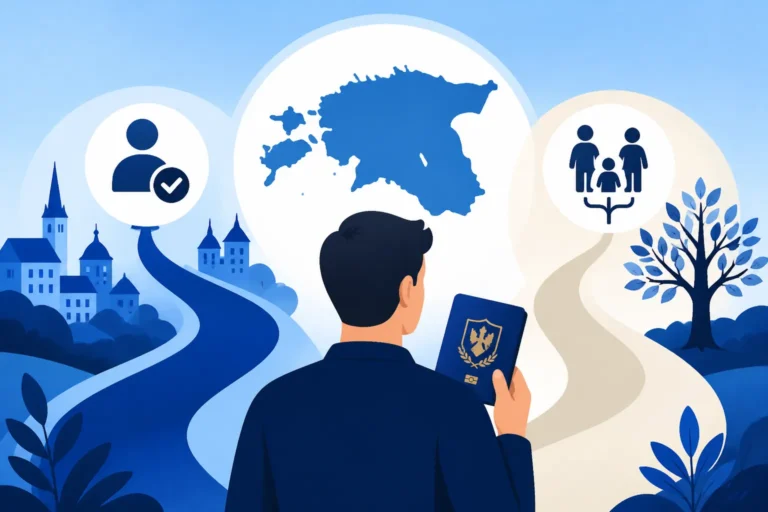
The critical first step for anyone moving from India is to figure out what your primary purpose for being in Estonia will be. This isn't just a bureaucratic formality; it fundamentally dictates which type of visa application you'll pursue and, subsequently, the requirements you'll need to meet. Estonia, like many European countries, has specific categories for long-term stays, each with its own set of rules and expectations. Rushing into an application without a clear purpose is a recipe for frustration and likely rejection, so take the time to really nail this down.
Identifying Your Purpose: Which Visa is Right for You?
Estonia offers several pathways for non-EU citizens, including those from India, to move there long-term. Your personal circumstances and intentions will guide you toward the correct one. This isn't a one-size-fits-all situation; what works for a software engineer won't work for a student or someone joining their family.
Work Visa
If you've landed a job offer from an Estonian employer, congratulations! This is one of the most common and straightforward routes. Your employer will play a significant role in this process, often initiating the necessary paperwork for your work permit and supporting your D-visa application. The key here is a valid employment contract from an Estonian company. The Estonian Police and Border Guard Board (PPA) needs to verify that your skills are needed and that the job meets certain salary thresholds, especially if it falls under the immigration quota. It's not just about having a job; it's about having a qualifying job. For a deep dive into the specifics, you'll want to read up on The Expat Guide to Estonian Work Visas and Permits (2027).
Study Visa
Estonia has an excellent higher education system, with many programmes taught in English. If you've been accepted into a recognised Estonian educational institution, you'll apply for a study visa. This usually requires proof of admission, sufficient funds to support yourself, and health insurance. Unlike some countries where student visas are tightly restricted, Estonia is generally welcoming to international students, seeing them as future contributors to their society. Remember, securing admission is just the first hurdle; the visa application then follows. To understand the full scope of studying here, check out The Complete Guide to Studying at an Estonian University (2027).
Digital Nomad Visa (DNV)
Estonia was one of the first countries to introduce a Digital Nomad Visa, which has been a game-changer for many remote workers from outside the EU. This visa allows you to legally live and work remotely from Estonia for up to a year (which can then be extended to a temporary residence permit). The main criteria are that you must have an active employment contract with a company registered outside Estonia, be a freelancer offering services to clients outside Estonia, or run your own company registered outside Estonia. Crucially, you need to prove a minimum gross monthly income of €3,500 for the six months prior to your application. This isn't a visa for casually trying out remote work; it's for established digital nomads. For a comprehensive overview, don't miss How to Get Estonia's Digital Nomad Visa: The Full Guide (2027).
Family Reunification Visa
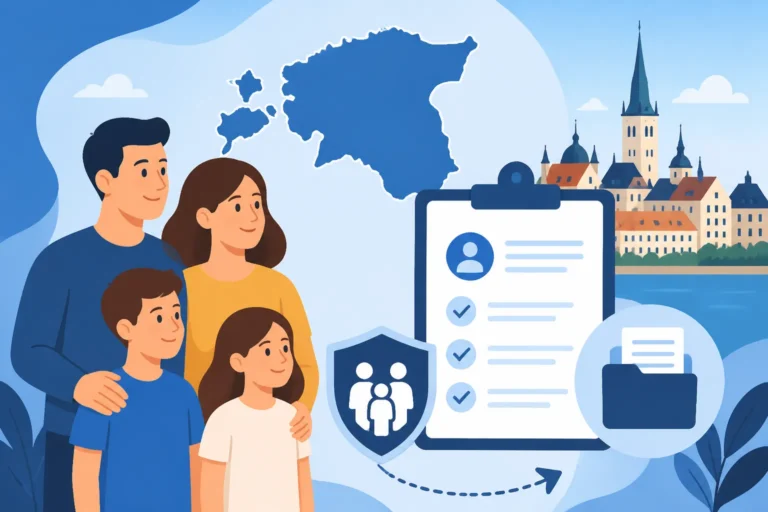
If your spouse, parent, or child is already legally residing in Estonia, you might be eligible for a family reunification visa. This pathway is designed to keep families together. The primary applicant in Estonia needs to prove they have sufficient income to support you, adequate accommodation, and valid health insurance. The bureaucratic hurdles here can sometimes be emotional, as you're dealing with reuniting loved ones across borders. Each case is assessed individually, and the relationship must be genuine and verifiable. For more details on this sensitive topic, refer to Family Reunification in Estonia: A Complete Guide for Expats.
Entrepreneur/Startup Visa
For the truly ambitious, Estonia offers a Startup Visa designed for founders with an innovative, scalable business idea. You'll need to gain approval from the Estonian Startup Committee first, which assesses the viability and innovativeness of your business. This isn't just for any small business; it's for those with serious growth potential. Once approved, you can apply for your D-visa. This route is challenging but incredibly rewarding for those who make it, as Estonia has a vibrant startup ecosystem.
The All-Important Isikukood: Your Estonian Identity Link
While you might not apply for your Isikukood (personal identification code) directly from India, understanding its importance is paramount from day one. Your Isikukood is like your social security number, tax ID, and national ID all rolled into one. It's absolutely foundational for almost everything you'll do in Estonia: opening a bank account, accessing healthcare, registering your residence, getting a phone contract, and pretty much every interaction with the government.
You'll typically receive your Isikukood once your residence permit application is processed after you arrive in Estonia on your D-visa. Sometimes, it can be issued during the D-visa process if you apply for a residence permit simultaneously, but usually, it's an in-country step. Don't underestimate its significance; it's the digital key to unlocking life in Estonia. To grasp why this number is so crucial, take a moment to read How to Get Your Isikukood (Personal Code) and Why It Matters for Healthcare.
The Nitty-Gritty: Application Process and Required Documents from India
Once you've identified your visa type, the real work begins: compiling documents and navigating the application process. This stage requires meticulous attention to detail and a healthy dose of patience. Any missing document or incorrect information can lead to delays or, worse, rejection, forcing you to start all over again. Trust me, you don't want to experience that kind of bureaucratic déjà vu.
Gathering Your Documents: A Checklist for Indian Applicants
The specific documents required will vary slightly depending on your visa type, but there's a core set that almost everyone needs. Prepare for a lot of paperwork, translations, and official stamps. It’s always best to get originals and several photocopies, and where necessary, certified English translations.
- Valid Travel Document: Your passport, valid for at least six months beyond your intended stay, with at least two blank pages.
- Application Form: Duly filled and signed. Most applications are now digital, but a printout of the signed form is usually required.
- Photograph: A recent passport-sized colour photograph (35×45 mm), meeting Schengen visa standards. Don't skimp here; poor photos are a common cause of rejection.
- Proof of Accommodation: This is crucial. It could be a rental agreement, a letter from your employer stating they provide housing, or proof of a university dormitory booking. They need to know you won't be homeless!
- Proof of Sufficient Funds: Bank statements (for the last 3-6 months), salary slips, scholarship letters, or a sponsorship letter from your employer or family. This shows you can support yourself financially in Estonia. The exact amount varies, but it's typically around €150-€200 per day of stay, or an equivalent for longer periods.
- Travel Medical Insurance: This is non-negotiable. It must be valid for the entire duration of your stay, cover the entire Schengen area, and have a minimum coverage of €30,000 for emergency medical treatment and repatriation. Many expats opt for international providers like Cigna Global because they offer comprehensive coverage that understands the unique needs of those living abroad. Make sure the policy document clearly states the coverage and validity. You’ll also need to understand What Health Insurance Do I Need for an Estonian Residence Permit?.
- Return Ticket Reservation: Or proof of sufficient funds to purchase one. This is to ensure you intend to leave Estonia when your visa expires if you're not getting a residence permit.
- Visa-Specific Documents:
- Work Visa: Original employment contract, a copy of the Estonian employer's registration, and sometimes a letter from the Estonian Unemployment Insurance Fund (Töötukassa) if your employer registered your short-term employment there.
- Study Visa: Official letter of admission from the university, proof of tuition fee payment, and scholarship documents if applicable.
- Digital Nomad Visa: Employment contract, client contracts, company registration documents (if self-employed), and bank statements showing consistent income meeting the €3,500 threshold.
- Family Reunification: Marriage certificate, birth certificates, and proof of the sponsor’s residence permit, income, and accommodation in Estonia.
- Police Clearance Certificate: A certificate from the local police authority in India, confirming you have no criminal record.
The Application Submission Process: Where and How
For Indian citizens, D-visa applications for Estonia are typically processed through the Estonian Embassy in New Delhi or one of its authorised visa application centres, often operated by VFS Global. It's crucial to check the Embassy's official website or the VFS Global website for the most current information regarding appointment booking, submission procedures, and fees. Things can change, so always verify before you make any plans.
The general process involves:
- Online Application: Many parts of the application can be initiated online. This helps in pre-filling forms and sometimes even uploading initial documents.
- Appointment Booking: You'll need to book an appointment at the Embassy or a VFS Global centre for biometric data collection (fingerprints and photo) and document submission. These appointments can sometimes be hard to get, especially during peak seasons, so plan well in advance.
- Document Submission: Attend your appointment with all your original documents and their photocopies. The staff will check everything and take your biometrics.
- Visa Fee Payment: The D-visa fee is usually paid at the time of submission. Be aware that VFS Global charges a service fee on top of the visa fee.
It's vital to remember that processing times can vary widely. While official guidelines might state a certain period, real-world experience often tells a different story. Factors like the volume of applications, the complexity of your case, and even national holidays in both India and Estonia can affect how long you wait. It's wise to apply well in advance of your intended travel date, giving yourself ample buffer time.
The Interview: A Crucial Step
Depending on your application type and the discretion of the consular officer, you might be called for a personal interview. This isn't something to dread, but rather an opportunity to clarify any aspects of your application and demonstrate your genuine intent to move to Estonia. The questions might revolve around:
- Your purpose of travel: Why Estonia? What makes it the right place for you?
- Your ties to India: Do you intend to return after your authorised stay (if not applying for residence permit right away)?
- Your financial situation: How will you support yourself? Be ready to elaborate on your bank statements or job offer.
- Your accommodation plans: Where will you live?
- Your knowledge of Estonia: This isn't a pop quiz, but showing you've done your homework and understand the country can be a plus.
Be honest, calm, and provide concise answers. Bring any additional documents you think might support your case, even if they weren't explicitly requested. It shows preparedness and seriousness.
| Visa Type | Main Purpose | Key Requirements | Approximate Initial Validity | Pathway to Residence Permit |
|---|---|---|---|---|
| Work Visa | Employment with Estonian company | Job offer, employer registration, income proof, health insurance | Up to 12 months | Yes, after arrival |
| Study Visa | Enrolment in Estonian university | Admission letter, proof of funds, health insurance | Up to 12 months | Yes, after arrival |
| Digital Nomad Visa | Remote work for foreign entity | Foreign employment/client contracts, €3500+ income, health insurance | Up to 12 months | Yes, after arrival |
| Family Reunification | Joining family in Estonia | Proof of relationship, sponsor's income/accommodation, health insurance | Up to 12 months | Yes, after arrival |
| Startup Visa | Launching innovative business | Startup Committee approval, business plan, funds, health insurance | Up to 12 months | Yes, after arrival |
Note: The Type D visa itself is usually valid for up to 12 months. Upon arrival, you'll apply for a temporary residence permit, which is typically issued for a longer duration (1-5 years depending on the purpose).
Navigating the Aftermath: What Happens After Your Visa is Approved?
So, you've got that golden sticker in your passport – a D-visa for Estonia! It's a huge relief, a moment to celebrate. But don't pop the champagne just yet. The D-visa is primarily a long-stay visa that allows you to enter Estonia and begin the process of settling down. It is often a stepping stone, particularly for non-EU citizens, to obtain a temporary residence permit, which is what truly grants you the right to reside in Estonia for an extended period. Many people confuse the two, thinking the D-visa is all they need. While it gets you in the door, there's a vital next step.
Visa Approval and What Comes Next
With your D-visa in hand, you can finally book your flights to Estonia. This is where the practicalities of moving really kick in. You'll want to ensure you have all your original documents, especially those related to your visa application, handy for immigration at Tallinn or Tartu airport. While the D-visa process usually means your entry is smooth, customs and border officials still have the right to ask questions.
Upon arrival, your immediate priority should be to initiate your application for a temporary residence permit. The D-visa allows you to stay up to the validity period stated on the visa, but to ensure continuous legal residence, especially if your purpose is work or study, the residence permit is key. This permit will generally be valid for a longer duration than your D-visa, often for one to five years, depending on your reason for moving. You will apply for this at the Estonian Police and Border Guard Board (PPA). For guidance on this crucial step, read How to Apply for a Temporary Residence Permit in Estonia.
From Visa to Residence Permit: The In-Estonia Transition
The process of transitioning from a D-visa to a temporary residence permit (TRP) usually involves another visit to the PPA. You’ll need to book an appointment, often well in advance, through their online system. During this appointment, you'll submit additional documents – some might be duplicates of what you provided for the D-visa, but others will be specific to your in-country status.
Key steps and documents for the residence permit application:
- PPA Appointment: Book your slot at a PPA service point. Be prepared for potential waiting times for available appointments. You can usually find information on How to Book an Appointment at the Police and Border Guard Board (PPA) on their website.
- Proof of Registration of Residence: This is absolutely critical. Within one month of arriving in Estonia, you must register your place of residence with the local government (e.g., Tallinn City Office or Tartu City Government). This registration is tied to your Isikukood and is a mandatory step for securing your residence permit. The process is known as How to Register Your Place of Residence (Elukoht) in the Population Register.
- Proof of Funds: Again, you'll need to show you can support yourself.
- Health Insurance: While you had travel insurance for your D-visa, for your residence permit, you'll need to demonstrate continuous and adequate health insurance coverage. This might involve enrolling in the Estonian Health Insurance Fund (Tervisekassa) if you're employed, or purchasing a comprehensive private health insurance plan.
- Biometrics: The PPA will take your fingerprints and another photo for your residence card.
- State Fee: There is a state fee for the residence permit application, which must be paid before or at the time of your appointment.
Once your temporary residence permit is approved, you’ll receive a residence card (ID card). This card is your official proof of legal residence and identity in Estonia. Keep it safe! It will contain your Isikukood and is essential for daily life.
Common Pitfalls and Pro Tips for Indian Applicants
Moving country, especially from a non-EU nation like India to Estonia, is rarely a perfectly smooth journey. There are unique challenges that Indian applicants often face, and knowing these in advance can save you a lot of grief. Don’t expect everything to be as straightforward as you might hope; bureaucracy has its own pace, no matter how digitally advanced a country is.
Overcoming Common Hurdles and Bureaucracy
One of the biggest frustrations for many newcomers is the seemingly slow pace of administrative processes, despite Estonia’s digital prowess. While many services are online, the initial setup for foreigners often requires physical presence and can be time-consuming.
- Language Barrier: While English is widely spoken, especially in Tallinn and Tartu, particularly within the tech community, government offices and smaller towns might still primarily operate in Estonian. Don't be afraid to ask for English-speaking staff or bring a friend who can translate. Google Translate is your friend, but nothing beats a human touch for complex matters.
- Documentation Specifics: Indian documents sometimes require specific apostille or legalisation procedures to be accepted in Estonia. Always verify these requirements with the Estonian Embassy or PPA before you leave India. Getting an apostille done from abroad can be a nightmare.
- Appointment Availability: As mentioned, PPA appointments, especially in Tallinn, can be scarce. Book them as soon as you have your D-visa (or even before, if the system allows pre-booking for residence permits). Procrastination here can lead to stress.
- Understanding the Digital System: Estonia prides itself on e-services, but for new arrivals, figuring out eesti.ee and other portals can be a learning curve. Patience is key. Eventually, you'll wonder how you ever lived without them.
- Processing Times: Official processing times are estimates. Always budget extra time for any visa or residence permit application. Chasing up applications usually doesn't speed things up and can sometimes be counterproductive.
Planning Your Move: Logistics Beyond the Visa
Beyond the visa and residence permit, there are countless logistical hurdles to consider when planning a move from India to Estonia. Thinking about these early can save you a lot of headaches and make your transition much smoother.
- Cost of Living: Estonia is generally more affordable than Western European capitals, but it's not "cheap." Housing in Tallinn can be comparable to some major European cities, while groceries and public transport are relatively inexpensive. Get a realistic picture of expenses by checking out The Complete Guide to Cost of Living in Estonia for Expats (2026).
- Shipping Your Belongings: If you're bringing more than just a couple of suitcases, research international moving companies well in advance. Services like Sirelo can help you compare quotes from various movers, making the process of getting your life from India to Estonia a little less overwhelming. They understand the intricacies of international shipping, including customs declarations and logistics.
- Finding Accommodation: Start looking for a place to live before you arrive, if possible. Websites like City24 and KV.ee are popular, but engaging a local real estate agent can be incredibly helpful. Be wary of scams, especially if you're asked for money without seeing the property or signing a legitimate contract.
- Banking: Once you have your Isikukood and residence permit, opening a bank account will be a priority. Local banks like Swedbank, SEB, and LHV are popular choices. This is fundamental for managing your finances, receiving your salary, and paying bills.
- Job Market & Employment Rights: Even if you have a job offer, it's good to understand the local employment landscape. Estonia has strong worker protections, but nuances in contracts and workplace culture exist. Understanding Estonian Employment Contracts and Worker Rights (2027) can prevent future misunderstandings.
- Cultural Adaptation: Estonia is a beautiful country with a unique culture. People can sometimes seem reserved at first, but they are warm and welcoming once you get to know them. Be open to new experiences, try to learn a few basic Estonian phrases, and embrace the local way of life.
- Connecting with Other Expats: There are many expat groups online (Facebook groups are particularly active) and in major cities. Connecting with fellow foreigners can provide invaluable support, advice, and a sense of community. Remember, you're not alone in this journey.
Moving from India to Estonia is a significant undertaking, but with proper planning, patience, and a good understanding of the process, it's an achievable dream. Embrace the journey, the challenges, and the incredible opportunities that await you in this fascinating Nordic-Baltic nation.
Disclaimer
The information provided in this guide is intended for general informational purposes only and does not constitute legal, financial, or immigration advice. Visa and immigration regulations are subject to change without notice, and individual circumstances may vary. Always consult with official government sources, such as the Estonian Police and Border Guard Board (PPA) or the Ministry of Foreign Affairs, or seek professional advice from an immigration lawyer or consultant for the most accurate and up-to-date information pertaining to your specific situation. We are not responsible for any inaccuracies or omissions in the information provided or for any actions taken based on this information.