How to Apply for an Isikukood as Part of Your Residence Process
Moving to a new country is exhilarating, but let's be honest, it also comes with a mountain of paperwork and administrative hurdles that can make even the most seasoned expat want to pull their hair out. In Estonia, one of the first and most crucial pieces of the puzzle you’ll encounter is the Isikukood, or personal code. It’s not just a number; it’s your key to unlocking virtually every service, digital or otherwise, in this incredibly efficient, yet sometimes bewildering, digital society. This guide will walk you through exactly how to get your Isikukood as a seamless part of your residence permit application, stripping away the confusion and helping you navigate this essential step.
What Exactly is an Isikukood (Personal Code) and Why Do You Need It?
When you first arrive in Estonia, you might feel like you’re constantly asked for a number you don’t yet have, or referred to processes that seem to hinge on this mysterious Isikukood. Trust me, you’re not alone in feeling this initial frustration. But once you understand what it is and how integral it is to Estonian life, things start to click into place.
More Than Just a Number: The Role of the Isikukood
Think of the Isikukood as your unique, lifetime identification number in Estonia. It’s a sequence of eleven digits, much like a social security number or national ID in other countries, but with a distinctly Estonian digital twist. This isn't just for government records; it's the backbone of virtually all public and private services here. Without it, you’ll find yourself hitting brick walls at every turn.
For instance, you can’t really open a proper bank account, register with a family doctor, or even get a local phone contract without an Isikukood. It’s what links you to the health insurance fund (Tervisekassa), allows you to pay taxes through the e-MTA portal, and grants you access to your digital health records via Digilugu. It’s genuinely the key to integrating into Estonian society and benefiting from its highly advanced digital infrastructure. It’s the identifier that ensures you exist within the system, allowing for seamless data exchange (securely, of course!) between different institutions.
The Core Connection to Your Residence Permit
Here’s the crucial bit: your Isikukood is not something you apply for separately in most cases when moving to Estonia for the long term. Instead, it’s inextricably linked to establishing your official residency. For most non-EU citizens, it’s issued automatically as part of your temporary residence permit application. For EU/EEA citizens, it's assigned when you register your right of residence in Estonia.
This means you don't need to chase it down as a standalone item; it's a byproduct of successfully becoming a resident. The Estonian state wants to identify you as a legal resident, and the Isikukood is their primary tool for doing so. This integrated approach might feel different from what you’re used to, where you might apply for an ID number before residency, but here, one usually follows the other. It's a testament to the Estonian belief in streamlined, digital processes, even if it feels a bit like a chicken-and-egg scenario at first glance.
The Residence Permit Pathway: How Your Isikukood is Issued
Understanding that your Isikukood comes hand-in-hand with your residence status is the first step in demystifying the process. Let's look at the two main pathways to getting it, depending on your citizenship.
Applying for a Temporary Residence Permit (TRP) or Long-Stay D-Visa
If you're coming from a non-EU/EEA country and planning to live and work, study, or join family in Estonia for more than 90 days, you’ll likely be applying for a temporary residence permit (TRP) or a long-stay D-visa that eventually leads to a residence permit. This is the primary route through which non-EU citizens get their Isikukood.
The process typically starts by gathering all the required documents for your specific type of residence permit – be it for work, study, family reunification, or even the increasingly popular digital nomad visa. You'll submit these, often along with your fingerprints and a biometric photograph, to the Estonian Police and Border Guard Board (PPA) either directly in Estonia or through an Estonian embassy or consulate in your home country. For example, if you're looking into the How to Get Estonia's Digital Nomad Visa: The Full Guide (2027), the Isikukood will be assigned once your residence permit application is approved and you are entered into the Population Register. Similarly, for those coming on a How to Get a Long-Stay (Type D) Visa for Estonia, this visa is generally a precursor to obtaining a residence permit, at which point the Isikukood enters the picture. The beauty of this system is that you're applying for one thing, and the other essential identifier is generated automatically, saving you an extra administrative step.
Registering Your Right of Residence (for EU/EEA Citizens)
For our fellow EU, EEA, or Swiss citizens, the process is a bit different, and thankfully, often simpler. You don't need a residence permit in the same way non-EU citizens do, but if you plan to stay in Estonia for longer than three months, you absolutely must register your right of residence. This is a mandatory step that ensures your legal status in the country.
You'll typically do this by visiting a local government office (often the Population Register office in your municipality, such as in Tallinn or Tartu) within three months of your arrival. You'll need to fill out a form, provide your passport or ID card, and show proof of sufficient means of support (e.g., an employment contract, student status, or simply enough funds) and a valid health insurance policy. Once your right of residence is registered, the local government unit will automatically assign you an Isikukood and enter you into the Population Register. You can find more detailed guidance on this specific pathway in articles like How to Register Your Right of Residence as an EU Citizen in Estonia. It’s a vital step that unlocks all the same conveniences and services that non-EU residents gain through their residence permits.
The Crucial Role of the Population Register
Whether you're a non-EU citizen getting a temporary residence permit or an EU citizen registering your right of residence, the common denominator for receiving your Isikukood is your entry into the Estonian Population Register (Rahvastikuregister). This is the official database that holds records of all residents in Estonia, including their personal data, place of residence, and, crucially, their Isikukood.
Your Isikukood is generated and assigned when your details are successfully recorded in this register. This is why the act of "registering your place of residence" (elukoht) is such a fundamental step for all long-term foreign residents, regardless of nationality. It’s not just a formality; it’s how the state formally acknowledges you as a resident and issues your unique identifier. Without this registration, you effectively don’t exist in the official system, and thus, no Isikukood. So, make sure you understand the importance of Registering Your Place of Residence in Estonia: The Complete Guide as it's the administrative cornerstone for everything else.
The Application Process: Steps and Essential Documents
Getting your Isikukood smoothly is really about getting your residence permit application right. Here’s a breakdown of the typical steps and what you'll need.
Gathering Your Documents for the Residence Permit
This is arguably the most critical phase. An incomplete application is the number one cause of delays and headaches for expats. While specific documents vary slightly depending on the type of residence permit you're applying for (e.g., work, study, family, digital nomad), there's a common core set of items you'll almost certainly need.
You'll definitely need your valid travel document (passport), recent passport-sized photos meeting specific technical requirements, and proof of sufficient funds to support yourself in Estonia. This proof usually comes in the form of bank statements or a scholarship letter if you're a student. Critically, you’ll also need valid health insurance coverage for your stay. This isn't just a suggestion; it’s a strict requirement. When looking for coverage, companies like Cigna Global offer comprehensive expat health insurance plans that meet the often-demanding requirements for Estonian residence permits, ensuring you tick that crucial box. Depending on your situation, you might also need an employment contract, an acceptance letter from a university, or documents proving family ties. Remember that any documents not in Estonian, English, or Russian will likely need to be officially translated and possibly apostilled or legalised. Taking the time to meticulously prepare these upfront will save you untold stress down the line. For a detailed checklist, refer to guides like What Documents Do I Need for an Estonian Residence Permit? and What Health Insurance Do I Need for an Estonian Residence Permit?.
Submitting Your Application and Biometrics
Once your documents are in order, it's time to submit your application. For non-EU citizens, this is typically done at a service point of the Police and Border Guard Board (PPA) in Estonia or an Estonian embassy or consulate in your country of origin. You’ll usually need to book an appointment well in advance, as slots can fill up quickly, especially in larger cities like Tallinn. It’s definitely worth consulting resources like How to Book an Appointment at the Police and Border Guard Board (PPA) to navigate this.
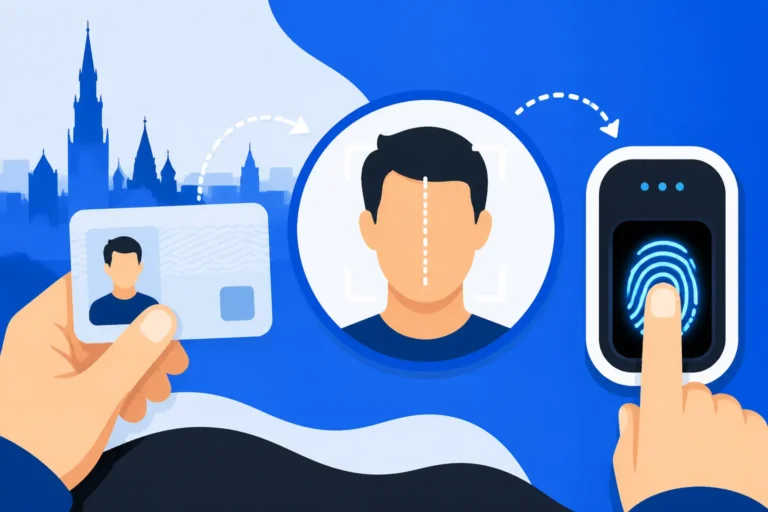
During your appointment, you’ll submit your physical documents, and your biometric data will be collected. This includes your fingerprints and a digital photograph. These biometrics are essential for creating your future residence card. It's during this formal submission and verification process that the PPA or consulate initiates the internal steps to register you in the Population Register, which in turn triggers the generation of your Isikukood. It’s not a separate form you fill out for the Isikukood; it's an inherent part of the residence permit application being processed.
The Follow-Up: Receiving Your Residence Card and Isikukood
After you’ve submitted your application and biometrics, it’s a waiting game. The processing times can vary significantly depending on the type of permit and the volume of applications, so patience is key. The PPA will typically notify you of their decision via email or postal mail. You can often track the status of your application online using a reference number provided during submission. You might find a guide like How Long Does It Take to Get an Estonian Residence Permit? helpful for setting expectations.
Once your residence permit is approved, your residence card will be issued. This physical card is your official proof of residence in Estonia and will explicitly state your Isikukood. For EU citizens registering their right of residence, you’ll receive a document confirming your registration, and your Isikukood will be included on it or made available to you upon request, often accessible through the eesti.ee portal. You can also pick up your physical residence card at a designated PPA service point or, in some cases, have it delivered to a specific address. Understanding How Do I Get a Biometric Residence Card in Estonia? is crucial for this final step. Upon receiving your card, you’ll also typically get envelopes containing your PIN codes, which activate the digital functionality of your ID card and unlock the full potential of your Isikukood in Estonia's digital society.
Common Roadblocks and How to Navigate Them
Even with the best intentions, things can sometimes go awry. Understanding potential pitfalls can help you prepare and react effectively.
Incomplete Applications and Delays
One of the most common reasons for delays or outright rejections in the residence permit process is an incomplete application. It sounds simple, but it’s surprising how often a crucial document is overlooked, or a specific translation requirement isn't met. For instance, sometimes a bank statement isn't deemed sufficient proof of funds, or a rental contract needs to be specifically formatted or registered.
My advice? Double-check everything. Then, have someone else (ideally an Estonian speaker or someone familiar with the system) double-check it again. If you're using a moving service like Sirelo, they often have resources or partners who can review your paperwork, offering an extra layer of assurance. Forgetting to apostille a document that requires it, or submitting an outdated passport photo, can send you back to square one, prolonging the wait for your Isikukood and your ability to truly settle in. Don’t rush this stage; thoroughness is your best friend here.
Proving Funds and Accommodation
Estonian authorities are quite strict about ensuring that new residents can support themselves and have a stable place to live. This is not about being difficult; it's about responsible immigration policy. For non-EU citizens, you generally need to show you have at least the minimum required income or savings per month to cover your living costs. This could be salary statements, bank statements showing sufficient funds in your account, or proof of a scholarship.
Similarly, proving stable accommodation is non-negotiable. A valid rental contract (üürileping) registered with the Population Register, or proof of property ownership, is usually required. Simply having a friend say you can crash on their couch for a bit won't cut it for a residence permit. If you're struggling to meet these requirements or understand the specifics, dedicated guides like How Do I Prove Accommodation for Your Estonian Residence Permit? and How Do I Prove My Income for an Estonian Residence Permit? are invaluable for understanding the exact thresholds and acceptable documentation.
Language Barriers and Assistance
While Estonia is a highly international country, especially in Tallinn and Tartu, the administrative language is undeniably Estonian. Dealing with official forms, understanding complex legal jargon, or even communicating effectively at a PPA service point can be daunting if your Estonian skills are nascent. This can lead to misunderstandings, errors in your application, or simply immense frustration.
Don't be afraid to ask for help. Many PPA employees speak excellent English, but it's not guaranteed, especially outside of major city centres. Consider bringing an Estonian-speaking friend or colleague with you to appointments. There are also professional immigration consultants and legal aid services available that specialise in helping foreigners navigate the residence permit process. While they come at a cost, the peace of mind and assurance of getting things right can be priceless. Remember, it's okay to feel overwhelmed; it's a completely natural part of moving to a new country with a different administrative system and language.
What to Do Once You Have Your Isikukood
Congratulations! You’ve got your residence card, and with it, your precious Isikukood. This marks a significant milestone in your expat journey, but it’s not the end of the administrative road. Now you need to put it to use.
Activating and Using Your Digital ID Card
Your Estonian residence card isn't just a piece of plastic; it's a powerful digital identity document. Along with your card, you will have received two sealed envelopes containing your PIN codes (PIN1 for authentication, PIN2 for digital signing) and a PUK code for unblocking. To unlock the full digital potential, you’ll need an ID card reader (which you can buy relatively cheaply from electronics stores or even some post offices) and the ID-software installed on your computer.
Once activated, your Isikukood, via your digital ID, becomes your gateway to Estonia's famous e-services. You can log into government portals like eesti.ee, check your tax information on the How the Estonian Tax and Customs Board (Maksu- ja Tolliamet) Works portal, access your digital health records through Digilugu, and perform legally binding digital signatures. This level of digital convenience is truly transformative, making most bureaucratic tasks quick and painless from your own home. For a deeper dive into Estonia's digital offerings, check out Navigating Estonia's Digital Healthcare System: An Expat's Roadmap (2027).
Registering with Local Services
With your Isikukood now firmly in hand, you can truly start settling in. Your next steps will involve registering with various local services, all of which will require your personal code.
Firstly, opening a bank account becomes significantly easier. Major Estonian banks like Swedbank, SEB, LHV, and Luminor will all ask for your Isikukood and residence card to complete your account setup. Having a local bank account is essential for receiving salary, paying bills, and general financial management. You can learn more about this in The Expat Guide to Opening a Bank Account in Estonia.
Secondly, you'll want to register with a family doctor (perearst). This is a crucial step for accessing public healthcare in Estonia, and your Isikukood is what links you to the Tervisekassa (Estonian Health Insurance Fund) and ensures your medical records are tied to you. Find out more about this process in The Expat Guide to Finding a Family Doctor (Perearst) in Estonia.
Finally, you’ll need your Isikukood for setting up crucial utilities like electricity, internet, and sometimes water or heating, especially if these aren't managed directly by your apartment association. Telecom providers will also require it for mobile phone contracts. Check out The Expat Guide to Setting Up Utilities in Estonia for more information. Essentially, the Isikukood is the universal key that confirms your identity and residency, allowing you to seamlessly integrate into life in Estonia.
Disclaimer
The information provided in this guide is intended for general informational purposes only and does not constitute legal, financial, or immigration advice. While we strive to keep the content up-to-date and accurate, regulations and procedures in Estonia can change. It is always recommended to consult official government sources, such as the Estonian Police and Border Guard Board (PPA) or a qualified legal professional, for the most current and specific advice pertaining to your individual situation.