What Documents Do I Need for an Estonian Residence Permit?
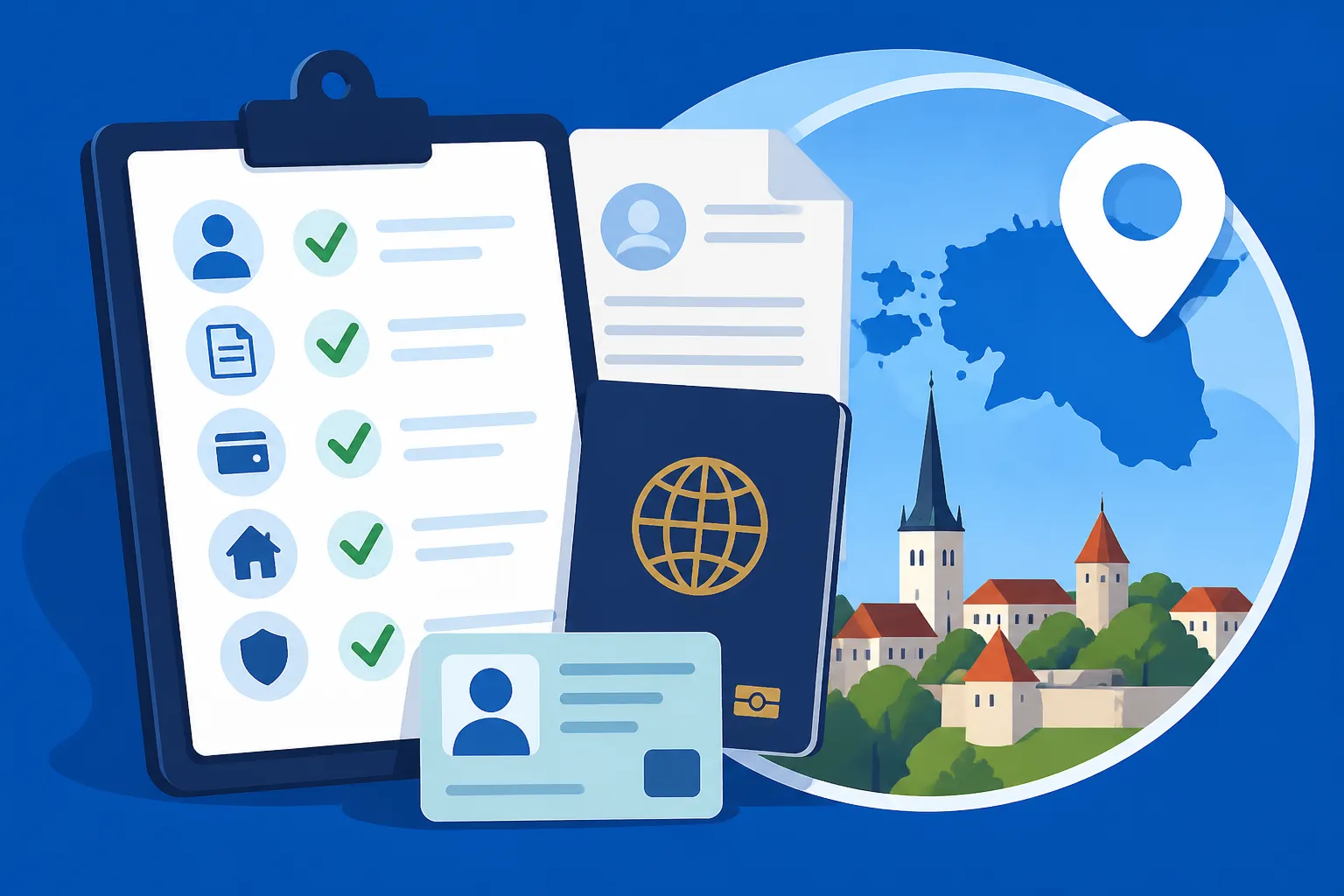
Ah, the Estonian residence permit application! It's one of those milestones that every expat here can relate to – a mix of excitement for the future and sheer dread at the thought of gathering all those documents. It often feels like you're trying to solve a complex puzzle with a few missing pieces and instructions in a language you're still learning. Trust me, I've been there, staring at the Police and Border Guard Board (PPA) website, wondering if I'd missed a crucial detail. This guide is designed to cut through the confusion and give you a crystal-clear checklist of exactly what documents you'll need to secure your Estonian residence permit.
The Foundation: Your Isikukood and Basic Identity Documents
Before you even think about submitting your application, you need to make sure you have your absolute basics in order. These are the cornerstones upon which your entire application will be built, and getting them wrong can lead to unnecessary delays or even rejection.
The All-Important Isikukood
First things first, let's talk about the Isikukood. If you're new to Estonia, this ten-digit personal identification code might sound like just another administrative hurdle, but it is, without exaggeration, the key to unlocking almost everything here. From healthcare to banking, and yes, absolutely for your residence permit, your Isikukood is essential. It's how the Estonian state identifies you in their systems. Without it, you’re essentially a ghost in the machine, and the PPA won't be able to process your residence permit application effectively.
You typically get your Isikukood either by registering your place of residence with the local government (usually City Hall or Linnavalitsus) or through the PPA when you apply for your residence permit. However, it's often smoother to have it beforehand if possible. To apply for it, you'll need your valid passport or ID card, proof of your residential address in Estonia, and a completed application form. It’s a foundational step, and understanding How to Get Your Isikukood (Personal Code) and Why It Matters for Healthcare will clarify its broader importance.
Passport and Travel Documents
This might seem obvious, but your passport is your primary identification document, and its validity is non-negotiable. The PPA requires that your passport or other travel document be valid for at least three months beyond the expected expiry date of your residence permit. So, if you're applying for a one-year permit, your passport should ideally be valid for at least 15 months from your application date. Always provide the original for verification, and be prepared to submit high-quality copies of all relevant pages, especially the personal data page and any pages with previous visas or entry stamps. If you've had previous Estonian visas or residence permits, showing their history can sometimes streamline the process, though it's not always explicitly required.
Photographs That Actually Work
Oh, the dreaded passport photo! It seems simple enough, but countless applications get snagged because of incorrect photos. The PPA has very specific requirements for the digital photo you submit. It must be a recent, high-quality, colour photograph (typically no older than six months) that meets international ICAO standards for biometric identification. This means a clear, front-facing view of your entire face, with a neutral expression and closed mouth, against a plain, light-coloured background (preferably white or light grey). No shadows, no head coverings (unless for religious reasons and a note is provided), and absolutely no glasses that obscure your eyes or cause reflections. Many photo studios in Estonia are familiar with these requirements, so it's often best to get them done professionally here. Don't try to reuse an old selfie – it just won't cut it and will likely get your application bounced back.
Proving Your Purpose: Why You're Here and How You'll Stay
Once the identity basics are covered, the PPA wants to know why you're coming to Estonia and, crucially, that you can support yourself and contribute positively during your stay. This section is where your specific circumstances come into play.
Proof of Sufficient Financial Means
Estonia wants to ensure that you won't become a burden on the state. Therefore, proving you have sufficient financial means to support yourself (and any dependents coming with you) is a critical part of your application. The exact minimum income requirements can vary and are often updated, so always check the PPA's official website for the latest figures. Generally, for a work-related permit, the income needs to be above the Estonian average wage, and for other permits (like student or family reunification), there's a specified minimum to cover basic living expenses. For an idea of current numbers, you might want to look into How Much Income Is Required for an Estonian Residence Permit?.
What kind of documents prove this? Typically, you'll need:
- Bank Statements: Recent statements (usually for the last 3-6 months) from your personal bank account, showing consistent income and sufficient funds. These should be translated and notarized if not in Estonian or English.
- Employment Contract: If applying for a work permit, a signed employment contract from an Estonian employer, clearly stating your salary.
- Scholarship Letter: For students, official confirmation of a scholarship, detailing the amount and duration.
- Proof of Pension or Investments: For retirees or those with passive income, documents proving regular pension payments or substantial investment portfolios.
If you're applying for family reunification, the income threshold for the primary applicant will be higher, as it needs to cover everyone in the household. It's not just about having money, but proving a steady, reliable source of it.
Proof of Accommodation in Estonia
The PPA needs to know you have a place to live. This isn't just a casual address; it needs to be a legitimate, registered residence. Without a confirmed address, you won't be able to register your place of residence in the Population Register later, which is another crucial step for integrating into Estonian life.
Acceptable documents for proof of accommodation include:
- Rental Agreement (Üürileping): A signed, valid rental contract with your landlord. Ensure it's for long-term accommodation and includes all necessary details like your name, the address, start and end dates, and signatures.
- Property Ownership Title: If you've purchased property in Estonia, a copy of the extract from the Land Register (Kinnistusraamat) proving ownership.
- Letter from Host/Employer: In some cases, if you're staying with a host family or your employer provides accommodation, a signed letter confirming this, along with their contact details and proof of their ownership/rental.
It’s vital that this address is accurate and that you intend to actually live there. While you might be juggling everything with a moving service like Sirelo to get your belongings to Estonia, make sure your accommodation proof is solid and official before you apply. For a deeper dive into what counts, check out How Do I Prove Accommodation for an Estonian Residence Permit?.
Documents Specific to Your Permit Type
This is where the application process truly branches out. The PPA needs specific evidence that aligns with the reason you're seeking residence in Estonia. Each permit type has its own set of unique requirements.
Let's break down some common scenarios:
-
Work Permit: If you're coming to Estonia for employment, the PPA will primarily need documents related to your job. This includes a signed employment contract from your Estonian employer, detailing your position, responsibilities, salary, and employment start date. Your employer will also typically provide an invitation or confirmation letter outlining the necessity of your role and their intention to hire you. You might also need to submit copies of your professional qualifications, such as university diplomas or certifications, and a CV to demonstrate your suitability for the role. Employers in Estonia sometimes help with parts of this process, but it's your responsibility to ensure all your personal documents are in order. If you're confused about what else is needed, What Documents Do I Need for an Estonian Work Permit? provides more detailed information.
-
Study Permit: For those coming to hit the books, your main document is the official letter of acceptance from an accredited Estonian educational institution (university, college, etc.). This letter needs to confirm your enrolment, the duration of your studies, and the programme you'll be undertaking. You'll also need proof of tuition payment (or a payment plan) and any scholarship details if applicable. The PPA wants to see that you're genuinely committed to studying and have the means to cover your educational costs. For specific guidance, refer to How Do I Apply for a Student Residence Permit in Estonia?.
-
Family Reunification: Bringing your loved ones to Estonia is a beautiful step, but the PPA needs clear evidence of your relationship. You'll need marriage certificates (for spouses), birth certificates (for children), and any other official documents that prove your family ties. These documents often need to be apostilled or legalised in your home country. The sponsoring family member (the one already residing in Estonia) will also need to provide their Estonian residence permit or citizenship details and, crucially, proof of sufficient income to support the entire family, often exceeding the individual requirement. This can be a complex area, and How Do I Apply for Family Reunification in Estonia? is a good resource.
-
Self-Employment/Business: If you're venturing into entrepreneurship, the PPA requires a solid business plan outlining your venture, its financial projections, and how it benefits Estonia. You'll need proof of sufficient funds to establish and run your business. If you've already registered a company (an OÜ – osaühing) or as a sole proprietor (FIE – füüsilisest isikust ettevõtja), you’ll need the company registration documents from the Estonian Centre of Registers and Information Systems. For sole traders, this means your FIE registration. This type of permit requires a clear demonstration of viability and commitment. If you're looking at this route, understanding Can I Get Residence in Estonia Through Self-Employment? is key.
-
Digital Nomad Visa (DNV): Estonia was one of the first to embrace digital nomads! For this permit, you'll need to demonstrate your status as a remote worker. This typically includes proof of your employment contract with a foreign company, registration documents for your foreign company, or client contracts if you're freelancing. Crucially, you need to show proof of income for the last six months that meets Estonia's DNV income threshold (which is regularly updated, so check the PPA site for the latest figure, currently around €4,500 gross per month). You’ll also need to prove foreign tax residency – that you pay taxes elsewhere. All these documents confirm you're genuinely a digital nomad and not looking for local employment. You can find more comprehensive details in How Do I Apply for Estonia's Digital Nomad Visa.
Here’s a quick overview of common specific documents by permit type:
| Permit Type | Key Specific Documents |
|---|---|
| Work Permit | Employment Contract, Employer Invitation Letter, Professional Qualifications (diplomas, CV) |
| Study Permit | Official Letter of Acceptance from University, Proof of Tuition Payment/Scholarship |
| Family Reunification | Marriage Certificate, Birth Certificates (for children), Proof of Sponsor's Income |
| Self-Employment | Business Plan, Company Registration Documents (OÜ/FIE), Proof of Business Funds |
| Digital Nomad Visa | Foreign Employment Contract or Client Contracts, Proof of Income, Foreign Tax Residency Certificate |
Health, Background Checks, and Other Essentials
Beyond your identity and your purpose for being in Estonia, there are a few other critical documents that the PPA requires to ensure you're a responsible and healthy addition to the Estonian community.
Health Insurance Coverage
This is non-negotiable. Whether you're coming for work, study, or family, you must have valid health insurance coverage. For a residence permit, this usually means coverage for the entire duration of your requested permit (e.g., 12 months for a one-year permit). If your permit is employment-based, you might eventually be covered by the Estonian Health Insurance Fund (Tervisekassa) through your social tax payments, but there can be waiting periods or gaps. For new arrivals, especially those not immediately covered by Tervisekassa, or those on a Digital Nomad Visa, private health insurance is usually the way to go.
Your insurance policy needs to meet certain criteria: it should cover medical expenses for illness and injury, and often repatriation costs. While some travel insurance policies might cover a D-visa initially, for a residence permit, the PPA typically expects more comprehensive coverage. Many expats opt for comprehensive private health insurance from providers like Cigna Global to ensure broad coverage from day one, covering consultations, emergencies, and even some specialist treatments. Always get an official certificate from your insurer stating the validity period and coverage details. You can learn more about this crucial aspect in What Health Insurance Do I Need for an Estonian Residence Permit?.
Background Checks and Additional Forms
To ensure public safety, the PPA usually requires a criminal record certificate from your country of origin (and any other country you’ve resided in for a significant period over the last five years). This certificate must be recent, often no older than six months, and may need to be apostilled or legalised depending on your home country's agreements with Estonia. This document proves you don't have a problematic criminal history.
Of course, you'll need to fill out the official application form for your specific residence permit type. This form is available on the PPA website. Fill it out meticulously, ensuring all information is accurate and consistent with your supporting documents. Any discrepancies can raise red flags. Make sure you sign it!
Finally, don't forget the receipt for the state fee payment. There is an application fee for all residence permits, and you'll need to pay this before or at the time of submission and include the payment confirmation. The fees can vary by permit type and are subject to change, so always verify the latest amounts on the PPA website.
Important Considerations and Practical Tips
Navigating the PPA system can feel like a marathon, not a sprint. A little preparation goes a long way.
Translations and Notarisation
Here's a critical point that many foreigners overlook: if any of your official documents (like birth certificates, marriage certificates, or academic diplomas) are not in Estonian or English, they must be translated by a sworn translator. Even if they are in English, if they are from outside the EU/EEA, they might require an apostille or legalisation to be recognised in Estonia. A sworn translator in Estonia is certified to provide legally recognised translations. You can usually find a list of sworn translators on the Ministry of Justice website or through local translation agencies. Never rely on unofficial translations, as the PPA will reject them.
Application Fees and Processing Times
As mentioned, there's a state fee for your residence permit application. This fee must be paid before or at the time of submitting your documents. The exact amount will depend on your permit type and is listed on the PPA website. Keep that payment receipt safe!
Processing times can be a source of anxiety. While the PPA states official processing times (e.g., typically up to 2 months for a temporary residence permit), these are maximums. In reality, it can sometimes be quicker, but it can also take the full duration, or even longer if additional information is requested. Applying during peak times (like before the academic year starts) can also lead to delays. Patience is key. You can check the general timelines and what to expect in How Long Does It Take to Get an Estonian Residence Permit?.
Submitting Your Application and Follow-Up
For most residence permits, you'll need to submit your application in person at a PPA service point in Estonia, or at an Estonian embassy or consulate in your home country if you're applying from abroad. It's almost always necessary to book an appointment in advance through the PPA website. These slots can fill up fast, so plan ahead! For more on this, consult How Do I Book a PPA Appointment for My Residence Permit?.
When you go to your appointment, bring all your original documents, plus good quality copies. The PPA officer will verify the originals and take your copies. They will also take your fingerprints and a digital photo (even if you brought one, they often take their own for biometrics).
Crucially, keep copies of everything you submit! This includes the application form itself. If the PPA needs further clarification or additional documents, they will contact you, usually via email or phone. Respond promptly to any requests. Don't be shy about asking questions if something isn't clear during your appointment.
While planning your move with resources like Sirelo can help you manage the logistics of relocating, the PPA application is a separate, critical step that demands your full attention. And remember, having your Cigna Global policy ready well in advance ensures no last-minute scrambling for medical coverage proof. The more organised you are, the smoother the process will be.
Disclaimer
Please remember that I am an expat blogger and not a legal professional. The information provided in this guide is based on personal experience, general knowledge, and publicly available information from the Estonian Police and Border Guard Board (PPA) and other official sources, accurate as of 2026. Immigration laws and requirements can change rapidly. Always consult the official PPA website (www.politsei.ee) or a qualified immigration lawyer for the most current and specific advice pertaining to your individual situation. This content is for informational purposes only and does not constitute legal advice.