Understanding Hospital Care at an Estonian Haigla
Finding yourself staring at the clinical white walls of an Estonian emergency room or preparing for a scheduled surgery can be an incredibly isolating experience when you are far from home. The language barrier, the unfamiliar digital interfaces, and the stoic nature of Baltic medical staff often lead to unnecessary anxiety. This guide demystifies the Estonian hospital system, ensuring you know exactly what to expect from admission to discharge.
The Estonian Hospital Ecosystem: Understanding the Hierarchy
When you first arrive in Estonia, the word haigla (hospital) might seem like a monolith, but the system is actually a tiered network designed for efficiency. Unlike some countries where every hospital offers every service, Estonia has specialized its care to ensure that the most complex cases are handled by the most equipped facilities. As an expat, understanding where you are being sent—and why—is the first step toward feeling in control of your healthcare journey.
Regional vs. Central Hospitals
Estonia’s healthcare is anchored by its two massive regional hospitals: the North Estonia Medical Centre (PERH) in Tallinn and the Tartu University Hospital (TÜK) in Tartu. These are the heavy hitters of the medical world here. If you have a highly complex condition or require advanced neurosurgery, you will almost certainly be transferred to one of these two. They are teaching hospitals, meaning you will often see medical students, and they possess the most advanced diagnostic equipment in the country.
Central hospitals, such as Ida-Tallinna Keskhaigla (East Tallinn Central Hospital) or Lääne-Tallinna Keskhaigla (West Tallinn Central Hospital), handle the bulk of secondary care. These are excellent facilities where most babies are born and standard surgeries, like gallbladder removals or hip replacements, take place. I personally found that the central hospitals often feel a bit more manageable and less "industrial" than the massive regional hubs, though the medical standards remain consistently high across the board.
Specialised Care Units and Local Facilities
Beyond the big cities, you will find local hospitals in places like Pärnu, Viljandi, or Narva. These are vital for stabilizing patients and providing general medical care, but they frequently refer complex cases back to Tallinn or Tartu. There are also specialized haigla units for psychiatric care or rehabilitation. Understanding this hierarchy helps you realize that being "transferred" isn't a sign of a problem; it is simply the system ensuring you are in the right hands.
If you are just starting your journey in the country, it is vital to have your paperwork in order before you ever need these facilities. This starts with How to Get Your Isikukood (Personal Code) and Why It Matters for Healthcare so that your digital records can be created the moment you walk through the door. Without that 11-digit code, the administrative hurdle becomes significantly higher.
Admission and Triage: Navigating the EMO Experience
The Emergency Medicine Department, known locally as the EMO (Erakorralise meditsiini osakond), is often an expat’s first point of contact with Estonian hospital care. It can be a jarring experience. Estonians value efficiency and directness, which can sometimes be mistaken for a lack of bedside manner. When you walk into an EMO in Tallinn or Tartu, you aren't just a patient; you are part of a highly calibrated triage system.
The Triage System and Wait Times
The EMO operates on a color-coded triage system: Red (life-threatening), Orange, Yellow, Green, and Blue (non-urgent). If you arrive with a minor injury or a high fever that could have been handled by a family doctor, you will likely be tagged "Green" or "Blue." In these cases, be prepared to wait. Some sources describe waiting rooms where the stay lasted six hours because the staff were busy with "Red" cases from a nearby traffic accident.
It is important to remain patient and understand that the EMO is not a "fast-track" to see a specialist. If your condition is not an emergency, the staff may even suggest you visit your Perearst the next day. For those who are traveling or haven't yet secured their residency, knowing Emergency Medical Care in Estonia: What Every Expat Needs to Know can save a lot of confusion during these high-stress moments. If you are a digital nomad or waiting for your residency to process, having a plan like SafetyWing can be a lifesaver, as it provides coverage for these sudden, expensive EMO visits before you are officially in the national system.
Planned Admissions and the Referral Process
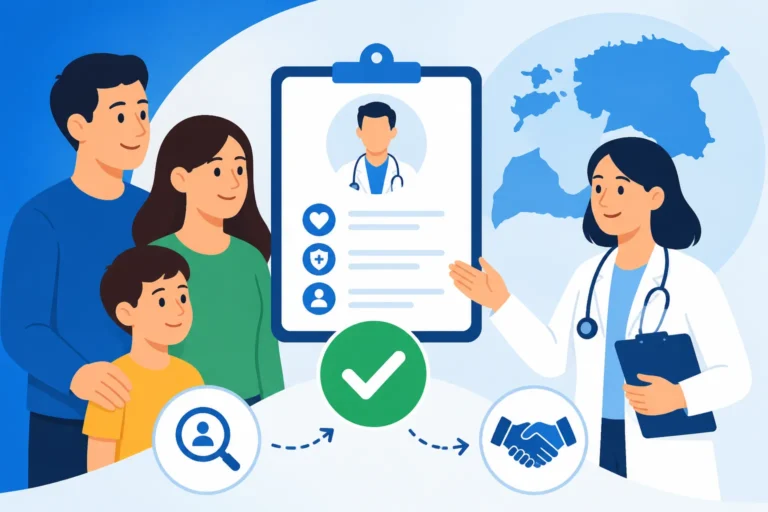
Most hospital stays in Estonia are not emergencies; they are "planned admissions." This process almost always begins with a saatekiri (referral) from your family doctor or a private specialist. You cannot simply walk into a hospital and ask for an MRI or a surgery. The system is designed to be a funnel, where the family doctor acts as the gatekeeper.
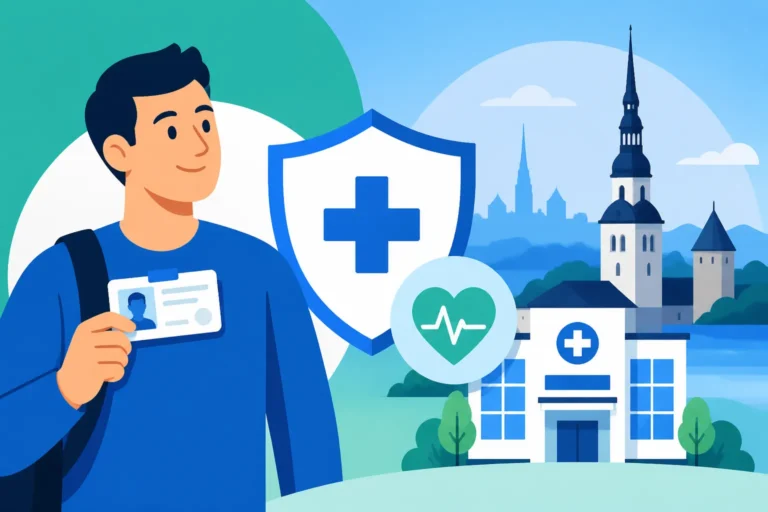
Once you have your referral, you will likely use the digital booking system to find a slot. On the day of admission, you’ll need your ID card and your referral details. You’ll be directed to a specific ward, where a nurse will handle your intake. This is where the digital nature of Estonia shines—the nurses will already have access to your medical history through your digital file. However, if you are a newcomer, you should look into How to Access Specialist Care Through the Estonian Public System to understand how to get that initial referral without getting stuck in a loop of bureaucracy.
The Financial Side: Costs and Insurance Coverage
One of the biggest anxieties for any foreigner is the "bill." In Estonia, the cost of hospital care depends entirely on your insurance status and whether the care is considered "essential." The system is surprisingly affordable compared to North America or even parts of Western Europe, but there are still nuances you must understand to avoid a surprise invoice.
Tervisekassa Coverage for Hospital Stays
If you are working in Estonia and paying social tax, or if you are a legal resident with health insurance, the Tervisekassa (Health Insurance Fund) covers the vast majority of your costs. However, there is a standard "bed-day fee" (voodipäevatasu). As of 2026, this is typically 5 EUR per day, and it is capped at 10 days per hospital stay. This means even a major surgery with a week-long recovery will only cost you 35 to 50 EUR out of pocket for the room and board.
Certain groups are exempt from this fee, including children, pregnant women, and patients in intensive care. For a deeper dive into these numbers, I highly recommend reading The Cost of Healthcare in Estonia: A Complete Breakdown for Foreigners (2026) so you can budget accordingly. It is also worth noting that the Tervisekassa is quite generous with the types of treatments it covers, provided they are medically necessary and you have gone through the proper referral channels.
Out-of-Pocket Fees for Uninsured Expats
If you do not have Tervisekassa insurance—perhaps you are a digital nomad, a tourist, or a new resident whose 14-day waiting period hasn't ended—the costs can escalate. An EMO visit might cost upwards of 100 EUR just for the consultation, plus the cost of tests, scans, and medications. A single night in a hospital bed without insurance can run into the hundreds or even thousands depending on the treatment required.
This is where supplemental insurance becomes critical. Many expats use SafetyWing during their first few months in Estonia to bridge the gap while their residency is being processed. It acts as a financial shield against the high costs of "uninsured" status. If you are in this category, you should definitely check Can Tourists Access Emergency Care in Estonia for Free? to see where the limits of public "charity" care actually end. Generally, only life-saving stabilization is provided for free to those without any form of insurance or EHIC card.
Daily Life Inside an Estonian Hospital
What is it actually like to spend 48 hours in an Estonian hospital bed? For many expats, the experience is a mix of high-tech efficiency and "old school" Baltic austerity. The rooms are generally clean, modern, and shared with one or two other people, though private rooms are sometimes available for an extra fee.
Communication and the Language Barrier
English is widely spoken by doctors, especially those under the age of 50. However, the nursing staff and the support personnel (like those delivering food or cleaning) may only speak Estonian or Russian. This can lead to moments of frustration where you are trying to ask for a glass of water or more pain medication and are met with a blank stare.
My advice? Use technology. Having a translation app on your phone is essential. Also, Estonians are not big on small talk. Don't be offended if the nurse enters, performs a task in silence, and leaves. It isn't rudeness; it’s just the professional culture here. If you are worried about communicating your specific needs, you might want to look into How to Find an English-Speaking Doctor in Estonia to see if you can request a primary care provider who can help bridge that gap during your hospital stay.
Hospital Amenities and Patient Rights
Food in Estonian hospitals is functional. Expect a lot of porridge for breakfast, and soups or meat-and-potato dishes for lunch and dinner. It is usually healthy but might be a bit bland for international palates. Most wards have Wi-Fi, and the signal is usually quite strong, allowing you to stay connected with family or even do a bit of light work if you’re up to it.
As a patient, you have the right to informed consent. Doctors are legally required to explain the risks and benefits of a procedure. You also have the right to a second opinion, though getting this within the public system can take time. If you feel like your needs aren't being met, every hospital has a patient advocate or a quality department where you can file a formal complaint. For those who want a more comprehensive look at how the entire system functions, reading How Estonia's Health Insurance Fund (Tervisekassa) Works: A Full Overview is a great way to understand your standing as a patient.
Digital Integration: The Role of Digilugu
One of the most impressive (and occasionally overwhelming) parts of the Estonian hospital experience is the digital health record, known as Digilugu. In many countries, you have to carry around folders of X-rays and paper prescriptions. In Estonia, everything is tied to your Isikukood.
Real-time Data and Patient Access
Every blood test, every doctor’s note, and every image taken during your hospital stay is uploaded to the national health portal. You can log in with your ID card or Smart-ID and see exactly what the doctor wrote about you. This level of transparency is incredible, but it also means you might see test results before the doctor has a chance to explain them to you.
This digital backbone ensures that if you are treated in Tallinn but normally live in Tartu, your local doctor can see exactly what happened the moment you are discharged. To get comfortable with this system, spend some time reading Understanding the Digilugu (Digital Health Record) System in Estonia. It is arguably the most powerful tool you have for managing your health in this country.
Post-Discharge Care and E-Prescriptions
When you are discharged from an Estonian haigla, you won't get a paper prescription. Instead, the doctor will issue a digiretsept (digital prescription). You simply go to any pharmacy (Apteek), show your ID card, and the pharmacist pulls up your prescription on their screen. It is seamless and eliminates the risk of losing a slip of paper.
You might also be issued a digital "sick leave" certificate, known as a haigusleht. This is automatically transmitted to your employer and the Tax and Customs Board so you can receive your sickness benefits. For more on how this works, check Understanding Sick Leave (Haigusleht) and Sick Pay in Estonia. Also, don't forget to ask about your follow-up care; the hospital will usually tell you to book a follow-up with your family doctor rather than returning to the hospital itself. This is perfectly handled through the Understanding the Digiretsept (Digital Prescription) System in Estonia process.
Comparing Public and Private Hospital Options
While the public haigla system is the backbone of Estonian healthcare, there is a growing private sector. Many expats wonder if they should skip the public queues and go straight to a private clinic. The answer depends on your timeline and the complexity of your issue.
| Feature | Public Hospital (Haigla) | Private Clinic |
|---|---|---|
| Wait Times | Can be long for non-urgent care | Usually very short (days) |
| Cost (with Insurance) | Very low (5 EUR bed fee) | High (full price minus small Tervisekassa subsidy) |
| Specialization | Handles the most complex/emergency cases | Best for diagnostics and minor surgery |
| Language | English common, but not guaranteed with all staff | High likelihood of fluent English staff |
| Atmosphere | Clinical and functional | More like a hotel or high-end office |
Why Choose Private Clinics
Private clinics like Confido or Fertilitas are popular for diagnostics, wellness checks, and minor elective surgeries. They offer a much more personalized experience. If you need an MRI and don't want to wait three months in the public system, you can pay to have it done privately next week.
If you are a freelancer or working for a foreign company, you might not be automatically enrolled in the state system. In this case, private care combined with a global health plan like SafetyWing is often the most sensible route. SafetyWing is particularly useful here because it can cover the costs of these private consultations if they arise from a sudden illness or injury while you are navigating the move to Estonia.
When the Public System is Unbeatable
For anything life-threatening, chronic, or highly complex, the public system is actually superior. Private clinics in Estonia generally do not have the intensive care facilities or the multi-disciplinary teams required for major trauma or complex oncology. If you have a serious heart condition, you want to be at the North Estonia Medical Centre, not a boutique private clinic. The public system is where the country’s top specialists spend the majority of their time.
Important Considerations for Families and New Arrivals
If you are moving to Estonia with a family, the hospital experience includes pediatric care, which is handled with exceptional care here. Children's hospitals in Tallinn and Tartu are world-class. However, as a parent, the administrative side remains your responsibility. You must ensure your children are registered.
For those who have just arrived and are feeling a bit lost, the first step isn't finding a hospital, it's finding a family doctor. This is the person who will guide you into the hospital system if you ever need it. I recommend reading The Expat Guide to Finding a Family Doctor (Perearst) in Estonia as soon as you have your residence permit. And if you are still in the "tourist" phase, remember that Can Tourists Access Emergency Care in Estonia for Free? usually only applies to life-saving emergencies. For everything else, you’ll want that insurance policy ready to go.
Disclaimer
This guide is intended for informational purposes only and does not constitute professional medical or legal advice. Healthcare regulations and costs in Estonia are subject to change. Always consult with the Tervisekassa, your local medical provider, or the Police and Border Guard Board for the most current information regarding your specific residency and insurance status.