What Is the VAT Rate in Estonia in 2026?
Trying to make sense of taxes in a new country can feel like you're learning a whole new language, even if you’re fluent in English. One of the most common questions I hear from fellow expats, right after "How do I get an Isikukood?", is about Value Added Tax, or VAT. It pops up everywhere, affecting everything from your morning coffee to your monthly rent, and understanding it is key to managing your finances here. This guide will meticulously break down Estonia's VAT rates, explain how they impact your daily life and business, and offer practical advice to navigate this often-confusing aspect of Estonian finance.
Understanding Value Added Tax (VAT) in Estonia for Expats
Let's be honest, VAT, or käibemaks as it's known in Estonian, isn't unique to Estonia. Most countries in the European Union operate a similar system. But that doesn't make it any less perplexing when you're first settling in and trying to decipher price tags and invoices. Essentially, VAT is a consumption tax. It's added to the price of most goods and services that you purchase, and ultimately, it's you, the end consumer, who pays it. Businesses act as collectors, passing the VAT onto the government. For many expats, this is the most direct tax they encounter daily, as it's almost always included in the listed price. You rarely see a separate "VAT" line item on a grocery store receipt, unlike in some other countries where it might be a surprise at the till. This inclusion can make it feel less impactful until you start comparing prices or dealing with larger purchases, where those percentages really add up.
The whole system can be a bit opaque if you don't know what you're looking for, especially when you're just trying to figure out your general Cost of Living in Estonia for Expats. It’s not like income tax, which you file once a year, or social tax, which is typically deducted from your salary before you even see it. VAT is woven into the fabric of almost every transaction. And while you, as a consumer, don't directly file VAT, understanding its rates helps you budget and appreciate the true cost of things. For those running businesses or considering self-employment, VAT becomes a much more hands-on affair, involving registration, collection, and regular reporting. So, whether you're just buying groceries or planning to launch a startup, a solid grasp of Estonia's VAT landscape is absolutely essential.
The Standard VAT Rate in Estonia: What You'll Usually Pay
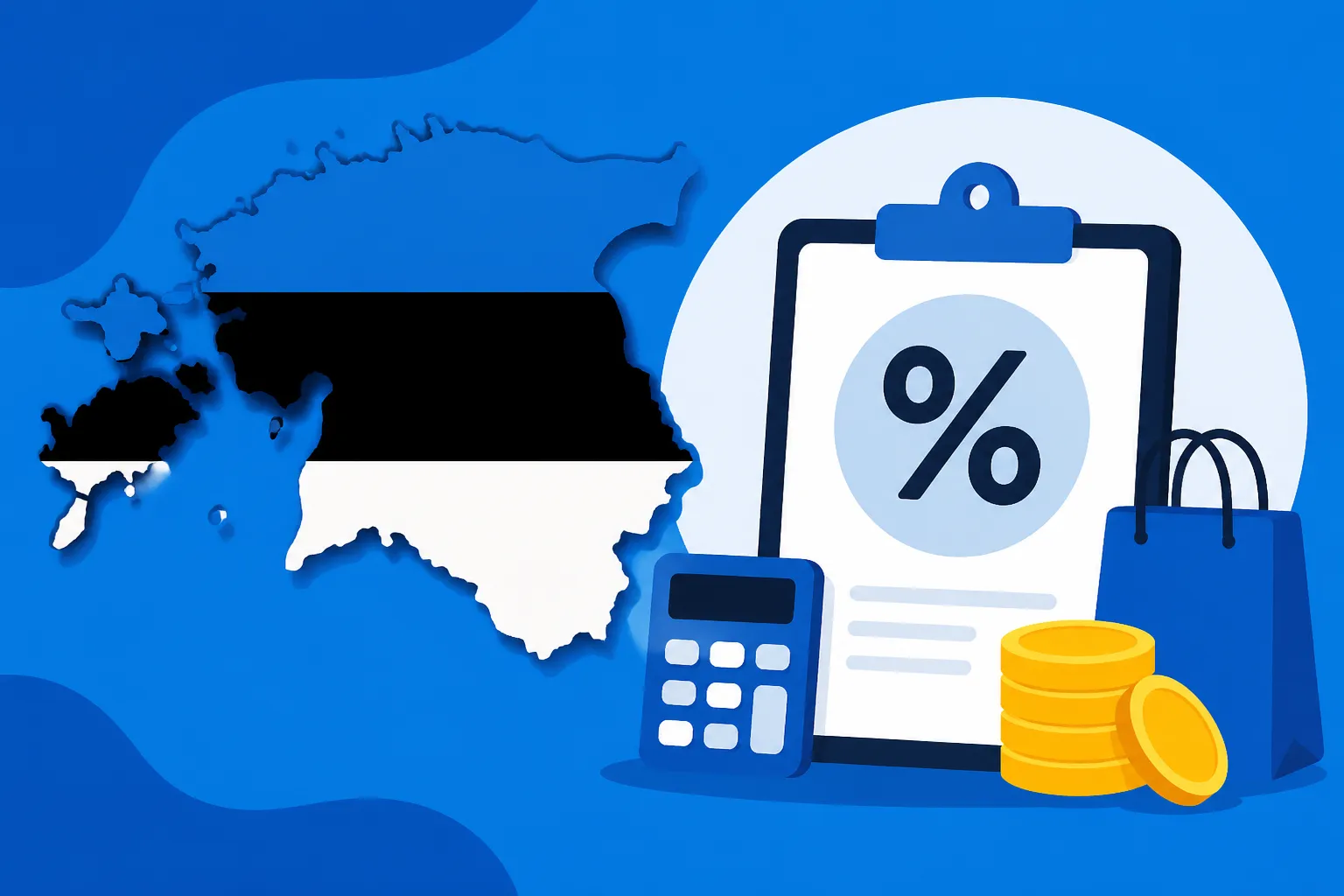
As of January 1, 2024, Estonia made a significant change, increasing its standard VAT rate from 20% to 22%. This is the rate you will encounter on the vast majority of goods and services you purchase in Estonia. From the moment you pick up a loaf of leib (rye bread) at Selver to buying a new smartphone at Euronics, or paying for a haircut, that 22% is silently factored into the price you see.
This change from 20% to 22% might seem like a small bump, but it certainly adds up over time, especially when you consider your overall monthly expenses. It affects almost everything that doesn't fall into a specific reduced-rate category. Think about dining out at your favorite restaurant, buying new clothes, electronics, home furnishings, or even many professional services like legal advice or IT support. All of these typically carry the standard 22% VAT. For businesses, this means collecting 22% on most sales. For consumers, it means that the sticker price already accounts for this tax. You won't be charged extra at the checkout for it, which at least prevents any last-minute sticker shock. However, it's important to remember that this higher rate impacts your purchasing power, and it's a factor in Estonia's overall consumer prices. Keep this in mind when comparing prices with other countries, as a lower advertised price in a country with a lower VAT rate could mean a similar actual cost.
Reduced VAT Rates: Saving a Bit on Specific Goods and Services
While the 22% rate is the big player, Estonia, like many EU countries, applies reduced VAT rates to certain categories of goods and services. These lower rates are usually implemented for social, cultural, or health reasons, making essential items or culturally significant activities more affordable. It's a way for the government to support specific sectors or ensure access to fundamental services.
Currently, the most common reduced rate you'll encounter is 9%. This applies to several important areas:
- Accommodation services: This is a big one for tourists and business travelers. Hotel stays, guesthouse bookings, and other short-term accommodation services are subject to the 9% rate. This makes Estonia a little more competitive for visitors compared to countries with higher VAT on hospitality.
- Books, newspapers, and magazines: Promoting literacy and access to information, these printed materials benefit from the reduced 9% rate. So, when you're buying a novel or your weekly Estonian news magazine, you're paying less VAT than on a new t-shirt.
- Pharmaceutical products and medical equipment: Essential for public health, these items also fall under the 9% category. This helps keep the cost of necessary medications and medical aids more manageable.
- Certain cultural and entertainment services: This can include things like tickets to concerts, theatre performances, cinemas, museums, and zoos. The exact scope can be quite specific, so always check if you're unsure, but generally, cultural enrichment is encouraged with a lower tax burden.
It's worth noting that while some countries have a super-reduced rate (like 5% or even 0% for very specific items), Estonia's reduced rate framework primarily revolves around the 9% bracket. There aren't currently widespread categories at a 5% rate for consumers in the same way as the 9% applies. Understanding these exceptions is crucial, especially if you're involved in any of these sectors or frequently consume these services. It also helps explain why some goods or services might feel comparatively cheaper than others when you're budgeting your daily life here.
Zero-Rated and Exempt Supplies: When VAT Doesn't Apply
Beyond the standard and reduced rates, there are categories of goods and services where VAT either isn't charged at all, or it's charged at 0%. While "zero-rated" and "exempt" might sound similar, they have crucial differences, especially for businesses. For consumers, the end result is the same: you don't pay VAT.
Zero-Rated (0%) Supplies:
When something is zero-rated, it means that VAT is technically applied, but at a rate of 0%. This distinction is important for businesses because, even though they don't charge VAT on their sales, they can still reclaim any input VAT they paid on their related purchases. This effectively removes VAT entirely from the supply chain for these specific goods or services. Common examples of zero-rated supplies include:
- International transport of passengers and goods: If you're flying out of Tallinn to another country, the flight ticket itself is generally zero-rated for VAT.
- Exports of goods: If an Estonian company sells goods to a customer outside the EU, these exports are typically zero-rated.
- Certain services related to international trade.
Exempt Supplies:
Exempt supplies, on the other hand, are entirely outside the scope of VAT. Businesses providing exempt supplies do not charge VAT on their sales, but crucially, they cannot reclaim input VAT on the purchases they make to provide those services. This can make a difference to their operating costs. For consumers, it simply means no VAT is added. Key categories of exempt supplies include:
- Healthcare services: Many public healthcare services, including those covered by the Tervisekassa (Estonian Health Insurance Fund), are exempt from VAT. This means visiting your family doctor (perearst) or receiving hospital care generally won't have VAT added to the bill. However, some aesthetic procedures or private medical services might be subject to VAT.
- Educational services: Primary, secondary, and higher education provided by recognized institutions are typically VAT exempt. So, when your kids enroll in an Estonian public school or you take a university course, you won't pay VAT on the tuition.
- Financial services: Things like granting loans, insurance services, and certain banking transactions are usually exempt from VAT. This is a complex area, but generally, the core financial products you use are VAT-free.
- Real estate transactions: The sale or rental of residential property is often VAT exempt, though there are important exceptions, such as new construction or certain commercial properties. For example, if you're buying an older apartment, you typically won't pay VAT on the purchase price, but you might on associated services like legal fees.
Understanding these categories is particularly helpful if you're involved in these sectors or considering making a major purchase like property. It also explains why some services, like a doctor's visit, might feel "cheaper" than a haircut from a VAT perspective – one is exempt, the other is not.
How VAT Impacts Your Daily Budget and Purchases
When you're an expat, every little percentage can make a difference to your monthly budget, and VAT is no exception. Because it’s a consumption tax, it touches almost every aspect of your financial life here. It's not just about knowing the rates; it's about understanding how those rates translate into the actual money leaving your wallet. Estonia's digital economy makes many processes efficient, but the underlying tax structure, including VAT, is a constant factor in the price of everything. From your morning coffee to setting up your home, VAT is quietly working in the background.
Navigating prices can sometimes feel like a game, especially when you're used to different tax structures. While the inclusion of VAT in advertised prices simplifies things at the checkout, it means you always need to account for it in your mental budgeting. This is particularly true for those coming from countries where sales taxes are added at the point of sale. Here, what you see is generally what you pay, but that "what you see" already has the tax baked in. This makes it crucial for anyone estimating their Cost of Living in Estonia to understand that the stated prices for goods and services already incorporate this tax burden.
Everyday Purchases: What to Expect at the Store and Online
For the average expat living in Estonia, the standard 22% VAT rate will be a familiar, albeit often invisible, component of most everyday purchases. When you walk into any supermarket – whether it's Rimi, Prisma, or Selver – the price you see on the shelf for your groceries, cleaning supplies, or even a new pair of socks, already includes the VAT. This "VAT-inclusive pricing" is standard practice across the EU and is generally convenient for consumers because there are no surprises at the checkout. What you mentally budget for a carton of milk or a new lamp is precisely what you'll pay.
This also applies to online shopping from Estonian retailers. If you're browsing the local e-shops, the prices displayed will typically already have the VAT integrated. The situation can get a bit more nuanced with international online purchases. If you're buying from another EU country, generally, the VAT rate of the seller's country applies. However, for goods purchased from outside the EU (e.g., from the UK, USA, or China), you'll often be subject to Estonian VAT (22%) plus any applicable customs duties when the item enters the country. This can lead to unexpected costs, so it's always wise to factor this in when ordering from non-EU sellers. The courier service or postal system will usually notify you and collect these additional charges before delivering your package, which can be a frustrating experience if you weren't expecting it.
Services: From Utilities to Dining Out
VAT also significantly impacts the cost of various services, which are a major part of any expat's monthly expenses. When you get your utility bills for electricity, internet, or phone services, the charges usually include the standard 22% VAT. So, when you're setting up your utilities in Estonia, remember that VAT is part of that total cost. Similarly, a delicious meal at a restaurant in Tallinn, a relaxing visit to a spa in Pärnu, or a fresh haircut will all have that 22% VAT baked into the final price.
For expats who rely on specific services, like language courses (if not offered by a recognized educational institution), gym memberships, or even private consultations that don't fall under the medical exemption, the 22% VAT applies. It's often helpful to glance at your receipts, especially for larger services, where the VAT amount might be listed separately at the bottom. This allows you to see the exact portion of your payment that goes towards tax. It's important to differentiate between services that are VAT-exempt, like many public healthcare services, and those that are not. For example, a visit to a private clinic for a specific procedure not covered by Tervisekassa might include VAT, whereas a routine visit to your Family Doctor Centre (Perearstikeskus) would not. Being aware of these distinctions helps you understand the full financial picture of living in Estonia.
Major Purchases: Property, Cars, and More
When it comes to larger, less frequent purchases, the impact of VAT can be substantial, though its application can also be more complex. For instance, the sale of residential property between private individuals is generally exempt from VAT. This means if you buy an existing apartment or house in Tallinn, you typically won't pay VAT on the purchase price itself. However, if you are buying a newly built property from a developer or a commercial property, VAT (22%) will usually apply. This distinction is crucial and can significantly affect the overall cost of your investment, so it's vital to clarify this during any property negotiations. When working with a real estate agent or a notary during the process of buying property in Estonia, ensure they clearly outline all VAT implications.
Regarding vehicles, buying a brand-new car from a dealership will incur the standard 22% VAT. However, if you opt for a used car from a private seller, much like with older residential property, no VAT typically applies to that transaction. If you purchase a used car from a registered business, VAT might apply, depending on how the business operates and whether they are selling it under a margin scheme. For many expats, understanding these nuances is critical when making significant investments. Other major purchases, such as high-value electronics, large appliances, or luxury goods, will almost certainly include the 22% VAT, just like smaller items. Being prepared for this tax component helps you budget more effectively for these bigger expenses and avoid any financial surprises.
VAT for Self-Employed and Businesses (FIEs and OÜs)
If you're an expat who's ventured into the world of self-employment or business ownership in Estonia, VAT becomes a much more immediate and hands-on concern. It’s no longer just a hidden percentage in your shopping cart; it’s a tax you are responsible for collecting, reporting, and remitting to the state. Estonia is very welcoming to entrepreneurs, whether you're setting up as an FIE (sole proprietor) or an OÜ (private limited company), but with that freedom comes a responsibility to understand the tax landscape, especially VAT. Many expats use platforms like Wise to manage international payments for their businesses, which can also tie into their VAT obligations, especially if they are dealing with foreign clients or suppliers. For a deeper dive into the overall tax system, especially for business owners, you might find the comprehensive guide to The Complete Guide to Taxes in Estonia for Expats incredibly useful.
The Estonian Tax and Customs Board (Maksu- ja Tolliamet) is very digital-first, making tax management relatively straightforward once you understand the system. However, for those new to entrepreneurship or operating across borders, the intricacies of input and output VAT, registration thresholds, and compliance can be daunting. It's not just about charging the right amount; it's about accurate record-keeping, timely filing, and ensuring you're fulfilling all your obligations to avoid penalties.
Understanding the VAT Registration Threshold
For any self-employed individual (FIE) or business (OÜ) in Estonia, one of the most important VAT considerations is the registration threshold. You are generally obligated to register for VAT if your taxable turnover (sales) exceeds €40,000 in a calendar year. This is the magic number. If your business revenues go above this amount, you must register as a VAT payer with the Estonian Tax and Customs Board (Maksu- ja Tolliamet). Once registered, you start charging VAT on your sales (output VAT) and become eligible to reclaim VAT on your purchases (input VAT).
However, even if your turnover is below €40,000, you have the option for voluntary VAT registration. Why would anyone do this? Well, if your business primarily sells to other VAT-registered businesses, and you incur a lot of VAT on your own purchases (e.g., buying equipment, software, or services), voluntary registration allows you to reclaim that input VAT. This can improve your cash flow and reduce your overall costs. The downside is the administrative burden: you'll need to meticulously track all your VAT, file regular VAT returns, and ensure compliance. For businesses primarily serving end-consumers, or those with very low expenses, staying below the threshold might be simpler. It's a strategic decision that depends heavily on your business model and clientele.
Input and Output VAT: The Business Side of Things
Once you are a VAT-registered entity – whether as an FIE or an OÜ – you operate with both "output VAT" and "input VAT." This is the core mechanism of the VAT system for businesses, and it's essential to grasp for proper accounting.
- Output VAT: This is the VAT that you, as a business, charge your customers on the goods and services you sell. For most sales, this will be at the standard 22% rate, unless your specific goods or services fall under a reduced rate or are zero-rated. You add this VAT amount to your invoice, and your customer pays the total. This money isn't truly yours; you are collecting it on behalf of the state.
- Input VAT: This is the VAT that you, as a business, pay on the goods and services you purchase for your business operations. For example, if you buy new office supplies, software subscriptions, or accounting services, you will pay VAT on those purchases.
The beauty of being VAT-registered is that you can reclaim the input VAT you've paid. At regular intervals (usually monthly), you calculate the total output VAT you've collected and subtract the total input VAT you've paid. If your output VAT is higher, you pay the difference to the Maksu- ja Tolliamet. If your input VAT is higher (meaning you've spent more on VAT-included purchases than you've collected from sales, common for startups or businesses with large initial investments), the Tax Board will refund you the difference. This process is primarily managed through the e-MTA online tax portal in Estonia, which offers a relatively user-friendly interface for managing your tax affairs. It's why meticulous record-keeping of all your sales invoices (with VAT clearly stated) and purchase receipts is absolutely paramount for any VAT-registered business.
VAT Returns and Compliance: Staying on the Right Side of the Tax Board
For VAT-registered businesses in Estonia, the commitment doesn't end with understanding input and output VAT; it extends to diligent compliance. This means regular filing of VAT returns and timely payments. Typically, VAT returns in Estonia are filed monthly. The deadline for filing the VAT return and making the payment for a given month is the 20th day of the following month. For example, for January's transactions, your VAT return would be due by February 20th. This means that if you are registered as an FIE, you will be interacting with the tax board quite frequently, not just when you pay taxes as an FIE in Estonia on your income, but every single month for VAT.
Missing these deadlines can lead to penalties, including late payment interest and fines. The Maksu- ja Tolliamet expects businesses to be proactive and accurate in their reporting. This is where good accounting practices and potentially professional assistance become invaluable. Many expats opt to work with English-speaking accountants who specialize in Estonian tax law to ensure they meet all their obligations correctly and on time. For international business transactions, especially when dealing with clients or suppliers outside of Estonia, using a service like Wise can simplify currency conversions and payments, but it's crucial to ensure that your financial records are meticulously maintained to support your VAT reporting. These tools are excellent for managing the flow of money, but the ultimate responsibility for correct VAT declaration lies with the business owner. Therefore, making sure you fully understand How to Register for VAT (Käibemaks) in Estonia and keep up with your monthly obligations is critical for hassle-free business operations in Estonia.
Practical Tips and Resources for Expats on VAT
Navigating any tax system in a foreign country can be a minefield, and Estonia's VAT is no exception. While the system is generally straightforward and digitally advanced, the devil is often in the details, especially when you're dealing with different languages and bureaucratic nuances. It's perfectly normal to feel a bit overwhelmed or confused at times. Many seasoned expats will tell you that the key to avoiding headaches is proactive learning and knowing where to turn for help. Don't fall into the trap of assuming things work the same way as in your home country; Estonia has its own unique flavour, particularly with its digital services and tax administration.
For those running businesses, the complexities multiply. While the e-MTA portal is excellent, interpreting specific regulations or understanding how international transactions impact your VAT can be tricky. Even small mistakes can lead to unnecessary stress or penalties. So, having reliable resources and a clear strategy for compliance is not just helpful, it's essential for peace of mind.
Getting Assistance and Staying Informed
For official and the most up-to-date information regarding VAT and other taxes in Estonia, your first port of call should always be the Estonian Tax and Customs Board (Maksu- ja Tolliamet). Their website (emta.ee) is comprehensive and offers an English version, which is a lifesaver. You'll find detailed guides, legislation, and all the necessary forms there. They also have a customer support line that can often assist in English, though patience is sometimes required.
For expats, especially those with businesses or complex financial situations, professional advice is invaluable. Hiring an English-speaking accountant or tax consultant specializing in Estonian tax law can save you a world of trouble. They can help with VAT registration, guide you through filing your annual tax return in Estonia, ensure correct calculation of input/output VAT, and provide advice on specific scenarios like cross-border services. While this comes at a cost, it’s often a worthwhile investment, especially in the early stages of establishing your business or if you have diverse income streams. Firms like Taxes for Expats are specifically geared towards helping foreigners navigate complex tax situations, including VAT, across different jurisdictions. They can provide tailored advice that general accounting firms might not offer.
What to Do If You're Unsure
It's a common expat lament: "I'm not sure if I'm doing this right." When it comes to VAT, uncertainty can lead to errors, and errors can lead to penalties. My advice? Don't guess. If you find yourself scratching your head about a specific transaction, a particular service, or your VAT obligations, reach out for clarification.
The Maksu- ja Tolliamet is generally responsive, and it's always better to ask them directly than to make a mistake. You can send them an email or call their information line. Clearly state your question, provide any relevant details, and keep a record of your communication. For businesses, a professional accountant can be your first line of defense. They can interpret official guidelines, clarify ambiguities, and ensure your practices are compliant. Remember, the Estonian tax system, while modern, is still complex, and specific situations (like selling digital services to non-EU clients, or importing goods for business use) can have unique VAT implications. Taking the time to get expert advice not only ensures compliance but also offers immense peace of mind, allowing you to focus on enjoying your life and work in Estonia rather than worrying about tax nightmares.
| VAT Rate | Application | Examples of Goods/Services | Notes for Expats |
|---|---|---|---|
| 22% | Standard | Most goods & services: groceries, electronics, clothing, restaurants, utilities, general professional services | This is the rate you will typically encounter on almost all purchases. Included in advertised price. |
| 9% | Reduced | Accommodation services, books, newspapers, magazines, pharmaceuticals, certain cultural/entertainment services | Applies to specific categories for social/cultural reasons. |
| 0% | Zero-Rated | Exports of goods, international transport of passengers | Businesses can reclaim input VAT. Consumers pay no VAT. |
| Exempt | Exempt | Healthcare services, educational services, financial services, sale/rental of residential property (with exceptions) | No VAT charged, but businesses cannot reclaim input VAT. Consumers pay no VAT. |
Disclaimer
The information provided in this guide is for general informational purposes only and does not constitute professional tax, legal, or financial advice. While we strive to keep the information up-to-date and accurate, tax laws and regulations in Estonia can change, and individual circumstances vary. Therefore, before making any decisions related to your VAT obligations or financial planning in Estonia, we strongly recommend consulting with a qualified Estonian tax advisor or accountant. We cannot be held responsible for any loss or damage arising from reliance on the information presented herein.