What Are the Requirements for Estonian Naturalisation?
So, you’ve settled into Estonia, embraced the digital life, maybe even learned a few words of tere and aitäh, and now you're dreaming of taking that ultimate step: becoming an Estonian citizen. It’s a huge, admirable goal, but let’s be real – the journey to naturalisation in Estonia is not a stroll through Kadriorg Park. It’s more like a multi-year hike up Suur Munamägi, often through thick forest and occasional bureaucratic fog. This guide is here to help you navigate those requirements, lay out what you're truly up against, and give you the realistic lowdown on what it takes.
Understanding the Path to Estonian Citizenship by Naturalisation
Becoming a citizen of Estonia by naturalisation isn't simply about living here for a few years and filling out a form. It's about demonstrating a genuine commitment to the country, its language, and its values. Estonia takes its citizenship seriously, and the process reflects that.
The Legal Framework and the "Loyalty" Aspect
The foundation for acquiring Estonian citizenship lies in the Citizenship Act. This piece of legislation outlines all the conditions, and it's quite clear-cut. From the Estonian state's perspective, citizenship isn't just a right; it's a privilege granted to those who have actively integrated and shown loyalty. This "loyalty" isn't about flying the Estonian flag every day, but rather understanding and respecting the country's constitutional order and being prepared to uphold it.
For many expats, this can feel a bit abstract. You might have been paying taxes, contributing to society, and speaking Estonian for years, and still, the process feels like a constant test. It’s not personal, it’s just the system, designed to ensure new citizens are truly invested. You’re essentially applying to join a club, and they want to make sure you know the club rules and are a good fit.
Why Naturalisation Can Feel Like a Marathon
If you’re contemplating naturalisation, you’ve probably already experienced the Estonian administrative machine. While often digital and efficient, for complex matters like immigration or citizenship, it can still feel incredibly slow and opaque compared to what you might be used to. There's a waiting period, exams, document gathering, and then another waiting period. It's easy to get disheartened, especially when you've invested so much time and effort into making Estonia your home.
It’s a process that demands patience and persistence, often spanning several years even after meeting the initial residence requirements. Think of it as a testament to your determination. It’s during this marathon that many of us expats realize the profound depth of our commitment to this unique corner of the world. Remember, even securing something as fundamental as your initial residence permit or understanding how to Registering Your Place of Residence in Estonia: The Complete Guide was a journey, and naturalisation is simply the next, bigger step.
Core Requirements for Naturalisation
Alright, let's get down to brass tacks. These are the non-negotiable foundations upon which your citizenship application will be built.
Residence Requirement: How Long is "Long Enough"?
This is often the first hurdle, and it’s a significant one. To even apply for Estonian citizenship by naturalisation, you must have lived in Estonia with a long-term or temporary residence permit for a specific period. Generally, this means you need to have resided permanently in Estonia for at least eight years, of which the last five years must have been continuous.
What does "continuous" mean in this context? It means you haven't been absent from Estonia for more than 90 days within any given 12-month period during those five years. There are some nuances here: if you've been away for longer periods for work, study, or health reasons, you might still qualify, but it complicates things significantly and requires substantial proof. For instance, if you were working for an Estonian company abroad or studying at a foreign university on an Estonian grant, these periods might count, but it's not guaranteed.
It’s vital to track your time in and out of the country meticulously. The Police and Border Guard Board (PPA) will check your entry and exit records. If you're an EU citizen, your registered right of residence counts, but you still need to prove the continuous presence. This long residence period is designed to ensure that you’ve truly become part of the local fabric, not just passing through. If you're still navigating the initial stages of getting your long-term permit, our guide on The Complete Guide to Estonian Residence Permits for Expats (2027) might be useful to understand the groundwork.
Legal Income: Proving Your Financial Stability
Estonia wants to be sure that you're a self-sufficient member of society, not a burden. Therefore, you must demonstrate that you have a legal and sufficient source of income to support yourself and any dependents living with you in Estonia. This isn't about being rich; it's about being stable.
What counts as legal income?
- Employment income: Your salary from a job.
- Self-employment income: Profits from your registered FIE (sole proprietor) or OÜ (private limited company).
- Pension: If you're a retiree.
- Maintenance: If you receive alimony or child support.
- Income from legal business activities: This could be rental income from property you own, for example.
The PPA generally expects you to have had this legal income for at least six months prior to submitting your application. The specific amount required isn't always fixed in stone and can be subject to change, but it's usually tied to the minimum subsistence level in Estonia. As of my last check, you're generally expected to show an income that allows you to cover your basic needs. This might be around the minimum wage for a single person, but it increases if you have dependents. You'll need to provide bank statements, salary slips, and tax returns to prove this. Understanding The Complete Guide to Taxes in Estonia for Expats (2027) will be crucial here, as your tax declarations are primary evidence of your income.
Language and Knowledge: The Estonian Hurdles
This is where many expats hit a significant wall. While English is widely spoken, especially in Tallinn’s tech scene, to become an Estonian citizen, you absolutely must demonstrate proficiency in the Estonian language and a solid understanding of the country's constitution and citizenship laws.
The Estonian Language Proficiency Exam (B1 Level)
This is, for most, the biggest challenge. You need to prove you can communicate in Estonian at a B1 level according to the Common European Framework of Reference for Languages (CEFR). A B1 level means you can:
- Understand the main points of clear standard input on familiar matters regularly encountered in work, school, leisure, etc.
- Deal with most situations likely to arise whilst travelling in an area where the language is spoken.
- Produce simple connected text on topics that are familiar or of personal interest.
- Describe experiences and events, dreams, hopes and ambitions and briefly give reasons and explanations for opinions and plans.
The exam, administered by the Education and Youth Board (Harno), tests all four skills: listening, reading, writing, and speaking. It's not just about textbook knowledge; it's about practical application. You'll be asked to listen to conversations, read articles, write short essays or emails, and engage in spoken dialogue with an examiner. The exam can be intimidating, but there are numerous language courses available across Estonia that specifically prepare you for the B1 level. Our guide, Learning Estonian: A Complete Guide to Language Courses and Levels, is an excellent resource to start your language journey.
I remember my own struggle with Estonian. It’s a beautifully complex language, and reaching B1 while managing work and family life is a monumental task. Don’t underestimate it, and start early. Dedicate consistent time, join conversation groups, and immerse yourself as much as possible. It's not just a requirement; it's a profound way to connect with your new home.
Knowledge of the Constitution and Citizenship Act
Beyond the language, you must also pass an exam demonstrating your knowledge of the Estonian Constitution and the Citizenship Act. This isn't about memorising every single article, but about understanding the fundamental principles of Estonian statehood, human rights, the structure of government, and the basic tenets of citizenship.
The exam covers topics like:
- The fundamental rights and freedoms of Estonian citizens.
- The highest organs of state power (Parliament, President, Government, Courts).
- The electoral system.
- Local government.
- The principles of the Estonian legal system.
- The rights and obligations of citizens.
- The ways of acquiring and losing Estonian citizenship.
This exam is usually offered in Estonian, but it's a bit less daunting than the language exam itself, as the content is factual and can be studied specifically. There are study materials, practice tests, and often preparatory courses available. This requirement reinforces the "loyalty" aspect – they want to ensure new citizens understand the very fabric of the society they're joining. For more specific details, refer to our comprehensive guide on Understanding the Estonian Language and Constitution Exams for Citizenship.
Loyalty, Oath, and Other Essential Conditions
These are the final pieces of the puzzle, crucial for the state to grant you full citizenship.
The Oath of Loyalty to Estonia
Once you’ve met all the other criteria and your application is approved, the final step before receiving your citizenship document is to take an oath of loyalty to Estonia. This isn’t just a formality; it’s a solemn declaration. You will swear (or affirm) to:
- Be loyal to the Estonian state.
- Observe the constitutional order of Estonia.
- Respect Estonian laws.
It’s a powerful moment, symbolising your full integration and commitment. Many expats find it deeply moving, marking the culmination of years of effort and dedication. It's a formal declaration that you accept the responsibilities that come with being an Estonian citizen, just as you would for any other nation.
Renouncing Your Previous Citizenship (General Rule)
This is often the most significant and emotionally charged requirement for many applicants. As a general rule, Estonia is not a dual citizenship country. This means that when you acquire Estonian citizenship by naturalisation, you are typically required to renounce your previous citizenship(s).
There are, however, some specific exceptions:
- Children: If a child acquires Estonian citizenship by naturalisation, they generally do not need to renounce their existing citizenship until they turn 18. At that point, they must decide which citizenship to retain.
- Automatic acquisition: If you acquire citizenship by birth (e.g., if you were born to an Estonian parent abroad and automatically gained that citizenship alongside the citizenship of your birth country), this rule may not apply in the same way.
- Specific circumstances: There might be rare, specific circumstances or international agreements that allow for exceptions, but these are very few and far between.
For most adult naturalisation applicants, be prepared for the difficult decision of letting go of your original nationality. This isn't a quick process either; you'll often need to provide official proof from your home country that you have initiated or completed the renunciation process. This step alone can add months, if not more, to your overall timeline. It’s a very personal decision, and Understanding Dual Citizenship Rules in Estonia is essential before you even embark on this journey.
Clean Record: No Criminal Background
Estonia expects its citizens to be law-abiding members of society. Therefore, you must have a clean criminal record. This means you must not have been convicted of an intentional criminal offence. The PPA will conduct background checks, both in Estonia and potentially in your home country, to verify this.
Minor infractions or traffic tickets usually won't be an issue, but any serious criminal history will almost certainly lead to the denial of your application. This is a standard requirement in most countries for citizenship by naturalisation, ensuring the integrity of the nation's civic body.
Application Process and Practical Tips
So, you’ve checked off all the boxes, or at least you’re well on your way. What’s next in the practical steps?
Gathering Your Documentation
This stage requires meticulous attention to detail. Any missing or incorrectly prepared document can cause significant delays. You’ll need a comprehensive dossier including:
- Your residence permit and valid passport.
- Proof of residence history (this will often be checked via the Population Register).
- Evidence of legal income (bank statements, salary slips, tax returns).
- Certificates proving you've passed the Estonian language exam (B1 level).
- Certificates proving you've passed the Constitution and Citizenship Act exam.
- Proof of renunciation of previous citizenship (or proof of application for renunciation, if applicable).
- Any other documents requested by the PPA based on your specific circumstances (e.g., marriage certificates, birth certificates for dependents).
Always submit copies, but be prepared to show originals if requested. Ensure all foreign documents are apostilled or legalised and officially translated into Estonian by a sworn translator if not already in English or Estonian. Don't underestimate the time it takes to gather everything and ensure it meets the strict requirements.
Submitting Your Application and Awaiting a Decision
Once your massive stack of perfectly prepared documents is ready, you’ll submit your application to the Police and Border Guard Board (PPA). You can often book an appointment online to submit the documents, which is highly recommended to avoid long waits. Remember to use our guide on How to Book an Appointment at the Police and Border Guard Board (PPA) to streamline this step.
After submission, the waiting game begins. The PPA will review your application, verify all information, and conduct their background checks. This process can take several months, sometimes up to a year or even longer in complex cases. During this time, they might call you for an interview to clarify information or simply to confirm your commitment. Be prepared to articulate why you want to become an Estonian citizen.
Finally, if all goes well, you’ll receive a decision. If positive, you'll be invited to take the oath and then finally receive your certificate of citizenship. It's a moment of immense pride and relief, truly marking the end of a long and challenging, but ultimately rewarding, journey.
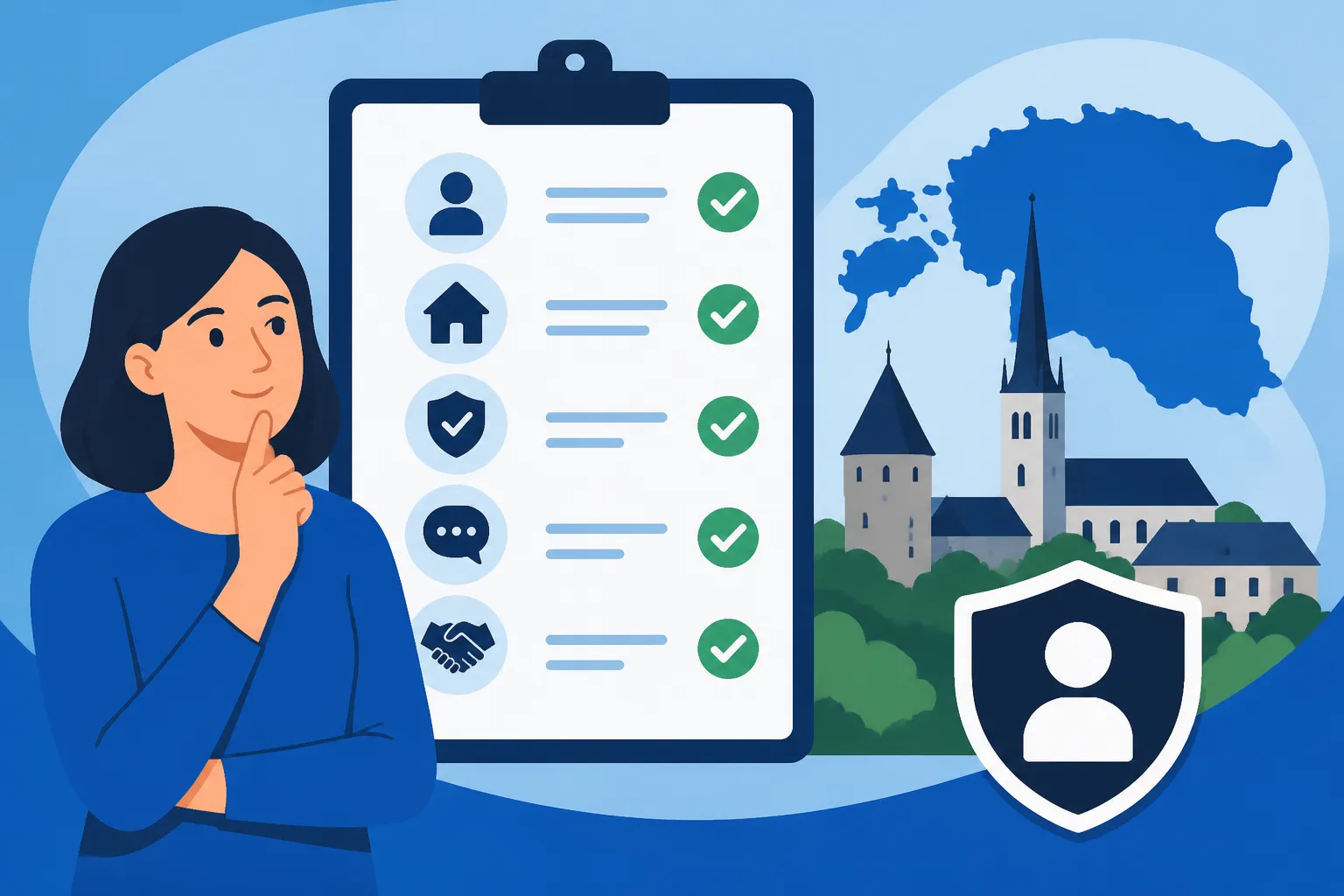
Table: Key Requirements for Estonian Naturalisation
| Requirement | Description | Key Documentation Needed |
|---|---|---|
| Legal Residence Period | At least 8 years of permanent residence in Estonia, with the last 5 years continuous (max 90 days absence per year). | Residence permit, Population Register data, travel history. |
| Legal and Sufficient Income | Demonstrable legal income to support oneself and dependents for at least 6 months prior to application. | Bank statements, salary slips, tax declarations, employment contracts. |
| Estonian Language Proficiency | Passed the official B1 level Estonian language exam. | Language exam certificate. |
| Knowledge of Constitution/Act | Passed the official exam on the Estonian Constitution and Citizenship Act. | Constitution exam certificate. |
| Oath of Loyalty | Swearing allegiance to the Estonian state, its constitutional order, and laws. | Administered by the PPA upon approval. |
| Renunciation of Past Citizenship | Generally required to renounce previous citizenship(s). Exceptions exist for children and certain specific circumstances. | Official proof of renunciation or application from home country. |
| Clean Criminal Record | No convictions for intentional criminal offences. | Background checks conducted by PPA. |
Moving and Settling in Estonia
While the focus here is naturalisation, remember that the initial move and settlement also present their own hurdles. Planning an international move to Estonia requires careful consideration of logistics, which is where platforms like Sirelo can be helpful for comparing moving services. And throughout your journey, from initial arrival to applying for citizenship, having robust health coverage is non-negotiable. While public healthcare is excellent for residents, ensuring you have comprehensive options, perhaps even considering providers like Cigna Global for more expansive coverage, especially during waiting periods or for specific needs, can bring immense peace of mind. Remember, your personal code, or How to Get Your Isikukood (Personal Code) and Why It Matters for Healthcare, is your key to accessing many essential services here.
Disclaimer
The information provided in this guide is intended for general informational purposes only and does not constitute legal advice. While we strive to keep the information up-to-date and accurate, requirements for Estonian citizenship by naturalisation can change. Always consult the official websites of the Estonian Police and Border Guard Board (PPA) and the Ministry of Interior, or seek advice from a qualified immigration lawyer in Estonia for the most current and specific guidance regarding your individual situation.