How to Set Up Waste and Recycling Collection in Estonia
Moving to a new country is a whirlwind of excitement and logistics, but nothing quite brings you back down to earth like trying to figure out how to throw out your trash. In Estonia, the waste and recycling system can feel like a labyrinth, with rules that vary from one municipality to the next, leaving many expats scratching their heads and wondering if they're doing it all wrong. This comprehensive guide is here to demystify waste collection in Estonia, helping you navigate the bins, understand the separation rules, and set up your household for proper disposal, no matter where you settle.
The Estonian Waste Management System: An Overview for Expats
When you first arrive in Estonia, you might expect a uniform, nationwide system for everything, including waste. However, much like many other public services, waste management here has a distinct local flavour. Understanding this fundamental difference is your first step towards conquering the bins.
Decentralised Responsibility and Local Rules
One of the biggest sources of confusion for newcomers is that there isn't one single, overarching national waste collection agency dictating every detail. Instead, the responsibility for organising waste management largely falls to the kohalik omavalitsus – your local municipality. This means that while the general principles of waste separation are broadly similar across Estonia, the specific rules, designated collection companies, bin colours, collection frequencies, and even the types of waste accepted at certain points can differ significantly between Tallinn, Tartu, Pärnu, or a smaller rural parish.
This decentralised approach can be incredibly frustrating. What might be perfectly acceptable in one town could be a no-go a mere 20 kilometres away. It often feels like you’ve finally mastered the system, only to move apartments or even just cross a district line and find yourself back at square one. The local government's role is to ensure that waste collection services are available to everyone in their administrative area, often through competitive tenders awarded to private waste management companies. These companies then operate under the municipality's specific regulations and pricing structures. Therefore, if you're ever in doubt, your local municipal government's website (look for sections on "jäätmed" or "jäätmekäitlus") is your ultimate source of truth, though often in Estonian!
Key Principles of Waste Separation
Despite the local variations, the core philosophy behind Estonia's waste management remains consistent: source separation is key. The goal is to minimise the amount of waste sent to landfills and maximise recycling and recovery. This isn't just an abstract environmental goal; it's a practical necessity that translates into how you sort your rubbish every single day.
You'll quickly learn that simply throwing everything into one big bin is not only environmentally irresponsible but can also lead to fines or refusal of collection. The general categories you'll encounter everywhere include mixed municipal waste, packaging waste (which itself is broken down), paper and cardboard, and bio-waste. There are also specific provisions for hazardous waste, large waste, and returnable packaging. The emphasis is on separating as much as possible at the point of origin – your home or office – to ensure that recyclable materials remain clean and viable for processing. This proactive approach by residents is fundamental to the system's effectiveness and is a civic expectation you'll need to embrace.
The overall environmental consciousness in Estonia is quite high, and locals take their waste separation seriously. You'll often see residents meticulously cleaning containers before placing them in recycling bins, a habit you’ll soon adopt. This commitment stems from a genuine desire to protect Estonia's beautiful natural environment and to adhere to EU-wide recycling targets.
Essential Steps to Setting Up Waste Collection at Home
Getting your waste collection sorted is one of those crucial first tasks when settling into your new Estonian home. It's often intertwined with other administrative necessities, so let's break down the process.
Registering Your Residence and the Population Register
The very first, foundational step to almost anything administrative in Estonia, including arranging waste collection, is ensuring your place of residence is officially registered. Without being in the Population Register (Rahvastikuregister), you're essentially invisible to many public and private service providers. Waste collection services, particularly for private homes, are tied directly to your registered address.
When you register your residence, you'll provide details of where you live, and this information then becomes accessible to your local municipality. This allows them to identify you as a resident and ensure you are enrolled in their mandatory waste collection scheme. This is also how you get your isikukood (personal code) if you haven't already, which is the golden key to most services here. Think of it: no official address, no official connection to the local waste services, and you could technically be viewed as an unregistered polluter. You can find detailed guidance on Registering Your Place of Residence in Estonia: The Complete Guide to ensure this critical step is done correctly. It's often one of the first things you do after securing long-term accommodation.
For those living in apartments, while the korteriühistu (apartment association) often handles the specifics, your residence still needs to be registered. This ensures that you are counted as part of the building's official resident count, which can impact the size and frequency of communal waste services. Without it, you might find yourself in a bureaucratic limbo when trying to address any waste-related queries or issues.
Understanding Your Apartment Association (Korteriühistu)
If you've rented or bought an apartment in Estonia, you're almost certainly part of a korteriühistu, or apartment association. This entity is usually responsible for the common services of the building, and waste collection is high on that list. For apartment dwellers, this is usually a blessing, as it takes much of the direct burden off your shoulders. The korteriühistu manager will typically contract with a local waste management company, arrange for the necessary bins (mixed waste, packaging, paper/cardboard, and sometimes bio-waste), and manage the collection schedule.
Your role, then, becomes one of understanding and adhering to the association's rules regarding waste separation and disposal. You'll find communal bins, usually in a designated area outside the building or in a locked room. Your monthly utility bill (kommunaalkulud) will include a charge for waste collection, which covers the association's costs. If you have questions about what goes where, when bins are collected, or what to do with specific types of waste, the korteriühistu board or manager is your first point of contact. They are your immediate local experts.
It's vital to communicate with your korteriühistu early on. Ask for any written guidelines they might have, typically found in the building's rules or on a notice board. Being a good neighbour in Estonia often means being a good waste sorter. Failure to separate properly can lead to the entire bin being refused collection, incurring extra charges for the association (and by extension, for all residents) to sort or re-collect. Dive deeper into how these associations work by reading Understanding Apartment Association Korteriühistu Fees in Estonia to truly grasp their comprehensive role in your apartment living.
Setting Up Services for Private Houses
If you're lucky enough to live in a private house in Estonia, whether you own it or are renting, the responsibility for setting up waste collection services falls directly on your shoulders. This means no korteriühistu to do the heavy lifting for you! You’ll need to directly contract with a waste management company that operates in your municipality. The local municipality's website is the best place to find a list of approved or designated waste collection service providers.
Once you identify the companies, you'll need to contact them to arrange for a waste collection contract. This usually involves choosing the size of your mixed waste bin (smaller bins collected less frequently mean lower costs, encouraging better separation) and agreeing on the collection frequency. Companies like Ragn-Sells, Eesti Keskkonnateenused, or Ekovir are prominent players, but their service areas can vary, so always check if they cover your specific address. You'll also typically have options for separate bins for paper/cardboard and sometimes bio-waste. For packaging waste, private house residents usually rely on public collection points (the yellow or green bell-shaped bins) or special collection bags provided by waste companies.
Be prepared for a bit of paperwork and potentially some language barriers during this process. Having your isikukood and registered address readily available will streamline things considerably. The service contract will outline collection dates, types of waste accepted, and pricing. Make sure you understand the terms, especially the minimum collection requirements set by your municipality. For instance, some municipalities mandate a certain frequency for mixed waste collection, even if you produce very little. This is where getting help from an Estonian-speaking friend or using translation tools (for initial setup, perhaps after topping up your data with a service like Airalo for seamless internet access) can be invaluable. This setup is distinct from setting up other utilities like electricity or water, which you can learn more about in guides like The Expat Guide to Setting Up Utilities in Estonia and How to Set Up Electricity in Your Estonian Home.
Diving Deeper into Waste Categories and Separation
Estonia's recycling system places a strong emphasis on sorting at the source. Getting to grips with what goes into which bin is crucial for effective waste management and avoiding common expat pitfalls.
Mixed Municipal Waste (Segajäätmed)
This is your general waste bin, the one where everything that cannot be recycled, composted, or disposed of in special categories ultimately ends up. However, the golden rule here is: if it can be separated, it should be separated. Mixed municipal waste, or segajäätmed, is what's left over after you've diligently sorted out all your packaging, paper, bio-waste, and any other special items.
What typically goes into the mixed waste bin? Think non-recyclable plastics, dirty packaging that can't be cleaned (like greasy take-out containers), broken ceramics, ash from fireplaces (cooled!), hygiene products, old textiles that aren't suitable for donation, and general household refuse. It's the destination for things that have no further use or cannot be processed environmentally. The importance of not contaminating this bin with recyclables cannot be overstated. When recyclables are mixed with general waste, they often become contaminated and unsuitable for recycling, defeating the entire purpose of the separation effort.
Collection frequency for mixed waste bins varies depending on your municipality and your contract (for private houses) or apartment association's arrangements. For apartments, it might be 1-3 times a week, while private houses might opt for less frequent collections (e.g., once every two or four weeks) to save on costs, provided they are effectively separating other waste types. Remember, the less you put in this bin, the better for your wallet and the environment. This is often the most expensive waste stream, so diligent separation will genuinely save you money.
Packaging Waste (Pakendijäätmed)
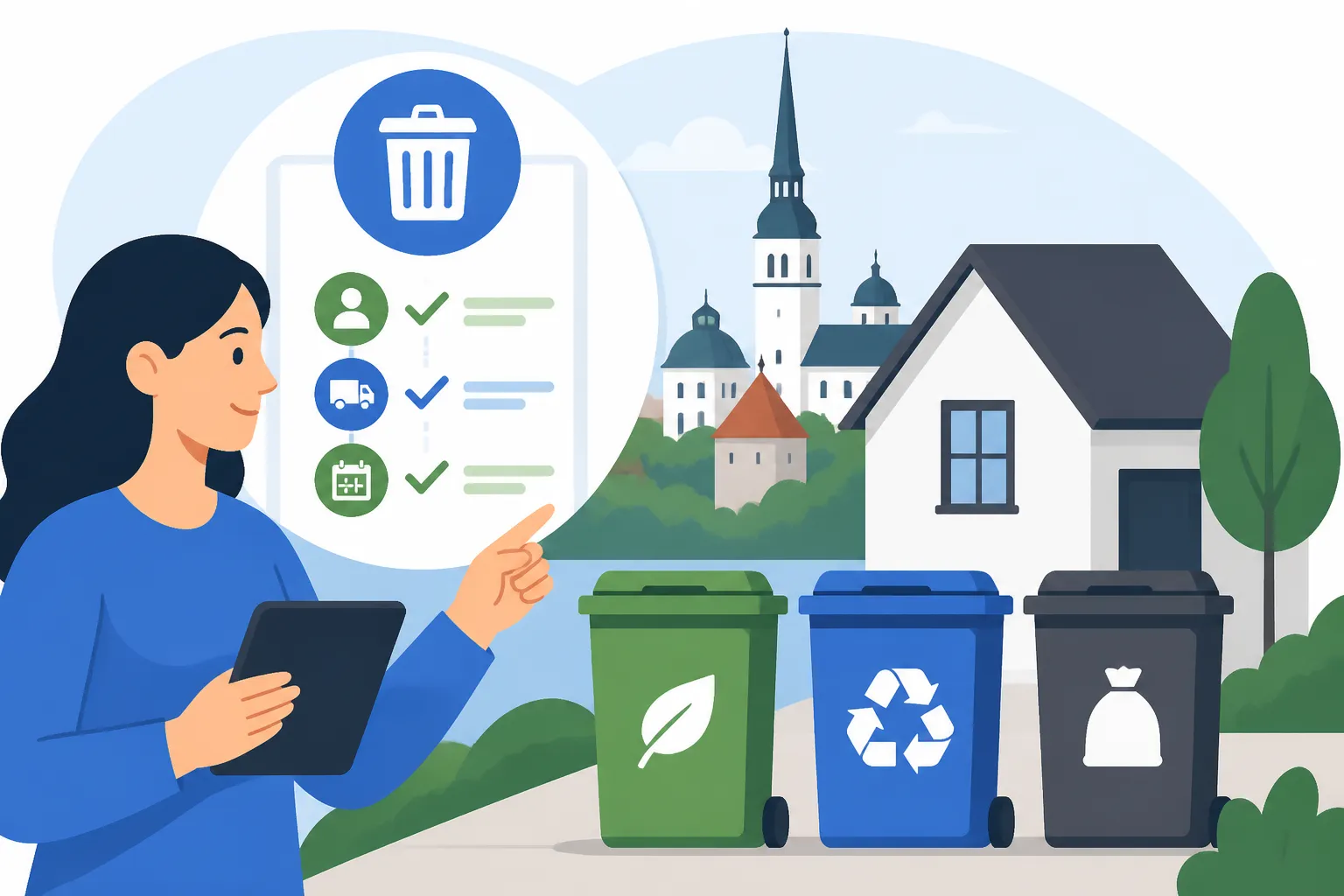
This is perhaps the most voluminous and, initially, the most confusing category for many expats. Packaging waste includes a vast array of materials, and successful recycling hinges on good initial sorting. In Estonia, packaging is generally collected in designated yellow bins (often bell-shaped containers found at public collection points), in green or yellow bins at apartment complexes, or sometimes specific transparent bags provided by waste companies for private house collection.
Here's a breakdown of what typically falls under packaging and crucial tips:
- Plastic Packaging: This includes plastic bottles (detergent, shampoo, yogurt), plastic bags, plastic films, food containers (butter, cheese, meat trays), and plastic cups. Crucial tip: Always rinse or clean plastic packaging to remove food residue. Dirty packaging contaminates the batch and makes it unrecyclable. Remove lids and caps – some are recyclable, some aren't, but separation helps.
- Glass Packaging: Glass bottles (non-deposit return ones), jars (jam, pickles, baby food). Crucial tip: Again, rinse them clean. Labels can usually stay on. Do not put window glass, mirrors, ceramics, or porcelain in these bins, as they have different melting points and will contaminate the glass recycling stream.
- Metal Packaging: Aluminium cans (non-deposit return ones), tin cans (food cans), aluminium foil, metal lids. Crucial tip: Rinse food cans. Crushing them can save space.
- Carton Packaging (Liquid Food Cartons): Milk cartons, juice cartons, cream cartons. Crucial tip: Rinse thoroughly and flatten to save space. These are often collected together with paper or in specific mixed packaging bins.
The aim is to keep these materials as clean and dry as possible. Many apartment buildings have dedicated bins for mixed packaging, while those in private homes often rely on specific collection bags or take their sorted packaging to public collection points. The "yellow bin" system is very common throughout the country.
Paper and Cardboard (Paber ja Papp)
This category is relatively straightforward but still has its nuances. Paper and cardboard waste is collected separately, typically in blue bins at apartment complexes or designated collection points. For private homes, you might have a blue bin, or you might take it to public collection points.
What's accepted:
- Newspapers, magazines, catalogues, advertising leaflets.
- Copy paper, notebooks, envelopes.
- Clean cardboard packaging (cereal boxes, shoe boxes, corrugated cardboard). Flatten these to save space.
What's not accepted (and this is important):
- Wet or dirty paper and cardboard (e.g., greasy pizza boxes, food-stained paper towels). These go into mixed waste.
- Liquid food cartons (milk, juice boxes) – these are often considered packaging waste due to their plastic lining and should be put with packaging if a specific carton collection is not available, or sometimes with mixed waste if very dirty.
- Wrapping paper with glitter or plastic coating.
- Books with hardcovers (the covers often contain non-paper materials). Remove the cover, and the paper pages can be recycled.
Keeping paper and cardboard dry and clean is paramount, as moisture can destroy the fibres and make them unrecyclable. You'll often find these bins emptied less frequently than mixed waste, so compacting your items is a good habit.
Bio-Waste (Biolagunevad jäätmed or Biojäätmed)
Bio-waste, or biodegradable waste, covers organic materials that can be composted. This category is increasingly important in Estonia's drive towards a circular economy and reducing landfill waste. While it might not be universally collected in all municipalities yet, it's becoming more common, especially in urban areas. Dedicated bio-waste bins are typically brown or green, and they are specifically for food scraps and certain types of garden waste.
What goes in:
- All food waste (cooked and uncooked), including fruit and vegetable peels, meat and fish scraps, bones, bread, dairy products.
- Coffee grounds, tea bags.
- Eggshells.
- Small amounts of garden waste (leaves, grass clippings, small branches – though larger amounts usually go to a jäätmejaam).
- Compostable kitchen paper towels.
What doesn't go in:
- Plastics (even "biodegradable" plastics can cause issues in commercial composting facilities unless specifically marked and accepted).
- Glass, metal, or other non-organic materials.
- Diapers or hygiene products.
For private house owners, home composting is a fantastic option, especially if you have a garden. Many municipalities even offer subsidies or support for setting up compost bins. If you don't have a dedicated bio-waste bin through your apartment association or municipality, these items generally go into mixed waste, as separate collection facilities may not be available in all areas. Always check your local municipality's specific guidelines on bio-waste to avoid contamination.
Special Waste Categories and Disposal Points
Beyond the everyday bins, there are several special waste categories that require specific disposal methods in Estonia. Knowing where and how to get rid of these ensures you're being responsible and avoiding potential fines.
Hazardous Waste (Ohtlikud jäätmed)
Hazardous waste is anything that poses a risk to human health or the environment due to its chemical properties. This category absolutely cannot be thrown into your regular mixed waste or recycling bins. Improper disposal of hazardous waste is not only illegal but can have serious consequences.
Examples of hazardous waste include:
- Batteries: All types, from AA to car batteries.
- Electronics (WEEE – Waste Electrical and Electronic Equipment): Old phones, laptops, TVs, household appliances, light bulbs (especially energy-saving ones).
- Chemicals: Cleaning products, paints, solvents, motor oil, antifreeze.
- Medicines: Expired or unused prescription and over-the-counter medications.
- Aerosol cans: If they contain hazardous residues.
The primary disposal points for hazardous waste are municipal waste stations (jäätmejaamad). These facilities are specifically equipped to handle and process dangerous materials safely. Many pharmacies also accept expired medicines, and larger electronics stores often have collection points for old electronics and batteries. Some municipalities organise special collection days for hazardous waste in residential areas, so keep an eye on local announcements. Always check the specific items accepted and opening hours of your nearest jäätmejaam before making a trip.
Large Waste (Suurjäätmed) and Construction Waste
Got an old sofa, a broken fridge, or bags of rubble from a DIY project? These fall under large waste (suurjäätmed) or construction waste and require separate handling. They are far too big and often too heavy or composite to go into your regular bins.
- Large Waste: This includes old furniture (sofas, tables, mattresses), large household appliances (fridges, washing machines – though often retailers will take old ones when delivering new), bicycles, and other bulky items. You generally cannot just leave these on the street. For apartments, your korteriühistu might organise occasional communal large waste collection days. Otherwise, you'll need to transport these items yourself to a jäätmejaam. There may be a small fee per item or by weight, depending on the facility and your municipality. Alternatively, you can hire a private waste collection company to pick them up, which is a more convenient but pricier option.
- Construction and Demolition Waste: Bricks, concrete, plasterboard, wood, tiles, insulation materials from building or renovation work must be disposed of at specialised collection points, often within the larger jäätmejaamad, or through dedicated construction waste companies. This type of waste is typically charged by weight, and it's essential to keep it separate from other waste streams. Some municipalities allow small amounts of inert construction waste (like bricks) in the mixed waste bin if it's securely bagged and doesn't make the bin excessively heavy, but this is rare and best avoided.
Always plan for the disposal of large and construction waste in advance, especially if you're undertaking renovations. It’s never a good idea to just leave it out, hoping someone will take it.
Returnable Packaging (Pandi pakend)
Estonia has an excellent and highly effective bottle deposit (or "pant") system for many beverage containers. This includes most plastic (PET) drink bottles, glass bottles, and aluminium cans for soft drinks, water, beer, and cider. When you buy a drink with the "deposit packaging" symbol (a small circular arrow with "PANDIPAKEND" or a similar text), you pay a small deposit (typically €0.10) which you get back when you return the empty container.
This system is incredibly easy to use and is an integral part of daily life for most residents. You can return these containers to automated collection machines found in almost all major supermarkets (like Rimi, Selver, Prisma, Maxima, Coop). Simply insert the empty, uncrushed container (with the barcode intact) into the machine, and it will issue a receipt. You can then redeem this receipt for cash at the store's customer service desk or use it as a discount on your next grocery purchase.
This system is fantastic for encouraging recycling and keeping the streets clean. It also gives you a tangible return for your efforts! Make sure your bottles and cans are empty and relatively clean, and most importantly, don't crush them before returning them, as the machines need to read the shape and barcode. For those interested in managing their daily costs, the deposit refund can be a nice little bonus, a small but regular reduction in your overall The Complete Guide to Cost of Living in Estonia for Expats (2026).
Common Challenges and Pro Tips for Expats
Navigating a new country's waste system can be tricky, even with the best intentions. As an expat, you'll likely encounter unique challenges. Here are some common hurdles and practical tips to overcome them.
Language Barriers and Local Information
Let's be honest, trying to understand municipal waste guidelines in Estonian when you're still learning "tere" can feel like deciphering an ancient scroll. Many official websites for municipalities or waste management companies are primarily in Estonian, and while Google Translate is a godsend, it doesn't always capture the nuances of specific waste categories or local regulations. This language barrier is a common source of frustration.
Pro Tip 1: Befriend an Estonian. Seriously, your Estonian colleagues, neighbours, or even your landlord can be an invaluable source of information. Most Estonians are very helpful and appreciate foreigners trying to integrate, and they've likely been sorting waste their entire lives. Don't be shy to ask for clarification on which bin is for what, or where the nearest jäätmejaam is located.
Pro Tip 2: Utilise Digital Tools, Smartly. While direct translation can be imperfect, it’s a starting point. Take photos of bin labels or signs and use image translation apps. Search online for "jäätmekäitlus [your city name] inglis keeles" (waste management [city name] in English) – sometimes you get lucky and find an English summary. For more advanced queries, consider improving your language skills with resources like How to Enrol in an Estonian Language Course.
Pro Tip 3: Look for Visual Cues. Many public bins and some apartment complex bins have pictograms or symbols alongside the Estonian text, which can give you a clue about what goes inside. Learn the symbols for plastic, glass, paper, and bio-waste – they are often internationally recognised.
Finding Local Collection Points (Jäätmejaam)
Knowing what to separate is one thing; knowing where to take it is another. For special waste, hazardous items, large waste, and sometimes even general recyclables if your home setup is limited, you'll need to locate your nearest waste station (jäätmejaam).
Pro Tip 1: Google Maps is your best friend. Simply type "jäätmejaam" and your city name (e.g., "jäätmejaam Tallinn" or "jäätmejaam Tartu") into Google Maps. This will usually bring up the closest municipal waste stations. Click on them to check opening hours, contact details, and often a list of accepted materials.
Pro Tip 2: Check Municipality Websites. Your local municipality’s environmental or waste management section (e.g., Tallinna Keskkonnaamet for Tallinn) will have comprehensive lists and maps of all jäätmejaamad and public recycling points (avalikud pakendikogumispunktid) in their area. These might also specify any fees or restrictions.
Pro Tip 3: Ask the Locals. Again, don’t hesitate to ask your landlord, korteriühistu manager, or neighbours. They’ll know exactly where to go and might even share tips on the quietest times to visit or specific local quirks.
Minimising Your Waste Footprint
Estonia, like much of Northern Europe, has a strong culture of environmental awareness and sustainability. Expats often find themselves adopting more eco-conscious habits, and waste minimisation is a big part of that.
Pro Tip 1: Reduce, Reuse, Recycle (in that order!). Before you even think about which bin to use, consider if you truly need that item, or if there's a reusable alternative. Carry reusable shopping bags (mandatory in most stores), use a reusable water bottle and coffee cup, and opt for products with minimal packaging.
Pro Tip 2: Explore Second-Hand and Repair Culture. Estonia has a growing network of second-hand shops (taaskasutuskeskus or humanitaarpood) where you can donate usable items or find treasures. Before throwing away a broken item, consider if it can be repaired. This not only reduces waste but can also save you money. Groups on social media for expats in Estonia often have "buy nothing" or "freecycle" sections, which are excellent for giving away or finding used items.
Pro Tip 3: Plan Your Shopping. Buying in bulk where possible, choosing fresh produce over pre-packaged, and planning meals can significantly reduce food waste and packaging. Many Estonian markets offer loose produce, which is a great way to cut down on plastic.
By embracing these tips, you'll not only navigate the Estonian waste system more effectively but also integrate more deeply into the local culture of environmental responsibility.
Navigating Waste Services as a New Arrival
The initial phase of moving to Estonia presents its own set of challenges, especially when it comes to practicalities like waste disposal. Let's look at how to handle things when you're just getting settled and how to manage the long-term aspects.
Temporary Solutions and Initial Setup
When you first land in Estonia and are probably living in temporary accommodation or haven't fully registered your long-term rental, dealing with waste can feel like an afterthought – until the rubbish starts piling up! It's perfectly normal to feel a bit lost during this chaotic period, especially if you're still waiting for essentials like your isikukood.
For very small amounts of general waste, public bins are available in city centres, parks, and bus stops, but these are for casual litter, not your household rubbish. Relying on them for regular waste disposal is not acceptable. If you're staying in a short-term rental, your landlord should have existing arrangements, and you should follow their instructions. They might point you to specific bins or a shared waste room. Don't assume you can just "make do" by using commercial bins or leaving bags outside.
The key during this initial period is communication. If you're renting privately, engage with your landlord immediately about waste arrangements. They are usually your best resource for local rules and the existing setup. For initial communication needs, especially when you might not have a permanent phone number yet, using an eSIM from a provider like Airalo can ensure you have immediate connectivity to contact landlords, korteriühistu managers, or look up information online without the hassle of a physical SIM card. Once you've secured your long-term housing and completed your residence registration, you can then proceed to the more formal setup, as outlined earlier in this guide. This initial period is often detailed within broader guides on settling in, such as The Complete Guide to Moving to Estonia: Your First 90 Days (2027), which advises on prioritising these practical needs.
Long-Term Integration and Understanding Your Bills
Once you’re properly settled and registered, waste costs become a regular part of your household expenses. For apartment dwellers, these will be integrated into your monthly utility bill, commonly known as kommunaalkulud. It’s not always obvious what you're paying for at first glance, especially if the bill is entirely in Estonian.
Your kommunaalkulud statement, typically provided by your korteriühistu or property management company, will list various charges, including heating, water, electricity, and usually a line item for "jäätmevedu" (waste collection) or "prügivedu" (rubbish collection). The cost can depend on the size of your apartment, the number of registered residents, and the frequency/capacity of the building's bins. It’s a good idea to ask your korteriühistu manager to explain these charges to you, especially the waste component. Understanding these detailed breakdowns is part of managing your monthly budget in Estonia, a topic often explored in depth in guides like Understanding Utility and Maintenance Costs Kommunaalkulud in Estonia.
For private house owners, you'll receive a separate invoice directly from your contracted waste management company (e.g., Ragn-Sells or Eesti Keskkonnateenused). This jäätmeveo arve will detail the bin sizes, collection frequencies, and the associated costs. Pay close attention to these invoices, as they are your record of compliance and costs. Sometimes, if a bin is contaminated, you might receive an additional charge for sorting, so keeping track of your separation efforts is vital.
Moving and Waste Disposal
Eventually, you might move apartments or even leave Estonia. This can generate a significant amount of waste, from unwanted furniture to accumulated paper and packaging. Planning for waste disposal during a move is crucial to avoid stress and extra costs.
First, go through your belongings thoroughly. Donate, sell, or give away anything that’s still usable. Local charities or online expat groups are great for this. For items that are truly waste – broken furniture, old electronics, bags of rubbish – you have a few options:
- Jäätmejaam: Your local waste station is the go-to for larger items, hazardous waste, and general mixed waste that won't fit in your regular bins. Be prepared for potential fees, especially for bulky items.
- Private Waste Removal: If you have a substantial amount of large waste, hiring a private waste removal service or a skip (container) is often the most convenient option, though it's the most expensive. This is where services that help with relocation, like Sirelo, might provide information or even coordination for such tasks as part of a larger moving package.
- Korteriühistu: Check if your apartment association has any specific procedures or a communal collection scheduled around your move-out date.
Always ensure that you leave your old property free of waste. Landlords and korteriühistud can charge you for waste left behind, and it's simply good etiquette. If you’ve had a direct contract with a waste company for a private house, remember to terminate that contract and arrange for the final collection of your bins. This ensures you don't keep paying for a service you're no longer using and that the bins are properly removed.
By approaching waste management with a little foresight and understanding, you can navigate this essential aspect of Estonian living smoothly, contributing to a cleaner environment while keeping your household in order.
Waste Categories at a Glance
To simplify your daily sorting, here's a quick reference table for common waste categories in Estonia:
| Waste Category | What Goes In | What Stays Out | Typical Collection/Bin Type | Key Action |
|---|---|---|---|---|
| Mixed Municipal Waste | Non-recyclable plastics, dirty packaging, hygiene products, ash (cooled), broken ceramics, general household refuse. | Recyclables (packaging, paper, bio-waste), hazardous waste, large items. | Grey/Black bins (apartment buildings, private houses) | Minimise content by separating other waste streams. |
| Packaging Waste | Clean plastic food containers, plastic bags/films, glass bottles/jars (non-pant), metal cans, clean liquid food cartons. | Dirty packaging, window glass, ceramics, electronics, deposit return packaging. | Yellow/Green bins, sometimes transparent bags (private houses), public points | Rinse thoroughly, flatten, remove caps where possible. |
| Paper and Cardboard | Newspapers, magazines, clean cardboard boxes (flattened), office paper. | Wet/dirty paper, pizza boxes, glittery wrapping paper, liquid food cartons, hardcovers. | Blue bins (apartment buildings), public points | Keep dry and clean, flatten boxes. |
| Bio-Waste | All food scraps (cooked/uncooked), coffee grounds, tea bags, eggshells, garden waste (small amounts). | Plastics, glass, metal, diapers, hazardous waste. | Brown/Green bins (some areas), home compost (private houses) | Use compostable bags if available, don't contaminate. |
| Hazardous Waste | Batteries, electronics, light bulbs, paints, solvents, chemicals, medicines. | Anything else. | Jäätmejaam (Waste Station), specific collection points (pharmacies for meds). | Never put in regular bins! Take to designated facilities. |
| Large Waste | Furniture, large appliances, mattresses, bicycles. | General household waste, hazardous waste. | Jäätmejaam, private collection, korteriühistu organised events. | Arrange collection or transport; may incur fees. |
| Returnable Packaging | Plastic (PET) drink bottles, glass drink bottles, aluminium drink cans (with "PANDIPAKEND" symbol). | Any other packaging, crushed bottles/cans (machines can't read). | Supermarket pant machines | Keep uncrushed, with barcode intact, redeem deposit at store. |
Disclaimer
The information provided in this guide is intended for general informational purposes only and is subject to change. Waste management rules in Estonia are primarily determined by local municipalities, and specific regulations, collection schedules, and accepted materials can vary significantly by location and may be updated periodically. While we strive to provide accurate and up-to-date advice, it is always recommended to consult your local municipality's official website, your apartment association (korteriühistu), or your waste management service provider for the most precise and current information applicable to your specific residence. This guide does not constitute legal or professional advice.