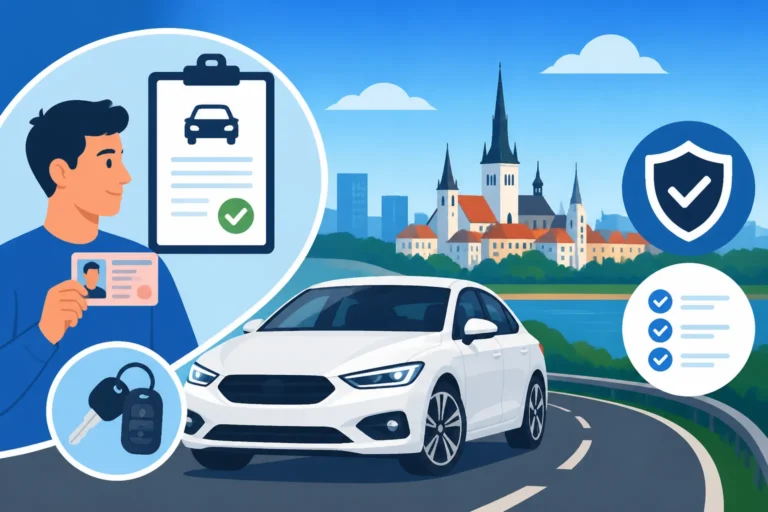
How to Buy a Used Car in Estonia as a Foreigner
So, you've settled into life in Estonia, gotten your residence permit, maybe even started learning a few Estonian phrases, and now you're facing that very real expat conundrum: getting around beyond what public transport offers. Buying a used car in a foreign country can feel like navigating a minefield, especially when you factor in language barriers and unfamiliar bureaucratic processes. This guide is here to cut through the confusion and walk you through every step of purchasing a second-hand vehicle in Estonia as a foreigner, from initial search to final registration.
Understanding the Estonian Used Car Market for Foreigners
Venturing into the used car market in Estonia as an expat can feel like stepping into the unknown. It’s not just about finding a car you like; it’s about understanding the local nuances, avoiding scams, and ensuring you’re compliant with all regulations. Many fellow expats make costly mistakes simply because they didn't know the ropes.
Initial Hurdles and Expat Realities
When you first arrive in Estonia, getting around might be your initial concern. While Tallinn and Tartu boast excellent public transport, venturing beyond these urban centres often necessitates your own wheels. For many, the idea of buying a car right away is daunting. You're likely still grappling with registering your residence, setting up utilities, and perhaps even understanding your first Estonian salary slip. The thought of adding a car purchase to that list can be overwhelming.
One of the biggest hurdles is often the language. While many younger Estonians speak excellent English, official documents, older sales listings, and some interactions with smaller dealerships or private sellers might still be predominantly in Estonian or Russian. This is where having a trusted local friend or a translator can be an absolute lifesaver. You’ll quickly realize that Google Translate is a good starting point, but it won’t catch all the legal subtleties or local slang in a car description. Remember, your early days here are packed with setting up house, managing your finances, and perhaps even engaging a service like Sirelo to help smooth out other relocation logistics, so don't rush the car purchase if you don't have to.
Another reality for expats is the importance of having your basic personal documentation in order. Before you even think about signing a sales agreement, you absolutely need your How to Get Your Isikukood (Personal Code) and Why It Matters for Healthcare and your residence registered. These aren't just for healthcare; they are foundational for almost any official transaction in Estonia, including vehicle registration. Without them, you’re essentially unable to complete the legal process of transferring ownership.
Where to Start Your Search: Online vs. Dealerships
Once you're ready to dive in, you'll find the Estonian used car market offers a decent selection. Knowing where to look is half the battle.
Online Marketplaces:
For most people, especially expats who are comfortable with digital platforms, online portals are the primary starting point. The big players here are:
- Auto24.ee: This is, without a doubt, the dominant platform for used cars in Estonia. It’s comprehensive, well-structured, and allows you to filter by almost any criteria imaginable. You'll find listings from both private sellers and dealerships. Many listings have detailed photos and descriptions, and some even offer English translations or sellers who can communicate in English.
- Soov.ee and Okidoki.ee: These are more general classifieds sites, but they do have car sections. You might find some niche or older vehicles here, often from private sellers. However, the quality of listings can be more varied, and English descriptions are less common.
- Facebook Marketplace and Expat Groups: These can be surprisingly good resources. Many expat groups in Estonia have members selling cars as they leave the country, often providing a more 'expat-friendly' transaction. You might also find good deals or cars already registered to expats, simplifying some aspects of the process. The downside is that these are informal, and you'll need to be extra vigilant about due diligence.
When browsing online, make sure to keep your wits about you. Scammers exist everywhere. Be wary of deals that seem too good to be true, sellers who pressure you, or those who ask for deposits before you've even seen the car. Always try to communicate directly with the seller, and if they only respond with vague, generic messages, that’s a red flag. Remember, while you’re out and about viewing cars, having a reliable data connection is key for quick research or navigation. Services like Airalo can be incredibly useful for new arrivals, ensuring you're always connected.
Dealerships and Used Car Lots:
While the allure of a private sale might be a lower price, dealerships offer a layer of security and convenience that can be appealing, especially for foreigners.
- Authorised Dealerships (e.g., Topauto, Amserv, Skandi Motors): These typically sell used cars of the brands they represent (e.g., Toyota, BMW, Skoda). The cars are often certified, come with a warranty, and have a clear service history. Prices will be higher than private sales, but you're paying for peace of mind, professional service, and a much lower risk of hidden issues. They are also much more likely to have English-speaking staff.
- Independent Used Car Lots: Estonia has many smaller, independent used car lots. These can offer a wider variety of makes and models, sometimes at more competitive prices. However, the quality of cars and the transparency of the sales process can vary significantly. You'll need to be more diligent with inspections and documentation here.
My advice? Start online to get a feel for prices and availability. Then, if you're feeling less confident about handling a private sale, consider visiting a few reputable dealerships. It’s always a good idea to bring a checklist, and don't hesitate to ask questions, no matter how trivial they seem.
Private Seller vs. Dealership: A Comparison
To help you decide where to focus your efforts, here's a quick comparison of the pros and cons:
| Feature | Private Seller | Dealership (Reputable) |
|---|---|---|
| Price | Generally lower, more room for negotiation | Generally higher, but often justified by added services |
| Warranty | None, sold "as is" | Often includes a limited warranty or guarantee |
| Inspection | Your responsibility to arrange independent inspection | Often provides pre-inspection report, but still verify |
| Paperwork | Requires careful verification of seller & car history | Handles most paperwork, ensures legal transfer |
| Language | Varies widely, may require a translator | More likely to have English-speaking staff |
| After-Sale | No support | Offers service, repairs, and support |
| Trust/Risk | Higher risk of hidden issues or scams, requires vigilance | Lower risk, established reputation, consumer protection |
| Time/Effort | More hands-on, coordinating inspections & meetings | More streamlined process, can be quicker |
Essential Documentation and Prerequisites
Before you even start test-driving vehicles, you need to ensure your personal ducks are in a row. Estonian bureaucracy, while largely digital, still requires proper identification and proof of residence for major transactions like vehicle ownership. Skipping these steps will lead to frustrating delays and wasted trips.
Your Isikukood and Residence Status
Your Isikukood, or personal identification code, is your golden ticket to almost everything official in Estonia. Without it, you simply cannot register a car in your name. This unique 11-digit number is assigned when you register your place of residence in the Estonian Population Register. If you're an EU citizen, you register your right of residence. If you're a non-EU citizen, you'll receive your Isikukood as part of your temporary residence permit application.
It's crucial to understand that merely having an e-Residency card is not sufficient for buying and registering a car as a private individual resident in Estonia. E-residency is for managing a business remotely, not for establishing personal residency or physical presence rights. You need actual physical residency and your Isikukood tied to that. If you’re still navigating the initial steps of moving here, check out guides like Registering Your Place of Residence in Estonia: The Complete Guide to make sure you’re set up correctly.
Make sure your residence status is up-to-date and registered correctly. The Estonian Transport Administration (Transpordiamet) will cross-reference your details with the Population Register. Any discrepancies could cause major headaches. If you’re on a short-term visa, you might not be able to register a car in your name, or your registration might be tied to the validity of your visa. Always clarify your specific situation with the Transport Administration if you have any doubts about your visa or residence permit status and its implications for vehicle ownership.
Driving Licence and Insurance Requirements
Naturally, you can't buy a car if you can't legally drive it! The rules regarding foreign driving licences in Estonia are quite straightforward:
- EU/EEA Licences: If you hold a driving licence issued by an EU or EEA member state, it is fully recognized in Estonia. You can drive with it until it expires. You don't have to exchange it, but you can if you wish. Many expats choose to eventually exchange it for an Estonian one simply for convenience, especially if it's nearing its expiration date. You can learn more about this process in How to Exchange Your Foreign Driving Licence in Estonia.
- Non-EU/EEA Licences: If your licence is from outside the EU/EEA, it's generally valid for up to one year from the date of your registration in the Estonian Population Register. After that, you must exchange it for an Estonian driving licence. To do this, you'll likely need to pass both a theory and a practical driving test in Estonia, unless your home country has a specific agreement with Estonia. Make sure to check the exact requirements with the Transport Administration well in advance. Do not get caught out driving illegally after your one-year grace period is up.
Vehicle Insurance (Liikluskindlustus):
Once you own a car, motor third-party liability insurance (liikluskindlustus) is mandatory by law in Estonia. You cannot drive your car without it, and it must be valid from the moment of purchase. This insurance covers damages you might cause to another vehicle, property, or person in an accident. It does not cover damage to your own vehicle.
You can easily get this insurance online from various providers like ERGO, If P&C Insurance, Swedbank P&C Insurance, or SEB. The process is quick and can often be done within minutes. You’ll need the car's registration number (from the seller), your Isikukood, and possibly your Estonian ID card details. The system is highly digitalized; once you pay, your insurance information is automatically entered into the central database.
For comprehensive coverage that also protects your own vehicle against theft, fire, or damage (collision with animals, acts of nature, vandalism, etc.), you'll need to purchase kasko insurance (full coverage). This is optional but highly recommended, especially for newer or more expensive vehicles, or if you simply want peace of mind. Kasko insurance premiums vary greatly based on the car's value, your driving history, and your chosen deductible. Many expat friends of mine regret skipping kasko after minor fender benders. Consider The Cost of Healthcare in Estonia: A Complete Breakdown for Foreigners (2026) if you want to understand all your options for staying protected while in Estonia.
The Car Inspection and Purchase Process
You’ve found a car that catches your eye, your personal documents are in order, and you’re ready to take the next steps. This is where meticulous attention to detail and a healthy dose of skepticism will serve you well. Don't let excitement cloud your judgment.
Pre-Purchase Inspection: A Non-Negotiable Step
This is perhaps the single most important piece of advice I can give you: never buy a used car in Estonia without a thorough pre-purchase inspection by an independent mechanic. I repeat, never. Even if the seller seems trustworthy, even if the car looks pristine, even if it has a valid technical inspection certificate, invest in a professional check.
Estonia has plenty of reputable car service centers (autoteenindus) in all major towns. Do a quick search for places with good reviews, or ask for recommendations in expat groups. Call them, explain you’re a foreigner, and that you need a pre-purchase inspection (ostueelne kontroll). They’ll typically check the engine, transmission, brakes, suspension, electronics, and look for any signs of accident damage, rust (which can be a real issue with Estonian winters), or major repairs. They'll also often check the car's history in the Transport Administration database for any red flags. This service usually costs around €50-€100, and it’s money incredibly well spent. It can save you thousands in future repairs or reveal issues that allow you to negotiate a lower price.
While the car is at the mechanic, you should also take this opportunity to perform your own background checks.
- Transport Administration Database (Transpordiamet): You can access the public vehicle register online (sõidukite e-teenindus). With the car's registration number (number plate) or VIN, you can check its technical inspection history (ülevaatus), mileage records, previous owners, and any outstanding fines or liens. This is crucial for verifying mileage and ensuring the car hasn't been written off or had its odometer tampered with. It will also show if the car has a valid technical inspection – an ülevaatus certificate – which is essential. You can learn more about this in Understanding the Vehicle Inspection (Ülevaatus) in Estonia.
- Service History (Hooldusajalugu): Always ask the seller for the car’s service book or records. A complete and consistent service history is a strong indicator of a well-maintained vehicle. If it’s missing or incomplete, be extra cautious.
- Visual Inspection and Test Drive: Before it goes to the mechanic, do your own careful visual check. Look for consistent paintwork, even panel gaps (signs of accident repair), tire wear, and any leaks under the hood. During the test drive, listen for unusual noises, check that all electronics work, and ensure the brakes, steering, and acceleration feel normal. Don’t be afraid to drive on different types of roads and at varying speeds.
Negotiating and Sealing the Deal: The Sales Agreement
Once the inspection report gives you a green light (or at least a clear understanding of any minor issues), it’s time to negotiate the price. Be polite but firm. Estonian sellers are generally open to negotiation, especially on private sales. Based on the inspection findings and comparable prices on Auto24, you’ll have a strong basis for your offer.
When you've agreed on a price, a written sales agreement (ostu-müügileping) is absolutely essential. This document legally transfers ownership and protects both buyer and seller. While you can find templates online, here are key elements that MUST be included:
- Full details of both buyer and seller: Name, Isikukood, address, contact information.
- Full details of the vehicle: Make, model, year, VIN, registration number, engine number, mileage (as stated by seller).
- Agreed purchase price.
- Date and place of sale.
- Declaration by the seller: Stating that they are the legal owner, the car is free of encumbrances (loans, liens, fines), and that they have disclosed all known defects.
- Declaration by the buyer: Stating that they have inspected the car or had it inspected and are aware of its condition.
- Signatures of both parties.
It’s highly advisable to use a bilingual contract or have a reliable translation if you’re not fully confident in Estonian. While not legally required for a private car sale, some expats choose to have the agreement notarized (notar), especially for higher-value vehicles. A notary verifies identities and ensures the legal validity of the signatures and content. This adds an extra layer of security and can prevent disputes later. However, it also adds to the cost (notary fees). For most used car purchases, a well-drafted and signed agreement should suffice.
Payment:
The safest way to pay is via bank transfer (pangaülekanne). This creates a clear digital record of the transaction. Avoid carrying large sums of cash. Make sure the transfer includes a clear description, referencing the sales agreement and the vehicle. Only transfer the money once the sales agreement has been signed by both parties.
Registering Your Used Car in Estonia
You've got the keys, the signed agreement, and you're officially a car owner! Now comes the final, crucial step: transferring the ownership into your name with the Estonian Transport Administration. This process is surprisingly straightforward, especially if you have your Isikukood and Estonian ID card.
The Estonian Transport Administration (Transpordiamet)
The Estonian Transport Administration (Transpordiamet), formerly known as the Road Administration (Maanteeamet), is the government body responsible for vehicle registration, driving licences, and road safety. Their e-service portal is excellent and will be your primary tool for this process.
You have a few options for registering the change of ownership:
- Online via e-teenindus (e-Service Portal): This is by far the easiest and fastest method, assuming both you and the seller have Estonian ID cards/e-Residency cards and are comfortable with digital signatures. Both parties need to log into the Transport Administration's e-service portal (https://eteenindus.transpordiamet.ee/ or through eesti.ee) and initiate/confirm the change of ownership.
- The seller initiates the transfer, entering the buyer's details.
- The buyer then logs in and confirms the purchase.
- The system checks for any issues (e.g., unpaid fines, invalid inspection).
- Once confirmed by both, you pay the state fee (riigilõiv) online, and the ownership is changed almost instantly.
- You will receive a new registration certificate (registreerimistunnistus) by mail a few days later, or you can pick it up from a service bureau.
- At a Transport Administration Service Bureau: If you or the seller prefer not to use the online system, or if you encounter any issues, you can visit a service bureau in person. Both the buyer and seller should ideally be present, bringing their ID documents and the signed sales agreement. A state fee must be paid, and the change of ownership will be processed on the spot. You'll walk out with a temporary registration certificate, and the permanent one will be mailed.
- Via a Notary: As mentioned before, if the sales agreement was notarized, the notary can also submit the change of ownership application to the Transport Administration. This usually costs more but provides the highest level of legal verification.
Remember, you must complete the ownership transfer within five working days of the purchase. Failure to do so can result in fines for both the buyer and the seller.
Registration Steps and Required Documents
Let's break down the online process, as it's the most common and efficient for expats once they're set up with an Estonian ID card.
For the Seller (initiates the process):
- Log into the Transport Administration's e-service portal using their Estonian ID card, Mobile-ID, or Smart-ID.
- Navigate to "Sõiduki omanikuvahetus" (Vehicle ownership change).
- Enter the buyer's Isikukood and the agreed purchase price.
- Confirm the vehicle details.
- Digitally sign the ownership transfer.
For the Buyer (confirms and pays):
- Log into the Transport Administration's e-service portal using your Estonian ID card, Mobile-ID, or Smart-ID.
- You will see a pending ownership transfer request.
- Review all the details to ensure they match your sales agreement.
- Ensure you have valid motor third-party liability insurance (liikluskindlustus) for the vehicle, effective from the date of purchase. The system will automatically check this.
- Confirm the purchase and digitally sign.
- Pay the state fee (riigilõiv). As of early 2024, the state fee for changing ownership of a used car is typically around €61 for online transactions, slightly higher for in-person at a service bureau. Always check the latest fees on the Transpordiamet website.
- Once the fee is paid, the ownership transfer is immediate. You’re now the legal owner!
Documents you'll need (or have access to during the online process):
- Your Estonian ID Card / Mobile-ID / Smart-ID: For logging in and digital signing.
- Your Isikukood.
- Vehicle registration certificate (registreerimistunnistus) from the previous owner: You'll need the details from this, though for online transfers, much of the data is pre-filled.
- Signed sales agreement (ostu-müügileping): Keep this safe! While not physically uploaded for online transfers, it's your proof of transaction.
- Proof of valid motor third-party liability insurance (liikluskindlustus): The system checks this automatically.
- Proof of payment for the car: Your bank transfer confirmation.
It’s worth reiterating the importance of the How to Register a Vehicle with the Transport Administration in Estonia process. Getting this wrong can lead to legal issues down the road, so follow the steps carefully. Once registered, remember to carry your physical registration certificate (registreerimistunnistus) in the car at all times when driving, along with your driving licence and proof of insurance.
Understanding Ongoing Costs and Responsibilities
Congratulations, you're now a fully fledged car owner in Estonia! But the costs don't stop after the purchase price and registration. Like any car owner, you'll have ongoing expenses and responsibilities that are good to be aware of, especially when considering The Complete Guide to Cost of Living in Estonia for Expats (2026).
Annual Inspections and Roadworthiness
Estonia has a strict system for ensuring vehicles are roadworthy. All vehicles must undergo periodic technical inspections (ülevaatus) at authorized inspection points.
- New Cars: Typically, the first inspection is after three years, then every two years.
- Used Cars: After the initial inspections, most cars need an inspection every year.
You can find inspection points (tehnokontroll) throughout Estonia. The cost of a standard passenger car inspection usually ranges from €30 to €50. During the inspection, they'll check everything from brakes and lights to emissions and tire condition. If your car passes, you'll get a sticker for your windscreen and an updated entry in the Transport Administration database. If it fails, you'll be given a list of deficiencies that need to be fixed, and you’ll have a certain period (usually 30 days) to get repairs done and undergo a re-inspection, often at a reduced fee.
It’s your responsibility to know when your car's inspection is due. The Transport Administration’s e-service portal can tell you the exact date. Don't let it expire – driving with an invalid inspection is illegal and can result in fines and insurance complications if you're involved in an accident. You can delve deeper into this specific topic with Understanding the Vehicle Inspection (Ülevaatus) in Estonia.
Maintenance, Fuel, and Other Expenses
Beyond the annual inspection, there's a whole host of other costs associated with car ownership in Estonia:
- Maintenance and Repairs: Estonian roads can be harsh on vehicles, especially during winter with potholes and salt. Regular servicing (oil changes, filter replacements, brake checks) is essential. Finding a trustworthy mechanic who can communicate in English might take some asking around, but they definitely exist, especially in Tallinn and Tartu. Prices for parts and labor are generally comparable to other EU countries, though perhaps a bit cheaper than Scandinavia.
- Fuel (Kütus): Fuel prices in Estonia fluctuate but are generally in line with the European average. As of early 2024, expect to pay around €1.50-€1.80 per liter for petrol (bensiin) and diesel (diisel). You’ll find plenty of petrol stations (tankla) everywhere, with major chains like Circle K, Neste, and Olerex.
- Tires (Rehvid): This is a critical point for driving in Estonia. By law, you MUST switch to winter tires (lamellrehvid or naastrehvid – studded tires) between December 1st and March 1st. Summer tires (suverehvid) are mandatory from May 1st to October 1st. The exact dates can vary based on weather conditions, but it's a non-negotiable legal requirement. Many garages offer tire storage services if you don't have space at home. A good set of winter tires is a significant investment but absolutely vital for safety.
- Parking (Parkimine): Parking in Estonian cities, especially central Tallinn, can be expensive and regulated. There are often paid zones, and free parking is scarce. Look for parking apps like Pargi.ee or Europark to pay conveniently via your phone. Outside city centers, parking is generally easier and often free.
- Road Tax (Auto maks): As of 2024, Estonia has introduced a new annual motor vehicle tax. This tax is based on factors like the vehicle's age, weight, and CO2 emissions. For older, heavier, or more polluting cars, the tax can be substantial. For newer, more environmentally friendly vehicles, it will be lower. This is a significant new ongoing cost that wasn't present before, so factor it into your budget. You can usually find the approximate tax amount for a specific vehicle on the Transport Administration's website by entering its registration number. This new tax is part of a broader shift in understanding The Complete Guide to Taxes in Estonia for Expats (2027) for vehicle owners.
- Car Wash (Autopesula): With dusty summers and snowy, slushy winters, keeping your car clean is a battle. Self-service car washes (iseteeninduspesula) are common and affordable.
As you can see, buying the car is just the beginning. Budgeting for these ongoing costs is essential to avoid financial surprises down the line. Keep all your car-related documents organized, and don't hesitate to ask fellow expats for recommendations on mechanics, insurance providers, or even tips for navigating the various payment apps needed for parking and fuel. Welcome to the world of Estonian car ownership!
Disclaimer
The information provided in this guide is for general informational purposes only and does not constitute legal, financial, or professional advice. While we strive to keep the information up-to-date and accurate, regulations and procedures in Estonia can change. Always consult official sources, such as the Estonian Transport Administration, the Estonian Tax and Customs Board, or a qualified legal professional, for the most current and specific advice pertaining to your individual situation.