How Do I Set Up Direct Debit for Bills in Estonia?
One of the many small hurdles that sneak up on you as an expat in Estonia is figuring out how to handle your recurring bills. You’ve got your electricity, internet, rent, apartment association fees – and suddenly, you’re drowning in manual payments. This guide is here to walk you through setting up direct debits, known as e-arve püsimakse, to automate those monthly headaches and give you one less thing to worry about.
Understanding Direct Debits in Estonia E-arve Püsimakse
When you first arrive in Estonia, you might be accustomed to a simple "direct debit" system where you give a company your bank details, and they just pull the money when it's due. In Estonia, it's a little different, and honestly, it can be a source of confusion for many foreigners. But once you get the hang of it, it's incredibly efficient.
What Exactly is an E-arve Püsimakse?
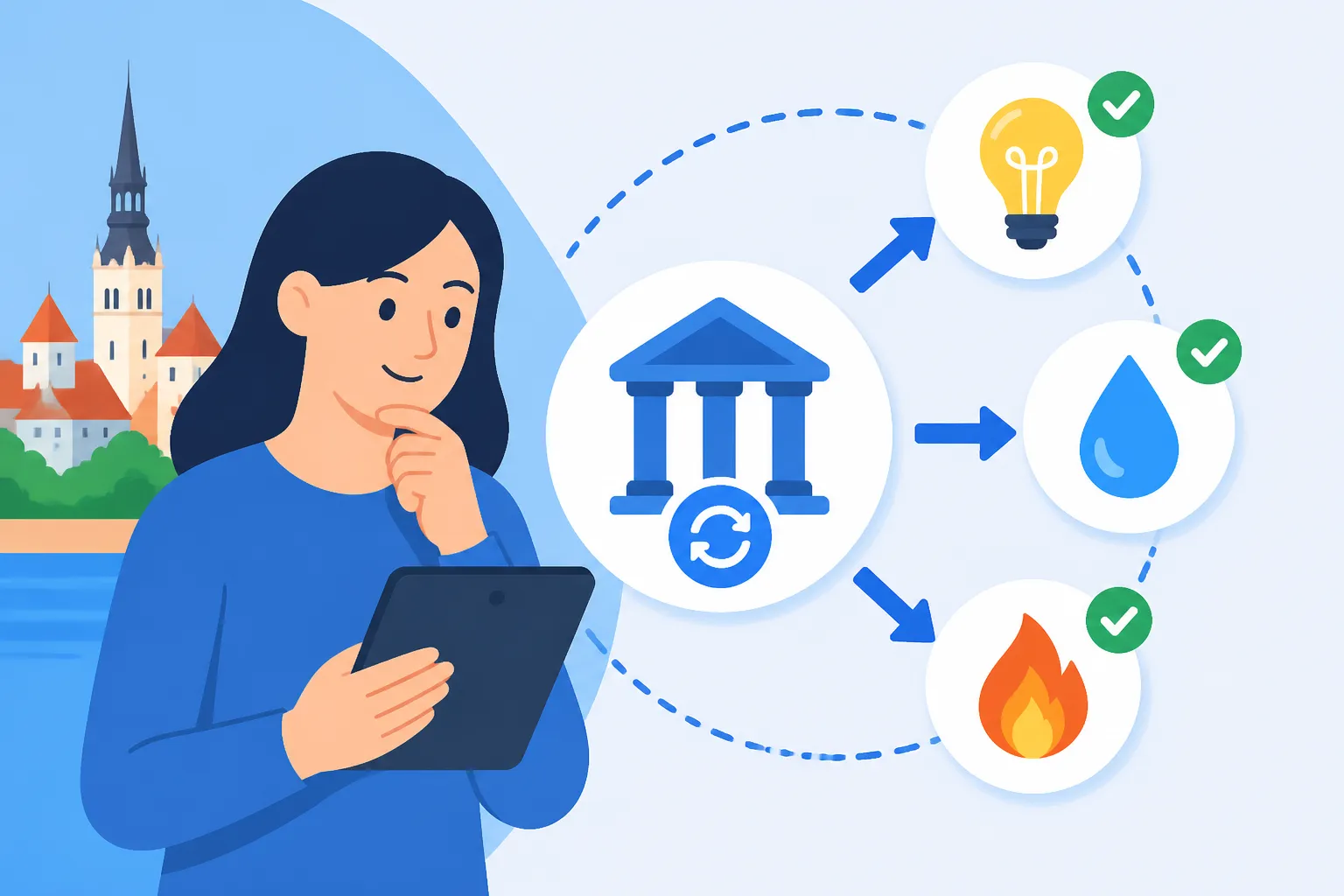
The term e-arve püsimakse translates roughly to "e-invoice standing payment" or "e-invoice direct debit," and it's key to understanding how automatic payments work here. It's not quite like the direct debits you might be used to from back home, where a company directly charges your account. Instead, the process in Estonia involves a two-step handshake between the service provider and your bank.
First, the service provider (like Eesti Energia for electricity or Telia for internet) sends an e-arve (e-invoice) directly to your bank's online system. This isn't an email invoice you receive; it's a digital invoice sent directly to your bank. Only once your bank receives this official e-invoice can the automatic payment be triggered. You, as the customer, then instruct your bank to automatically pay these specific e-invoices when they arrive. This system offers an extra layer of transparency and control, as the payment is always based on a verifiable invoice sent through a secure channel, rather than a direct pull from your account. It's a system designed for the digital age, much like many other things in Estonia.
Why They're So Common and Convenient for Expats
Once you understand the mechanics, e-arve püsimakse becomes your best friend. Imagine not having to remember due dates for every single bill – electricity, gas, internet, mobile phone, apartment maintenance fees, even some loan payments. It's a huge time-saver and a stress reducer, especially when you're still getting settled and have a million other things on your mind.
The convenience factor is amplified by Estonia's robust digital infrastructure. Everything is interconnected, and once you set up these e-invoices to automatically pay, it just works. You'll avoid late payment fees, which can quickly add up and are an unnecessary drain on your finances. For common services like those from Telia or Elisa, or your monthly Korteriühistu (apartment association) bill, automating these payments means less mental load and more time to enjoy your life in Estonia. It’s peace of mind wrapped up in a digital bow, especially for those who are still grappling with the Estonian language or just prefer to keep their administrative tasks to a minimum.
Step-by-Step Guide to Setting Up Direct Debits
Alright, let’s get down to the nitty-gritty of actually setting this up. It might seem like a lot of steps at first, but each one is logical, and soon you'll be a pro.
Step 1: Receiving E-Invoices E-arved
The foundational step to setting up an e-arve püsimakse is ensuring your service provider is actually sending e-invoices directly to your bank. This is often where expats hit their first snag, as it's not always an automatic opt-in. Many companies default to sending paper invoices or PDF invoices to your email, which won't work for automatic bank payments.
You need to actively request that your service providers send their e-invoices to your bank. This usually involves logging into their client portal (e.g., Eesti Energia’s self-service environment), navigating to your account settings, and looking for an option related to "e-arved" or "e-invoices." You'll typically need to select your bank from a dropdown list and confirm. For smaller providers, or your korteriühistu, you might need to send an email or make a phone call. Simply state that you wish to receive e-invoices (e-arved) directly to your bank for automatic payment (automaatne tasumine). It's crucial that they have your correct isikukood (personal code) on file, as this is how the invoices are linked to your identity and, subsequently, your bank account. Without a correctly linked isikukood, the e-invoice won't reach your bank's inbox properly. If you're still navigating the initial stages of life here, understanding How to Get Your Isikukood (Personal Code) and Why It Matters for Healthcare will clarify its overarching importance in all Estonian administrative processes, including banking.
Step 2: Activating the E-arve Püsimakse in Your Bank
Once you've confirmed that your service provider is sending e-invoices directly to your bank, the next step is to activate the automatic payment in your own internet banking environment. This process is fairly similar across Estonia's main banks like Swedbank, SEB, and LHV.
First, log into your internet bank using your ID-card, Mobile-ID, or Smart-ID. Navigate to the section usually labelled "E-arved" or "E-invoices." Here, you should see a list of e-invoices that have been sent to your bank. For new e-invoice relationships, you might see a pending invoice or an option to manage your e-invoice agreements. You'll then need to find the specific provider you want to set up automatic payments for. Within the settings for that provider, look for options like "automaatne tasumine" (automatic payment) or "vormista püsimakse" (create standing payment). Most banks will also allow you to set a "summa piirang" (amount limit) for automatic payments. This is a brilliant feature for expats, as it provides an additional layer of security. For example, if your average electricity bill is €50, you might set a limit of €100. If an e-invoice for Eesti Energia somehow comes in at €150, the automatic payment will fail, and your bank will notify you, prompting you to manually review and approve the payment. This prevents unexpected large charges. Make sure to confirm your selection, and you're good to go! For a broader understanding of how to manage your digital finances, you might find How to Set Up Online Banking and Payments in Estonia a valuable resource.
Let’s take a common hypothetical: you’ve just moved into your new apartment in Tartu, and you want to ensure your monthly electricity bill from Eesti Energia is paid automatically. First, you log into your Eesti Energia self-service portal, find the e-invoice settings, and select your bank (e.g., SEB) as the recipient for your e-arved. A day or two later, you log into your SEB internet bank, go to the "E-arved" section. You should see Eesti Energia listed. Click on it, choose "automaatne tasumine," and maybe set a payment limit. Voila! Your electricity bill is now on autopilot.
What to Do If a Provider Doesn't Send E-Invoices
Ah, the classic expat frustration! Not every single service provider in Estonia offers the e-invoice direct debit option directly to your bank. While major utilities and telecoms almost always do, smaller landlords, very local service providers, or some korteriühistud in older buildings might still only send paper invoices or PDFs. This leaves you in a bit of a quandary if you're aiming for full automation.
When an e-arve püsimakse isn't an option, you have a few alternatives. The simplest is to set up a regular standing order (püsimakse) in your bank. This is a fixed-amount payment that occurs on a set date each month. This works well for bills that are always the same, like some fixed rent payments (though usually rent involves more variable utility components). The downside is that it's fixed. If your bill amount changes, you'll have to manually adjust your standing order, which defeats some of the automation purpose. You'll need to remember to check for any changes in the invoice to prevent overpayment or underpayment. Alternatively, you can always make manual bank transfers for these specific bills. This involves logging into your bank each month, entering the recipient's details, the amount, and the reference number. It's more hands-on but ensures accuracy for variable bills without the e-invoice integration. For any payments to international accounts or if you’re managing funds across borders, platforms like Wise can be an efficient alternative for transfers that don't fit the local direct debit mold. Navigating these choices is part of How to Choose the Best Bank for Expats in Estonia, which can help you select a bank that best supports your specific billing needs.
Managing and Troubleshooting Your Direct Debits
Setting them up is one thing, but knowing how to keep an eye on them and what to do when something goes awry is equally important. It’s about maintaining that peace of mind.
Monitoring Your Payments and Understanding Statements
Once your e-arve püsimakse is active, it's wise to keep an eye on things, especially for the first few months. You can easily monitor all your payments by regularly checking your internet bank's transaction history or statements. Most banks have a dedicated section for "E-arved" where you can see the status of incoming e-invoices and whether they’ve been paid. It's a transparent system that shows the invoice, the payment date, and the amount.
It’s also crucial to get comfortable with your bank statements. They provide a comprehensive record of what's coming in and going out. If you've set up an amount limit (summa piirang) for an automatic payment, and an invoice exceeds that limit, you'll receive a notification from your bank – typically via email or within your internet bank's message system – informing you that the payment was not made automatically and requires your manual approval. This is your cue to investigate. Also, take the time to understand the breakdown of your Estonian utility bills, known as kommunaalkulud. These can be complex, often itemizing heating, water, waste, and maintenance fees from your apartment association. Having a grasp of these categories will help you identify if a bill looks unusually high. If you're struggling to decipher those often-intimidating utility breakdowns, diving into Understanding Utility and Maintenance Costs (Kommunaalkulud) in Estonia will definitely give you a clearer picture.
Common Issues and How to Solve Them
Despite the digital efficiency, sometimes things don't go perfectly, and an e-arve püsimakse might not execute as planned. One of the most common issues is an e-invoice simply not arriving at your bank, or if it does, the automatic payment doesn't trigger. This often points to a disconnect at the service provider's end – perhaps your isikukood isn't correctly linked, or the e-invoice delivery to banks hasn't been properly activated for your account.
In such cases, your first port of call should always be the service provider (e.g., Telia customer service, your korteriühistu manager). Explain that you've requested e-invoices to your bank but they're not coming through or aren't being paid automatically. They can check their system to ensure everything is set up correctly on their side. If the issue is with an incorrect amount or a double payment, again, the service provider is usually the one to rectify it and issue any necessary refunds. Cancelling a direct debit is straightforward through your internet bank – you just find the specific e-invoice agreement and choose to terminate it. Remember, these systems are designed to be user-friendly, but a little proactivity goes a long way. For an overarching view on managing your household services, refer to The Expat Guide to Setting Up Utilities in Estonia.
Changing Banks or Moving House
Life as an expat often involves changes – new jobs, new apartments, maybe even a new bank if you find one that suits you better. It's crucial to remember that your e-arve püsimakse agreements are tied to your specific bank account. This means they do not automatically transfer if you change banks or even move apartment and switch to new utility providers.
If you decide to switch banks, you’ll need to explicitly cancel all your existing e-arve püsimakse agreements with your old bank. Then, once your new bank account is set up, you'll have to repeat Step 1 and Step 2 of the setup process with each service provider and your new bank. It’s a bit of administrative work, but it’s essential to avoid missed payments or payments from an account you no longer use. Similarly, when you move house, your old electricity, internet, and korteriühistu agreements cease for your previous address. You'll then need to set up new agreements for your new address and activate the e-arve püsimakse for those new service providers. This also applies to updating your isikukood with your new address in the Population Register. Keeping your official residence updated is paramount, and you can find detailed steps in Registering Your Place of Residence in Estonia: The Complete Guide.
Practical Tips for Expats Navigating Estonian Billing
Living in Estonia, you quickly learn that the digital way is often the only way, and embracing it makes life significantly smoother.
The Importance of Your Isikukood and Digital ID
I can't stress this enough: your isikukood (personal code) is your golden ticket to virtually everything in Estonia, and that absolutely includes setting up and managing your bills. It acts as your unique identifier across all public and private services. When you apply for electricity, internet, or even register with your apartment association, providing your isikukood ensures that your accounts are correctly linked to your identity. This linkage is what allows service providers to send those crucial e-invoices directly to your bank, which then enables your e-arve püsimakse.
Beyond the isikukood, your digital ID (whether it’s your physical ID-card, Mobile-ID, or Smart-ID) is your primary tool for navigating the online banking systems where you'll manage these direct debits. These secure authentication methods make logging in, confirming payments, and setting up new agreements incredibly straightforward and safe. Without them, you’d be stuck in a bureaucratic maze of physical signatures and office visits. Embracing Estonia’s digital ecosystem will simplify your financial life immensely, much like it simplifies Navigating Estonia's Digital Healthcare System: An Expat's Roadmap (2027).
Language Barriers and Support
While Estonia is increasingly expat-friendly, and many companies and institutions offer services in English, you will inevitably encounter situations where Estonian is the primary language. This can be particularly challenging when trying to set up or troubleshoot something as important as bill payments.
Major banks like Swedbank, SEB, and LHV generally have excellent English-speaking customer support via phone or their online chat functions. Don't hesitate to reach out to them if you're struggling to find the right section in your internet bank or understand a specific option. For service providers, the situation can be more varied. Larger telecoms like Telia and Elisa usually have English support. Smaller, local utility companies or apartment associations, however, might not. In these cases, tools like Google Translate can be a lifesaver, or you might need to lean on an Estonian-speaking friend or colleague for assistance. When it comes to understanding more complex financial implications, for instance, how your financial habits here might tie into future tax obligations, companies like Taxes for Expats offer specialized advice. Even when the immediate query isn't directly tax-related, having a broader understanding of your financial administrative responsibilities can be incredibly helpful. Finding English-speaking services is a common expat quest, whether it’s for administrative tasks or even something as personal as locating The Expat Guide to Finding a Family Doctor (Perearst) in Estonia.
To help clarify the differences between the two main types of recurring payments, here’s a quick overview:
| Feature | E-arve Püsimakse (E-invoice Direct Debit) | Püsimakse (Standing Order) |
|---|---|---|
| Payment Trigger | Automated by an e-invoice sent directly to your bank. | Automated by a fixed amount and date set by you. |
| Amount | Variable, matches the invoice amount. | Fixed amount, regardless of actual bill. |
| Flexibility | Adapts to changing monthly usage/costs. | Requires manual adjustment if bill amount changes. |
| Control | Can set an upper limit; bank notifies if invoice exceeds. | No inherent amount limit per invoice. |
| Setup Process | Requires provider to send e-invoice, then activate in bank. | Set up directly in your internet bank (no provider action). |
| Best For | Variable bills (electricity, internet, phone, most kommunaalkulud). | Fixed, consistent payments (e.g., gym memberships, fixed rent). |
It's clear that the e-arve püsimakse is the superior option for most variable monthly bills, aligning perfectly with Estonia's digital-first approach to administration.
Disclaimer
The information provided in this guide is intended for general informational purposes only and does not constitute professional financial, legal, or administrative advice. While every effort has been made to ensure accuracy and timeliness, processes and regulations in Estonia can change. Expats are strongly advised to verify all information with official sources, relevant service providers, and potentially seek independent professional advice tailored to their specific circumstances. We are not responsible for any inaccuracies or for any actions taken based on the information provided herein.