What Is the Cost of a Dental Implant in Estonia?
Waking up with a missing tooth or a failing crown is stressful enough, but the financial uncertainty of modern restorative dentistry can be even more overwhelming for expats. If you are navigating the Estonian medical landscape, you likely know that quality is high but dental care is largely private. This guide provides a deep dive into the actual costs, clinical procedures, and insurance realities of getting a dental implant in Estonia.
Understanding the Dental Landscape in Estonia
Estonia has quietly become a hub for dental tourism and high-end restorative care in Northern Europe. For those of us living here, the transition from the healthcare systems of the UK, US, or even Germany often comes with a bit of "sticker shock" regarding what the state covers versus what you pay out of pocket. In Estonia, dental care for adults is almost entirely private, meaning that while the technology is world-class, the patient bears the brunt of the costs.
The quality of care in clinics across Tallinn and Tartu is exceptionally high. Most clinics use advanced 3D imaging (CBCT scans) and offer European or American implant systems like Straumann or Nobel Biocare. Because the market is competitive, clinics strive to maintain the latest standards, often employing specialists who have trained across Europe. However, this means that How Do I Find a Dentist in Tallinn as an Expat? involves looking past the sleek waiting rooms and understanding the technical expertise of the implantologist.
One of the first things you will notice is the heavy reliance on digital infrastructure. Your dental records are often linked to your digital ID, though private dental notes aren't always fully synced with the national health record in the same way a hospital visit might be. Understanding How to Get Your Isikukood (Personal Code) and Why It Matters for Healthcare is essential even for private dentistry, as it allows the clinic to apply the small annual dental benefit provided by the state, which currently sits at a modest 60 euros for most adults.
Breaking Down the Costs of Dental Implants in 2026
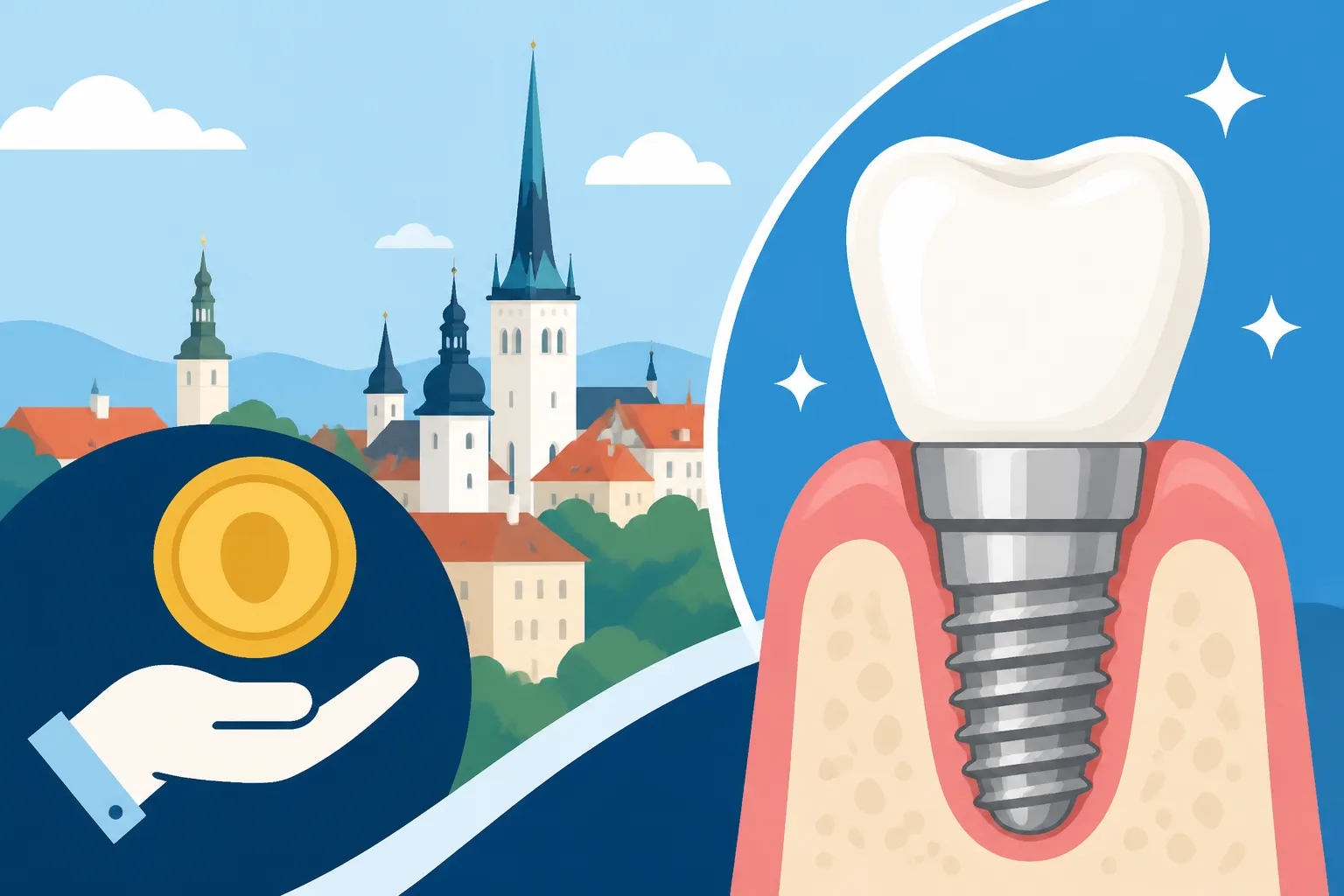
When you see an advertisement for a dental implant in Estonia, the price listed is often just for the "screw" or the surgical placement. The final bill is often much more complex than newcomers expect. A single dental implant restoration consists of three main parts: the titanium or zirconia screw (the implant), the abutment (the connector), and the crown (the visible tooth).
In Tallinn, the surgical placement of the implant typically ranges from 700 to 1,200 euros. The abutment and the final ceramic or zirconia crown will add another 600 to 900 euros. This brings the total for a single tooth to somewhere between 1,300 and 2,100 euros. This is significantly cheaper than in the United States or Scandinavia, but it is a major investment nonetheless. If you are curious about broader medical expenses, you should check The Cost of Healthcare in Estonia: A Complete Breakdown for Foreigners (2026) to see how this fits into your overall budget.
There are also "invisible" costs that can catch you off guard. Before the surgery, you will need a consultation and a 3D scan, which usually costs between 100 and 150 euros. If you have been missing a tooth for a long time, the jawbone might have thinned, requiring a bone graft or a sinus lift. These procedures can add 300 to 800 euros to your total. It is vital to ask for a full "Raviplaan" (treatment plan) during your first visit so there are no surprises halfway through the process.
| Item/Procedure | Estimated Cost (EUR) | Notes |
|---|---|---|
| Initial Consultation & 3D Scan | 100 – 180 | Includes CT scans and treatment planning |
| Single Implant Placement (Surgical) | 700 – 1,200 | Titanium screw and surgical labor |
| Abutment and Healing Cap | 150 – 300 | The connector between screw and crown |
| Zirconia or Ceramic Crown | 500 – 800 | The custom-made prosthetic tooth |
| Bone Grafting (if required) | 300 – 600 | Depends on the volume of material needed |
| Sinus Lift (if required) | 600 – 1,000 | Only for upper jaw molar replacements |
The Step-by-Step Implant Journey in an Estonian Clinic
The process of getting an implant is not a one-day affair. It is a biological journey that requires patience. In my experience, the first phase is the most critical: the planning. Using 3D scans, the dentist ensures there is enough bone to support the implant and that no nerves are in the way. This is where you will discuss the materials. While titanium is the gold standard for its strength and biocompatibility, some clinics in Estonia now offer ceramic (zirconia) implants for those with metal sensitivities or specific aesthetic concerns.
The second phase is the surgery itself. It is usually performed under local anesthesia and takes about 45 to 90 minutes. Many expats feel nervous about the language barrier during surgery, but How to Find an English-Speaking Doctor in Estonia is relatively easy in the dental field. Most surgeons will talk you through each step, from the initial incision to the precise drilling and placement of the screw. Afterward, you’ll be sent home with a prescription for painkillers and specific instructions on how to keep the area clean.
The third and longest phase is osseointegration. This is the period, usually lasting 3 to 6 months, where your jawbone actually grows into and fuses with the implant. During this time, you might have a temporary gap or a flipper tooth. Once the dentist confirms the implant is stable, they will attach the abutment and take an impression for your permanent crown. This final piece is usually crafted in a local lab in Tallinn or Tartu, ensuring a perfect color match to your existing teeth.
Insurance, Subsidies, and Managing the Bill
One of the most common questions from new arrivals is whether the Tervisekassa (the Estonian Health Insurance Fund) covers implants. For the vast majority of adults, the answer is a firm no. The state provides a very small annual benefit that can be used for check-ups and fillings, but implants are considered high-end restorative work. You can find more details in the guide on Understanding Dental Care and Adult Dental Benefits in Estonia.
Because of these high out-of-pocket costs, many expats look toward private solutions. If you are a digital nomad or a frequent traveler, you might consider how international health policies handle dental emergencies. While a standard plan from SafetyWing is primarily designed for unexpected medical emergencies and travel-related illnesses, having a robust safety net allows you to allocate your personal savings specifically for planned dental work like implants without worrying about other medical mishaps draining your funds. SafetyWing is a popular choice for those in the transition phase of moving to Estonia who haven't yet secured local private coverage.
If you are employed locally, your employer might offer private health insurance as a perk. Some of these premium packages, often provided by local insurers like Confido or Ergo, may include a dental allowance that covers a portion of implant costs. However, these are often capped at a few hundred euros per year. For those without such benefits, How Much Does Dental Treatment Cost in Estonia Without Insurance? is the reality they must face. It is also worth noting that SafetyWing can provide peace of mind for other health issues while you are waiting for your residency and Tervisekassa rights to kick in.
Choosing the Right Clinic in Tallinn or Tartu
Selecting where to have your surgery is a balance between cost, technology, and rapport. In Tallinn, clinics are clustered in the city center (Kesklinn) and the newer developments like Ülemiste City. Prices in the city center tend to be slightly higher, reflecting the convenience and the overhead of the facilities. However, these clinics are often the best equipped for international patients, with staff who are perfectly fluent in English and familiar with the documentation needs of foreign insurance companies.
If you are looking to save a bit of money, looking at clinics in Tartu or Pärnu can sometimes result in 10-15% lower fees for the same materials. The University of Tartu’s influence means the quality of dentistry in Tartu is arguably the highest in the country, as it is where the nation’s dentists are trained. Regardless of location, always ask about the brand of the implant system. Brands like Straumann or Nobel Biocare are recognized globally, which is vital if you move to another country later and need a local dentist to service or repair the implant.
While researching, don't forget to look into Health Insurance in Estonia: Mandatory, Private and Travel Options Explained to see if your current coverage has any overlaps. If you are currently on a travel-heavy lifestyle, utilizing a service like SafetyWing for your general medical needs ensures that if you have an accident that damages your teeth, you have the initial emergency stabilized. For the long-term implant process, however, you will want a stable relationship with a local clinic that can follow your progress over several months.
Practical Considerations for the Post-Surgical Phase
After the surgery, the "expat life" can complicate recovery. You’ll need to avoid strenuous activity and very hot or hard foods for a few days. If your job involves a lot of talking or public speaking, you might want to schedule the surgery on a Thursday or Friday to allow for a quiet weekend. Swelling is common, and while it usually peaks on the second day, having a clear schedule is helpful.
In the event of a rare complication, such as persistent pain or signs of infection, knowing how to access Emergency Medical Care in Estonia: What Every Expat Needs to Know is crucial. Most dental clinics have an emergency protocol for their surgical patients, providing a direct number or an on-call service. If a problem arises during a weekend when your private clinic is closed, Tallinn has a central dental emergency clinic (Lääne-Tallinna Keskhaigla hambapolikliinik) that handles acute issues, though they likely won't perform complex implant repairs.
Finally, remember that an implant requires just as much, if not more, hygiene than a natural tooth. Peri-implantitis is a real risk if you don't maintain professional cleanings. Most Estonian dentists will insist on a follow-up cleaning every six months. This long-term maintenance is a small price to pay for a restoration that, if handled correctly, can last for the rest of your life. As you settle into your new life, having your health and dental plans sorted—perhaps with a baseline of SafetyWing for your travels and a trusted local dentist for your restorative needs—will make Estonia truly feel like home.
Disclaimer
The information provided in this guide is for educational and informational purposes only and does not constitute professional medical or financial advice. Dental costs and regulations in Estonia are subject to change. Always consult with a qualified dental professional and your insurance provider regarding your specific medical needs and coverage options.