How Much Does Dental Treatment Cost in Estonia Without Insurance?
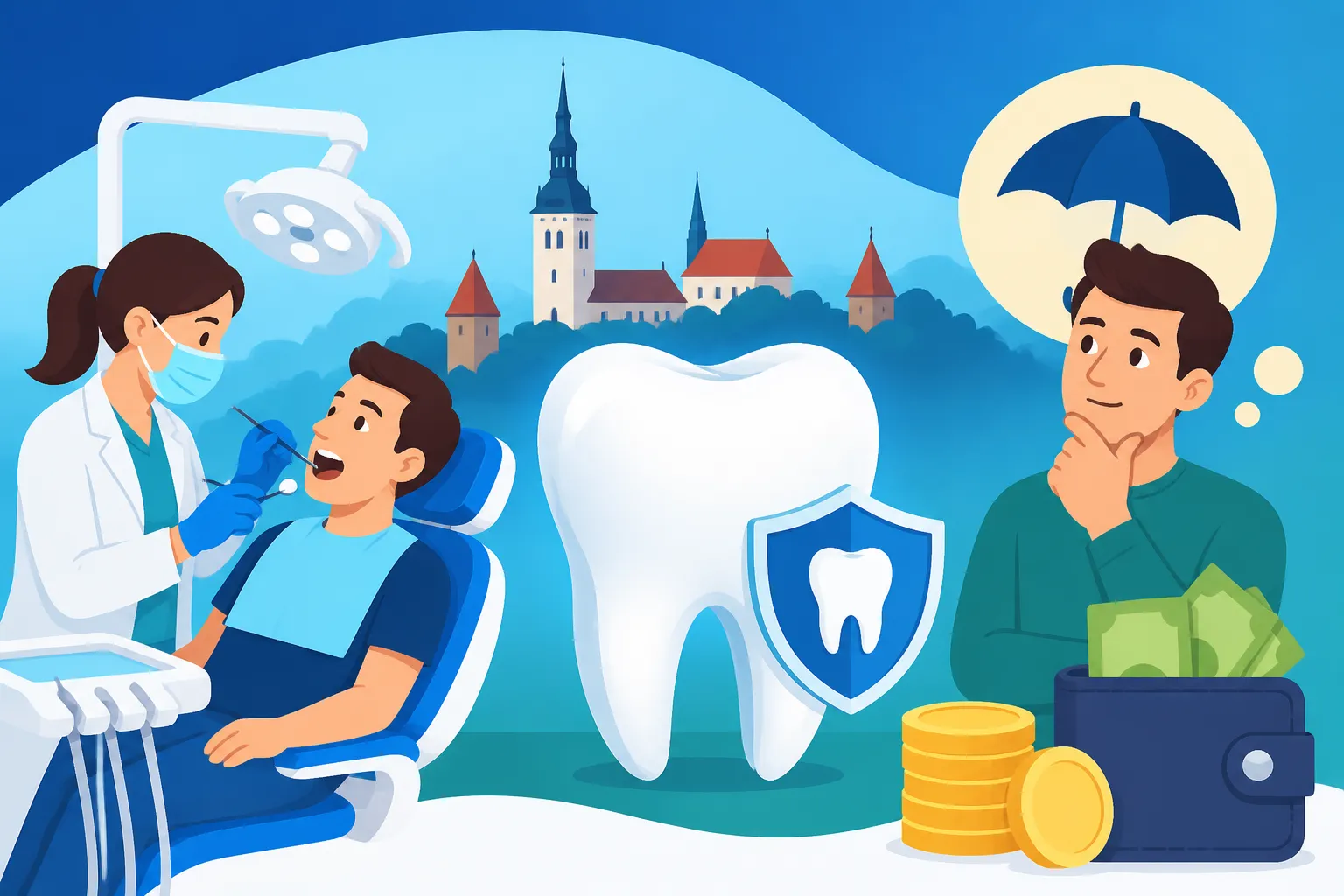
Moving to Estonia brings plenty of joys, but the sudden onset of a toothache can quickly turn your Baltic dream into a financial headache. Many foreigners arrive assuming the famous e-state covers everything, only to find dental care is largely private. This guide breaks down the real-world costs of dental treatment in Estonia without insurance, from simple cleanings to complex implants.
The Reality of Dental Care Costs for Expats in Estonia
When you first arrive in Tallinn or Tartu, the slick digital infrastructure might lead you to believe that every aspect of health is subsidized. While it is true that The Complete Guide to Healthcare in Estonia for Expats (2027) highlights a very robust public system, dental care for adults is a notable exception. Unlike general practitioners or hospital stays, the Estonian government provides very limited financial support for dental work. For the average expat who has just landed and might not yet be fully integrated into the tax system, you are essentially looking at a private market where prices are set by individual clinics.
The frustration often peaks when you realize that even if you have your residency sorted, the public dental benefit for adults is surprisingly small. Currently, the Estonian Health Insurance Fund (Tervisekassa) provides a modest annual benefit that usually covers only a fraction of a single filling. If you are not yet registered with the national system or are waiting for your documents, you will be paying 100% of the bill out of pocket. This is why many digital nomads and new arrivals rely on a flexible option like SafetyWing to handle unexpected medical emergencies, including sudden dental pain that requires immediate intervention.
It is also important to understand that there is a significant price gap between high-end clinics in central Tallinn and smaller practices in more residential districts or smaller towns. In premium clinics like Maxilla or Kliinik 32, you are paying for English-speaking staff, state-of-the-art diagnostic equipment, and often, a much shorter waiting list. If you are still in the process of getting an Isikukood and don't have a local ID card yet, these private clinics are often your only choice, as they are better equipped to handle patients outside the national digital health record system.
The Two-Tiered System: Public Subsidies vs. Private Reality
In Estonia, children up to the age of 19 receive dental care for free, provided the clinic has a contract with the Tervisekassa. However, once you hit adulthood, the "free" ride ends abruptly. For adults, the system operates on a reimbursement model where the state pays a tiny portion (often around 40 to 100 EUR per year depending on your status) directly to the clinic. The catch? You must visit a clinic that has a specific contract with the state. Many of the most popular, English-speaking clinics in the city center do not participate in this scheme for routine work, meaning you pay the full market rate.
For expats, this means you are essentially navigating a private market. If you are working for a local startup, your employer might provide additional private health insurance as a perk, which can offset these costs. Without that, you are looking at prices that, while lower than in the US or the UK, can still take a bite out of your monthly budget. This is where Understanding Dental Care and Adult Dental Benefits in Estonia becomes essential reading, as it explains the nuances of who qualifies for the higher 105 EUR "vulnerable group" benefit versus the standard 40 EUR benefit.
Location Matters: Tallinn vs. The Rest of Estonia
Price transparency is generally good in Estonia, with most clinics posting their "Hinnakiri" (price list) online. However, a "consultation" in a fancy office in Porto Franco or Rotermann might cost double what you would pay in a neighborhood clinic in Mustamäe or a smaller city like Narva. If you are on a budget, it is often worth taking the train to Tartu or Pärnu for major procedures like crowns or implants, as the overhead costs for clinics outside the capital are significantly lower.
While seeking out lower costs, don't sacrifice communication. Finding a dentist who can explain the procedure in English is vital, especially when discussing complex surgeries or long-term treatment plans. Many expats find that How to Find an English-Speaking Doctor in Estonia is just as relevant for dental specialists as it is for general medicine. Most younger dentists in Estonia are highly proficient in English, having studied international medical literature, but always confirm this when booking your appointment to avoid any stressful "lost in translation" moments chair-side.
Estimated Price List for Common Dental Procedures
Understanding the raw numbers is the only way to plan your finances. In Estonia, the billing is often granular. You aren't just billed for "a filling"; you are billed for the anesthesia, the specific type of filling material, and sometimes even a separate "visit fee." This can be a bit of a shock when the 80 EUR filling you expected turns into a 130 EUR invoice at the reception desk.
The following table provides a realistic range of what you might pay in a private clinic in Tallinn or Tartu in 2026 without any state subsidies or private insurance coverage.
| Procedure Type | Estimated Cost (EUR) | Notes |
|---|---|---|
| Initial Consultation | 30 – 60 | Often excludes X-rays |
| Panoramic X-ray (Panoraamröntgen) | 35 – 55 | Essential for first visits |
| Professional Dental Cleaning | 90 – 150 | Includes tartar removal and soda polishing |
| Composite Filling (Small/Medium) | 70 – 130 | Price depends on surfaces covered |
| Root Canal Treatment (Single Canal) | 150 – 300 | Often requires 2-3 visits |
| Simple Tooth Extraction | 60 – 120 | Price varies by tooth position |
| Surgical Wisdom Tooth Extraction | 150 – 450 | Highly dependent on complexity |
| Ceramic Crown | 500 – 800 | Includes laboratory fees |
| Dental Implant (Post only) | 800 – 1,200 | Crown is usually extra |
Routine Maintenance and Prevention
A standard check-up is the foundation of the system. Most clinics will insist on a new patient consultation which includes a visual exam. If you haven't been to a dentist in Estonia before, they will almost certainly require a panoramic X-ray. This digital image allows them to see the state of your jaw, old root canals, and hidden cavities. It is a one-time cost that is well worth it to avoid Emergency Medical Care in Estonia: What Every Expat Needs to Know later down the line.
Dental hygiene is another area where costs have risen recently. A "Pärlipesu" (pearl wash or soda polishing) combined with ultrasound cleaning is the standard. It usually takes about 45 to 60 minutes. While 100+ EUR feels steep for a cleaning, the quality of hygiene care in Estonia is exceptionally high, often performed by specialized dental hygienists using the latest Air-Flow technology. This preventative step is the best way to keep The Cost of Healthcare in Estonia: A Complete Breakdown for Foreigners (2026) from ballooning into the thousands.
Restorative Work: Fillings and Root Canals
Fillings are the most common reason for a dental visit. In Estonia, clinics categorize fillings by the number of "surfaces" (pinnad) involved. A small cavity on the top of a molar is cheaper than a large reconstruction that involves the sides of the tooth. Most clinics use high-quality light-cured composite resins that match your tooth color perfectly.
Root canals are where things get expensive. If you have a deep infection, the dentist must clean the canals, often over multiple appointments. You will pay for each canal treated (molars have more than incisors), the temporary fillings, and the final permanent seal. Because this is a slow, meticulous process, the labor costs add up quickly. If you find yourself in sudden, agonizing pain before you've had a chance to secure local insurance, SafetyWing can be a lifesaver, as their nomad insurance often covers emergency dental pain relief up to a certain limit, helping you manage the initial shock of these costs.
Specialized Treatments: Implants, Crowns, and Wisdom Teeth
When you move beyond basic maintenance into the realm of oral surgery or prosthetics, the prices in Estonia start to look more like significant investments. For many expats, this is the point where they start comparing Estonian prices with their home countries. Generally, Estonia remains cheaper than Scandinavia, the UK, or the US, but it is no longer a "budget" destination like it might have been fifteen years ago. The quality, however, is on par with the best clinics in Zurich or London.
Wisdom tooth extraction is a rite of passage that many expats face while living here. If the tooth is "impacted" (horisontaalne or peetunud), it requires a maxillofacial surgeon rather than a general dentist. This procedure involves local anesthesia (or occasionally sedation, which costs extra), cutting into the gum, and sometimes removing bone. The recovery period is crucial, and you will likely be prescribed antibiotics and strong painkillers, which you can pick up using the How Do I Use a Digiretsept at a Pharmacy in Estonia? system.
The Financial Commitment of Dental Implants
If you are missing a tooth, an implant is the gold standard. This is a two-stage process. First, a titanium screw is placed into the jawbone. After several months of healing (osseointegration), an abutment and a ceramic crown are placed on top. When asking What Is the Cost of a Dental Implant in Estonia?, you must be careful to ask for the "all-in" price. Some clinics quote only the price of the screw, leaving out the cost of the surgical procedure, the abutment, and the crown, which can effectively double the initial estimate.
Because this is a multi-month process, it is vital to have a stable residency situation or a reliable insurance buffer. If you are an e-resident or a digital nomad moving between countries, the lack of continuity can be a problem. SafetyWing provides that necessary bridge for many, ensuring that if an emergency occurs during the surgical healing phase, you aren't left stranded financially. Always ask for a written "Raviplaan" (treatment plan) before starting implant work so there are no surprises six months down the line.
Orthodontics and Aesthetic Dentistry
Braces and Aligners (like Invisalign) are increasingly popular in Tallinn. Orthodontic treatment is almost entirely private for adults. The initial consultation and 3D scanning usually cost around 100 to 200 EUR. The cost of the braces themselves can range from 1,500 to 4,000 EUR per arch, depending on whether you choose metal brackets, ceramic ones, or clear aligners.
Aesthetic work, such as veneers or professional whitening, is also widely available. Whitening (valgendamine) in a clinic usually costs between 250 and 400 EUR. It is important to note that these are considered purely cosmetic and will never be covered by the Tervisekassa benefit, nor by basic emergency travel insurance. If you are planning a "smile makeover," you should budget for this as a luxury expense. Knowing How Do I Find a Dentist in Tallinn as an Expat? who specializes in aesthetics will help you find a practitioner who understands the "natural look" often preferred in Northern Europe.
Strategies for Managing Dental Costs as an Expat
Navigating the Estonian dental scene requires a mix of local knowledge and financial planning. One of the best tips for newcomers is to not wait for an emergency. Establish a relationship with a clinic early. Many of the best dentists have waiting lists that are weeks or even months long. If you are already "in the system" as a regular patient, they are much more likely to squeeze you in for an emergency 15-minute slot if a filling drops out.
Another strategy is to utilize the digital tools available to you. Once you have your ID card, you can log into the national health portal to see your records. This transparency allows you to keep track of exactly what was done and which teeth were treated, which is helpful if you ever need to seek a second opinion. If you are still waiting for your residence permit, make sure you keep all paper invoices, especially if you plan to claim them against a private insurance policy later.
Choosing the Right Clinic and Insurance
When searching for a clinic, don't just look at the price list. Look at the technology they use. A clinic that uses digital scanners instead of physical molds, or has an in-house dental lab, can often save you time and multiple visit fees. For those without a permanent contract in Estonia, such as freelancers or those on a Digital Nomad Visa, having a policy like SafetyWing is a standard recommendation in the expat community. It acts as a safety net for the "worst-case scenarios" like a broken tooth from a fall or an acute abscess that requires immediate surgery.
For those who are locally employed, check your "Benefits" package. Since 2018, Estonian employers can provide up to 400 EUR per year in tax-free health benefits to employees (often via platforms like Stebby). While this is usually used for gym memberships or massages, some dental clinics accept these credits. It’s always worth asking your HR department if dental care is an eligible expense under your specific company policy.
Final Tips for the Savvy Expat
- Ask for a "Check-up + Hygiene" package: Some clinics offer a slight discount if you book both at the same time.
- Check for "Visiiditasu": Some places charge 5-10 EUR just for opening the door, while others include it in the procedure price.
- Inquire about installment plans: For large procedures like implants or orthodontics, many Estonian clinics partner with banks like LHV or Holm Bank to offer "Liising" (payment plans), allowing you to spread the cost over 12 to 24 months.
- Keep your "Isikukood" handy: Even private clinics will ask for it to link your treatment to your digital health history.
Dental care in Estonia is high-quality and generally more affordable than in many Western nations, but it is far from free. By understanding the granular nature of the billing and planning for the inevitable "out-of-pocket" reality, you can maintain your health without derailing your finances in your new home.
Disclaimer
The information provided in this article is for general informational purposes only and does not constitute professional medical or financial advice. Prices and regulations regarding healthcare in Estonia are subject to change. Always consult with a qualified dental professional and your insurance provider for specific advice related to your situation.