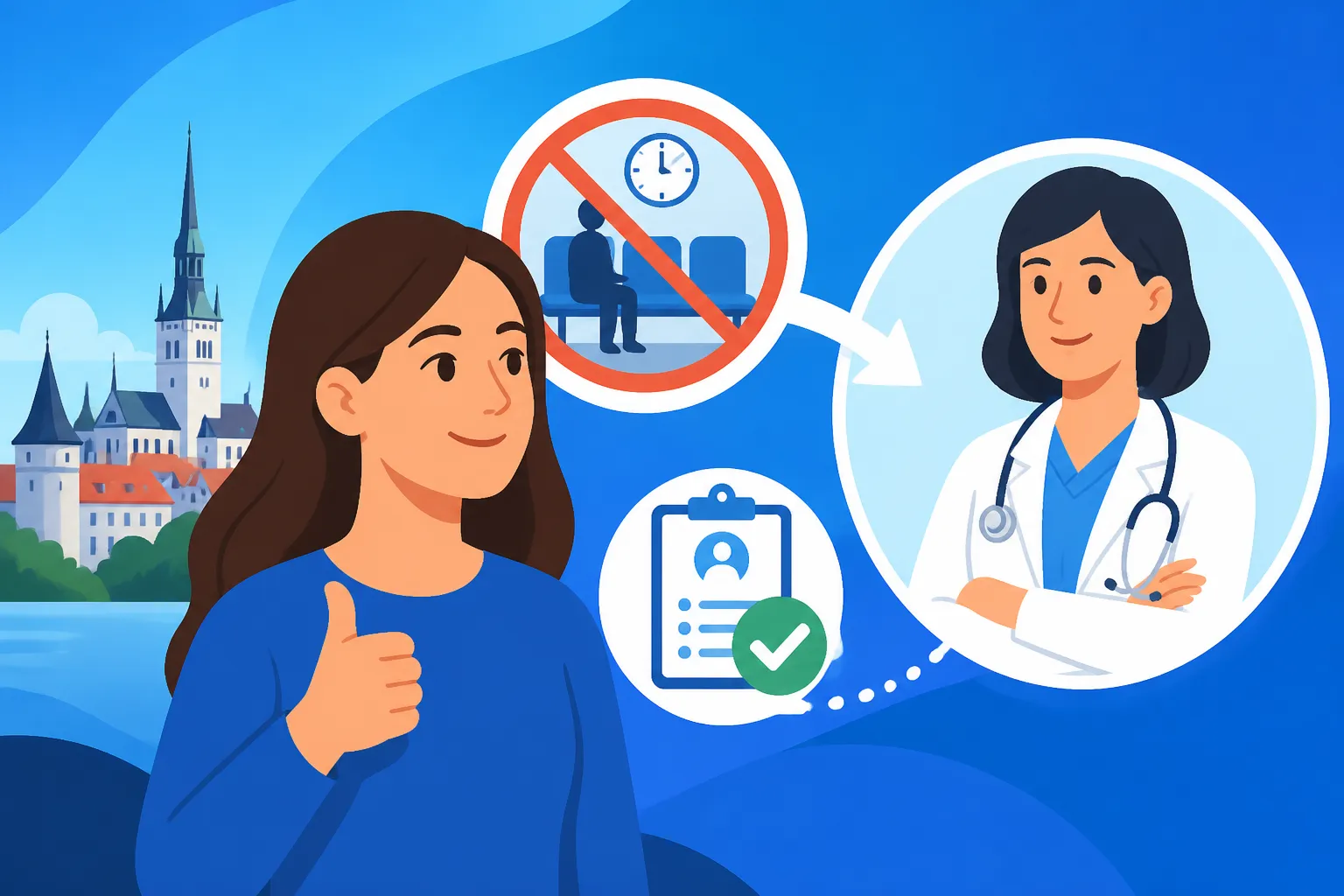
How Do I Get a Specialist Referral Without Long Waits in Estonia?
Moving to Estonia often feels like entering a digital utopia until you need to see a specialist for a persistent health issue. Waiting times for public appointments can stretch for months, leaving you frustrated and worried about your well-being. This guide explains how to bypass long queues, navigate the e-referral system, and leverage private options to get the care you need immediately.
Understanding the Specialist Referral System in Estonia
The Estonian healthcare system is built on a "gatekeeper" model. This means that for the vast majority of medical issues, you cannot simply call up a cardiologist or a neurologist and book an appointment. Your first point of contact must always be your primary care provider. If you are new to the country, The Expat Guide to Finding a Family Doctor (Perearst) in Estonia is an essential resource to help you get registered before an urgent need arises.
Once you meet with your family doctor, they will evaluate your symptoms. If they determine that your condition requires a higher level of expertise, they will issue a digital referral. This referral is not a piece of paper; it is an electronic entry in the national health database linked to your personal identification code. This is one of the many reasons why knowing How to Get Your Isikukood (Personal Code) and Why It Matters for Healthcare is the foundation of living in Estonia. Without that code, the digital gears of the referral system simply cannot turn for you.
There are a few exceptions to the referral rule. In Estonia, you generally do not need a referral to see a gynecologist, a dermatologist, an ophthalmologist, or a psychiatrist. For almost everything else—from orthopedists to gastroenterologists—the digital referral is the mandatory "key" to unlocking a public appointment. However, having the key doesn't mean the door opens immediately. The wait times for these public slots are notoriously long, often ranging from four weeks to four months depending on the specialty and the city.
The Reality of Public Waiting Lists
The primary reason for the long waits in the public system is the way the Estonian Health Insurance Fund (Tervisekassa) allocates its budget. Each hospital, such as the East Tallinn Central Hospital (ITK) or the North Estonia Medical Centre (PERH), has a specific contract with the state. These contracts dictate how many "public" appointments the state will pay for each quarter. Once a hospital reaches its limit for a particular specialty, they cannot offer any more state-funded slots until the next budget cycle begins, regardless of how many doctors are actually standing in the building.
This creates a "bottleneck" where thousands of residents are competing for a limited number of subsidized slots. For an expat used to faster systems, this can be incredibly demoralizing. You might find yourself staring at a screen that says the next available appointment for an endocrinologist in Tallinn is five months away. It is important to remember that this isn't necessarily a shortage of doctors, but a limitation of the state's current funding structure.
When you are facing these long waits, you have to decide between patience and your budget. This is where the debate of Public vs Private Healthcare in Estonia: Which Should Expats Choose? becomes very practical. If you have a minor, non-urgent issue, waiting might be fine. But for anything affecting your quality of life, you need to know the workarounds to skip the line.
How to Get a Specialist Appointment Faster
The most effective way to skip the three-month wait is to opt for a "Tasuline vastuvõtt" or a paid appointment. In Estonia, even the large public hospitals offer paid slots. These are the exact same specialist doctors, working in the same offices, but because you are paying the full market rate out of your own pocket instead of relying on the Tervisekassa subsidy, you can often get an appointment within a few days or a week.
When you choose a paid appointment, the digital referral rules often change. Many private clinics and paid departments in public hospitals will see you without a referral if you are paying the full fee. However, even if a referral isn't strictly required for the visit, it is still highly recommended to have your family doctor write one. This ensures that the specialist can see your medical history in the digital system. You can learn more about this process in our guide on Understanding E-Referrals (Saatekiri) Work for Specialists in Estonia to ensure you don't miss any digital steps.
For those who find the private fees in Estonia to be a burden, having secondary coverage is a lifesaver. Many expats choose to use SafetyWing as a supplement to their local coverage. SafetyWing can be particularly helpful because it allows you to seek private care and get treated by specialists without waiting for the public system's budget to reset. Using a private provider like SafetyWing often means you can simply book the fastest appointment available at a clinic like Confido or Qvalitas and handle the reimbursement later, effectively buying back your time and health.
Navigating the Digital Health Portals
Estonia’s digital infrastructure is its greatest pride, and the Health Portal (Terviseportaal) is where you will manage your specialist journey. To use this system, you need your ID-card or Mobile-ID and a card reader or a functioning Smart-ID app. This portal allows you to see every referral your doctor has issued and search for available appointments across the entire country.
A pro tip for expats: do not just search for appointments in Tallinn. If you live in the capital and see a four-month wait, try searching for specialists in Tartu, Pärnu, or even smaller towns like Haapsalu. The Estonian train system is excellent, and a two-hour trip to Tartu could save you three months of waiting. When you log in, the system will show you a list of all clinics that have open slots. You can filter by "Tervisekassa" (publicly funded) or "Tasuline" (private/paid).
If you are struggling to navigate the interface, reading up on Understanding the Digilugu (Digital Health Record) System in Estonia will give you a step-by-step look at how to find these elusive slots. The portal is available in English, but some of the specific medical terms in the appointment descriptions might still be in Estonian. Keeping a translation app handy is a must for any veteran expat navigating the Navigating Estonia's Digital Healthcare System: An Expat's Roadmap (2027).
Cost Comparison for Specialist Care
The price of skipping the wait varies significantly depending on the clinic and the specialty. While a public visit usually costs a standard 5€ fee, a private visit can range from 50€ to over 150€. This table provides a realistic look at what to expect in 2026 for common specialist visits in major cities like Tallinn and Tartu.
| Specialty | Public Wait Time | Private Wait Time | Public Cost | Private Cost (Est.) |
|---|---|---|---|---|
| Dermatologist | 4–8 Weeks | 2–5 Days | 5€ | 60€ – 90€ |
| Cardiologist | 10–16 Weeks | 3–7 Days | 5€ | 80€ – 120€ |
| Orthopedist | 8–12 Weeks | 2–6 Days | 5€ | 70€ – 110€ |
| Gynecologist | 3–6 Weeks | 1–3 Days | 5€ | 50€ – 80€ |
| Neurologist | 12–20 Weeks | 5–10 Days | 5€ | 90€ – 150€ |
Keep in mind that these "Private Cost" estimates are just for the initial consultation. If the specialist needs to perform an ultrasound, a biopsy, or an MRI, those costs will be added to your bill if you are in the "Paid" stream. This is why a comprehensive guide on The Cost of Healthcare in Estonia: A Complete Breakdown for Foreigners (2026) is so important for financial planning. Many foreigners are shocked when a 70€ consultation turns into a 400€ bill because of diagnostic tests. Again, this is where having SafetyWing can provide a massive safety net, as it helps cover these unexpected private costs that the local state insurance won't touch if you choose to jump the queue.
Practical Tips for Getting Seen Faster
If you cannot afford a private visit and there are no public slots available, don't give up. The digital portal is updated in real-time. People cancel appointments every single day. One of the best strategies is to check the portal early in the morning, around 8:00 AM or 9:00 AM. Often, slots that were canceled the night before will reappear. It requires persistence, but many expats have managed to snag a public appointment within a week just by being diligent with their refreshes.
Another strategy is to call the registration desk of the hospital directly. While the digital portal is powerful, sometimes the receptionists have a clearer view of the schedule or can put you on a "cancellation list" (though this is less common than it used to be). If your Estonian isn't fluent, don't worry. Most medical receptionists in Tallinn and Tartu speak good English. If you are nervous about the language barrier, check our tips on How to Find an English-Speaking Doctor in Estonia to ensure you're calling the right places.
Lastly, if your condition worsens while you are waiting for a specialist, do not hesitate to contact your family doctor again. They have the power to mark a referral as "Urgent" (Kiireloomuline). An urgent referral bypasses the standard waiting list and requires the hospital to see you within a much shorter timeframe, usually a few days. However, doctors only use this for genuinely serious or deteriorating conditions, so be honest and detailed about your symptoms.
Using Private Clinics for Specialized Procedures
Sometimes the wait isn't just for the consultation, but for the procedure itself—like a surgery or a high-tech scan. In these cases, private clinics like Confido Medical Centre in Tallinn offer a comprehensive alternative. These clinics house specialists, diagnostic labs, and even surgical suites under one roof. While the out-of-pocket costs are higher, the efficiency is unmatched. You can often get a consultation, an MRI, and a follow-up treatment plan all within the same week.
For many expats, the peace of mind offered by these private centers is worth the price. If you are working for a startup or a tech company in Estonia, check if your employer provides additional private health insurance as a perk. Many do, precisely because they know the public system can be slow. If they don't, individual plans or travel-medical hybrids like SafetyWing are the most common ways foreigners manage their health expenses. SafetyWing is particularly popular among the digital nomad community in Tallinn because it offers that crucial flexibility to choose private specialists when the public system is bogged down.
Navigating specialist care in Estonia requires a blend of digital savvy and a clear understanding of when to spend money to save time. By mastering the portal, understanding the "Tasuline" system, and ensuring you have the right insurance coverage, you can ensure that your health is never left on a months-long waiting list.
Disclaimer
The information provided in this guide is for informational purposes only and does not constitute professional medical or legal advice. Healthcare regulations, waiting times, and costs in Estonia are subject to change. Always consult with a qualified healthcare provider or the Estonian Health Insurance Fund (Tervisekassa) for the most current information regarding your specific medical situation.