Can Tourists Access Emergency Care in Estonia for Free?
Arriving in Tallinn’s medieval Old Town as a tourist is usually a dream, but that dream can quickly turn into a nightmare if you suddenly face a medical crisis. Many travelers assume that because Estonia is in the EU, emergency care is automatically free for everyone. This guide clarifies the confusing reality of Estonian medical billing for tourists and helps you navigate the system without financial ruin.
Understanding the Definition of Emergency Care in Estonia
In Estonia, the legal term for emergency care is vältimatu abi, which translates literally to "unavoidable aid." This refers to medical services provided in situations where delaying care could lead to the death or permanent disability of the patient. If you are a tourist and you find yourself in such a state, Estonian law mandates that healthcare providers must treat you immediately. However, "must treat" does not mean "must treat for free." The distinction between the obligation to provide care and the obligation to pay for it is where many tourists get caught off guard.
If you are an EU citizen carrying a valid European Health Insurance Card (EHIC), your experience will be significantly different from someone visiting from the United States, Canada, or Australia. For EHIC holders, the Estonian Health Insurance Fund covers the majority of the costs, but you will still be expected to pay a small "visit fee," which is currently capped at 5 Euros for an emergency room visit. You can learn more about how this works in our guide on How to Use Your EHIC (Euroopa Ravikindlustuskaart) in Estonia. Without this card, or if you are from a non-EU country, you are technically responsible for the full market price of every bandage, blood test, and doctor’s minute.
The reality of "free" care is often misunderstood. Even if you are admitted to the hospital, there are "inpatient" fees. For the first ten days of a hospital stay, a daily fee (voodipäevatasu) of roughly 2.50 Euros applies to those with coverage. For tourists without coverage, these daily rates can skyrocket into the hundreds or thousands of Euros depending on the intensity of the care required. This is why understanding Emergency Medical Care in Estonia: What Every Expat Needs to Know is vital even if you are just passing through for a week.
The Triage System and Why It Matters for Your Bill
When you walk into an Emergency Medicine Department (locally known as an EMO), you aren't seen on a first-come, first-served basis. You are triaged. A nurse will assign you a color code based on the severity of your condition. Red and orange cases are immediate; yellow cases are urgent; green and blue cases are considered non-emergencies.
If you go to the EMO with a condition that the triage nurse deems "non-emergency" (like a mild sore throat or a small cut that doesn't need stitches), you might be told to wait for six hours. More importantly, you might be charged a significantly higher "consultation fee" because you are using emergency resources for a primary care issue. This is a common trap for tourists who don't have a local doctor. If your situation is not life-threatening, you should always check our advice on How to Find an English-Speaking Doctor in Estonia to avoid the heavy EMO price tag.
The Financial Reality for Non-EU Tourists
For visitors coming from outside the European Union, the concept of free healthcare in Estonia is a myth. While the prices are significantly lower than what you might expect in a private US hospital, they are still substantial enough to derail a vacation budget. If you are uninsured, the hospital will expect payment, often upfront or via a guarantee of payment from an insurance provider.
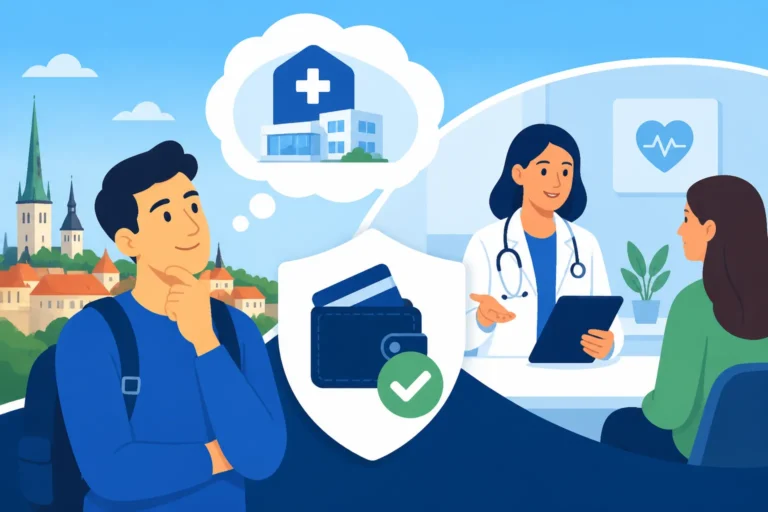
A typical visit to the EMO for a non-EU tourist can start with a base fee of 50 to 100 Euros just to see a doctor. Once you factor in diagnostics—such as an X-ray (around 30-50 Euros), an ultrasound (70-100 Euros), or a CT scan (200-400 Euros)—the bill grows quickly. If you require surgery or a multi-day stay in the intensive care unit, you are looking at thousands of Euros. This is exactly where a dedicated travel insurance policy like SafetyWing becomes an essential safety net, as they are designed to handle these specific types of "sudden and unforeseen" medical expenses.
The billing process for non-EU citizens is often handled by the hospital’s international department. They will generate an invoice based on the Estonian Health Insurance Fund’s price list, but usually with a multiplier for "uninsured" or "private" patients. It is worth noting that while The Cost of Healthcare in Estonia: A Complete Breakdown for Foreigners (2026) provides a good baseline, tourist prices can sometimes be higher due to administrative surcharges.
Common Emergency Costs for Tourists
To give you a clearer picture of what you might face, here is a comparison of estimated costs for various emergency services in Estonia for a tourist without EU insurance.
| Service Category | EHIC Holder Cost | Non-EU / Uninsured Cost |
|---|---|---|
| EMO Visit Fee | ~5 EUR | 80 – 150 EUR |
| Ambulance Dispatch | 0 EUR | 100 – 200 EUR |
| Hospital Stay (per day) | ~2.50 EUR | 300 – 800 EUR |
| Standard X-ray | 0 EUR | 40 – 70 EUR |
| Specialist Consultation | 5 EUR (with referral) | 100 – 200 EUR |
It is a common misconception that the ambulance is always free. While the act of the ambulance arriving and the medics stabilizing you is often subsidized for the public, the hospital bill that follows is not. You can read more about the specific breakdown in our post on How Much Does an Ambulance (Kiirabi) Cost in Estonia?. Using a service like SafetyWing can often cover these costs directly, saving you from having to pay out-of-pocket and seeking reimbursement later.
Where to Go When an Emergency Strikes
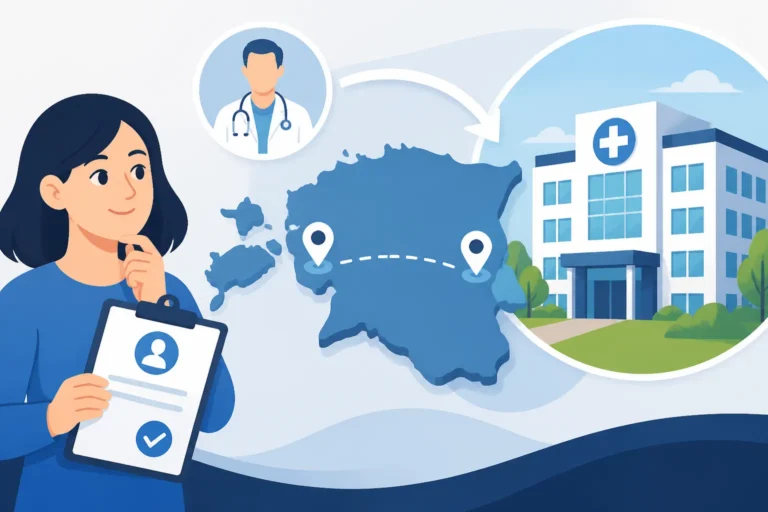
If you are in a life-threatening situation, the universal emergency number in Estonia is 112. The operators generally speak English, Estonian, and Russian. If you can move on your own but need urgent care, you should head to the nearest EMO. In Tallinn, the most common destinations are the North Estonia Medical Centre (PERH) in Mustamäe or the East Tallinn Central Hospital (ITK) near the city center.
When you arrive at the EMO, you must present your passport or ID card. If you have travel insurance, like SafetyWing, have your policy number and the insurer’s contact information ready. The staff will likely ask for your address in Estonia (your hotel or Airbnb) and your home address. Even in an emergency, the administrative wheels keep turning, and having this information ready can speed up your admission.
Language Barriers and Communication
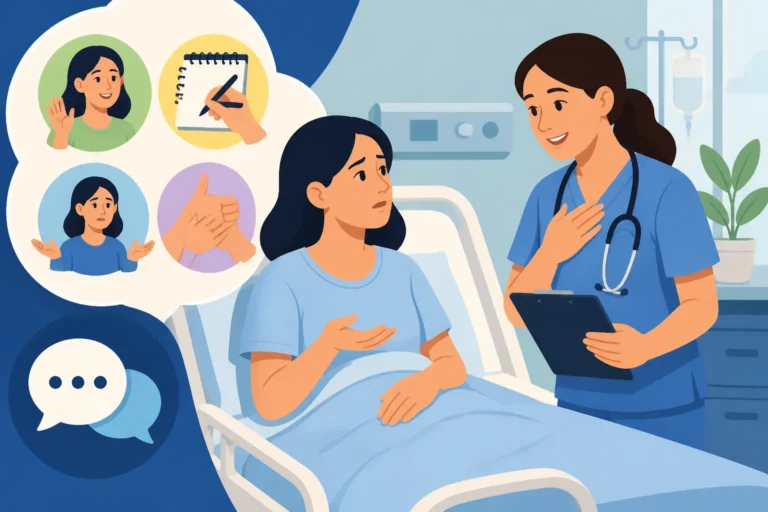
While Estonia is a highly digital and modern society, the level of English in hospitals can vary. Younger doctors and nurses at major hospitals like PERH usually speak excellent English. However, in more remote areas or with older staff, communication can be a struggle. If you find yourself in a smaller town like Viljandi or Narva, the language barrier might feel more significant.
If your condition isn't an absolute emergency but you need advice, you can call the Family Doctor Advice Line at 1220. They offer advice in English daily from 15:00 to 17:00. This can be a lifesaver if you aren't sure if your symptoms warrant a trip to the EMO. If they do suggest you go to the hospital, having a clear understanding of Understanding Emergency Numbers (112) and Ambulance Care in Estonia will help you stay calm during the process.
Prescriptions and Follow-up Care for Visitors
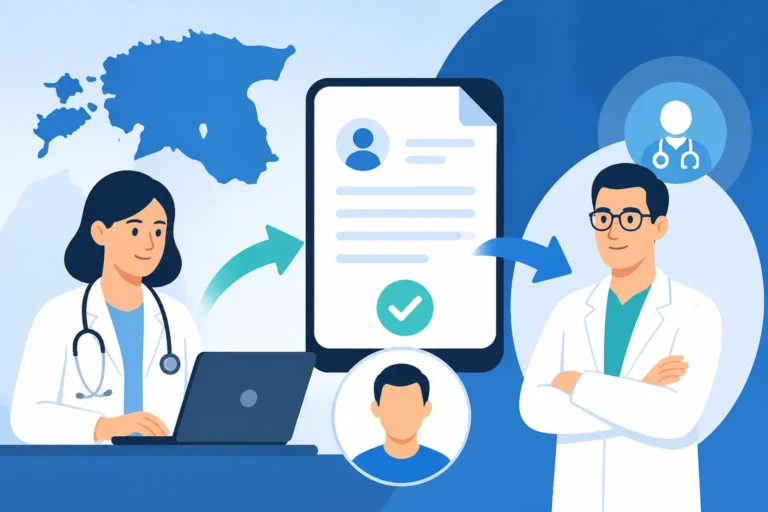
If the emergency room doctor treats you and sends you on your way, they will likely issue a digital prescription (digiretsept). As a tourist, this is where things get a bit tricky. Your "isikukood" (Estonian personal code) is usually the key to the digital system. Since you don't have one, the doctor will issue the prescription against your passport number.
You can then go to any pharmacy (apteek) and present your passport to buy the medication. You will have to pay the full price of the medicine, as tourists do not qualify for the state subsidies that residents receive. For more information on where to find medication at odd hours, see our guide on What Pharmacies Are Open Late or 24 Hours in Tallinn. This is another area where travel insurance like SafetyWing is useful, as they often reimburse the cost of emergency-related prescriptions.
Why You Shouldn't Rely on "Free" Care
Relying on the hope of free care is a risky strategy. Even if a hospital provides life-saving treatment without asking for a credit card upfront, they will eventually send the bill to your home address or pass it to a collection agency. Moreover, the Estonian healthcare system is under significant pressure, and waiting times for non-critical issues can be many hours.
Understanding the Estonian Pharmacy (Apteek) system and Opening Hours is also essential because many over-the-counter medications you might find in a supermarket in the UK or US are only sold in pharmacies in Estonia. If you have a minor injury, a pharmacist might be able to help you for free, saving you an expensive and unnecessary trip to the hospital.
Practical Steps to Protect Yourself
Before you even board your flight to Lennart Meri Tallinn Airport, there are several things you should do to ensure you aren't left with a massive medical bill. First, if you are an EU citizen, double-check the expiry date on your EHIC. If it’s expired, it’s useless. Second, regardless of where you are from, print out a physical copy of your insurance policy. In a crisis, scrolling through your phone to find a PDF is the last thing you want to do.
If you are a frequent traveler or a digital nomad, considering a flexible policy like SafetyWing is often the most logical choice because it covers you globally and can be started even after you have already left home. It provides a bridge between the high-cost "private" reality of being an uninsured tourist and the subsidized public system that is reserved for residents.
Finally, keep a small "medical kit" in your bag with your essential information. This should include:
- A copy of your passport.
- Your insurance card (EHIC or private like SafetyWing).
- A list of any chronic conditions or allergies.
- A list of medications you are currently taking (using their generic names, as brand names vary in Estonia).
Knowing how to get an Isikukood in Estonia isn't usually necessary for a short-term tourist, but if you decide to extend your stay and become a resident, it will be the first step in joining the public healthcare system. Until then, your best defense is a combination of caution and a solid insurance policy.
Disclaimer
The information provided in this guide is for educational and informational purposes only and does not constitute legal or medical advice. Healthcare regulations and pricing in Estonia are subject to change. Always consult with official government sources or a qualified legal professional regarding your specific situation and insurance requirements.