How Do I Use a Digiretsept at a Pharmacy in Estonia?
Moving to Estonia often feels like stepping ten years into the future, but that digital shift can be jarring when you are used to the paper-heavy bureaucracy of other countries. If you are standing in a pharmacy wondering why the doctor didn't give you a slip of paper, don't panic. This guide explains how to navigate the Digiretsept system, from the doctor’s office to the pharmacy counter, ensuring you never leave empty-handed.
The Reality of Digital Prescriptions in Estonia
When I first moved to Tallinn, I remember leaving my family doctor’s office feeling incredibly anxious. The doctor had told me my medication was "in the system," but I had nothing to show for it—no signed paper, no official-looking stamp, nothing. I spent the walk to the pharmacy convinced there had been a misunderstanding. However, in Estonia, the digital prescription, or Digiretsept, is the absolute standard. It is a centralized, paperless system where your medical data is tied directly to your personal identification code, known as the Isikukood.
This system is designed to reduce errors, prevent the loss of physical scripts, and allow pharmacists to see your medication history to check for dangerous drug interactions. For an expat, this means you no longer have to worry about losing a piece of paper or having to decipher a doctor’s famously messy handwriting. Everything is stored in a secure government cloud. You can find more details on the infrastructure behind this in the guide on Understanding the Digiretsept (Digital Prescription) System in Estonia.
The beauty of this system is its universality. Whether you are at a large Apotheka in a shopping mall or a tiny Benu pharmacy in a rural village, the pharmacist can access your prescription instantly. They don't need to call your doctor or verify a signature; they simply need to verify who you are. This level of integration is a cornerstone of the Estonian "e-state," and once you get used to it, going back to paper scripts feels like moving back to the Stone Age.
How the Prescription Reaches the System
The process starts at your consultation. Whether you are seeing a specialist or a general practitioner, the doctor enters the prescription details into the national health information system. They specify the dosage, the duration, and whether the prescription is repeatable. For those still looking for a primary care provider, you might want to check How Do I Find an English-Speaking Family Doctor in Tallinn? to ensure your initial setup is smooth.
Once the doctor hits "save," the prescription is live. There is no waiting period for the data to sync. You could theoretically walk out of the doctor's office, enter the pharmacy next door, and your medication would be ready for pickup. This is particularly helpful during emergencies or when you are traveling within the country and realize you’ve forgotten your daily medication.
Repeat Prescriptions and Remote Management
One of the best features for long-term residents is the ability to handle repeats without a physical visit. If you have a chronic condition, your doctor can issue a "repeat" prescription which you can claim in installments. When you run out of repeats, you often don't even need to book an appointment. Many doctors allow you to request a renewal via email or a phone call, provided you have had a check-up recently.
If you are a digital nomad or an expat who hasn't yet qualified for the public system, you might be using private coverage like SafetyWing. While SafetyWing is excellent for covering unexpected illnesses and accidents while you transition into the Estonian system, the digital prescription process remains the same regardless of who is paying—the pharmacist just needs to see your ID. You can learn more about managing these tasks online in How Do I Get a Prescription Renewed Online in Estonia? to save yourself a trip to the clinic.
Stepping Into the Apteek: The Pickup Process
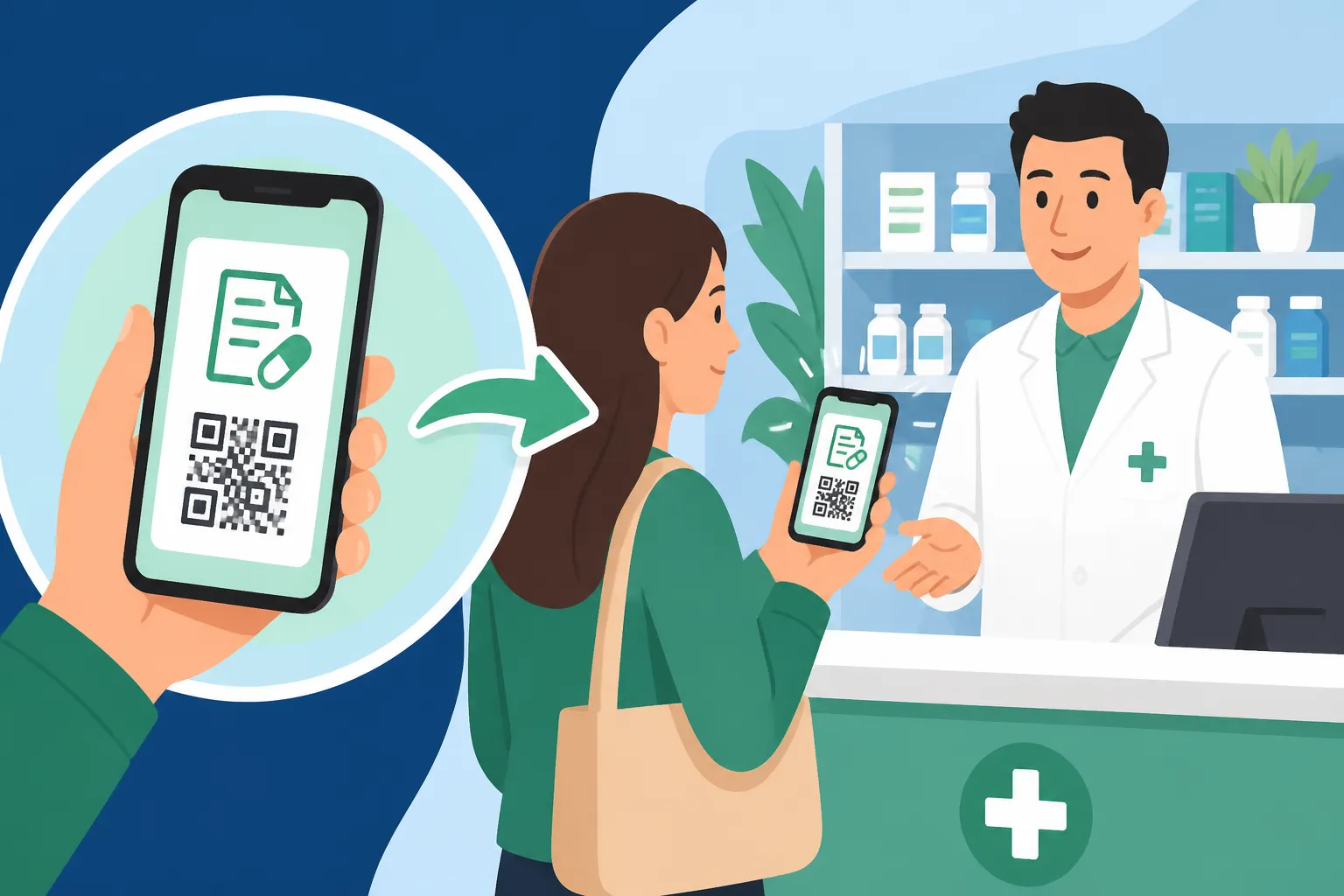
When you enter an Estonian pharmacy, which you will recognize by the sign "Apteek," the process is refreshingly simple but requires one specific item: your photo ID. This can be your Estonian ID card, your residence permit card (Elamisluba), or even your digital ID on your phone if you have Mobile-ID or Smart-ID set up. For foreigners who have not yet received their local ID, a passport will often suffice, provided your Isikukood is already registered in the health system.
Many newcomers try to show the pharmacist a photo of a prescription or an email from their doctor. While the pharmacist might be sympathetic, they cannot legally dispense medication based on a photo. They must "log in" to your digital file using your ID card. This ensures that the medication goes to the right person and that the state's health insurance fund, Tervisekassa, applies any discounts you are entitled to.
Verifying Your Identity at the Counter
Once you reach the counter, simply tell the pharmacist you have a digital prescription. In Estonian, you can say "Tere, mul on digiretsept." They will then ask for your ID card, which they will insert into a card reader. On their screen, a list of all your active, unclaimed prescriptions will appear. They will see the name of the drug, the strength, and the instructions provided by your doctor.
It is important to note that the pharmacist can also see if you have any "pending" prescriptions that are not yet active. Sometimes, doctors postdate prescriptions for chronic conditions so you can't buy them all at once. If you are curious about how these locations operate across the country, refer to Understanding the Estonian Pharmacy (Apteek) System and Opening Hours for more logistical help.
Buying Medication for Family or Friends
A common question is whether you can pick up medicine for someone else. The answer is yes, but it requires a bit of preparation. In the Estonian system, you can authorize another person to see and buy your prescriptions via the national health portal. If you haven't set up this authorization, the person picking up the medicine must know your Isikukood and present their own ID card.
The pharmacist will record the ID of the person who actually collected the medication. This is a great safety feature, as it creates a digital trail of who picked up what and when. For parents, this is seamless, as children’s prescriptions are automatically linked to their parents' ID cards in the system. If you are managing healthcare for your whole household, Prescription Medications and Pharmacies in Estonia: The Complete Guide offers deeper insights into family management.
Costs, Discounts, and the Role of Insurance
One of the most pleasant surprises for expats is the cost of prescription medication in Estonia, especially if you are covered by the national health insurance. The Tervisekassa (Health Insurance Fund) subsidizes a large portion of many essential medicines. These discounts—usually 50%, 75%, or even 100% after a small mandatory co-payment—are applied automatically at the pharmacy counter. You don’t need to fill out any reimbursement forms.
The price you pay at the register is the final price. The pharmacist’s computer calculates your insurance status in real-time. If you are currently in a gap between jobs or waiting for your residency to process, your insurance status might be "inactive." In these cases, you will have to pay the full "retail" price of the medication. This is where having a backup like SafetyWing becomes a lifesaver. While SafetyWing is primarily for travel and emergency medical situations, it provides that crucial peace of mind during your first months in the country when you might not yet be fully integrated into the local social tax system.
Understanding the Co-payment System
Even with 100% coverage, there is usually a small "reception fee" or co-payment for each prescription, typically around 2.50 EUR. This is a flat fee that goes toward the administrative costs of the pharmacy. If you are buying several different medications, you will pay this fee for each unique prescription line.
| Type of Medication | Tervisekassa Discount | Typical Out-of-Pocket Cost |
|---|---|---|
| Standard (Non-subsidized) | 0% | Full Market Price |
| Chronic Illness Meds | 75% – 100% | 2.50 EUR + small % |
| General Subsidized Meds | 50% | Half Price + 2.50 EUR |
| Hospital-issued Scripts | 100% | 2.50 EUR |
For those interested in the broader financial picture of Estonian healthcare, including what to expect for non-prescription costs, I recommend reading The Cost of Healthcare in Estonia: A Complete Breakdown for Foreigners (2026).
What If the Medication Is Out of Stock?
If a pharmacy doesn't have your specific brand in stock, the digital system allows them to see equivalent generic versions. In Estonia, pharmacists are actually required by law to offer you the cheapest generic alternative if your doctor hasn't specifically insisted on a brand name for medical reasons. This is a fantastic way to save money. If you insist on a specific brand that is more expensive, you will have to pay the difference yourself.
In rare cases where a medication is out of stock across the city, the pharmacist can check the stock of other branches of their chain. Because the prescription is digital, you don't need to "take it back" from them. You can simply walk to the other branch, and they will see the prescription is still "unclaimed" in the system. To better understand the differences in care levels and costs, you might find Public vs Private Healthcare in Estonia: Which Should Expats Choose? helpful.
Managing Your Health Data via Digilugu
Everything related to your prescriptions is visible to you through the national health portal, known as Digilugu (Health Record). You can log in at terviseportaal.ee using your Smart-ID or ID card. This portal is an expat's best friend for tracking health history. Under the "Prescriptions" tab, you can see every script ever issued to you, its expiration date, and whether it has been claimed.
I highly recommend checking this portal before heading to the pharmacy, especially if it has been a few months since your doctor’s visit. Prescriptions in Estonia usually expire after 60 to 180 days, depending on the type. If you show up at the pharmacy and the script has expired, the pharmacist cannot help you—you will need to contact your doctor for a renewal.
Resolving Issues with Inactive Insurance
A common frustration for new expats is finding out at the pharmacy counter that their health insurance is not yet active. This often happens if your employer hasn't finalized your registration or if you are on a specific type of visa. If you find yourself in this situation, you will be charged the "full price," which can be significantly higher for specialized medications.
To avoid these surprises, you should read What Happens If I Get Sick Before My Health Insurance Starts in Estonia? to understand your rights and the temporary measures you can take. During these "limbo" periods, having an international policy like SafetyWing ensures that if your medication is part of an emergency treatment plan, you aren't left footing a massive bill alone.
Using Foreign Prescriptions in Estonia
If you have just arrived and have a paper prescription from your home country, the situation is a bit more complex. Estonian pharmacies are generally allowed to accept prescriptions from other EU countries if they contain specific information. However, scripts from outside the EU (like the US or India) are usually not accepted directly.
In these cases, you will need to take your foreign script to a local Estonian doctor, who will then "convert" it into a local Digiretsept. This is a standard procedure and usually quite quick. For a detailed walkthrough of this process, check out Can I Use a Foreign Prescription at an Estonian Pharmacy?.
Staying Prepared with Private Coverage
While the Estonian public system is world-class in its digital efficiency, it isn't always instant for those arriving on a D-visa or a Digital Nomad Visa. If you are here for a shorter stay or are in the process of setting up your OÜ, you may not be paying into the social tax system yet. In these scenarios, the digital prescription system still works for you, but you will be paying the non-subsidized price.
Using a service like SafetyWing is a smart move for expats who want to ensure they have medical support while navigating the initial administrative hurdles of residency. It acts as a bridge, giving you the security to explore Tallinn or Tartu without worrying about the high costs of private emergency consultations. You can find more about the early days of residency in How Do I Access My Digilugu Health Record Online in Estonia? to get your digital identity sorted as soon as possible.
Final Thoughts on Navigating the System
Using a Digiretsept is one of those things that feels complicated until you do it once. After your first successful trip to the pharmacy, you will wonder why the rest of the world hasn't adopted this system yet. No more lost papers, no more confusion about dosages, and a perfectly clear history of your care.
Just remember the golden rule: Always bring your ID card. Without it, the "e-Estonia" magic simply can't happen. If you stay proactive by checking your health portal and ensuring your insurance status is correct, your medical needs in Estonia will be handled with an efficiency you've likely never experienced before.
Disclaimer
The information provided in this guide is for informational purposes only and does not constitute professional medical or legal advice. While we strive to keep our content updated, Estonian healthcare regulations and digital systems can change. Always consult with a qualified medical professional or the Estonian Health Insurance Fund (Tervisekassa) for specific advice regarding your health and insurance coverage. For emergency situations, always dial 112.