Understanding Residence Options for Retirees in Estonia
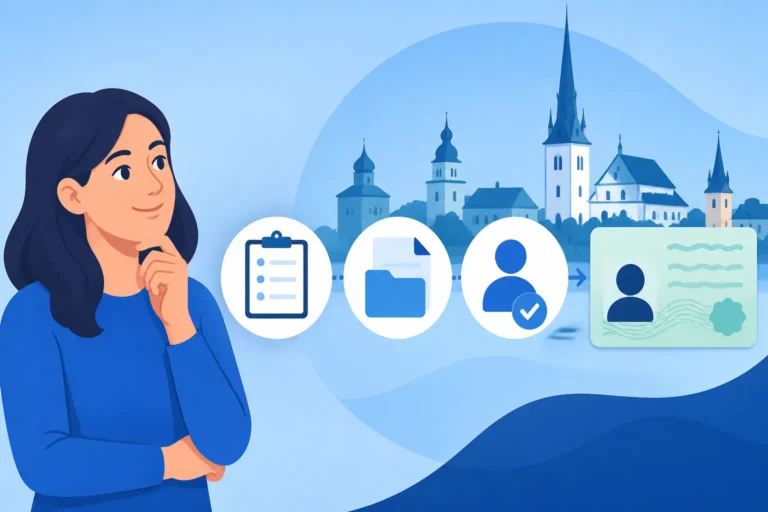
So, you're dreaming of spending your golden years amidst the tranquil forests, charming medieval towns, and vibrant digital pulse of Estonia? It's a beautiful vision, isn't it? Many of us expats who've settled here can attest to the magic of this Nordic-Baltic gem. However, if you're picturing a straightforward "retirement visa" where you can simply show your pension statement and settle in, I'm here to give you a dose of honest reality. Estonia, for all its allure, doesn't make it easy for non-working, non-dependent retirees to gain long-term residence. This guide is going to walk you through the often-frustrating landscape of residence options for retirees in Estonia, laying out the practicalities, the bureaucratic hurdles, and the absolute necessities you'll need to consider.
The Reality of Retiring in Estonia: More Complex Than It Seems
Let's be frank right from the start: Estonia isn't one of those warm, sunny European countries actively advertising a "golden visa" or a special, easy path for retirees. While it welcomes skilled workers, students, and entrepreneurs with open arms, the pathway for someone simply looking to live off their pension or savings without an active contribution to the economy or strong family ties here is, well, practically non-existent. This can be a tough pill to swallow for those who've fallen in love with Estonia's unique charm, but it's crucial to understand this fundamental difference upfront.
No Dedicated "Retirement Visa" or Golden Visa
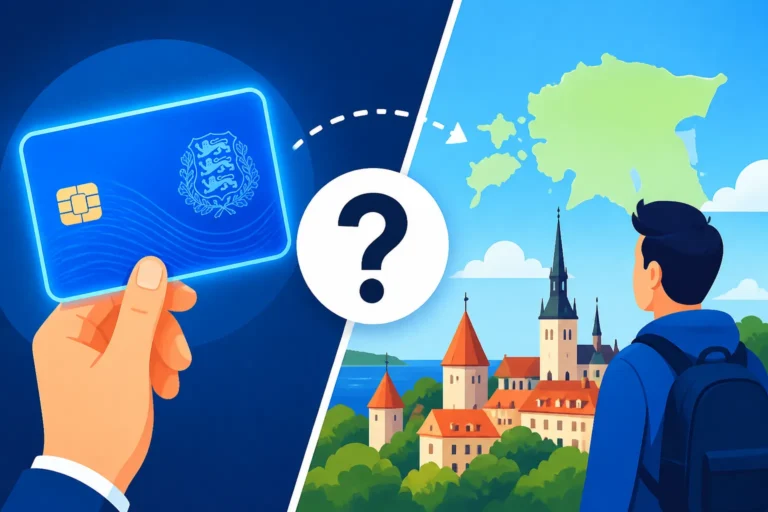
When you start researching "retirement in Estonia," you'll quickly notice a conspicuous absence: there's no specific visa category for retirees. Unlike countries that offer long-stay visas based purely on passive income or substantial investments (often called "golden visas" or "D7 visas" in places like Portugal), Estonia's immigration policy is very much geared towards economic contribution. This means that if your primary intention is to reside here without working, studying, or joining family, you're immediately facing an uphill battle against the default immigration categories.
Many foreigners who arrive with hopes of an easy transition, only to be met with the stark reality that the Police and Border Guard Board (PPA) doesn't have a box to tick for "foreign pensioner looking for quiet life." It’s not about welcoming specific demographics but about ensuring that new residents contribute to or integrate within the existing societal framework primarily through employment, education, or family. This isn't to say it's impossible, but it requires a creative and often complex approach, which we'll delve into.
Understanding Estonia's Immigration Philosophy
Estonia's immigration philosophy is rooted in pragmatism. It's a small nation with a relatively low population density, and its policies are designed to attract individuals who can actively contribute to its growth and development. This usually means skilled workers, innovative entrepreneurs, or those pursuing higher education. For instance, the Estonian government has made great strides in attracting tech talent and supporting its vibrant startup ecosystem. The focus is often on economic output and integration into the workforce.
For retirees, this means you're generally expected to fit into one of the existing categories that are not designed with retirement in mind. The PPA evaluates applications rigorously, and the burden of proof is always on the applicant to demonstrate how they meet the strict criteria of these categories. Without a clear path, you're often trying to force a square peg into a round hole, which can be incredibly frustrating and time-consuming. It’s a very different system from many Western countries, and understanding this underlying principle is key to managing your expectations.
Exploring Potential Residence Pathways (and their Hurdles)
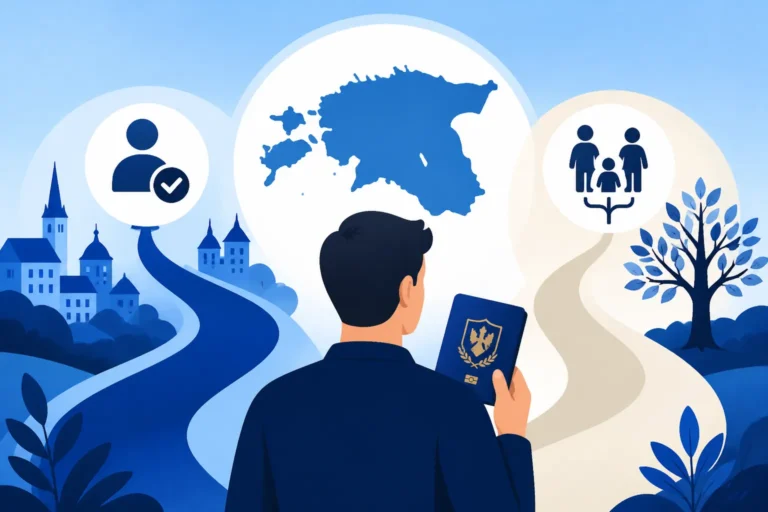
Given the lack of a specific retiree visa, what are the options? You'll likely need to explore the existing residence permit categories, each with its own set of significant hurdles for someone primarily looking to retire. Remember, these permits are not designed for this purpose, so the fit will often feel awkward at best.
Residence Permit for Employment
The most common route for non-EU/EEA citizens to gain long-term residence in Estonia is through employment. This means securing a job with an Estonian employer who is willing to sponsor your work permit. However, for most retirees, this path is highly impractical, if not impossible. The Estonian job market, while vibrant in certain sectors like IT, is generally not geared towards hiring individuals in their retirement years.
To qualify for an employment-based residence permit, you would typically need to meet several criteria: a valid job offer, a salary that meets the average Estonian gross monthly wage (which varies by sector but is consistently rising), and sometimes proof that no Estonian or EU/EEA citizen could fill the role. Furthermore, many jobs require specific skills, qualifications, and often, some level of Estonian language proficiency, especially outside the international tech sphere. Unless you're a highly sought-after specialist in a specific field and willing to continue working, this route is simply not feasible for most retirees. If you're curious about the general job market, you might find more information in our guide on The Expat Guide to Finding a Job in Estonia (2027), but be prepared for the realities it presents for retirees.
Residence Permit for Business Entrepreneurship
This pathway offers a more plausible, though still challenging, option for some retirees with significant capital or an entrepreneurial spirit. Estonia is famously business-friendly, especially for those looking to start a new company (OÜ – osaühing, or private limited company) or invest in an existing one. The most direct routes here are the Startup Visa or a general Residence Permit for Business. However, neither is a passive investment scheme.
For a Startup Visa, you'd need to convince an expert committee that your innovative business idea has high growth potential and will contribute to Estonia's economy. This requires a solid business plan and active involvement in running the startup, not just funding it. For a general Residence Permit for Business, you’d need to register an OÜ, submit a detailed business plan, and demonstrate sufficient capital (e.g., investing at least €16,000 into the company's share capital if you're a sole owner, or €65,000 for a foreign investment). Crucially, you need to show active participation in the company's activities, demonstrating that your business has significant positive impact on Estonia's economy, such as creating jobs, generating substantial income, or bringing in significant foreign investment. This isn't a route for someone just looking to manage their pension portfolio; it demands real, ongoing business engagement. For a deeper dive into establishing your own venture, check out Self-Employment in Estonia: The FIE and OÜ Guide for Foreigners.
Residence Permit for Family Reunification
If you have a spouse, minor child, or in very specific, limited cases, a dependent parent who is an Estonian citizen or already holds a valid residence permit in Estonia, then family reunification becomes the most straightforward and viable pathway. This route is designed to keep families together and doesn't usually carry the same economic contribution requirements as work or business permits.
However, "straightforward" doesn't mean "easy." The PPA still has strict criteria. The sponsoring family member must prove they have sufficient legal income to support all family members without relying on social benefits, and they must have adequate registered accommodation in Estonia. For spouses, you'll need marriage certificates and proof of a genuine relationship. For dependent parents, the bar is incredibly high; typically, they must be unable to cope independently in their home country and entirely dependent on their Estonian-resident child for sustenance and care. This usually applies in very specific humanitarian or severe health dependency cases, not generally for active retirees looking to enjoy their golden years. Ensure you fully understand the criteria for How to Apply for Family Reunification in Estonia.
Financial Considerations and Self-Sufficiency
Regardless of the permit route you pursue, a fundamental requirement for any long-term residence in Estonia is proving you can financially support yourself and any dependents. This is where many prospective retirees, especially those on fixed pensions, can face significant challenges.
Proving Sufficient Financial Means
The PPA is very clear: you must demonstrate that you have stable, legal income to support yourself and any family members without becoming a burden on the Estonian social welfare system. For most residence permits, this means showing proof of income (e.g., salary, business profits, substantial pension) that meets a certain threshold. While there isn't a fixed "retiree income" standard, the PPA will generally look for income at least equivalent to the average Estonian salary or sufficient funds in a local bank account to cover your living expenses for the duration of your permit. This isn't just a casual glance; they want documented proof.
For instance, if you're trying to establish a business, your business plan needs to show projected profits that will cover your living expenses. If you're joining family, your sponsor needs to demonstrate their ability to support you. It’s not just about having money; it’s about having a reliable source of money that can be legally demonstrated. This is closely tied to the Estonian tax system, and the Maksu- ja Tolliamet (Tax and Customs Board) will be interested in how your income is declared and taxed, even if it's foreign pension income. You will need an [Isikukood Personal Code] to interact with almost any official body, including the PPA and the tax office.
The Cost of Living Reality
While Estonia is generally considered more affordable than many Western European countries, it's certainly not "cheap," especially in Tallinn or Tartu. Your financial planning needs to be realistic and account for rising costs. Rent is usually the largest expense, with a decent one-bedroom apartment in central Tallinn potentially costing €500-€800 per month, not including utilities. Utilities (kommunaalkulud) can add another €100-€300, particularly in winter when heating bills skyrocket.
Groceries, while often locally sourced and good quality, can be comparable to or even higher than some Western European countries for imported goods. Transportation is relatively affordable, and Tallinn offers free public transport to registered residents, but owning a car adds significant costs. Healthcare, as we'll discuss, can also be a major expense if you're relying solely on private insurance. It's essential to do your homework and get a realistic picture of your potential monthly outgoings. Our guide on The Complete Guide to Cost of Living in Estonia for Expats (2026) provides a comprehensive breakdown to help you budget.
Healthcare and Insurance for Retirees in Estonia
This is arguably the most critical and potentially confusing aspect for retirees considering Estonia. Access to the public health insurance fund, Tervisekassa, is primarily linked to employment or self-employment and the social tax payments that come with them. For non-EU/EEA retirees, this often means direct access to Tervisekassa is off the table, making private health insurance an absolute necessity.
Navigating the Tervisekassa (Health Insurance Fund)
Estonia boasts a generally excellent public healthcare system, funded through social tax contributions. If you are formally employed by an Estonian company, are a registered self-employed person (FIE) making sufficient contributions, or are a dependent of someone who is, you generally qualify for Tervisekassa coverage. However, if you're simply retiring, drawing a pension from abroad, and not actively working or running a significant business in Estonia, you will not automatically be covered by Tervisekassa.
This is a stark reality. Many expats are surprised to learn that their foreign pension, no matter how substantial, doesn't automatically grant them access to the public health system. You cannot simply "buy into" Tervisekassa as an independent retiree. Therefore, you must factor in the full cost of private healthcare for yourself and any dependents. For all healthcare interactions, having an How to Get Your Isikukood Personal Code is essential, even for private services, as it's your unique identifier in the digital healthcare system.
The Absolute Necessity of Private Health Insurance
For non-EU/EEA retirees, having robust private health insurance is not just recommended; it's absolutely mandatory for obtaining and maintaining your residence permit. The PPA requires proof of comprehensive health insurance coverage that meets specific criteria, often including sufficient coverage for medical treatment, hospital care, and repatriation. This insurance must be valid for the entire duration of your requested permit.
Choosing the right private health insurance is crucial. You'll need to look for plans that offer comprehensive coverage, as general travel insurance policies are usually insufficient for residence permit purposes. Providers like Cigna Global offer international health insurance plans specifically designed for expats, which can provide the necessary coverage for Estonia. When comparing options, pay close attention to deductibles, coverage limits, pre-existing conditions clauses, and whether the policy covers outpatient care, specialist visits, and prescription medications. Understand that private healthcare in Estonia, while high quality, can be expensive out-of-pocket, so your insurance needs to be robust. For a detailed comparison, our article on Understanding Private Health Insurance Plans in Estonia can be very helpful. Remember, without Tervisekassa, you are fully reliant on your private policy.
Practicalities of Settling Down as a Retiree
Even if you navigate the permit maze, the day-to-day practicalities of moving and settling in as a retiree in Estonia present their own set of considerations. From finding a suitable home to integrating into a new culture, these elements significantly impact your quality of life.
Finding Accommodation and Community
Securing accommodation is one of your first hurdles. The rental market in major cities like Tallinn and Tartu can be competitive, and landlords often require significant deposits (usually one to three months' rent) in addition to the first month's rent. Rental contracts (üürileping) are typically for a fixed term, and understanding your tenant rights and obligations is crucial. For older expats, finding age-friendly housing, perhaps without many stairs or with accessible public transport links, can add another layer of complexity.
While Estonia has a growing expat community, the senior expat demographic is smaller and perhaps less visible than in traditional retirement destinations. Joining local expat groups online or in person can be a great way to meet people, but be prepared that many social activities might be geared towards younger professionals or families. Actively seeking out local community centers, senior clubs, or hobby groups can help foster integration, though language will often be a factor. When planning your move, considering specialized movers like Sirelo can simplify the logistics of bringing your belongings to Estonia, taking some stress out of the initial setup phase.
Language, Integration, and Digital Life
Estonia is a highly digitalized society, which is fantastic for administrative tasks. From signing documents digitally to managing your bank account and accessing your health records via Navigating Estonia's Digital Healthcare System, the e-services are incredibly efficient. However, there's a learning curve, and while many younger Estonians speak excellent English, older generations, especially outside Tallinn and Tartu, may not. This means basic Estonian language skills will significantly enhance your daily life, from grocery shopping to doctor's appointments.
Investing in Estonian language courses is highly recommended for deeper integration and a smoother daily experience. The language barrier can be a source of isolation for many older expats, so proactive learning can make a huge difference. Furthermore, while the digital services are a boon, remember that personal interactions with officials, shopkeepers, or even neighbors might still require some translation or effort. Being comfortable with a digital-first approach to almost everything is key to enjoying life here.
Weighing the Pros and Cons of Retiring in Estonia
Like any significant life decision, choosing a retirement destination requires a careful weighing of advantages and disadvantages. Estonia offers a unique lifestyle, but it comes with its own set of trade-offs, particularly for retirees.
Advantages: What Makes Estonia Appealing
Estonia has a lot going for it. It's an incredibly safe country with low crime rates, offering a peaceful environment to live in. Its stunning natural beauty, from vast forests to a picturesque coastline, provides ample opportunities for outdoor activities. The capital, Tallinn, is a UNESCO World Heritage site with a vibrant cultural scene, excellent restaurants, and a growing international atmosphere. Tartu offers a charming university town vibe, while smaller towns offer genuine tranquility.
The digital society is a huge plus, streamlining bureaucracy and making many aspects of life incredibly efficient. If you appreciate clean air, modern infrastructure, and a quiet pace of life (outside central Tallinn), Estonia can be very appealing. The cost of living, while not dirt cheap, is still generally lower than in many Western European or Nordic countries, particularly for housing outside the capital. Plus, the healthcare facilities are modern and well-equipped, even if you're relying on private insurance.
Disadvantages: The Hurdles for Retirees
The biggest disadvantage, as we've thoroughly discussed, is the lack of a dedicated residence pathway for retirees. This forces you into categories that may not fit your situation, leading to stress, uncertainty, and potentially significant financial and time investments in a business venture you hadn't planned for. Healthcare access can be a complex and expensive issue if you don't qualify for Tervisekassa, placing a heavy reliance on private insurance like those offered by Cigna Global.
The language barrier, especially for non-digital natives or those looking for social interaction beyond the expat bubble, can be isolating. The climate is another factor; Estonian winters are long, dark, and cold, which can be a significant adjustment for those used to warmer climes. Finally, the expat community, while growing, is still primarily younger professionals and families, meaning fewer social networks specifically tailored to retirees. This can sometimes lead to feelings of disconnect if integration into local society proves challenging.
Residence Permit Pathways for Retirees in Estonia: A Snapshot
Here’s a quick overview of the potential (and often challenging) paths to residence for retirees in Estonia:
| Permit Type | Primary Requirement | Key Challenge for Retirees | Best Suited For |
|---|---|---|---|
| Employment | Job offer from an Estonian employer, meeting salary thresholds. | Finding an employer willing to hire a retiree; meeting salary & skill requirements; work commitment. | Retirees with highly specialized, in-demand skills or those willing to continue working in Estonia. |
| Business/Entrepreneurship | Establish an Estonian company (OÜ) with a viable business plan, significant investment, and active participation. | Requires active entrepreneurial engagement, not passive income; high investment thresholds; demonstrating economic impact. | Retirees with significant capital and a genuine desire to start and actively run a business in Estonia. |
| Family Reunification | Close family member (spouse, child, in rare cases dependent parent) is an Estonian resident/citizen and can support you. | Strict dependency criteria for parents; sponsor must prove sufficient income and accommodation. | Retirees whose spouse or a direct minor child (or rarely, highly dependent adult child) already resides in Estonia with sufficient means. |
| Digital Nomad Visa | Work remotely for a foreign company/client with specific income. | Requires active remote work, not retirement; specific income thresholds; duration is temporary (up to 1 year, renewable once). | Retirees who continue to work remotely, are financially self-sufficient, and only plan a shorter-term stay (1-2 years). This is not a direct path to long-term residency beyond 2 years. |
| Long-Stay (Type D) Visa | Often a precursor to a temporary residence permit, or for specific short-term purposes not covered by Schengen. | Does not grant residence permit status; limited validity (up to 1 year); rarely granted for "retirement" without other purpose (work, study). | Exploring short-term stay for specific purposes while seeking a long-term solution, but not a direct path to retirement. Learn more about Understanding the Long-Stay (Type D) Visa for Estonia here. |
Disclaimer
Please remember that I am an expat blogger, not an immigration lawyer or financial advisor. The information provided in this guide is based on my personal experience, general knowledge, and publicly available information from official sources as of early 2026. Immigration laws, financial requirements, and healthcare policies in Estonia can change. It is absolutely essential to consult with the official Police and Border Guard Board (PPA) of Estonia, a qualified immigration lawyer, and a financial advisor before making any decisions about moving or retiring in Estonia. This guide is for informational purposes only and should not be considered legal or financial advice.