How Do I Enrol My Child in School in Estonia?
Moving to a new country with children is exhilarating, but let’s be honest, the moment you start thinking about schools, a wave of anxiety can hit. Where do they go? How do I enrol them? What documents do I need? These are just some of the questions swirling in your head, and believe me, you’re not alone. I’ve been there, staring blankly at Estonian government websites, trying to decipher the process. This guide is here to cut through the confusion and walk you through every step of enrolling your child in school in Estonia, whether you’re eyeing a local public institution or an international academy.
Understanding Estonia's Education System for Expats
Estonia prides itself on a high-quality, digitally advanced education system. For expat families, understanding its structure is the first hurdle, and it's essential to grasp the core differences between the public and international options available. It’s not always a straightforward choice, and each path comes with its own set of considerations.
Public Schools The Backbone of Estonian Education
The public school system in Estonia is the backbone of its education landscape, and for good reason. It’s tuition-free, high-quality, and deeply integrated into the local community. For many families, especially those planning a long-term stay and wishing for their children to truly integrate into Estonian society, public schools are an excellent choice. Your child will be immersed in the Estonian language from day one, which, while daunting initially, is arguably the fastest way for them to become proficient.
However, this immersion also presents the biggest challenge: the language barrier. While some public schools, particularly in larger cities like Tallinn or Tartu, may offer specific transition classes or additional language support for non-Estonian speakers, it's not a universal provision. Younger children (under 10) often adapt incredibly quickly, sometimes surprisingly faster than their parents! For older children, however, diving into a full Estonian curriculum without prior language skills can be incredibly tough, leading to frustration and academic struggles initially. It's a steep learning curve, requiring resilience from both the child and supportive parents. Yet, the reward is often a profound connection to the local culture and language, which is invaluable for any expat.
International Schools Bridging the Gap
For families seeking a smoother transition, or those with plans for global mobility, international schools offer a compelling alternative. These are typically private institutions that charge tuition fees, but they provide curricula taught in English or other foreign languages, often adhering to internationally recognized standards like the International Baccalaureate (IB) programme or British A-Levels. The primary benefit here is the continuity of education and the familiar language of instruction, easing the academic burden on children moving from similar systems abroad.
Major cities in Estonia, predominantly Tallinn and Tartu, host several well-regarded international schools. The International School of Estonia (ISE) in Tallinn, for instance, offers the IB programme from primary years through diploma. The Tallinn European School is another excellent choice, catering to children from various European backgrounds. While these schools provide a familiar academic environment, they do come with a significant financial commitment. Tuition fees can range from several thousand to over ten thousand euros per year per child, not including additional costs like registration fees, uniforms, and extracurricular activities. It's a cost many expat employers cover, but for self-funded families, it's a major budget item. The environment is multicultural, often with smaller class sizes, and they typically offer a wide range of extracurriculars, which can also aid in social integration.
Key Educational Stages and Ages
Understanding the structure of Estonian schooling helps you know where your child fits in. It’s broadly divided into three main stages, though compulsory education begins at age seven.
First, there’s Kindergarten (Lasteaed), which is for children aged 1.5 to 7 years old. While not compulsory, most Estonian children attend. These institutions provide early childhood education and care, often with a strong focus on play-based learning and preparing children for basic school. Space can sometimes be limited, especially in popular areas, and while partially subsidised by municipalities, parents do pay a monthly fee. For details on how this works, you might find our guide on Understanding Kindergarten (Lasteaed) Enrolment in Estonia really helpful.
Then comes Basic School (Põhikool), which is compulsory and lasts for nine years, typically for children aged 7 to 16. This covers grades 1 through 9. It’s a comprehensive education stage where students acquire foundational knowledge across various subjects. Upon completion, students receive a basic school leaving certificate.
Finally, students can choose to continue their education in Upper Secondary School (Gümnaasium) or vocational education. Upper secondary school is three years long (grades 10-12), usually for ages 16 to 19. It’s not compulsory but is the path for those aiming for higher education. Here, students delve deeper into subjects, often with some choice over their specialisations. For those with teenagers, a detailed look at How to Enrol Your Teenager in Upper Secondary School in Estonia could be invaluable. Understanding these stages will help you pinpoint exactly where your child should be placed within the system.
The Nitty-Gritty: Enrolling Your Child in an Estonian Public School
Enrolling your child in a public school in Estonia can feel like navigating a maze, particularly if you’re new to the country and its digital-first administrative processes. But with the right information, it becomes far more manageable. The key is to remember that nearly everything here revolves around your official residency and personal identification.
Your Isikukood and Population Register Registration
This cannot be stressed enough: your child's Isikukood (personal identification code) and your registered place of residence in the Estonian Population Register are the absolute cornerstones of public school enrolment. Without these, you're essentially invisible to the system. The Isikukood is a unique 11-digit number assigned to every resident, crucial for accessing public services, including healthcare and education. Your child needs one, and so do you. You can learn more about its importance in our guide: How to Get Your Isikukood (Personal Code) and Why It Matters for Healthcare.
Once you have your Isikukood, registering your place of residence is the next critical step. Your municipality (e.g., Tallinn, Tartu) uses this information to determine which school your child is primarily allocated to, based on school catchment areas. This isn’t just a formality; it directly impacts which local school your child can attend. Make sure you register your family's address as soon as possible after moving. Our comprehensive guide Registering Your Place of Residence in Estonia: The Complete Guide walks you through this essential process. Without being registered, the municipality won't assign your child a school. It's often through the local government portal or by visiting a municipal service office that you make this official.
The Application Process for Basic and Upper Secondary Schools
The application process for public basic and upper secondary schools is primarily managed at the municipal level, meaning the specific steps might vary slightly between cities. However, the general principle remains consistent across Estonia.
For basic schools (grades 1-9), the process usually begins in the spring for enrolment in the upcoming academic year, which starts in September. Municipalities, such as the Tallinn Education Department or the Tartu City Government Education Department, are responsible for assigning children to schools based on their registered place of residence and the school district. You typically submit an application online via the municipality’s self-service portal (e.g., eKool or the specific municipal education platform), indicating your preferred school or simply requesting assignment to the nearest one. While you can express preferences, the ultimate decision often rests on available places and geographical proximity. For those enrolling a child in primary school, specifically, our article How to Enrol Your Child in an Estonian Public Primary School as a Foreigner offers a tailored look.
For upper secondary schools (grades 10-12), the process is often more competitive. Students usually apply directly to the gümnaasium of their choice and may need to pass entrance exams or interviews. This is less about geographic allocation and more about academic selection, similar to many other countries. Again, these applications are typically handled in the spring months. If you're tackling this with a teenager, you'll want to check out How to Enrol Your Teenager in Upper Secondary School in Estonia. Don’t be surprised if schools request previous academic records, especially for older children, to assess their readiness for the Estonian curriculum.
Required Documents and Medical Clearances
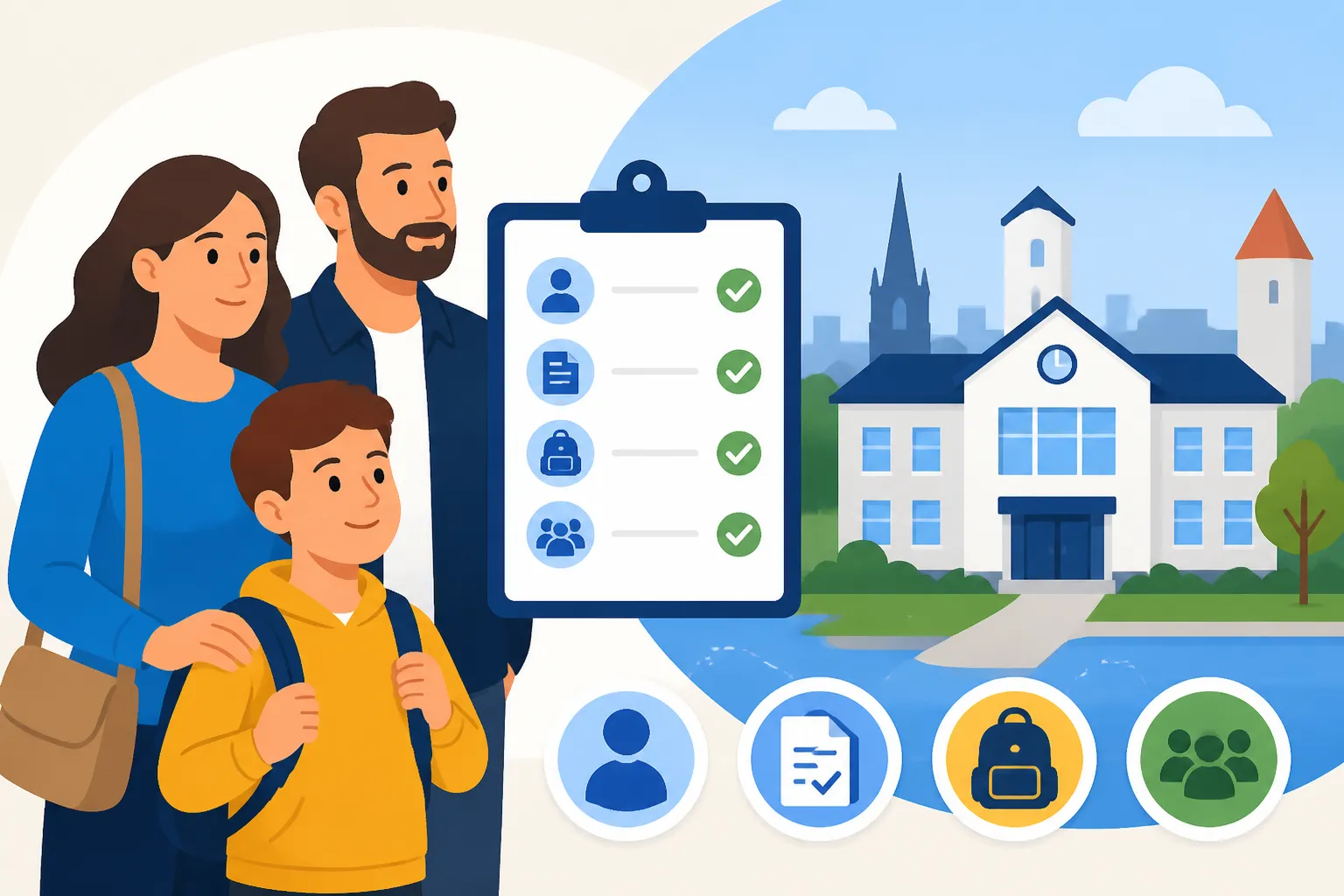
Gathering the right paperwork is crucial and can save you a lot of headaches later. Beyond the Isikukood and proof of residence, you’ll need a few other key documents for school enrolment.
Firstly, your child’s birth certificate (often requiring an apostille and a sworn translation into Estonian if not originally in English or Estonian) is mandatory to verify their identity and age. You’ll also need previous school records or academic transcripts from their last educational institution. These help the Estonian school understand your child’s educational background and potentially place them in the appropriate grade level, especially if their previous system differs significantly.
Beyond academic records, health records and vaccination certificates are vital. Estonian schools require a medical assessment and often proof of specific vaccinations for public health reasons. It's best to have these translated into Estonian or English by a certified translator before your appointment. Your child will usually need to undergo a medical examination by a family doctor (perearst) in Estonia, who will then issue a health certificate for school. This is a standard procedure to ensure your child meets health requirements and that the school is aware of any specific needs they might have. Finding a family doctor can be a process, and our guide, The Expat Guide to Finding a Family Doctor (Perearst) in Estonia, is a great place to start. For a deeper dive into vaccination specifics, refer to Understanding Vaccination Schedules and Requirements in Estonia. Be prepared for these medical checks to ensure everything is in order before their first day.
Exploring International School Options in Estonia
While the public system is robust, international schools in Estonia serve a unique and vital role for the expat community. They offer an alternative that often aligns more closely with the educational paths many families started in their home countries.
Researching and Applying to International Schools
When considering international schools, your research will primarily focus on two cities: Tallinn and, to a lesser extent, Tartu. Tallinn hosts the majority of options. The International School of Estonia (ISE) is a prominent choice, offering the International Baccalaureate (IB) programme from kindergarten all the way through to the Diploma Programme. This can be fantastic for families who value a globally recognized curriculum. Another significant option is the Tallinn European School, which is primarily aimed at children of EU institution employees but does accept other students if space permits, offering European Baccalaureate programmes. In Tartu, the Tartu International School provides a smaller, yet equally dedicated, English-language education.
The application process for these schools is quite different from public schools. It typically begins with an online application form on their respective websites, which will ask for detailed information about your child's academic history, any special needs, and often a personal statement or essays for older students. Following this, there are usually application fees, and then schools may request entrance exams, interviews (for both parents and students), and recommendations from previous teachers. Given the popularity and limited spaces, particularly in early years, it's wise to apply well in advance, sometimes even a year or more before your intended start date. Many international schools operate with waiting lists, so early application is definitely key. For a broader overview of these institutions and their unique offerings, our guide on Understanding International Schools and Their Costs in Estonia provides an excellent resource.
Costs and Financial Considerations
Let's talk money, because for international schools, it's a significant factor. Unlike the free public system, these are private institutions, and their fees reflect the tailored curricula, smaller class sizes, and often extensive extracurricular offerings.
Tuition fees are the most substantial cost. They can vary widely depending on the school and the child's grade level. For example, at a school like the International School of Estonia, annual tuition for primary years might be in the range of €10,000 to €15,000, while upper secondary can push upwards of €20,000 per year. And that's just tuition.
Beyond tuition, you'll encounter other expenses:
- Application Fees: A non-refundable fee paid when you submit your initial application, typically a few hundred euros.
- Registration/Enrolment Fees: A one-time fee paid upon acceptance to secure your child's place, which can also be in the hundreds or even low thousands of euros.
- Capital Development Fees: Some schools charge an additional fee to contribute to facility maintenance and development, sometimes annually or as a one-off.
- Materials and Books: While often included in tuition, some curricula may require specific textbooks or materials that come at an extra cost.
- Uniforms: Many international schools require uniforms, which is another purchase to factor in.
- Lunch Programs: School lunches are usually an additional monthly fee.
- Extracurricular Activities & Trips: While a rich offering, these often come with separate costs.
It's clear that the financial commitment is substantial. If your employer is covering relocation costs, inquire about educational allowances, as this is a common benefit for expat packages. If you're self-funding, it's crucial to budget carefully. Remember, these costs are just one part of your overall spending in Estonia; for a comprehensive look at what it means to live here, check out The Complete Guide to Cost of Living in Estonia for Expats (2026). When you're budgeting for this move, it helps to know how every piece fits. Don't forget that getting connected is key from day one to manage all these applications and finances. Services like Airalo can give you an eSIM to ensure you have mobile data the moment you land, so you're not scrambling for Wi-Fi while trying to fill out forms.
| Feature | Estonian Public Schools | International Schools |
|---|---|---|
| Tuition Fees | Free | Significant annual fees (e.g., €10,000 – €20,000+) |
| Language | Primarily Estonian (some offer transition classes) | Primarily English (or other specific foreign languages) |
| Curriculum | Estonian National Curriculum | IB, British, American, European Baccalaureate, etc. |
| Integration | Deep immersion into Estonian culture and language | Multicultural, international community |
| Location | Available in every municipality | Mainly in Tallinn, limited options in Tartu |
| Class Size | Can be larger, especially in popular urban areas | Generally smaller |
| Application | Municipality-based, linked to residence register | Direct application, entrance exams, interviews |
| Documents | Isikukood, residence registration, birth cert., health records, previous school reports | Birth cert., previous transcripts, recommendations, possibly entrance exams, health records |
| Extra Costs | School supplies, lunch (sometimes subsidised), optional excursions | Application fees, registration fees, capital fees, uniforms, lunches, extracurriculars, trips |
Overcoming Common Challenges for Expat Families
Moving your family to a new country like Estonia, even with the promise of excellent education, comes with its fair share of hurdles. Many expats encounter these challenges. It's not just about paperwork; it's about adaptation, communication, and building a new life.
The Language Barrier and Integration Support
The language barrier is undoubtedly the most significant challenge for many expat children entering the Estonian public school system. Even with the best intentions, diving into a curriculum taught entirely in a new language is tough. I remember one parent telling me how their 8-year-old would come home exhausted, not from the academics, but from the sheer mental effort of trying to understand and speak Estonian all day. It’s a real struggle, and validating that feeling is important.
However, Estonian schools and municipalities are increasingly aware of this. Many public schools, especially in larger cities like Tallinn, have implemented language immersion programs or special transition classes designed to support foreign children in acquiring Estonian skills before fully integrating into regular classes. These programmes are often invaluable, providing a softer landing. Even if a formal program isn't available, schools often provide extra Estonian lessons. As parents, supporting your child with additional language learning outside of school, even just with simple apps or an online tutor, can make a huge difference. Don't underestimate the power of playdates with Estonian children – they are often the most effective language teachers! For adults, too, learning some Estonian can bridge communication gaps with teachers and school staff; our guide on Learning Estonian: A Complete Guide to Language Courses and Levels can point you in the right direction. It's a journey, not a sprint, and patience is key for everyone involved.
Navigating the Estonian School Culture
Beyond language, the cultural nuances of the Estonian school system can also be surprising. The teaching styles might differ from what you're used to. Generally, Estonian education emphasizes independent learning, critical thinking, and a certain degree of self-reliance from students. Direct parent involvement in day-to-day school life, like volunteering in classrooms, might be less common than in some Western countries, though parent-teacher meetings are, of course, a staple.
One major aspect you'll encounter is Estonia's advanced digital healthcare system and digital government services. Schools extensively use online platforms like eKool or Stuudium for communication between teachers, parents, and students. This is where you'll find grades, homework assignments, school announcements, and communicate directly with teachers. It's incredibly efficient once you get the hang of it, but initially, it can feel like another system to learn. Being proactive and regularly checking these platforms, even if it's through a translation app initially, is key to staying informed. Don't hesitate to ask clarifying questions; Estonian teachers, once comfortable, are usually very helpful. If you’re getting your household goods moved with a company like Sirelo, they often have resources or community forums that can share insights into local school culture as well, as they deal with families relocating all the time.
Finding Support Networks
You don’t have to go through this alone. Finding a support network is crucial for both your child and yourself. Connecting with other expat families who have navigated the same challenges can provide invaluable advice, emotional support, and practical tips. Look for expat groups on social media platforms (Facebook groups are particularly active in Tallinn and Tartu), attend school events, or reach out to parent associations at international schools.
Many schools, especially international ones, actively foster a sense of community among parents. These networks can offer everything from recommendations for English-speaking tutors to playdate opportunities, which are vital for your child’s social integration. Even within public schools, while expat parents might be fewer, seeking out local parents who speak some English can create helpful bonds. Remember, everyone wants their child to succeed and be happy, and a shared experience, even a challenging one, can bring people together. The more connections you make, the more resources and support you’ll find to make your child’s educational journey in Estonia a success.
Disclaimer
Please note that while this guide provides comprehensive information based on current knowledge and typical procedures, educational policies, application deadlines, and specific school requirements in Estonia can change. It is always advisable to consult the most up-to-date official information from the Estonian Ministry of Education and Research, your specific municipality's education department (e.g., Tallinn Education Department, Tartu City Government Education Department), and the websites of individual schools for the most accurate and current details.