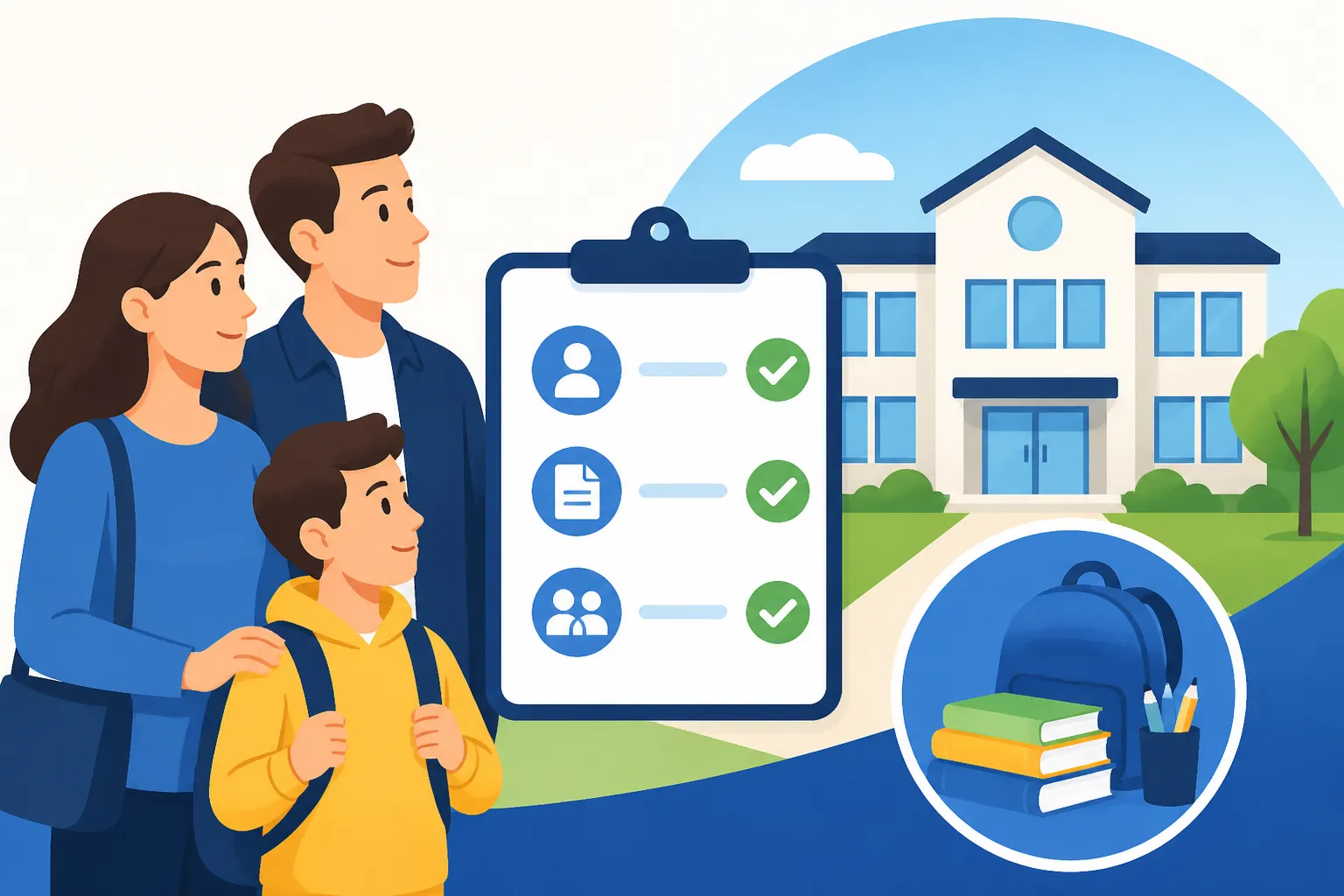
How to Enrol Your Child in an Estonian Public School
One of the biggest anxieties for any expat parent, myself included, is figuring out the schooling situation for your kids. It’s not just about finding a good school; it’s about navigating a completely new system, often in a foreign language, while still trying to unpack boxes and remember which bus goes where. This guide is designed to demystify the process of enrolling your child in an Estonian public school, drawing from the experiences of many foreign families, including my own, who’ve been through it.
Understanding Estonia's Education System for Foreign Families
Estonia prides itself on its highly effective and digitally advanced education system, often ranking among the top globally. For expat families, this can be both reassuring and a bit daunting. It’s a system built on local principles, which means understanding its nuances is key to a smooth transition for your children.
The Basics: Structure and Philosophy
The Estonian education system is structured into several stages, starting with pre-school education (lasteaed), followed by compulsory basic school (põhikool), and then upper-secondary education (gümnaasium or kutseõpe, vocational education). Basic school, which covers grades 1 through 9, is where most expat children will enter, and it's compulsory from the age of seven. The philosophy here is very much focused on critical thinking, independence, and a holistic approach to learning, rather than just rote memorisation. Teachers are highly respected, and there's a strong emphasis on leveraging technology, which means digital tools and platforms are deeply integrated into daily school life. This digital-first approach extends even to administrative tasks, so get ready to embrace the e-system!
From our experience, the system generally values the child's individual development, encouraging them to find their strengths and interests. The school environment tends to be supportive, though the primary language of instruction is, of course, Estonian. This can be a significant hurdle for newcomers, but we’ll get to the support systems available later. Many parents coming from more traditional, exam-heavy systems find the Estonian approach refreshing, with less pressure on very young children. However, it requires parents to be actively engaged and often means a period of adjustment for the kids as they adapt to a new language and pedagogical style.
Public vs. Private vs. International Schools
When considering schools in Estonia, you generally have three main routes: public, private, or international. Each has its own set of characteristics, and the "best" choice really depends on your family's specific needs, budget, and long-term plans in Estonia.
Public schools are free for all residents, funded by the local municipalities. They teach in Estonian, following the national curriculum, and typically admit students based on their registered place of residence – a "neighbourhood school" principle. This option is fantastic for families looking to fully immerse their children in Estonian culture and language, and it’s usually the most sustainable choice for long-term residents. The quality of public education is generally very high across the board, not just in specific elite schools. However, the language barrier is the elephant in the room for many expat children, especially if they are older.
Private schools, on the other hand, charge tuition fees and might offer alternative curricula (e.g., Waldorf, Montessori) or have a stronger focus on specific subjects. While some private schools might offer more support in English or have international streams, they are still predominantly Estonian in their daily operations and curriculum. They offer another layer of choice if you're looking for a particular educational philosophy, but remember to factor in the costs.
Then there are international schools, predominantly found in Tallinn, such as the International School of Estonia or the European School. These schools typically offer English-medium instruction, follow international curricula like the International Baccalaureate (IB), and cater specifically to the expat community. They are excellent for children who will only be in Estonia for a few years or whose parents prefer a seamless transition between countries without language immersion challenges. However, the tuition fees for international schools can be substantial, often a significant line item in an expat family's budget. For the purpose of this guide, we'll be focusing exclusively on navigating the public school system, as it's the most common and accessible path for many long-term expat families.
Essential First Steps Before Enrolment
Before you even start thinking about school uniforms or textbooks, there are a few foundational administrative hurdles you simply must clear. Trust me, trying to shortcut these steps will only lead to headaches and delays down the line. Estonia's system is highly integrated and relies heavily on accurate personal data.
Securing Your Residence and Isikukood
This cannot be stressed enough: for your child to be enrolled in an Estonian public school, they must be a registered resident of Estonia and have an Isikukood (personal identification code). This code is your digital fingerprint in Estonia, linking you to everything from healthcare to banking, and yes, to the education system. Without it, your child won't exist in the official registries that schools use for enrolment.
Getting an Isikukood is often one of the very first things you do upon arrival. For EU citizens, it usually happens when you register your right of residence. For non-EU citizens, it's typically issued along with your residence permit. Make sure your children, not just you, receive their own individual Isikukood. You can learn more about this crucial identifier by reading How to Get Your Isikukood Personal Code and Why It Matters for Healthcare. Without this fundamental identifier, you’ll hit a wall with almost every public service, including school enrolment. It's the key that unlocks the Estonian digital society for your family.
Registering Your Place of Residence
Once everyone in the family has an Isikukood, the next critical step is registering your official place of residence in the Estonian Population Register. This is not just a formality; it directly impacts which public school your child will be assigned to. Estonian public schools operate on a "neighbourhood school" principle, meaning your child is generally allocated a spot in the school closest to your registered address within your municipality.
The municipality (e.g., Tallinn City Government, Tartu City Government) uses this registered address to determine your child's catchment area. If you live in Tallinn, for example, the city will assign your child to a school in your district. If you’re renting, ensure your landlord is agreeable to registering your address and that the rental contract is legitimate. Sometimes, families moving from abroad might temporarily stay in short-term accommodation. While convenient, this won't be sufficient for school registration. You need a long-term address registered in the Population Register. For a deeper dive into this vital process, you should definitely check out Registering Your Place of Residence in Estonia: The Complete Guide. Remember, if you register in one municipality, you're bound by their school allocation policies. Don't be surprised if moving to a different neighbourhood means your child could be reassigned to a different school if space is available or if you choose to apply for a change. It is a seamless, digital process once you have the correct documents, but it must be done accurately.
The Enrolment Process for Basic School (Põhikool)
Basic school (grades 1-9) is the compulsory education stage in Estonia, and for many expat families, this is where their children will begin their Estonian educational journey. The process for primary-aged children is somewhat different from upper-secondary, primarily due to the neighbourhood school principle.
Age Requirements and Starting School
In Estonia, basic school typically starts in the year a child turns seven years old. So, if your child is turning seven at any point during the calendar year, they are eligible and expected to start school that September. For instance, if your child has a birthday in December, they would still start school in September of that year. Education is compulsory from this age, and generally, children attend for nine years.
There can be some flexibility, though it’s less common. If your child is exceptionally bright and ready for school earlier, or perhaps needs another year to mature, there are procedures for early or delayed school start. This would involve assessment by educational psychologists and approval from the local municipality. However, for most expat families, sticking to the standard age requirement is the path of least resistance. It's a system designed to ensure all children receive a robust foundation before moving on to more specialised studies. If you are moving mid-year or your child is already older than seven, they will be placed in the appropriate grade based on their age and previous schooling.
Applying to Your Neighbourhood School
This is where your registered place of residence becomes paramount. The local municipality is responsible for assigning school places for basic school. Typically, sometime in late winter or early spring (e.g., February-March), the local government (like the Tallinn Education Department) will inform you of the school your child has been automatically assigned to based on your registered address in the Population Register. This notification often comes via email or through the eesti.ee portal if you have set up your digital notifications correctly.
Once you receive this automatic assignment, you usually have a window to confirm acceptance. If you are happy with the assigned school, you simply accept the offer. But what if you’re not? Perhaps you prefer a different school due to its reputation, a specific program, or because a friend’s child is going there. In this case, you can submit an application to your preferred school directly. Be aware, however, that these applications are often competitive, and priority is usually given to children from the assigned catchment area. If there are more applications than spots, schools might use additional criteria, such as entrance assessments or interviews, though this is more common for upper secondary. It's always a good idea to research schools in your area once you've secured How to Find and Rent Long-Term Accommodation in Estonia, especially if you have a strong preference, to understand their application process and whether they have any specific requirements beyond the general municipal assignment.
Required Documents for Enrolment
Once you've been assigned a school and decided to accept the spot, the school will ask for a set of documents to finalise enrolment. This is fairly standard, but it’s crucial to have everything ready, preferably with certified translations if they’re not in Estonian, Russian, or English (though English is often accepted for core documents).
Here’s a typical checklist:
- Child’s Birth Certificate: The original and a copy, often requiring an apostille and sworn translation if from a non-EU country.
- Child’s and Parent’s Identification Documents: Passports or ID cards for both the child and at least one parent/guardian.
- Proof of Residence in Estonia: This is usually verified through the Population Register, but the school might ask for a formal printout if they cannot access it directly.
- Previous School Reports/Transcripts: If your child has attended school before, their academic records from previous years will be needed. These should be translated and explain the grading system used. This helps the school determine appropriate grade placement, especially for older basic school students.
- Application Form: The school will provide its own specific enrolment application form to be filled out.
- Medical Certificate/Health Card: Some schools might request a medical certificate or a health card outlining your child's vaccination history and any pre-existing conditions. This is to ensure the school is aware of any specific needs your child may have.
It's wise to contact your assigned school directly once you know it to confirm their exact list of required documents, as there can be slight variations. Having all these documents prepared and translated beforehand, especially if you’re moving from a non-EU country, can save you a lot of stress. Consider using services like Sirelo to help you manage the logistics of moving and document preparation, as getting everything organised before you land can be a massive time-saver.
Navigating Language Barriers and Support Systems
For many expat families, the biggest hurdle to public school enrolment is, understandably, the Estonian language. It’s a beautiful, unique language, but it's not widely spoken outside Estonia, making immersion a steep learning curve for non-native speaking children.
The Language Question: Estonian Immersion
Estonian public schools primarily conduct all instruction in Estonian. This means that if your child arrives with little to no Estonian, they will be entering a fully immersive environment. For younger children, especially those under 10, language acquisition can be remarkably fast. Kids are like sponges, and within six months to a year, many will be surprisingly fluent in day-to-day school communication. However, for older children, particularly those in the latter years of basic school (grades 7-9) or entering upper secondary, the challenge is significantly greater. They not only have to learn a new language but also simultaneously grasp complex academic concepts in that language.
This immersion, while incredibly effective for language learning, can be very demanding emotionally and academically for the child. It requires a lot of resilience from them and patience and support from you, the parent. It’s important to acknowledge that there will be a transition period filled with frustration and potential academic setbacks. While some schools in areas with larger Russian-speaking populations might offer instruction in Russian, this is not a common option for English-speaking expats seeking Estonian-medium education. This makes preparation and proactive engagement with the school even more vital.
Language Support Programs and Integration Classes
Thankfully, many Estonian public schools, especially in larger cities like Tallinn and Tartu, are increasingly experienced with welcoming non-Estonian speaking children. They often have provisions for language support, though the extent and nature of this support can vary significantly from one school to another.
Common support systems might include:
- Dedicated Estonian as a Second Language (ESL) classes: Some schools offer specific lessons for non-native speakers, either individually or in small groups, to help them catch up with Estonian faster.
- Integration classes/programs: These are sometimes offered at the municipal level or by specific schools, providing a more structured environment for newcomers to learn Estonian and adapt to the curriculum before fully integrating into regular classes.
- Peer support: Schools often try to pair new students with Estonian-speaking classmates who can help them navigate the school day and act as informal translators.
- Flexible grading: Teachers might initially be more understanding with new arrivals regarding academic performance, focusing more on effort and participation while the child gains language proficiency.
It's absolutely crucial for you to be proactive. When you communicate with your assigned school, ask specific questions about what kind of language support they offer for non-Estonian speaking students. Don't assume anything. Some schools are better equipped than others, and understanding what's available will help you manage expectations for your child's transition. Remember that this journey is as much about the parents’ resilience as it is the child’s. While your kids are busy soaking up Estonian, consider taking some lessons yourself. Learning Estonian: A Complete Guide to Language Courses and Levels can provide excellent resources for adults, making it easier for you to support their homework and communicate with teachers.
Enrolling in Upper Secondary School (Gümnaasium)
Enrolment into upper secondary school (grades 10-12 or gümnaasium) is a different beast entirely compared to basic school. It's not automatic and is generally more competitive, reflecting the students' choice to pursue academic studies leading to higher education.
The Application and Entrance Exam Process
Unlike basic school, where assignment is primarily based on residency, entry into a gümnaasium requires a proactive application from the student and often involves entrance examinations. Students typically apply to several gymnasiums of their choice during the spring of their 9th grade year. Each gümnaasium usually sets its own application criteria, which almost always includes a series of entrance exams covering core subjects like Estonian language, mathematics, and often a foreign language or a subject relevant to a specific academic stream (e.g., physics for a science-focused gümnaasium).
These exams are competitive, and spaces are limited, especially in highly sought-after schools like Gustave Adolf Grammar School or Tallinn English College. Students will often prepare extensively for these exams. Furthermore, many gymnasiums offer different study specialisations or 'streams' (e.g., humanities, exact sciences, economics), and students might apply directly to a specific stream. This requires the student to have a good understanding of their academic interests and future aspirations. It’s a significant step towards their chosen career path, even at this relatively young age.
What Foreign Students Need to Know
For foreign students aiming for gümnaasium, the academic bar is certainly higher. Here are some key considerations:
- Academic Performance: Strong academic records from basic school (grades 7-9 are often reviewed) are essential. If coming from an international or foreign system, you might need to ensure your child's previous academic achievements are well-documented and potentially How to Get Your Foreign Degree Recognised ENIC/NARIC in Estonia for official equivalency.
- Estonian Language Proficiency: This is arguably the most critical factor. While language support exists at basic school level, entering gümnaasium generally presupposes a high level of Estonian language proficiency (B2 or C1 level, depending on the school and program). The entrance exams are conducted in Estonian, and the curriculum is demanding. If your child has successfully completed Estonian basic school, they should be well-prepared. However, if they are arriving directly from a foreign system, this will be a major hurdle.
- Interviews and Portfolios: Some gymnasiums, especially those with specific artistic or academic focuses, might also require an interview, a portfolio of work, or essays as part of the application process. These are designed to gauge the student's motivation, skills, and fit with the school's ethos.
It’s advisable to research specific gymnasiums well in advance. Check their websites for application deadlines, exam requirements, and any specific support they might offer international students. For older expat students, careful planning and potentially intensive Estonian language tutoring ahead of time will be crucial for a successful application.
Practical Tips and Expat Experiences
Moving to a new country and enrolling your children in school is a huge undertaking. Beyond the paperwork and official processes, there are practical realities and emotional aspects to consider. Drawing on expat experiences can help smooth the path.
Connecting with the School Community
One of the best pieces of advice I can give is to get involved and connect with the school community as much as possible, even if you don't speak fluent Estonian yet. Attend parent-teacher meetings (usually held a couple of times a year), school events, and concerts. Even if communication is initially a challenge, your presence shows support for your child and respect for the school. Most teachers, especially in areas with expat populations, will make an effort to communicate in English, or at least use simple terms. Don't be shy about asking for an English-speaking parent or school staff member to help translate if needed.
The class teacher (klassijuhataja) is a pivotal figure in your child's school life. This person is your primary point of contact for anything related to your child's academic progress, social well-being, and general school matters. Building a good relationship with them is invaluable. Many schools also have active parent councils or groups, which can be an excellent way to meet other parents, including other expats, and gain insights into school life. These connections can offer practical advice, emotional support, and even help with translating complicated notices.
Essential Digital Tools and Communication
Estonia is a digital leader, and its education system is no exception. Most communication between the school, teachers, and parents happens through online platforms like eKool or Stuudium. These portals are where you'll find grades, homework assignments, school announcements, absence notifications, and direct messages from teachers. Getting familiar with these platforms early on is essential. Most have English language options, but understanding how they integrate into daily school life is important.
These platforms are also linked to the broader eesti.ee portal, which is your gateway to virtually all government services in Estonia. Whether you're checking your child's health records in Navigating Estonia's Digital Healthcare System: An Expat's Roadmap 2026 or accessing general public services via Understanding eesti.ee and Digital Government Services in Estonia, the digital thread runs through everything. Ensure you have your Mobile-ID or Smart-ID set up, as these are your keys to securely accessing these platforms. In the initial days of settling in, keeping your family connected is vital. Services like Airalo can be a lifesaver, providing instant eSIM data connectivity so you can navigate, translate, and stay in touch without hunting for local SIM cards immediately upon arrival. This digital readiness is a hallmark of Estonian life and will serve you well in navigating the school system.
Comparing Basic and Upper Secondary School Enrolment
To sum up the key differences, here's a quick overview of what to expect when enrolling your child in Estonian public schools, depending on their age and educational stage.
| Feature | Basic School (Põhikool – Grades 1-9) | Upper Secondary School (Gümnaasium – Grades 10-12) |
|---|---|---|
| Compulsory? | Yes, from age 7 (or year they turn 7) | No, optional academic track |
| Enrolment Basis | Primarily based on registered place of residence (neighbourhood principle) | Application-based, competitive entrance exams |
| Language Expectation | Estonian immersion with varying levels of language support | High level of Estonian proficiency (B2/C1) expected |
| Key Documents | Birth certificate, ID, proof of residence, previous school reports | ID, basic school certificate, previous transcripts, exam results |
| Application Period | Automatic municipal assignment usually in spring; direct applications may follow | Spring (typically March-April) for entrance exams and applications |
| Main Challenge | Language barrier, settling into new cultural context | High academic demands, competitive entry, language proficiency |
| Primary Goal | Foundational education, social integration, language acquisition | Academic specialisation, preparation for higher education |
Disclaimer
Please remember that while I strive to provide accurate and up-to-date information based on my experiences and available resources, regulations and processes in Estonia can change. This guide is for informational purposes only and should not be taken as legal or official advice. Always consult the official websites of the Estonian Ministry of Education and Research, your local municipality's education department, or legal professionals for the most current and specific requirements for your situation.