Can I Get Estonian Citizenship If My Grandparent Was Estonian?
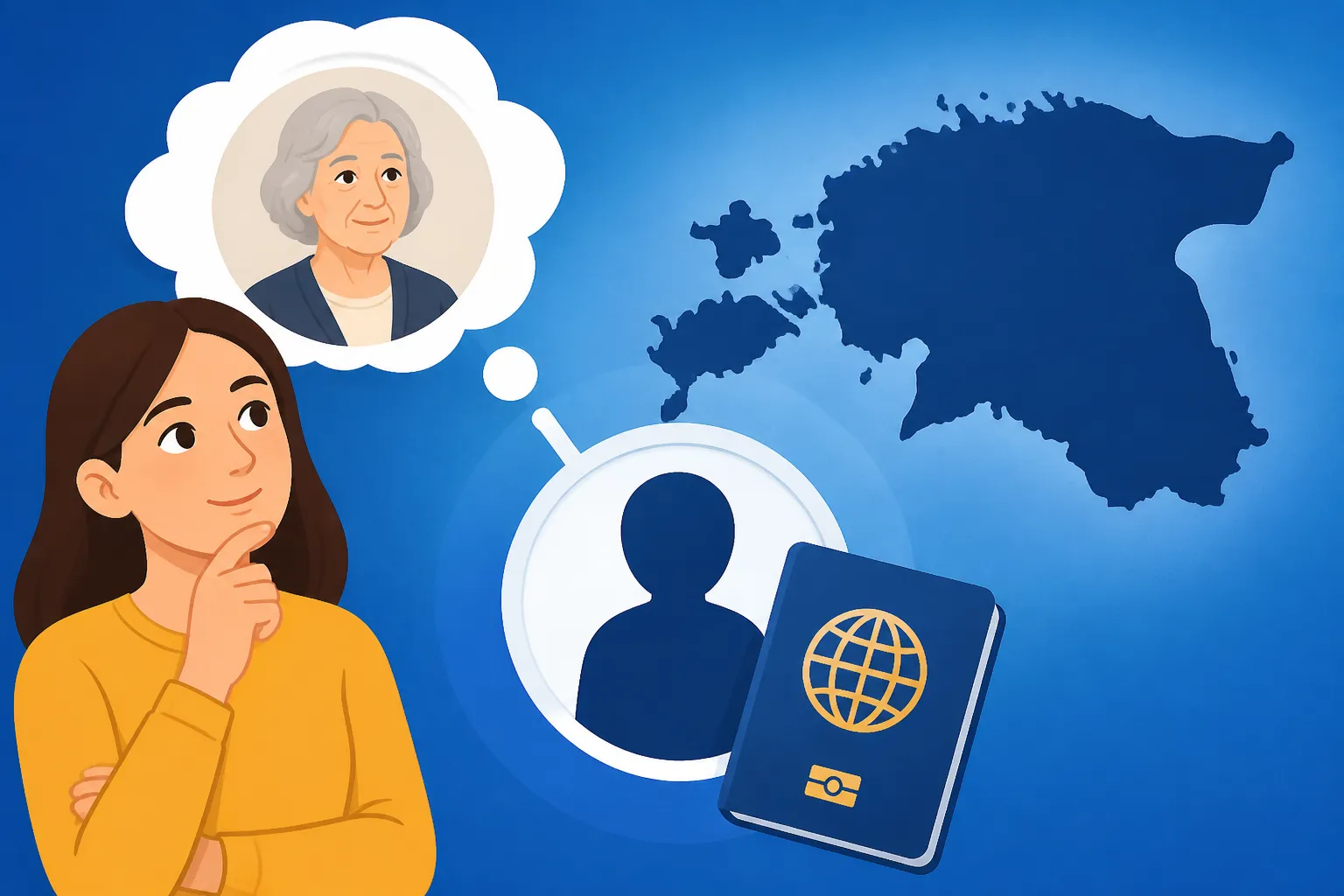
Navigating the labyrinthine rules of citizenship in a new country can feel like trying to solve a Rubik's Cube blindfolded, especially when you're digging into ancestral ties. Many of us expats, or those considering a move, arrive in Estonia with hopes of connecting with a family history that might open doors. If you’ve heard whispers of Estonian grandparents and are wondering if that’s your golden ticket to citizenship, this guide is here to shed some realistic light on a complex but deeply personal journey.
Understanding Estonian Citizenship by Descent: The Basics
When it comes to acquiring Estonian citizenship based on your family tree, Estonia's legal framework operates under principles that might be quite different from what you're used to in your home country. It’s not simply about having a distant relative; there are very specific requirements that hinge on timing and historical context.
The Principle of Jus Sanguinis (Right of Blood)
At its core, Estonian citizenship is primarily determined by jus sanguinis, which is Latin for "right of blood." This means that citizenship is passed down through parentage, rather than by the place of birth (which is jus soli, or "right of soil"). For most cases, this is a straightforward lineage: if one of your parents was an Estonian citizen at the time of your birth, then you are automatically an Estonian citizen. It doesn't matter if you were born in Tallinn, Timbuktu, or Toronto; the key is the citizenship status of your parent(s).
For example, imagine your mother was an Estonian citizen when you were born in Canada. Under the principle of jus sanguinis, you would also be an Estonian citizen from birth, even if you’ve never set foot in Estonia. The challenge often isn't the principle itself, but proving that your parent actually was an Estonian citizen at that crucial moment, especially if their own citizenship status was complicated by historical events. This rule is quite strict and doesn't typically extend beyond the immediate parent-child relationship for automatic citizenship by birth.
The Critical Date: Estonian Citizenship at the Time of Birth
This is where things can get incredibly tricky, and it’s often the sticking point for those looking beyond their immediate parents to grandparents. For automatic citizenship by birth, your parent must have been an Estonian citizen at the precise moment you were born. This means that if your parent acquired Estonian citizenship after your birth, you wouldn't automatically become a citizen through them. Similarly, if your parent was born to an Estonian citizen grandparent but, for some reason, didn't hold Estonian citizenship themselves at the time of your birth, the chain is broken.
Estonia’s tumultuous 20th century history, particularly the Soviet occupation from 1940 to 1991, casts a long shadow over these rules. During this period, many Estonians fled the country or were deported, and their descendants were born abroad. The legal status of Estonian citizenship during the occupation is complex. Estonia considers the Soviet occupation illegal and continuous, meaning that Estonian citizenship was never legally lost by those who were citizens before 1940 and their direct descendants, provided they did not voluntarily acquire the citizenship of another state, particularly the Soviet Union. This critical distinction is what allows for the possibility of "restoring" citizenship through a grandparent, rather than it being a simple, automatic right by descent over multiple generations.
When Grandparents Come into Play: Historical Context and Restoration of Citizenship
So, this brings us to the core of your question: can a grandparent actually be the key? The short answer is, "Yes, but it's not straightforward and it's heavily tied to historical circumstances." This isn't about simple descent; it's often about the restoration of citizenship due to specific historical injustices.
The Specific Case of Lost Citizenship Due to Occupation
Estonian law does provide a pathway for individuals whose ancestors were Estonian citizens prior to the Soviet occupation that began on June 16, 1940. This isn't a general "citizenship by descent from a grandparent" clause that many countries might have, but rather a specific legal mechanism to rectify the historical situation for those whose citizenship was never legally lost, despite being displaced or born abroad.
To qualify for this restoration, you generally need to prove that:
- Your grandparent (or other direct ancestor) was an Estonian citizen before June 16, 1940. This is the absolute starting point. You need definitive documentation of their Estonian citizenship from that period.
- Your direct lineage (parent, then you) consistently retained this link. This is the biggest hurdle. The law states that citizenship can be restored to individuals who were Estonian citizens before 1940, and their direct descendants (children, grandchildren, great-grandchildren) who have not acquired the citizenship of another state after June 16, 1940. This is a crucial, stringent condition. It means that if your parent, for instance, was born in the Soviet Union and voluntarily accepted Soviet citizenship, or if your grandparent voluntarily acquired citizenship of another country (beyond the temporary displacement of war), then the chain might be broken.
Let me give you a hypothetical scenario: Your paternal grandmother was an Estonian citizen born in Tartu in 1915. She fled to Sweden in 1944 to escape the Soviet occupation and never formally became a Swedish citizen, maintaining her Estonian identity. Your father was born in Sweden in 1948, and while he grew up there, he never voluntarily acquired Swedish citizenship either, identifying as Estonian. If you were born to your father in the 1970s and also never voluntarily acquired another citizenship that would negate your Estonian link, you might have a case for restoration. However, if your father became a Swedish citizen or your grandmother acquired Soviet citizenship after 1940, the path becomes much, much harder, often impossible under this specific provision.
This is fundamentally about reclaiming a citizenship that Estonia considers was never truly lost by its rightful citizens and their descendants, rather than granting new citizenship based on a distant bloodline. It is a nuanced and often emotionally charged area of law, reflecting Estonia's long fight for independence and the continuity of its statehood. For those contemplating a move to Estonia, understanding these historical nuances is paramount, and resources like The Expat Guide to Moving to Estonia from a Non-EU Country (2027) can help set expectations for what's involved in relocating.
Proving Lineage and Non-Acquisition of Other Citizenship
This is arguably the most challenging part of the entire process. It's not enough to simply say, "My grandmother was Estonian." You must provide robust, undeniable documentary evidence.
- Tracing Your Lineage: You'll need original or certified copies of birth certificates, marriage certificates, and potentially death certificates for every single person in the direct line from you, back to your Estonian grandparent. These documents establish the biological link. For example, your birth certificate shows your parents, your parent's birth certificate shows their parents (one of whom is your Estonian grandparent), and so on. Any changes of name (due to marriage, for instance) must also be clearly documented and linked.
- Proving Prior Estonian Citizenship: For your grandparent, you'll need documents proving their Estonian citizenship before June 16, 1940. This could include old Estonian passports, birth records from the Estonian Population Register, school records, military service records, or other official government documents issued by the Republic of Estonia during its pre-war independence. These can be incredibly difficult to locate, especially if your family lost them fleeing war or persecution.
- The "Non-Acquisition of Other Citizenship" Clause: This is the make-or-break point. You (and your intervening parent) must prove that you did not voluntarily acquire citizenship of another state after June 16, 1940. This is exceptionally difficult, particularly for those born and raised in the Soviet Union. If an individual born in Soviet Estonia received a Soviet passport, the Estonian state generally views this as an acquisition of Soviet citizenship, which would negate the claim for restoration, unless it can be proven that this acquisition was not voluntary (e.g., forced upon them). The burden of proof here is entirely on the applicant, and Estonian authorities are very stringent. They'll look for any sign of active renunciation of Estonian identity or voluntary embrace of another nationality.
Gathering this evidence often involves extensive genealogical research and requesting documents from multiple countries' archives. It can be a long, painstaking, and often frustrating process. Consulting with a legal professional specializing in Estonian citizenship law is almost always a necessity for this specific path. They can help you understand the nuances of what constitutes "voluntary acquisition" in the eyes of Estonian law and assist in navigating the documentation requirements.
Navigating the Application Process: Documentation and Challenges
Even with a strong ancestral claim, the actual application for Estonian citizenship restoration or determination of citizenship by birth is a bureaucratic marathon. It demands meticulous attention to detail, patience, and often a fair bit of grit to see it through.
Gathering Your Ancestral Documents
The journey begins long before you even fill out an application form – it starts with the relentless hunt for documents. As mentioned, you'll need every vital record in your direct ancestral line leading back to your Estonian grandparent. This means birth certificates, marriage certificates, and death certificates. Each of these documents, if not originally in Estonian or English, will need to be officially translated by a sworn translator. Furthermore, many documents from foreign countries will require an apostille or legalization to be accepted by Estonian authorities, confirming their authenticity. This process alone can take months, sometimes years, and incur significant costs.
Estonian archives are a critical resource for this process. The National Archives of Estonia (Rahvusarhiiv) and the Population Register (Rahvastikuregister) hold a vast amount of historical data that could prove your grandparent's pre-1940 Estonian citizenship. However, accessing these records, especially if you're not in Estonia and don't speak Estonian, can be a challenge. You might need to hire a local genealogist or a lawyer to help with archival research. For guidance on what specifically you might need, you'll find What Documents Prove Estonian Descent for Citizenship? an invaluable resource.
The Police and Border Guard Board (PPA) Application
Once you've painstakingly gathered your evidence, the actual application is submitted to the Police and Border Guard Board (Politsei- ja Piirivalveamet or PPA) in Estonia, or through an Estonian embassy or consulate abroad if you reside outside the country. You'll complete an application for the determination of Estonian citizenship by birth or for the restoration of Estonian citizenship, depending on the specifics of your case.
Be prepared for an interview. The PPA officers will want to ascertain all facts, especially concerning your (and your parent's) non-acquisition of other citizenships. They may ask probing questions about your life history, allegiances, and why you are seeking Estonian citizenship now. This is not a formality; it's a critical step where authorities assess the validity of your claim against the strict legal criteria.
The waiting game begins after submission. Processing times can be significant, ranging from several months to well over a year, given the depth of historical research often required by the authorities. It’s not uncommon for the PPA to request additional documents or clarifications during this period. For a clearer picture of what to expect, read How Long Does Estonian Citizenship by Descent Take?.
The Renunciation of Other Citizenships
This is a stark reality for many. Estonia maintains a strict policy against dual citizenship, meaning that if your application for restoration or determination of citizenship is successful, you will almost certainly be required to formally renounce any other citizenship you hold before you can officially receive your Estonian passport. This is a monumental decision, often with profound personal and legal implications, and it's one you must be prepared to make.
There are very, very few exceptions to Estonia's dual citizenship rule, primarily involving children who acquire multiple citizenships at birth and those for whom renunciation is impossible under the laws of their other country. However, restoration of citizenship through ancestral links typically does not fall into these exceptions. Therefore, if you are granted Estonian citizenship via this route, prepare for the very real possibility of having to choose. Understanding this policy in detail can be found in Understanding Dual Citizenship Rules in Estonia. For those planning a larger relocation once their citizenship is sorted, a moving service like Sirelo can be a great help in coordinating all the logistics for your big move.
Overcoming Language Barriers and Bureaucracy
The administrative process in Estonia, while increasingly digitalized, is still heavily conducted in Estonian. This can be a significant hurdle for non-Estonian speakers. While PPA service points might have English-speaking staff, your application itself, any supplementary documents, and any official correspondence will primarily be in Estonian. This means reliance on official translations for all your documents, and potentially needing an interpreter for interviews.
Patience is not just a virtue here; it's a necessity. The process is not designed for speed, especially when it involves historical research and complex legal interpretations. Expect delays, be persistent in following up (politely!), and always keep copies of everything you submit. Leveraging digital services through eesti.ee is encouraged, but for this specific, complex type of application, direct interaction with the PPA and potentially legal counsel is usually unavoidable. Even if you're not taking a language test for this specific type of citizenship, learning some Estonian will vastly improve your experience in dealing with the bureaucracy, as explored in How Do I Prove Estonian Language Skills for Citizenship?.
Beyond Grandparents: Other Pathways and Considerations
While the ancestral route through grandparents is specific and demanding, it’s worth understanding that it’s not the only way to become an Estonian citizen. Sometimes, other pathways might be more feasible, even if they require a different kind of commitment.
Naturalisation as an Alternative
If the pathway for citizenship restoration through your Estonian grandparent proves too complex, or if your family's history doesn't quite fit the strict criteria (for instance, if your parent or grandparent voluntarily acquired other citizenships after 1940), then naturalisation is the standard alternative. Naturalisation is the process of becoming a citizen of a country you were not born in, by fulfilling certain residency and integration requirements.
The general requirements for naturalisation in Estonia include:
- Lawful and Long-Term Residence: You must have resided in Estonia legally and permanently for a specified period, typically eight years, with the last five years being continuous.
- Stable Legal Income: You need to demonstrate that you have a stable and legal source of income to support yourself in Estonia.
- Estonian Language Proficiency: A critical requirement is passing an Estonian language proficiency exam at a B1 level or higher. This shows your commitment to integrating into Estonian society.
- Knowledge of the Constitution and Citizenship Act: You must also pass an examination on the Estonian Constitution and the Citizenship Act.
- Oath of Loyalty: You will take an oath of loyalty to the Republic of Estonia.
- Renunciation of Other Citizenships: Like the restoration process, naturalisation generally requires you to renounce any other citizenships you hold.
Naturalisation requires a more active and sustained commitment to living within Estonia and integrating into its society, as opposed to the ancestral route which relies on existing, albeit historically complex, blood ties. For more detailed information on this process, consider exploring How to Apply for Estonian Citizenship by Naturalisation and Understanding the Estonian Language and Constitution Exams for Citizenship.
The Nuance of "Citizenship by Origin" vs. "Restoration"
It's helpful to distinguish between "citizenship by origin" (which is essentially automatic citizenship by birth to an Estonian parent) and "restoration of citizenship" (the specific historical provision tied to the Soviet occupation that may involve grandparents).
"Citizenship by origin" is usually straightforward: if your parent was an Estonian citizen at your birth, you are an Estonian citizen. The "application" in this case is often more about having your existing citizenship status confirmed and registered if it wasn't done at birth. The challenge is in proving that parental citizenship status.
"Restoration" is a legal mechanism to re-establish citizenship for individuals and their descendants who were deemed to have "lost" it (though Estonia considers it never truly lost de jure) due to the Soviet occupation, provided they meet the strict non-acquisition clause. While both rely on ancestral links, the legal grounds, the specific articles of law, and the types of evidence required can differ. If your case is about your parent being an Estonian citizen when you were born, the process outlined in How Do I Apply for Estonian Citizenship by Origin? would be highly relevant.
Health Insurance and Practicalities for a Move
Regardless of which path you pursue for citizenship, if you plan to move to Estonia during this process, or after obtaining citizenship, practical matters like health insurance are paramount. While residents with state health insurance (Tervisekassa) contributions enjoy comprehensive public healthcare, there can be waiting periods or gaps in coverage, especially if you're newly arrived or transitioning.
It's always wise to ensure you have robust health coverage, particularly during the often lengthy and uncertain application phases. Private health insurance can bridge these gaps or provide access to services not fully covered by the public system. Companies like Cigna Global offer comprehensive international health insurance plans that can provide peace of mind during your transition, ensuring you're covered for unexpected medical needs regardless of your citizenship application status. For a full picture of your options, take a look at Health Insurance in Estonia: Mandatory, Private and Travel Options Explained and The Complete Guide to Healthcare in Estonia for Expats (2027).
Becoming an Estonian citizen through ancestral ties, particularly through a grandparent, is a journey that intertwines personal history with national history, bureaucracy, and legal intricacies. It requires not just a hopeful heart, but also meticulous documentation, deep understanding of Estonian law, and immense patience. Good luck!
| Feature | Citizenship by Birth (Parent) | Restoration of Citizenship (Grandparent) | Naturalisation |
|---|---|---|---|
| Primary Link | Direct parent | Ancestor pre-1940 (e.g., grandparent) | Residency & integration |
| Dual Citizenship | Generally not allowed | Generally not allowed; must renounce | Generally not allowed; must renounce |
| Language Test | Not required | Not required | Required (B1 level) |
| Constitution Exam | Not required | Not required | Required |
| Residency Requirement | Not required | Not required | 8 years lawful, 5 years continuous (for adults) |
| Key Historical Context | None (standard birthright) | Soviet occupation (1940-1991) crucial | Integration into contemporary Estonian society |
| Proving Non-Acquisition of Other Citizenship | Not applicable | Crucial and challenging requirement | Not applicable (unless dual citizenship exception) |
| Typical Documentation | Parent's birth cert, your birth cert | Ancestor's pre-1940 Estonian docs, full lineage, proof of non-acquisition | Proof of residency, income, language, constitution knowledge |
Disclaimer
The information provided in this guide is for general informational purposes only and does not constitute legal advice. Estonian citizenship law is complex and subject to change. It is highly recommended to consult with the Estonian Police and Border Guard Board (PPA) directly, or seek advice from a qualified legal professional specializing in Estonian immigration and citizenship law, for specific guidance pertaining to your individual circumstances.