How Do I Validate My Nursing Qualification in Estonia?
So, you're a qualified nurse, perhaps with years of experience under your belt, and you're dreaming of bringing your skills to Estonia. It's an exciting prospect, but let's be honest, the idea of navigating a new country's bureaucratic system, especially when it comes to professional qualifications, can feel like trying to find your way through a dense, foggy bog. Many expats face this exact hurdle, wondering if their hard-earned diplomas and licenses will even be recognized. This guide is here to cut through that fog, demystifying the process of validating your nursing qualification in Estonia so you can focus on what you do best: caring for people.
Understanding the Estonian Healthcare Landscape for Nurses
Before you even start gathering documents, it’s crucial to understand the context of nursing in Estonia. It’s a modern, digitally advanced system, but also one with its own unique structure and regulatory bodies. The move here is more than just a change of scenery; it's a shift into a different professional ecosystem.
The Regulating Body: Terviseamet Health Board
In Estonia, the grand gatekeeper for all healthcare professionals, including nurses, is the Terviseamet (Health Board). Think of them as the ultimate authority that ensures everyone practicing healthcare in the country meets specific standards. This isn't just a formality; it’s about patient safety and maintaining a high quality of care across the nation. Your journey to validating your qualification will primarily involve interacting with this board, submitting your credentials, and awaiting their assessment. They’re the ones who will ultimately grant you the right to practice, or let you know what steps you need to take to get there.
The Terviseamet’s role is comprehensive, covering everything from professional registration to overseeing public health. They set the professional standards, issue licenses, and maintain the national register of healthcare professionals. It can feel like a daunting institution, but their mission is clear: to ensure that only qualified individuals provide care. Understanding their central role from the outset helps manage expectations and navigate the process more smoothly, knowing exactly who you're dealing with.
Why Validation is Crucial for Practicing in Estonia
You might think, "I'm a nurse, my degree is from a reputable institution, why do I need to jump through more hoops?" And that's a perfectly valid thought! However, professional validation isn't just about proving you have a degree; it's about ensuring your education and practical experience align with Estonian national standards. Each country has its own curriculum, practical training requirements, and scope of practice for nurses. What's standard in one country might differ significantly from another.
Validation ensures that you are legally permitted to practice, that you understand the ethical and professional guidelines within Estonia, and that you can be held accountable to the same standards as locally trained nurses. Without this official recognition, you simply cannot work as a registered nurse in Estonia. It protects both you and your future patients. Trying to skip this step would not only be illegal but also unprofessional, potentially jeopardizing your career and the safety of those you care for. This is where the process often validates the frustrations expats face, as it can feel like a repetitive exercise, but it serves a fundamental purpose.
Initial Realities of Working in Estonian Healthcare
Estonia prides itself on its advanced digital infrastructure, and its healthcare system is no exception. From electronic health records (Digilugu) to digital prescriptions (Digiretsept), you'll find a highly integrated, paperless environment. This can be a huge bonus for efficiency, but it also means a new set of digital skills to master. Don't expect to walk into a hospital and find paper charts; everything is online.
Foreign nurses often find the digital aspects fascinating and efficient, though the initial learning curve can be steep. You'll need to get comfortable with the e-health portal, logging in, accessing patient data, and documenting care digitally. Furthermore, while the general principles of nursing care are universal, the specific protocols, equipment, and even some cultural nuances in patient interaction might differ. Prepare for an orientation period where you'll not only adapt to a new country but also to a sophisticated digital workplace. You can learn more about this by reading Navigating Estonia's Digital Healthcare System: An Expat's Roadmap (2027).
The Core Process: Steps to Validate Your Nursing Qualification
Now, let's get down to the nitty-gritty. The validation process involves several key stages, each requiring meticulous attention to detail. It's a journey, not a sprint, so patience and thoroughness are your best friends here.
Gathering Your Documents
This is often the most time-consuming part, and where many expats hit their first wall. The Terviseamet requires a very specific set of documents to assess your qualification. You’ll need to compile these from your home country, and often, they’ll need to be officially translated and authenticated.
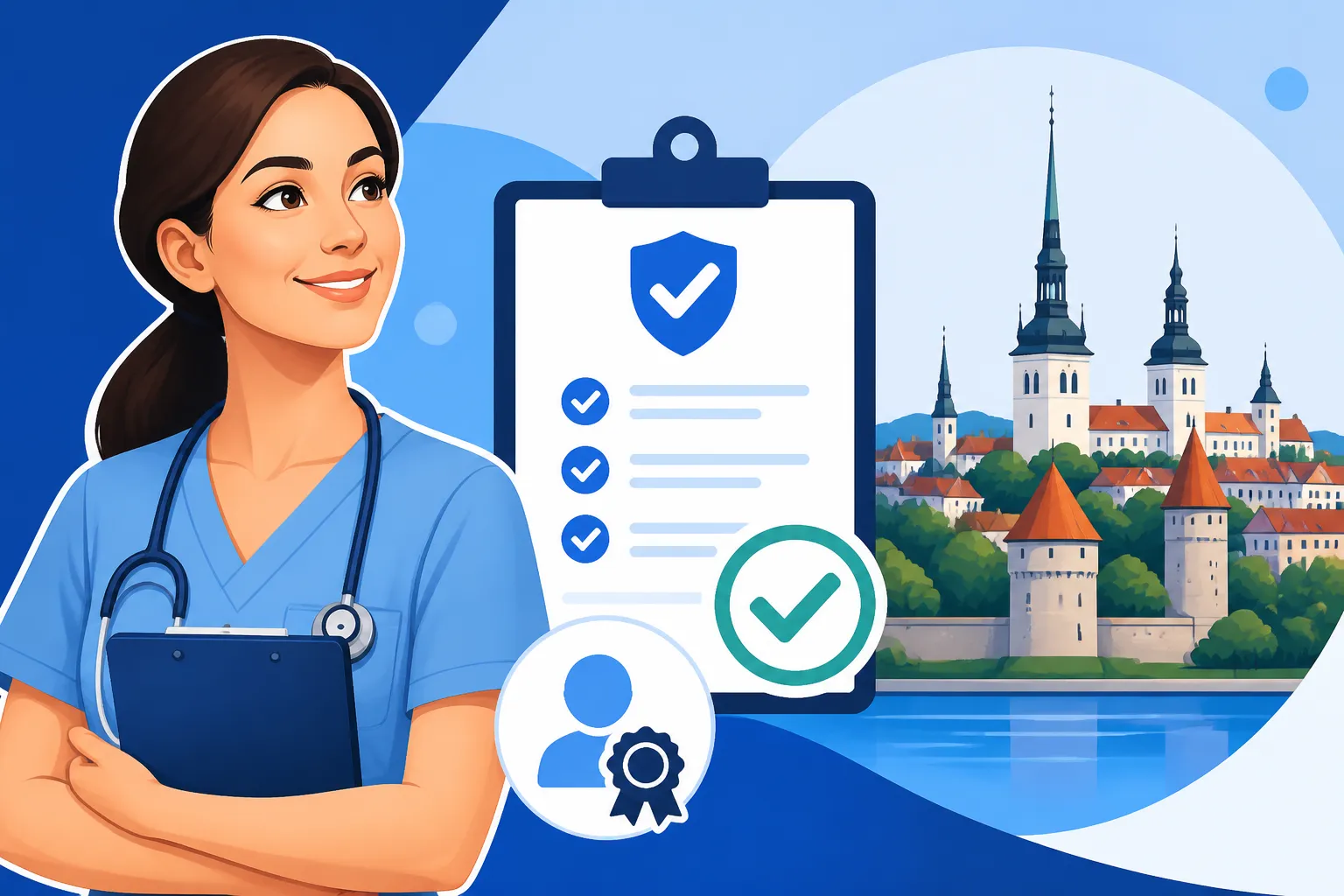
Here’s a typical checklist of what you'll need:
- Application Form: Usually available on the Terviseamet website.
- Proof of Identity: A copy of your passport or national ID card.
- Curriculum Vitae (CV): Detail your education and professional experience.
- Educational Diplomas and Transcripts: This includes your nursing degree, any specialized training certificates, and a detailed breakdown of your coursework, including hours of theoretical and practical training. These need to be clear and legible.
- Professional License/Registration: Proof of current and past licenses to practice in your home country or other countries where you've worked.
- Certificate of Good Standing: Issued by the nursing regulatory body in your home country, confirming that you are not under investigation and have no disciplinary actions against you. This is crucial and often needs to be sent directly from the issuing authority to the Terviseamet, or with a sealed envelope.
- Proof of Professional Experience: Certificates or letters from previous employers detailing your roles, responsibilities, and dates of employment.
- Marriage Certificate (if applicable): If your name on your documents differs from your current legal name.
- Estonian Personal Identification Code (Isikukood): You'll need this for almost any official transaction in Estonia, including this application. If you don't have one, you'll need to apply for it. You can find out more by reading How to Get Your Isikukood Personal Code and Why It Matters for Healthcare.
- Proof of Language Proficiency: We'll dive deeper into this, but generally, you'll need at least a B2 level in Estonian.
Crucially, all foreign documents must be translated into Estonian or English by a sworn translator. Depending on your country of origin, some documents might also require an Apostille or super-legalization to confirm their authenticity. This can be a complex and sometimes costly step, so budget both time and money for it. Don't rush this stage; any missing or improperly translated document will only delay your application.
Applying to the Terviseamet
Once your document portfolio is pristine, it’s time to formally submit your application to the Terviseamet. While some processes in Estonia are highly digital, for professional qualification recognition, you might still need to send physical copies or use a specific secure portal. Always check the very latest instructions on the Terviseamet website, as procedures can occasionally evolve.
The Terviseamet usually has a dedicated section on its website for foreign qualification recognition, often with clear guidelines and downloadable forms. Fill out the application form completely and accurately. Any discrepancies between your form and your supporting documents can raise red flags and cause delays. Attach all your meticulously prepared and translated documents. Ensure you pay any associated state fees for the application, as proof of payment is typically required. It is not uncommon for the Terviseamet to communicate primarily in Estonian, so having a good translation app or a local Estonian friend to help you with correspondence can be incredibly helpful during this stage. Remember, the key is thoroughness and patience.
Waiting and Potential Additional Requirements
After submission, the waiting game begins. The Terviseamet assesses each application on a case-by-case basis. They compare your foreign qualification against Estonian national standards. This assessment can take several weeks or even months, so factor this into your relocation timeline. It's a busy office, and they're dealing with applications from all over the world.
During this assessment, the Terviseamet might determine that your qualification isn't entirely equivalent to Estonian standards. This isn't necessarily a rejection! It's an indication that there are some gaps that need to be filled. They may then propose one of the following:
- An Adaptation Period: This is a supervised traineeship in an Estonian healthcare institution, lasting several months. It allows you to gain practical experience under the direct guidance of an Estonian registered nurse, familiarizing you with the local healthcare system, protocols, and digital tools.
- An Aptitude Test: This is a theoretical and/or practical examination designed to assess your knowledge and skills in areas where your foreign qualification might differ from Estonian requirements.
- Additional Education: In some cases, if the gaps are significant, you might be advised to complete specific courses or modules at an Estonian nursing school.
The Terviseamet will clearly communicate their decision and the proposed compensatory measures. It’s crucial to understand these requirements and commit to fulfilling them if you want to proceed with your career in Estonia. They are not designed to be roadblocks but rather pathways to ensuring you are fully prepared for the Estonian healthcare environment.
Language and Further Requirements
Beyond the formal recognition of your qualification, language proficiency and ongoing professional development are cornerstones of a successful nursing career in Estonia.
Estonian Language Proficiency
Let's be blunt: working as a nurse in Estonia without a solid grasp of Estonian is incredibly challenging, if not impossible. Patient communication, team collaboration, and even understanding official documentation all hinge on language. The Terviseamet typically requires proof of Estonian language proficiency at a B2 level. This isn't just conversational fluency; it means you can understand the main ideas of complex text on concrete and abstract topics, including technical discussions in your field, and can interact with a degree of fluency and spontaneity.
Achieving a B2 level takes dedication. Many expats find this the most formidable hurdle. You'll need to invest time and effort in language courses. Public institutions like the Integration Foundation often offer subsidized courses. However, to genuinely get conversational and grasp the nuances needed for a professional setting, platforms like iTalki offer one-on-one lessons with native speakers, which can make a huge difference in building confidence beyond classroom settings. Immersion, watching Estonian TV, listening to radio, and simply trying to speak it daily, are all part of the process. Remember, patient safety often depends on clear communication, so this isn't a requirement to be taken lightly. Start learning Estonian as early as possible. For a deeper dive into language learning resources, check out Learning Estonian: A Complete Guide to Language Courses and Levels.
Continuous Professional Development
Once you are registered and practicing as a nurse in Estonia, the learning doesn't stop. Like most developed countries, Estonia has a system of continuous professional development (CPD) to ensure healthcare professionals remain up-to-date with the latest medical advancements, techniques, and best practices. You’ll be expected to participate in ongoing education, training, and professional activities to maintain your competence and keep your registration active.
This could involve attending workshops, seminars, conferences, completing online courses, or even pursuing further specialized certifications. The specific requirements and how they are tracked will be communicated by the Terviseamet or your employer. It’s a vital part of maintaining a high standard of care and demonstrating your commitment to your profession. Think of it as an ongoing investment in your skills, keeping you sharp and effective throughout your career in Estonia.
Life as a Foreign Nurse in Estonia
Successfully validating your qualification is a massive step, but it’s just one part of building a life and career here. Integrating into the workplace and understanding the broader professional environment are equally important.
Finding Your First Nursing Job
With your qualification validated and language skills honed, the next big step is landing your first nursing job. Estonia, like many countries, faces a demand for healthcare professionals, so opportunities do exist, especially in larger cities like Tallinn and Tartu.
Start by checking major job portals such as CV-Online, Work in Estonia, and even specific hospital websites. Networking is also incredibly powerful; attend professional events, join expat groups, and leverage platforms like LinkedIn. When applying, remember to tailor your CV to Estonian standards, emphasizing your validated qualification and language skills. Prepare for interviews that might test your practical knowledge and ability to communicate in Estonian. Don't be discouraged if your first few applications don't lead to an offer; persistence is key. Many foreign nurses find their initial roles through smaller clinics or rehabilitation centers before moving to larger hospitals. For more comprehensive job-seeking advice, refer to The Expat Guide to Finding a Job in Estonia (2027).
Understanding Salary and Benefits
Salaries for nurses in Estonia are competitive within the Baltic region, though they might differ from Western European or North American standards. Your actual earnings will depend on your experience, specialization, and the healthcare institution you work for. It’s important to research average salaries for nurses in Estonia to set realistic expectations.
Beyond the base salary, understanding your benefits package is crucial. This typically includes health insurance through the national Tervisekassa system, which is generally quite comprehensive once you are contributing social tax. You'll also have annual leave entitlements and sick leave provisions, all governed by Estonian labor law. Social tax contributions from your employer will also go towards your pension and unemployment insurance. Once you start earning, understanding your obligations is key. Resources like Taxes for Expats can be invaluable for navigating the nuances of Estonian taxation, especially with social tax. To truly get a handle on your financial picture, it's worth exploring guides like Understanding Social Tax and Pension Contributions in Estonia and How Much Income Tax Will I Pay in Estonia in 2026?.
Integrating into the Workplace Culture
Estonian workplace culture, while professional, often values direct communication, efficiency, and a degree of independence. As a foreign nurse, you might notice differences in team dynamics, hierarchy, or even patient-nurse relationships. For instance, the digital nature of healthcare means less paper, but also demands a high level of digital literacy and responsibility in documenting care.
Be open to learning, ask questions when unsure, and actively seek feedback. Building rapport with your colleagues takes time and effort, but is immensely rewarding. Participation in staff meetings and professional development days will also aid your integration. Show genuine interest in learning about Estonian culture, and you’ll find colleagues are often very welcoming and happy to help you settle in. Remember, you're not just bringing your nursing skills; you're also bringing your unique perspective and experience, which can enrich the team.
| Step | Description | Estimated Timeframe | Key Considerations |
|---|---|---|---|
| 1. Initial Research | Understand Terviseamet requirements, language levels, and general process. | Ongoing | Check Terviseamet website regularly for updates. |
| 2. Document Gathering & Preparation | Collect all academic certificates, professional licenses, CV, and experience letters. Get sworn translations and Apostilles if required. Apply for your Isikukood. | 1-3 months (highly variable by country) | Start early! Translations and Apostilles take time and can be costly. Ensure documents are complete and accurate. |
| 3. Estonian Language Learning | Reach B2 proficiency. Enroll in courses, practice daily. | 6-18 months (depending on starting level) | Crucial for patient interaction and professional integration. Consider platforms like iTalki. |
| 4. Application Submission to Terviseamet | Complete the official application form and submit all prepared documents and pay the state fee. | 1-2 weeks | Double-check everything. Keep copies of all submitted documents. |
| 5. Terviseamet Assessment | The Health Board reviews your qualifications against Estonian standards. | 2-4 months | Patience is key. Be prepared for potential requests for additional information. |
| 6. Fulfill Additional Requirements | If your qualification is not fully equivalent, complete an adaptation period, aptitude test, or additional education as requested by Terviseamet. | 3-12 months (if required) | This is a mandatory step for full recognition. Commit fully to the process. |
| 7. Receive Official Recognition | Once all requirements are met, Terviseamet issues official recognition and registers you as a nurse in Estonia. | N/A (after step 6) | Congratulations! You are now legally able to practice. |
| 8. Job Search & Integration | Find employment, register your place of residence, and integrate into the Estonian healthcare system. | Ongoing | Use job portals and networks. Registering your place of residence is vital for all other services. Consider The Complete Guide to Working in Estonia as a Foreigner (2027). |
Disclaimer
The information provided in this guide is for general informational purposes only and does not constitute professional legal, financial, or medical advice. While we strive to keep the information up-to-date and accurate, regulations and procedures in Estonia, particularly those related to professional qualification recognition, can change. Always consult the official websites of the relevant Estonian authorities, such as the Terviseamet (Health Board) and the Police and Border Guard Board (PPA), or seek advice from qualified legal and immigration professionals for the most current and specific information pertaining to your individual circumstances.