How Do I Get an Estonian Visa as a Software Developer?
So, you’ve been bitten by the Baltic bug, huh? And as a software developer, you’ve heard the whispers about Estonia being a digital paradise, a land of e-everything, and a genuinely exciting place to grow your career. You’re dreaming of Tallinn’s medieval charm mixed with its buzzing tech scene, or perhaps Tartu’s vibrant university town atmosphere. But then reality hits: how on earth do you actually get there, legally, as a working professional? The world of Estonian visas and residence permits can feel like navigating a maze built by government architects with a penchant for paperwork, but don't you worry. This guide is here to untangle the bureaucratic knots and show you the most direct paths for a software developer to make Estonia home.
Understanding Estonia's Appeal for Software Developers
Let's be honest, Estonia isn't just a pretty face with charming old towns. For software developers, it's a real powerhouse, a genuinely interesting place where innovation isn't just a buzzword, it's baked into the national DNA. The country has positioned itself as a leader in digital governance and technology, which naturally attracts and nurtures a thriving tech ecosystem.
The Tech Hub Advantage in Estonia
When you think tech in Estonia, you're primarily thinking of two cities: Tallinn and Tartu. Tallinn, the capital, is truly the beating heart of the startup scene. From the moment you step off the plane, you’ll notice the digital infrastructure is just different here. It's the birthplace of Skype, a hub for major players like Bolt and Wise (which, by the way, you might find incredibly useful for international money transfers once you're settled in!), and constantly churning out new, innovative companies. The sheer density of tech companies, incubators, and accelerators means a wealth of opportunities for software developers across various stacks and specializations. You'll find roles in everything from cybersecurity and fintech to gaming and SaaS.
Tartu, while smaller, is Estonia's intellectual capital, home to the prestigious University of Tartu. This gives it a vibrant, academic, and slightly more experimental tech scene. Many R&D divisions and cutting-edge startups choose Tartu for its talent pool and collaborative environment.
The government actively supports the tech sector, making it an incredibly attractive environment for foreign talent. They understand that to keep their digital economy booming, they need skilled individuals like you. This means that while bureaucracy can be challenging anywhere, Estonia generally tries to streamline processes for highly skilled workers, though sometimes it still feels like you're jumping through hoops.
General Visa Pathways for Foreign Workers
Okay, so the jobs are here, the tech scene is buzzing, but how do you actually get permission to work and live here? For most software developers looking to relocate and work for an Estonian company, a standard short-stay visa (like a Schengen C visa) simply won't cut it. Those are for tourists or very short business trips. What you'll be looking at primarily are two main categories:
- Long-Stay (Type D) Visa: This visa allows you to stay in Estonia for up to 365 days within a 12-month period. It’s often used as a stepping stone, granting you legal presence in Estonia while you await a more permanent residence permit, or if your employment is genuinely short-term.
- Temporary Residence Permit: This is the golden ticket for most expats. A temporary residence permit allows you to live and work in Estonia for a longer duration, typically for two to five years, and can be renewed. This is what you'll usually be aiming for if you've secured a proper job with an Estonian company. It also ties into your ability to obtain an Isikukood, Estonia’s personal identification code, which is absolutely vital for everything from opening a bank account to accessing healthcare. Getting your Isikukood is often one of the first major administrative hurdles you'll face, and it underpins almost all your interactions with Estonian public services.
Understanding these basic pathways is your first step. Now, let’s dive into the specifics for software developers, as your skills put you in a very favorable position.
The Primary Visa Routes for Software Developers
As a software developer, you're in a high-demand field, and Estonia knows it. This means you often have several clear, well-defined pathways into the country, each with its own nuances. It's not always a one-size-fits-all scenario, so let's break down the most common and relevant options for you.
The Work-Based Residence Permit (Most Common)
For the vast majority of software developers who land a job with an Estonian company, the work-based temporary residence permit is the most direct and common route. This permit explicitly grants you the right to reside and work in Estonia for your specific employer.
Key Requirements for the Work-Based Residence Permit
Before you even think about submitting paperwork, there are a few fundamental requirements you’ll need to meet:
- A Solid Job Offer: This is non-negotiable. You need a formal, signed employment contract from an Estonian company. The job must align with your skills and education as a software developer. Your employer will play a crucial role in this process, often initiating the application on their end.
- Employer's Role and Salary Requirement: Your Estonian employer must first register your short-term employment with the Police and Border Guard Board (PPA) if your contract is for less than a year, or apply for a work permit as part of your residence permit application. Crucially, your salary must meet a specific threshold. For a general work-based residence permit, your gross monthly salary must be at least equal to the Estonian average gross monthly salary. This figure changes, but as of late 2023, it was hovering around €1,832. For highly skilled professionals like software developers, many employers will offer salaries significantly higher than this, so it usually isn’t an issue, but it's important to be aware of the minimum.
- Education and Experience: While not always a strict requirement for every single role, having a university degree in a relevant field (computer science, engineering, etc.) or significant professional experience will strengthen your application. The PPA wants to see that you are indeed a qualified professional for the role.
- Proof of Accommodation: You need to show that you have a place to live in Estonia. This usually means a signed rental agreement (üürileping) for an apartment in Tallinn, Tartu, or wherever your job is located. If you're renting, ensure the landlord is willing to register your address in the Population Register. Sometimes, if you're arriving first and staying temporarily, a hotel booking might suffice initially, but a long-term rental agreement will eventually be needed for your actual residence permit.
- Valid Travel Document and Other Documents: Naturally, you'll need a valid passport that has at least six months' validity beyond your intended stay. You’ll also need passport-sized photos meeting specific requirements, a completed application form, and proof that you’ve paid the state fee.
- Health Insurance: This is a big one. You need to demonstrate that you have adequate health insurance coverage for your stay in Estonia. While once you're employed and paying social tax, you'll generally be covered by the Estonian Health Insurance Fund (Tervisekassa), for the initial period or if there's a waiting period, you might need private health insurance. Companies like Cigna Global offer expat-friendly plans that can bridge this gap and provide comprehensive coverage from day one. You can read more about Health Insurance in Estonia: Mandatory, Private and Travel Options Explained to understand your options better.
The Application Process
Navigating the application can feel a bit like a scavenger hunt, but generally, it follows these steps:
- Employer Sponsorship: Your Estonian employer will often kickstart the process, especially with the PPA regarding your work eligibility. They might even handle some of the initial paperwork for you, which is a massive relief!
- Application Submission: You can typically submit your application either in person at a PPA service point in Estonia (if you're already here on a D-visa, for example) or at an Estonian embassy or consulate in your home country. Ensure you have all your documents in order. For many, applying from their home country is the initial step to gain entry. For a more detailed look, check out How Do I Get a Work Permit and Residence Permit in Estonia?.
- Biometrics: At some point in the process, usually during your application submission appointment, you'll need to provide your biometric data, which includes fingerprints and a digital photograph. This data is then stored on your residence card. Understanding How to Get an Estonian Residence Card and Its Biometrics can help you prepare.
- The Waiting Period: Oh, the waiting game! This is where patience truly becomes a virtue. Processing times can vary significantly, from a few weeks to several months, depending on the volume of applications and the complexity of your case. It's one of the most common frustrations for expats – the feeling of being in limbo. But trust me, it’s worth the wait. You can often track your application status online, which offers at least a sliver of peace.
- Collecting Your Card: Once approved, you'll be notified to collect your residence card. If you applied from abroad, you’d typically collect it from the embassy; if in Estonia, from a PPA office. Remember, getting your Isikukood is intrinsically linked to this process, and it's what makes you officially "you" in the Estonian system. You can learn more about booking an appointment for your immigration needs by reading How to Book an Appointment at the Police and Border Guard Board (PPA).
The EU Blue Card (For Highly Skilled Workers)
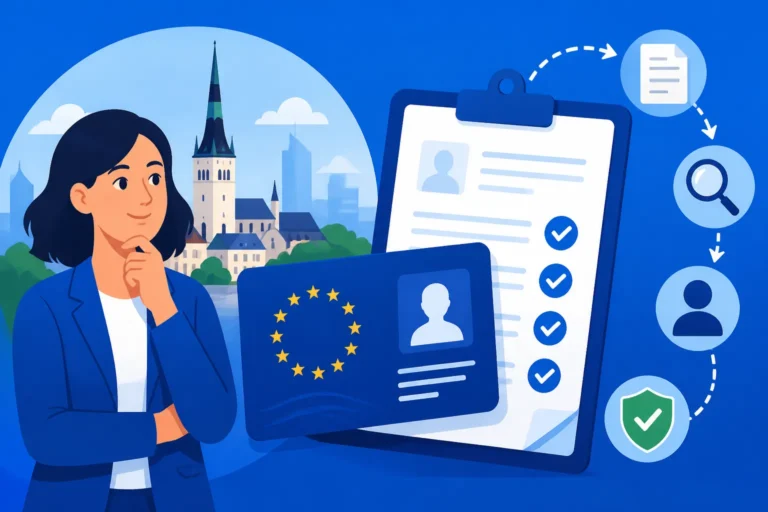
If you're a highly skilled software developer with a university degree and a high-paying job offer, the EU Blue Card might be an even better option than the standard work-based permit. It's specifically designed to attract non-EU/EEA highly skilled professionals to the European Union.
Advantages and Requirements
The EU Blue Card offers some compelling advantages:
- Faster Processing: Applications for the Blue Card are often prioritized and processed more quickly.
- Intra-EU Mobility: After having lived in Estonia for 18 months on an EU Blue Card, you gain certain rights to move and work in other EU member states under specific conditions.
- Higher Salary Threshold: To qualify, your gross monthly salary must be at least 1.5 times the Estonian average gross monthly salary. Based on the earlier figure, this would be around €2,748 (1.5 x €1,832). This higher threshold ensures that the Blue Card is indeed for top-tier talent.
- Educational Qualification: You generally need to hold a higher education qualification (a university degree) that takes at least three years to complete. However, if you don't have a degree but have extensive, relevant professional experience (typically 5+ years in the IT sector), this can sometimes be considered equivalent.
- Job Contract: You need a valid job contract for at least six months.
The application process is largely similar to the general work-based residence permit, but you'll use a specific EU Blue Card application form and emphasize meeting these higher-tier criteria. For a deeper dive, check out Understanding the EU Blue Card for Skilled Workers in Estonia.
The Startup Visa (For Founder-Developers)
Perhaps you're not just looking for a job, but to build something new yourself! Estonia is incredibly startup-friendly, and if you’re a software developer with an innovative business idea, the Startup Visa could be your ticket. This visa is aimed at founders of high-growth, innovative companies.
Requirements and Process
- Startup Committee Approval: The crucial first step is to get your business idea approved by the Estonian Startup Committee. They assess whether your startup has high growth potential and is genuinely innovative. This isn't just for any small business; it's for ventures that can scale internationally.
- Sufficient Funds: You'll need to demonstrate you have sufficient funds to sustain yourself and your startup activities in Estonia.
- PPA Application: Once approved by the Startup Committee, you then proceed with a residence permit application through the PPA, attaching the Committee's endorsement.
This route is fantastic if you're an entrepreneurial developer, but it's a different beast from simply being an employee. You can learn more about it by reading Understanding the Startup Visa for Founders in Estonia.
The Digital Nomad Visa (For Remote Developers)
Now, for those of you who work remotely for companies outside Estonia, but fancy living here, the Digital Nomad Visa (DNV) is a game-changer. Estonia was one of the first countries to introduce this, recognizing the global shift towards remote work.
Requirements and Limitations
- Remote Work Proof: You must prove that you can perform your duties remotely, either as an employee for a foreign-registered company or as a self-employed individual/freelancer with clients primarily outside Estonia. This visa is explicitly not for working for an Estonian company.
- Income Requirement: You need to show that you've earned a minimum gross income of €3,500 per month for the six months preceding your application. This demonstrates your financial independence.
- Health Insurance: Just like with other permits, comprehensive health insurance for the duration of your stay is mandatory. Again, a private provider like Cigna Global is an excellent option here, ensuring you're covered for any unforeseen medical needs while you're enjoying Estonian life.
The DNV typically grants you a Type D visa (long-stay) for up to one year, which can potentially be extended into a temporary residence permit. It’s an amazing opportunity to experience Estonia without tying yourself to a local employer, but remember, it doesn't give you access to the Estonian labor market. If you decide you do want to work for an Estonian company, you'd likely need to switch to a work-based residence permit. For all the ins and outs, our guide How to Get Estonia's Digital Nomad Visa: The Full Guide (2027) is packed with details.
Here’s a quick comparison of these key pathways:
| Visa/Permit Type | Target Developer Profile | Key Requirement | Salary Threshold (approx.) | Employer Sponsorship Needed? | Access to Estonian Labour Market? |
|---|---|---|---|---|---|
| Work-Based Residence Permit | Employed by an Estonian company | Job offer from Estonian company | ≥ Estonian average gross salary (€1,832/month) | Yes | Yes |
| EU Blue Card | Highly skilled, degree-holding developer employed by Estonian co. | Job offer from Estonian company, higher education | ≥ 1.5x Estonian average gross salary (€2,748/month) | Yes | Yes (with EU mobility benefits) |
| Startup Visa | Developer founding or joining an innovative Estonian startup | Approval from Startup Committee, business idea | Sufficient funds for living & business | N/A | Yes (as founder/employee of own startup) |
| Digital Nomad Visa | Developer working remotely for foreign company | Foreign employer or self-employment (foreign clients) | ≥ €3,500/month for 6 months | No | No (only remote work for foreign entities) |
Note: Salary thresholds are based on Q4 2023 average gross salary and are subject to change. Always verify current figures with official sources.
The Application Process: Step-by-Step for Developers
Alright, you've identified your pathway. Now comes the nitty-gritty: the actual application. This is where meticulous attention to detail can save you a lot of headaches and potential delays.
Gathering Your Documentation
This step is critical, and where many expats find themselves pulling their hair out. Estonia's digital reputation often makes people assume everything is paperless, but for initial immigration processes, there's still a fair bit of physical documentation required. Don't rush this! Plan your move carefully – a reliable international moving service like Sirelo can help you organize everything from documentation to logistics, ensuring you have your ducks in a row well before you hit Estonian soil.
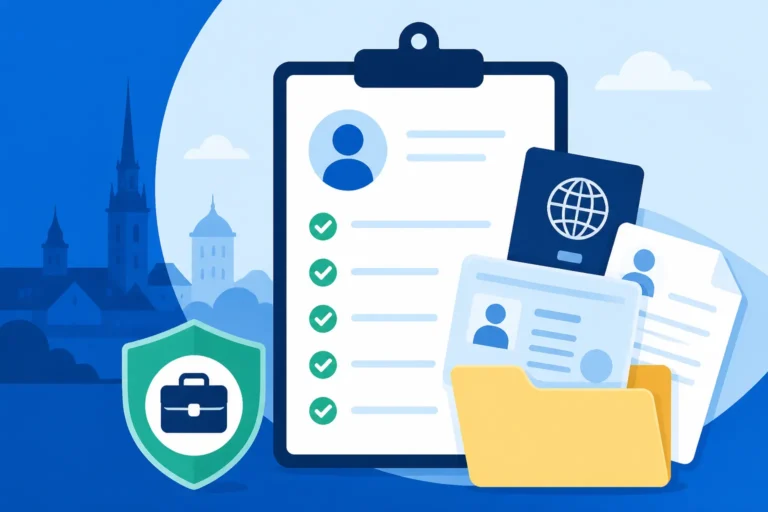
Here’s a general checklist of documents you’ll likely need:
- Valid Travel Document: Your passport. Make sure it's valid for at least six months beyond the validity of the visa or permit you're applying for.
- Application Form: Duly completed and signed. These are available on the PPA website or at embassies.
- Passport-Sized Photos: Usually two, conforming to specific biometric standards (recent, specific dimensions, neutral expression, light background). Don't try to reuse old holiday snaps!
- Proof of Purpose:
- For Work Permit/EU Blue Card: Your employment contract with the Estonian company, detailing your position, salary, and duration of employment. You might also need your CV, educational diplomas, and proof of professional experience (e.g., reference letters).
- For Startup Visa: The approval letter from the Estonian Startup Committee.
- For Digital Nomad Visa: Proof of your foreign employment contract or freelance client agreements, and bank statements showing your consistent income for the last six months.
- Proof of Accommodation: A rental agreement (üürileping) is the most common. If you initially have temporary accommodation, clarify this with the PPA, but be ready to provide a long-term plan.
- Proof of Sufficient Funds: Bank statements showing you can support yourself financially. This is especially crucial for the Digital Nomad Visa, but generally important for any residence permit to ensure you won't be a burden on the state.
- Health Insurance Policy: A valid health insurance policy covering your entire intended stay in Estonia, with adequate coverage. As mentioned, while Tervisekassa will cover you once social tax payments start, often a private policy (like those from Cigna Global) is required for the application and initial period, covering medical expenses up to a certain amount, typically €30,000. This is one of those frustrating "chicken or the egg" situations where you need insurance before you're fully integrated.
- Proof of State Fee Payment: You’ll need to pay an application fee. Keep the receipt! The fees vary depending on the type of permit and your citizenship.
Always check the most current requirements on the official PPA website or with the Estonian embassy in your country, as these lists can change. And seriously, get professional translations for any documents not in English or Estonian, especially your diplomas or birth certificates if required.
Submitting Your Application and Biometrics
Once your document folder is bulging and perfectly organized, it's time to submit:
- Where to Apply:
- From outside Estonia: You'll typically apply at the nearest Estonian embassy or consulate in your home country or country of legal residence.
- From within Estonia (e.g., if you entered on a D-visa): You can apply at a PPA service point in Estonia. However, it's generally recommended to apply from your home country unless you have a specific reason to do otherwise.
- Booking an Appointment: For both embassies and PPA service points, it's almost always mandatory to book an appointment beforehand. Don't just show up! Slots can fill up, so plan this well in advance. Our guide on How to Book an Appointment at the Police and Border Guard Board (PPA) can walk you through it.
- Biometrics Collection: During your appointment, your fingerprints will be taken, and a digital photo will be captured for your residence card. This is a standard procedure and helps ensure the security and authenticity of your identity documents.
The Waiting Game and Next Steps
After submission, it's time to practice your patience.
- Processing Times: As mentioned, these vary. For temporary residence permits, it can range from a few weeks to several months (up to 2 months for an EU Blue Card, up to 4 months for a general residence permit by law, but sometimes faster or slower in practice). Always apply well in advance of your intended move date.
- Checking Status: You can usually check the status of your application online via the PPA website using your application number. This can be a daily ritual for many anxious applicants!
- Upon Approval: If your application is successful, you'll receive notification. You’ll then be instructed to collect your residence card. This card is your official ID in Estonia and will contain your Isikukood, a number essential for everything from medical care to banking. Our guide on How to Get Your Isikukood (Personal Code) and Why It Matters for Healthcare explains just how crucial it is.
- If Rejected: It's tough, but sometimes applications are rejected. The rejection letter will usually state the reasons. You typically have the right to appeal the decision within a certain timeframe. If this happens, it's often wise to seek legal advice from an immigration lawyer specializing in Estonian law.
Post-Arrival Essentials for Software Developers in Estonia
Congratulations! You’ve got your visa or residence permit, packed your bags, and landed in Estonia. The hard part of getting here is over, but now the next phase begins: settling in and becoming a functional resident.
Registering Your Residence and Getting Your Isikukood
This is arguably the single most important step after you arrive. Within one month (30 days) of receiving your residence permit, you must register your official place of residence in the Estonian Population Register. Even if you've already provided a rental contract for your visa application, you still need to complete this step.
Why is this so important? Because this act officially links you to an address in Estonia, and it's how your Isikukood (personal identification code) becomes fully active and integrated into the system. Without it, you can hit roadblocks trying to open a bank account, access some public services, or even get certain discounts.
You typically do this at your local city or rural municipality government office. In Tallinn, it's at the city district governments (Linnaosavalitsus). You'll need your passport, residence permit, and your rental agreement. For a full breakdown of this vital step, definitely read Registering Your Place of Residence in Estonia: The Complete Guide.
Navigating Healthcare and Social Security
Estonia has a comprehensive healthcare system, but understanding how you fit into it as a new expat can be confusing.
- Tervisekassa (Health Insurance Fund): If you're employed by an Estonian company, congratulations! Your employer will pay social tax on your salary, and a portion of this goes towards the Tervisekassa. After a short waiting period (usually around 14 days from when your employer first registers your employment), you'll become eligible for public health insurance. This covers most primary care, specialist visits (with a referral from a family doctor), hospital care, and prescription subsidies.
- Private Insurance: As mentioned earlier, while Tervisekassa is fantastic once you're in, you might need private health insurance (like that from Cigna Global) for your initial application and to cover any gaps before your public insurance kicks in. If you're on a Digital Nomad Visa, public health insurance is generally not available through Tervisekassa unless you meet specific criteria, so private insurance is absolutely essential.
- Finding a Family Doctor (Perearst): Once you have your Isikukood and Tervisekassa coverage (if applicable), your next step is to find and register with a family doctor. This is your first point of contact for most medical needs. Our guide, The Complete Guide to Healthcare in Estonia for Expats (2027), provides all the details you’ll need to navigate the system effectively.
Opening a Bank Account and Financial Matters
This is another area where new arrivals often encounter unexpected hurdles. While Estonia is digitally advanced, opening a local bank account can be surprisingly difficult for non-residents or those who haven't fully established their residency (i.e., registered their address).
- Initial Challenges: Estonian banks (like Swedbank, SEB, LHV) have tightened their policies to comply with international anti-money laundering regulations. They often require you to have a strong connection to Estonia – usually a residence permit and a registered address. Simply having an Isikukood might not be enough on its own.
- Be Prepared: Bring all your documentation: passport, residence permit, employment contract, and proof of address registration. Be ready to explain your income source and why you need an Estonian account. Start this process as soon as possible after registering your residence.
- Alternative Solutions: Many expats initially rely on international online banks like Wise (formerly TransferWise) or Revolut for their daily transactions. These can be lifesavers while you work through the local bank bureaucracy.
- Taxes: As a software developer, your income will be subject to Estonian income tax. Estonia has a flat income tax rate, and understanding your obligations, especially if you have foreign income, is crucial. Our guide, Understanding Income Tax (Tulumaks) in Estonia: The Full Expat Guide, will be invaluable. You can also get a full overview with The Expat Guide to Opening a Bank Account in Estonia.
Integrating into the Estonian Tech Community
One of the best parts about being a software developer in Estonia is the welcoming and active tech community.
- Networking: Look for local tech meetups, industry events, and hackathons. Platforms like Meetup.com and Eventbrite are good places to start looking. Tallinn and Tartu have regular events covering everything from AI and blockchain to front-end development and cybersecurity.
- Expat Groups: Join expat groups on Facebook or other social media platforms. These communities are fantastic for asking questions, getting recommendations, and making new friends. You’ll find developers from all over the world who understand the unique challenges and joys of living in Estonia.
- Language: While English is widely spoken in the tech scene, learning even a few basic Estonian phrases will go a long way with locals and show your commitment to integrating. There are plenty of resources for Learning Estonian: A Complete Guide to Language Courses and Levels.
Settling into Estonia as a software developer is a journey with its ups and downs, but the vibrant tech scene, digital convenience, and high quality of life make it a rewarding one. Take it step by step, lean on expat communities, and don't be afraid to ask for help when the bureaucracy gets overwhelming. Tere tulemast Eestisse! Welcome to Estonia!
Disclaimer
The information provided in this guide is intended for general informational purposes only and does not constitute legal, financial, or immigration advice. While we strive to keep the information up-to-date and accurate, regulations and procedures in Estonia can change without notice. Always consult official government websites (such as the Estonian Police and Border Guard Board – PPA, and the Ministry of Foreign Affairs), legal professionals, or financial advisors for the most current and specific advice pertaining to your individual circumstances. We assume no responsibility for any actions taken based on the information contained herein.